Mae Kate Campbell studied geology at the University of Vermont from 2017-2021. While working toward her master's degree, the former Gund Graduate Fellow had the opportunity to do field work in Cuba. She shares how the Gund helped prepare her for her current role, associate scientist with the Lake Champlain Basin Program.
How did you end up with the Gund?
I started at UVM in 2017, right as the Gund was broadening beyond its original focus on ecological economics. I took classes with Gund faculty, and my advisor, Dr. Paul Bierman became a Gund faculty fellow in 2018. With many intersections between my coursework, graduate research, and the mission of the Gund, I was happy to be welcomed as a graduate fellow!
What was your research while you were here?
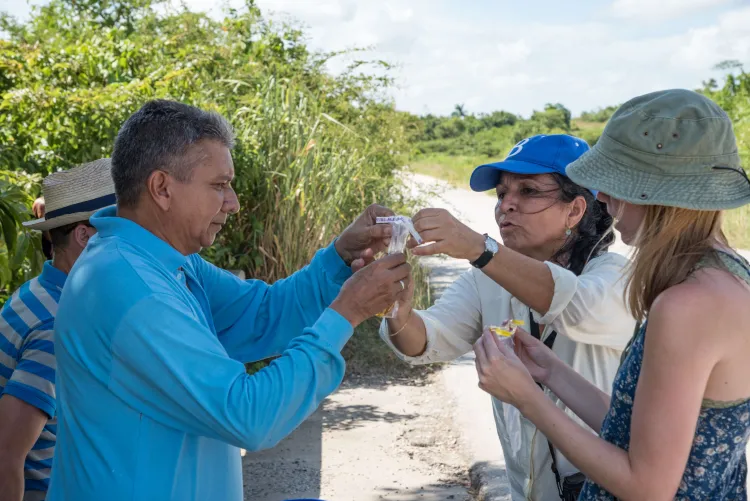
My master’s research focused on characterizing long term-erosion rates in Cuba, using a combination of cosmogenic nuclides and water chemistry data. This research was the first time cosmogenic nuclide measurements had been made in Cuba, and our findings emphasized the importance of considering mass loss by solution when interpreting cosmogenic-nuclide-derived erosion rates in landscapes like the tropics. My work contributed to a larger project aimed at understanding how human actions, like changes in the way agriculture is practiced, can impact erosion rates.
Beyond the strictly academic, this research brought together a team of scientists from the U.S. and Cuba, and it was incredible to build these professional and personal relationships despite the political barriers that make collaboration between our countries difficult. The team we worked with from the Centro de Estudios Ambientales de Cienfuegos (CEAC) were not only excellent scientific colleagues, but welcoming ambassadors of their country and culture, and I am grateful for our time working together.
What are you doing now?
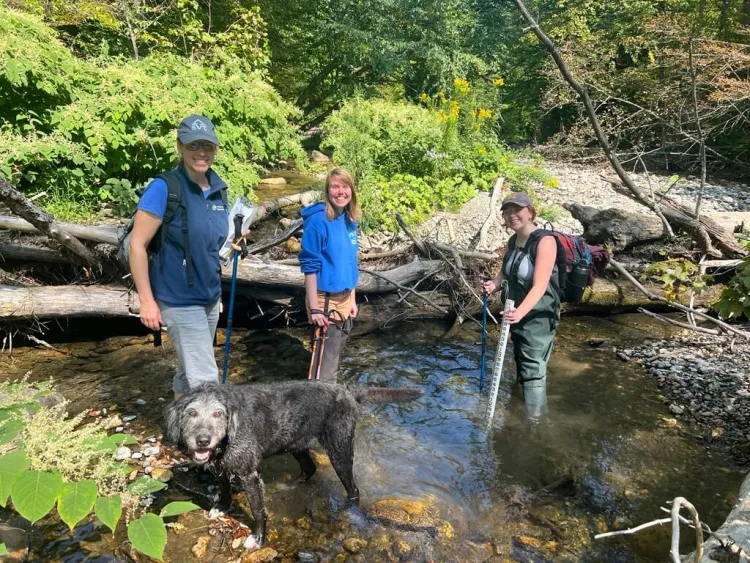
I began working at the Lake Champlain Basin Program in 2020 as I was still in the process of completing my master’s work. In my role as Associate Scientist, I support planning and implementation projects to protect and restore water quality and habitat in the Lake Champlain watershed, and research projects to guide management actions. My role is project-management focused; in addition, I support our long-term water quality monitoring program and contribute to our State of the Lake reports.
How did the Gund Institute prepare you for your current position?
The interdisciplinary thinking and focus on approaches to real-work environmental issues cultivated by the Gund was excellent preparation for the watershed management work on Lake Champlain. The Gund community has continued to be important as I transitioned from academia to my professional role. I still work with Gund faculty fellows and other Gund alums regularly!
Any advice for current or future graduate students or postdocs?
It sounds trite, but being open to possibilities can lead to wonderful things! I was nervous about applying for and starting a job while still finishing my graduate work (and then I ended up doing both as the pandemic started…), but I am really glad I did. There were definitely some tough moments balancing finishing my degree with starting my career, but it was worth it to finish out my research while already being able to look ahead and see how I could apply the skills and knowledge I learned through grad school to my new role. Basically, don’t be afraid to go for an opportunity even if the timing isn’t perfect!