In our ongoing interview series with members of the Gund Institute for Environment community, we’re catching up with veterinarian and ecologist Luz Aura de Wit. She reflects on navigating a major research pivot during the pandemic and shares how her time at the Gund helped prepare her for her current role at Bat Conservation International.
This conversation has been edited for clarity.
How did you end up with the Gund?
I joined the Gund Institute as a postdoctoral fellow in 2019, right after finishing my Ph.D. at U.C. Santa Cruz. My background up to that point had been a mix of veterinary medicine, ecology, and conservation, and my dissertation really pushed me into the social dimensions of environmental problems. I focused on how managing invasive vertebrates—mostly feral and invasive cats—could have both conservation and human health benefits. I looked at how people’s risk of exposure to Toxoplasma gondii, a parasite cats can carry, changed under different management schemes, including eradication efforts on islands.
As I wrapped up my dissertation, I felt like I was at a fork in the road. One path would have taken me deeper into disease ecology and pathogen dynamics; the other leaned more into human–environment interactions, economics, and social systems, areas I didn’t have much formal training in but felt deeply curious about. I’d realized by then that my real passion was in figuring out win–win solutions for biodiversity and human well-being. That perspective, and the sense that you can’t do meaningful conservation without thinking about people, is what drew me to Taylor Ricketts’ lab and to the Gund.
What was your research while you were here?
I started with a project very much in line with my dissertation: looking at how managing invasive rats on islands could benefit both ecosystems and human health. I focused on Angiostrongylus cantonensis, the parasite that causes rat lungworm disease. The plan was to do some initial synthesis work and then head to Hawaiʻi for fieldwork, since the disease is endemic there.
Then COVID-19 emerged a few months into my fellowship, and travel shut down. It was a huge disruption, and with fieldwork off the table, Taylor and I started talking about what we could do that felt relevant and useful in that moment. That led us to explore the economics of pandemics and the wildlife trade.
We wanted to understand the economics of prevention versus response: did the costs of managing epidemics or pandemics outweigh the economic benefits associated with wildlife trade and hunting? SARS in 2002 had also been linked to wildlife markets, yet little had changed. So we asked: were the economic benefits of the wildlife trade really large enough to justify the continued risk? Or was this a matter of scale, where the global and national costs are enormous, but the people directly involved in the trade see a different pattern?
We compared costs and benefits for COVID-19, SARS, and Ebola at global, national, and household levels. What we found was that the relationship shifts depending on the scale and the disease, but for pandemics as large as COVID-19 and SARS, the costs outweigh the benefits at global and national levels. At the household level, though, where people are making day-to-day decisions about hunting or trading wildlife, the benefits almost always exceeded the costs. This highlighted an important insight, that preventing future disease emergence requires directing resources and support to the households and communities most directly involved.
For me personally, this research was a unique opportunity to merge disease ecology, conservation, human well-being, and environmental economics in a way that was completely new and incredibly meaningful.
What are you doing now?
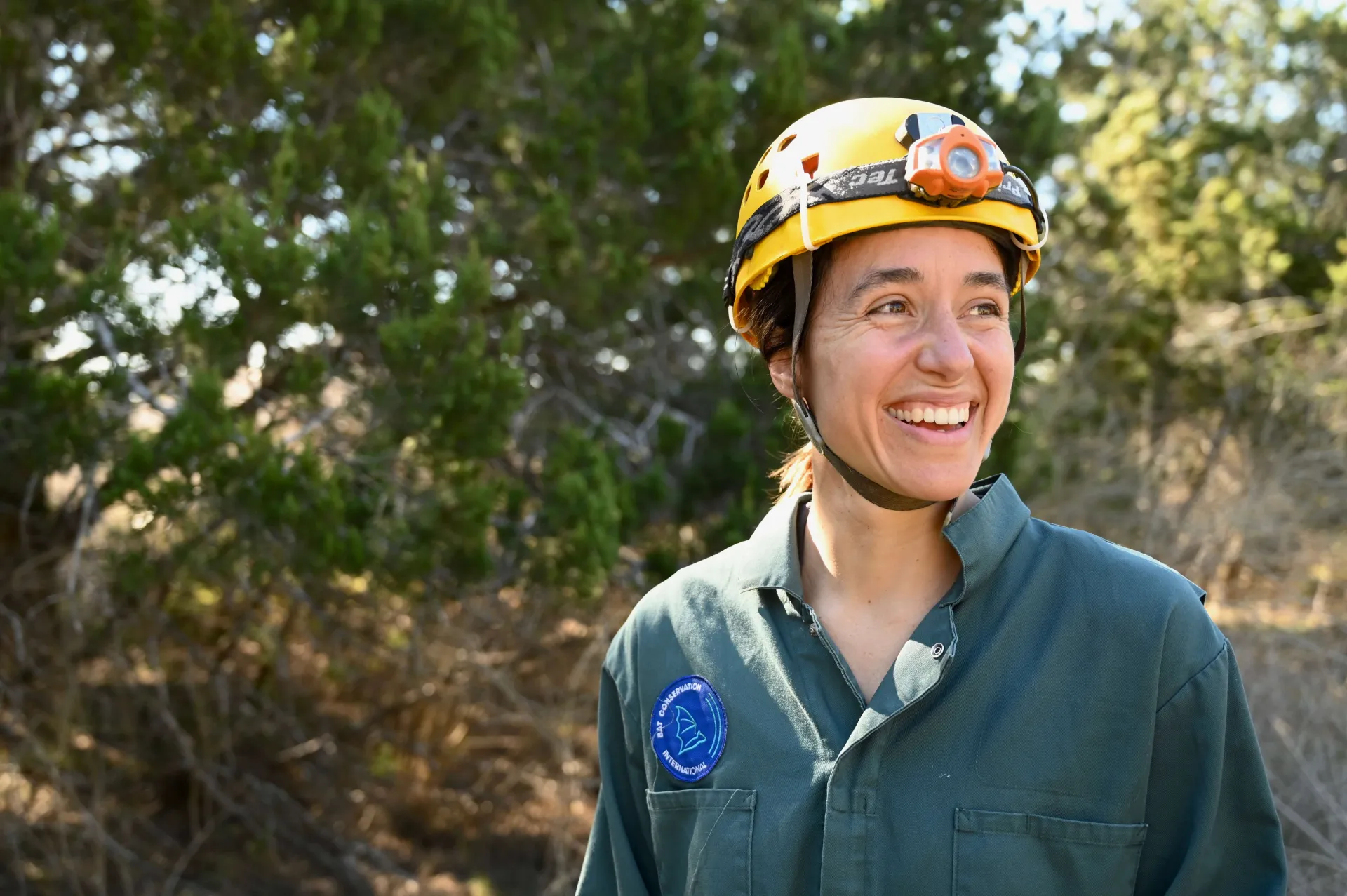
I’m currently the director of the Bats and One Health Program at Bat Conservation International (BCI). I’ve been at BCI almost four years now. I started as a research scientist leading a large project to assess the risk of North American bats being exposed to SARS-CoV-2 and to build a baseline understanding of alphacoronaviruses across bat populations.
I’ll be honest, I was quite nervous at first. I wasn’t trained as a bat biologist, and the project was big and fast-paced. But my background in disease ecology and environmental drivers of pathogen dynamics translated really well. Once that project wrapped up, I was promoted to director of the program, which I helped design from scratch.
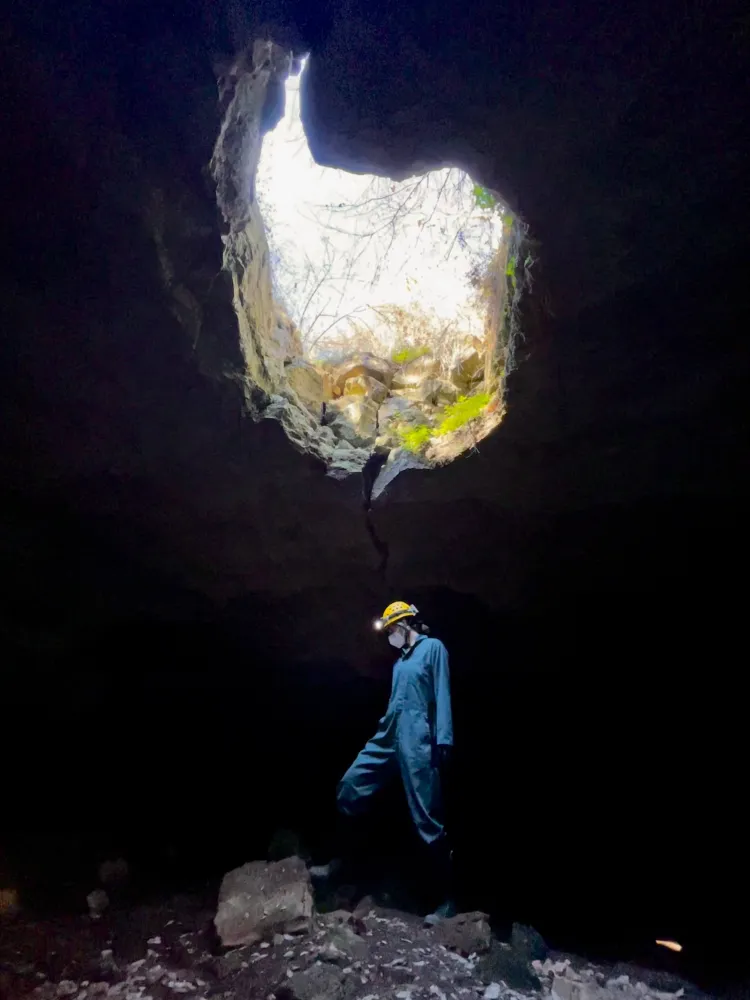
The program focuses on identifying strategies where bat conservation actions have environmental and social co-benefits— whether that’s working with farmers to adopt bat-friendly practices that boost ecosystem services, or protecting roosts and foraging habitats so bats stay healthy and the risk of spillover or conflict with people and domestic animals is reduced. Ultimately, we want people to value bats not just because they’re fascinating animals, but because protecting them genuinely supports both human and ecosystem health.
How did the Gund Institute prepare you for your current position?
The Gund really shaped the way I approach problems. It pushed me to constantly connect ecological and social dimensions, and to ask not only “what does the science say?” but also “how does this actually play out for the people who depend on these systems?” and “how can we make things work for nature and people?” This way of thinking has been essential in my work at BCI, where the science is always tied to policy, community engagement, and real-world decision-making.
The Gund also taught me how to communicate across disciplines: economists, social scientists, medical professionals, conservation biologists. That skill has been invaluable, because my job now lives in the space between disciplines. Working across disciplines is one of the foundations of One Health. The Gund also gave me a lot of confidence in co-developing research questions that are both rigorous and applied, which fits perfectly with the type of solution-oriented science that the Gund is known for.
Any advice for current or future graduate students or postdocs?
Be open to pivots. Sometimes your research or your plans will get disrupted, not in a good way, and not on your timeline, but staying flexible can open doors you didn’t expect.
Don’t be afraid to cross disciplinary boundaries, even if it feels uncomfortable at first. Some of the most exciting and impactful work happens in those spaces. Learning to engage with economics, policy, and social science really expanded what I could do as an ecologist and veterinarian.
And lean into community. One of the best parts of the Gund is the collaborative culture. Talk to people, share your ideas, ask questions, show up to events. Those relationships often spark new ideas, new projects, and even new career directions. It’s easy to feel isolated in research, but staying connected makes all the difference.