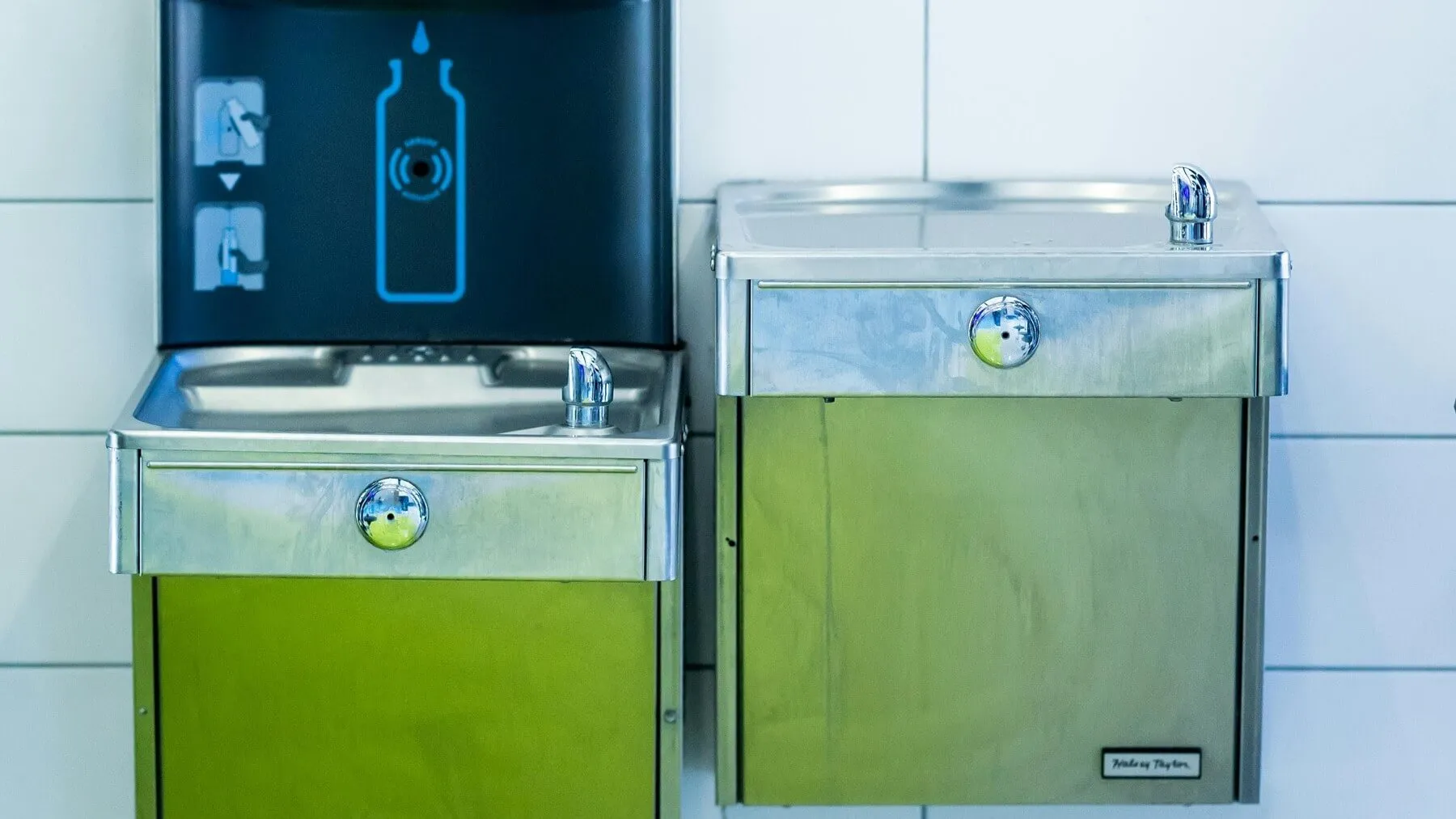
In 2021, the city of Jackson, Mississippi experienced a water crisis after aging infrastructure failed during a winter freeze, leaving many less-affluent, predominantly Black Jackson neighborhoods without water.
“(The JSU) campus had to be shut down,” recalls professor Chandar Lewis of Jackson State University (JSU). “The Jackson Public Schools had to be shut down. You had people that went weeks without water.”
Lewis, a former Jackson Public Schools elementary school principal and biology teacher, and an Associate Professor in JSU’s College of Education and Human Development, knew that Jackson's teachers were working under profoundly challenging circumstances. She’d also become concerned about her own daughter’s fifth-grade science education, which she feared was not providing sufficiently rigorous preparation for middle school science coursework.
“I said there has to be a way for us to work with our teachers—whether it's those teachers that are in the classroom already or if it's our teacher candidates—on how to bridge the gap between elementary and middle school science,” Lewis said.
Given the city’s recent water crisis, water education seemed like a perfect fit.
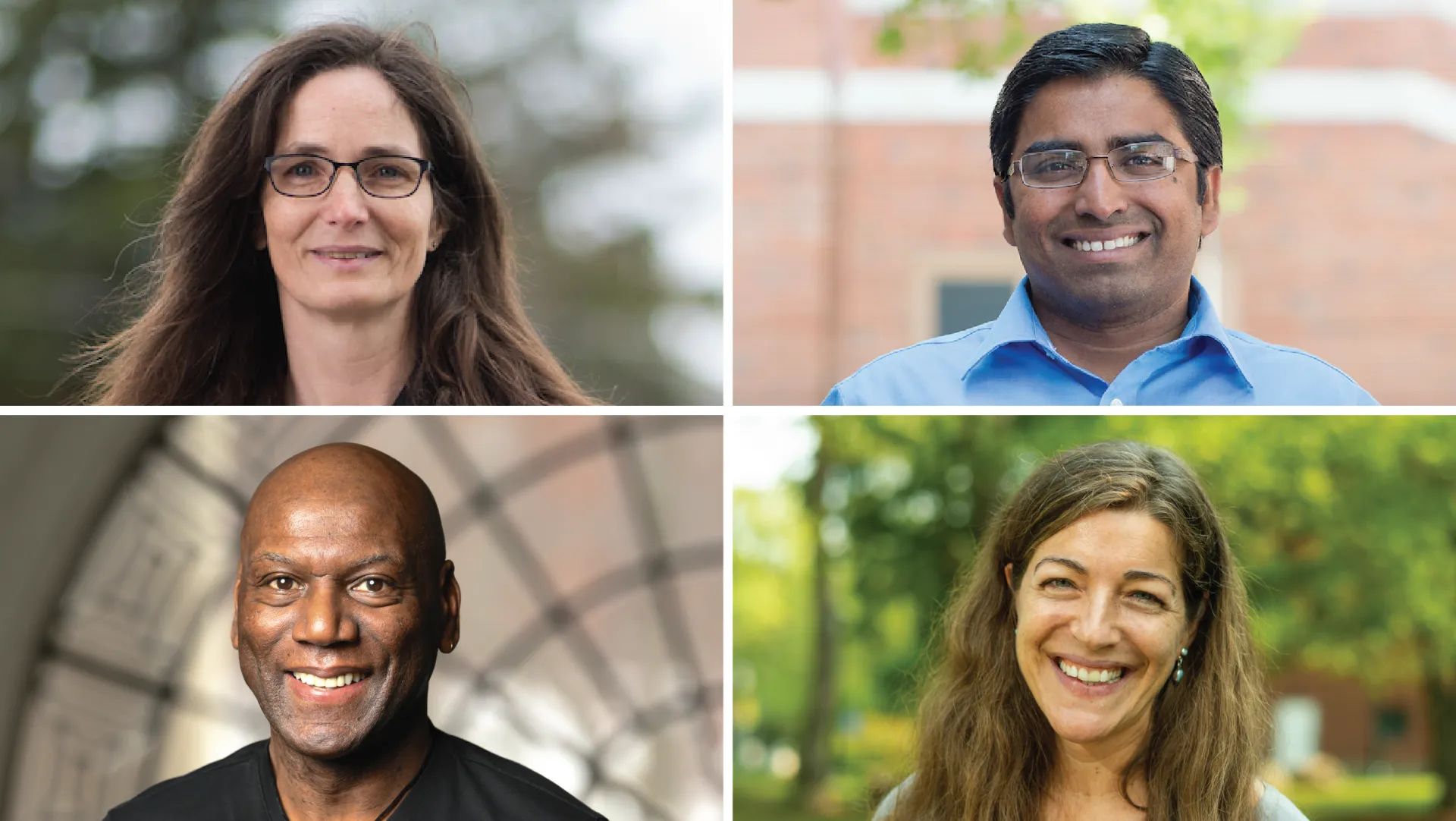
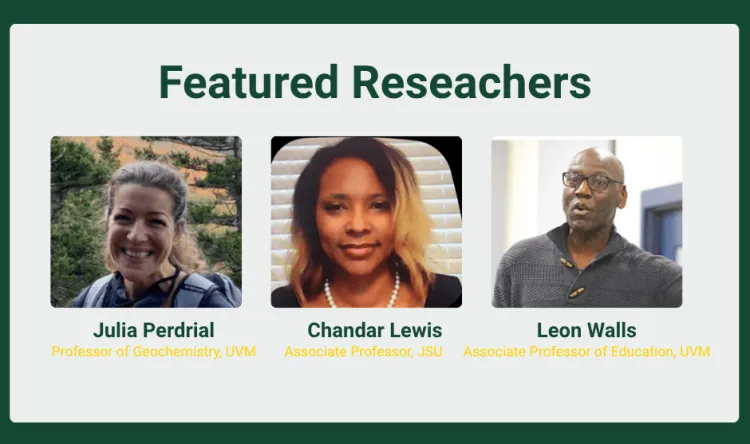
This conversation, which Lewis shared with JSU colleagues Dr. Deirdre Wheaton and Dr. Jacqueline Jackson and with geochemistry professor Julia Perdrial of UVM’s College of Arts and Sciences and education professor Leon Walls of UVM’s College of Education and Social Services, helped the researchers transition into the next phase of a partnership they’d begun via a previous National Science Foundation (NSF) grant. When Perdrial and Walls were awarded the Gund Institute’s Catalyst Award in 2023, they and their colleagues at JSU, a historically Black college and university, explored what this water education could look like.
Perdrial says that she and Walls went into the project with intentionally broad goals, expecting to refine their path based on community input. For example, the researchers expected to provide trainings to teachers, but a virtual listening session with Jackson community members in spring 2023 revealed that teachers didn’t need yet another professional development day crammed into their schedules; they needed help connecting with one another and accessing experts whose expertise complemented the educators’ already established goals.
“Let's get input from the community—what do we need to do? And then start designing and implementing things,” Perdrial said of the process.
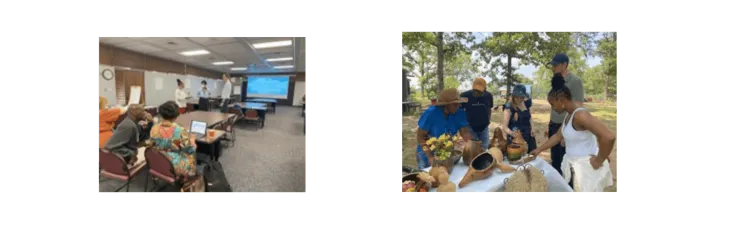
Figure 2: Informal water education: the team (Wheaton, Blouin, Walls, Nix) visits the local farm that is engaged in community outreach and place-based education (photo credit J. Perdrial).
Perdrial and Walls headed to Jackson in June 2023 to join their JSU colleagues and figure out how the project could best serve the teachers and students at Jackson’s public schools. They received more feedback from teachers and other community members, including that for many of the teachers’ identified needs a local expert in Jackson was willing to help.
So, Perdrial says, the researchers pivoted in part to network-building, helping teachers plug into the Jackson area-wide bench of informal educators. That included farmers, museum workers including from the Mississippi Museum of Natural Science, and municipal water management professionals—all experts on the ground in Jackson and already doing the work.
It was one of many times throughout the project that expectations and reality didn’t match.
“Grounding this work into feedback was such a beautiful exercise in blind spots,” Perdrial added.
Making it Fun
Walls, himself a former middle-school science teacher, as well as a former engineer, knew the importance of hands-on learning.
“It has to be fun,” he says. “The science, the learning part, has to be fun to really stick with them.”
In his experience, doing science really helped with that. He shared his knowledge with JSU faculty members who created a series of science-focused modules for teachers.
The modules included experiments that students could do themselves, often in partnership with a local expert. They included the materials needed for activities like water testing, making observations of local ecosystems, and data collection. The researchers saw an opportunity to use education to encourage agency among children who’d lived the reality of the water crisis, Lewis said.
“During the development of the modules, we built in spaces for teachers to share what they were feeling about what's going on in their classroom, what was going on with their students,” she says. “And that was a way for us to help them develop lessons that would help their students as they're going through all of these things.”
These “candid conversations” were important given the effects of Jackson’s water crisis on these students, which was in some cases significant.
“You don't have water at your house,” Lewis said. “How do you deal with that?... It was very intentional lesson building around it for the younger children.”
The modules started with the natural water cycle then led students through the city’s water collection and purification system. The lessons not only offered scientific knowledge but also placed this knowledge within the context of societal factors that had allowed Jackson’s water system to fail Black neighborhoods so badly—and offered students opportunities to see in themselves the potential to develop solutions. Lewis recalls that a key question teachers could ask their students was: “Can we think of some solutions that we can provide the city on how to keep this from happening again?”
Educating the Educators
Another aspect of the work focused on the ever-echoing impact of educating future teachers. The researchers worked on redesigning a JSU course on children’s science education for future teachers. Here, Perdrial says, the goal was to help pre-service teachers to teach science within its larger social and historical milieus. New teachers who’d completed the course presented their experiences to a community gathering in June 2024—a gathering at which they then began forging their own partnerships with Jackson’s water experts, also in attendance.
The flexibility to identify missing pieces and make needed connections was one of the unique advantages of the Catalyst Award, Perdrial says; most grant applications demand an outline of the whole project in advance, whereas here, the researchers had the opportunity to apply even while saying, ‘our goals aren’t entirely clear yet.’
“I think that flexibility is critical when we're doing transdisciplinary work based on the critical need of a community,” she says.
Indeed, the partnership has now outlasted the Catalyst Award that funded its progress, with scholars from both leading institutions noting a sense of collegiality and mutual appreciation. Notably, this isn’t always the case.
“We (at JSU) were very skeptical at first because, coming from an HBCU, a lot of grants—whether it's an NSF grant or another organizational grant, or a funding agent at the time when the societal climate in the U.S. was different—everything focused on a diversity or equity component… and a lot of times, these entities thought that if they could get an HBCU on board, then they would be checking the box for diversity,” she says. But then, the requesting researchers would make absolutely no effort to work with HBCU colleagues or develop an actual research partnership, she says.
Looking back, Lewis says, “I must say that Julia and Leon did a very wonderful job of building relationships because we were very vocal in sharing our concerns.” She notes that Jackson’s water crisis, as a scientific topic utterly inextricable from its societal context, brought together fundamental issues for this project to address.
“So I think that moving forward, UVM would be a great example for other PWI's (predominantly white institutions) on how to work with HBCU's—not use HBCUs, but utilize and work alongside HBCUs,” Lewis says.
Perdrial and Walls also acknowledged this exploitative history as they pursued the Catalyst project.
“The key piece—and some scientists need to hear it, others don't, because they work like this, but I for sure needed to hear it—is that going out to the community and asking what's the critical need should be the first step, not the last step after we've gotten the funding and have started the work,” Perdrial says.
Building Lasting Connections
With the final reports from the Catalyst Award filed, the team is looking ahead to where the work may go next. Lewis believes the project can serve as an example of the expansive and needed work happening at JSU, and highlights the importance of the university’s research, and the work of HBCUs overall.
“If it can be shown on a national level where people can see that this is what’s happening at a Jackson State in partnership with the University of Vermont… it may not necessarily change the (state) legislature’s minds on providing a formula for funding, but what it will do is make them understand the impact that a Jackson State has and can bring,” she says.
Perdrial hopes to see water education continue in Jackson. She says it’s a fundamental topic that can serve as an avenue for students to see beyond water from a tap and inspire them.
“Water education is really meaningful, because it is such an essential human right to be able to have access to water,” she says.
The team walked away with genuine connections, built on mutual respect.
“All the folks in Jackson, and the UVM team, we're friends,” Perdrial says “They’re really close to our hearts now.”
Walls, who grew up in the upper Midwest, says he never anticipated the relationships he’d develop with either the people or the state of Mississippi. He was born there but left in early childhood. He says Mississippi’s history of enslavement and Jim Crow laws shaped and soured his impression of the state.
But the people he met there changed his mind.
They were “doing good work,” he says. “I met those faculty members at Jackson State. I met some community members.” The senior couple who run an educational farm that welcomes Jackson’s schoolchildren for field trips reminded him of his own grandparents, he says.
“I had a new connection with actual people in the state,” Walls says. “But it’s made me sit back and go, ‘You know what? Not every single person. Not every single thing.’”
Instead, he added, “It made me realize that I painted everything and everyone with the same brush, and you can't do that. You just simply can't.”
Other collaborators on this project included Professors Regina Toolin (UVM College of Education and Social Services) and Donna Rizzo (UVM College of Engineering and Mathematical Sciences); and Gund Graduate Fellow Mandy Nix (UVM Rubenstein School of Environment and Natural Resources).