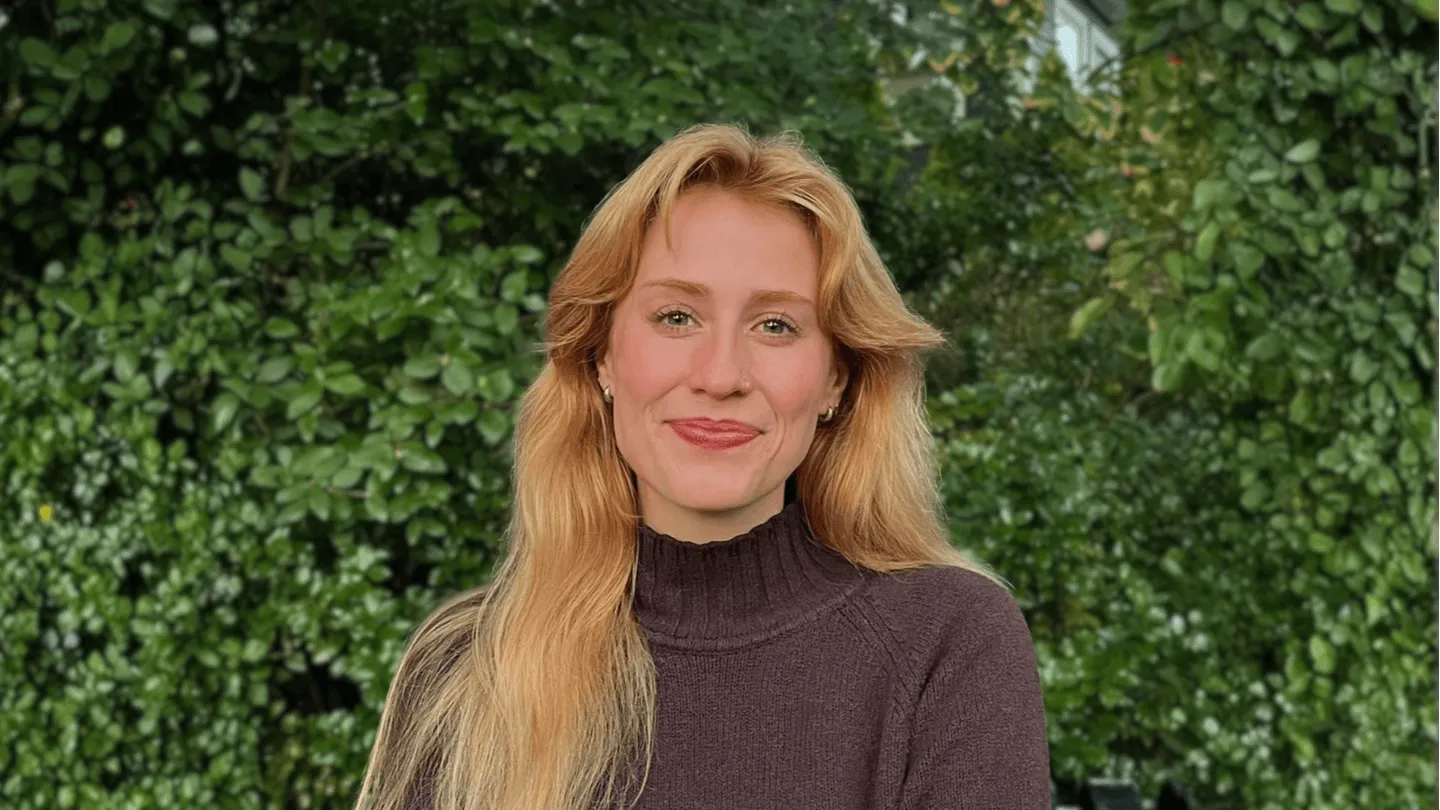
What she didn’t expect was that her science focus, along with her experience as a student peer leader at UVM’s Career Center, would lead her to a completely different corner of life sciences: recruiting.
McDonald now works for Sci.bio, a boutique recruiting firm based in Braintree, Mass., specializing in placing talent in the life sciences and pharmaceutical industries.
“When I was in school, I did research, but bench science was not calling my name,” said McDonald. “This role has been a great application of the sciences on a more off-the-beaten path that I was looking for.”
McDonald enrolled at UVM as a biology major, hoping to become a doctor. The courses were rooted more in ecology and plant sciences than she was hoping, so she switched her major to neuroscience to gain clinical exposure by shadowing physicians. The experience was rich for McDonald but ultimately still wasn’t the right fit.
“After that I didn’t really know what to do,” she admitted. “I still really liked science research, and my [Principal Investigator] introduced me to UVM’s pharmacology program, which was wonderful, but throughout this, I still didn’t really know what I wanted to do. I worked at the Career Center, and that experience genuinely shaped my post-graduation.”
McDonald appreciated the people-focus of her role at the Career Center as a student peer leader, assisting students at drop-in appointments reviewing resumes, elevator pitches, prepping for interviews and more.
“What I do now is a really great intersection of enjoying science and connecting with people.”
McDonald also credits the Career Center with giving her the edge with landing her current role.
“After I graduated, I went on vacation and thought, ‘oh boy, I should probably open my computer and apply to some jobs, don't know what they're going to be, but I'm going to do it!’” she recalled. “I found this position on LinkedIn as an intern to hire opportunity. I sent in my resume, and there wasn’t a place to send a cover letter. My friends at the Career Center said, ‘you should probably include a cover letter.’ So I sent my cover letter to the email that was associated with the job post.”
“[The recruiter] reached out to me and said, ‘I've gotten a lot of applications, but I'm going to speak with you because you sent me that cover letter, because I look for people who follow up.’ In recruiting, people might not answer initially because they don't see your application. It's important that you follow up a few times respectfully. And he was like, ‘You might not have been my first choice initially, but now you are.’”
As for advice from a recent graduate surveying the current recruitment landscape, McDonald offers soon-to-be-grads some advice:
Start exploring what’s out there
“People say to start searching for jobs early. If I'm being perfectly honest, I did not,” she said. “I think that would have benefited me to start looking just, you know, sporadically. I'm not going to say, ‘you better be pounding the pavement every day,’ but when you stumble across the right job, it can be happenstance sometimes. Work on it a little bit every week. Just see what’s out there what and looks interesting.”
Highlight your accomplishments on LinkedIn
Recruiters find you on LinkedIn if your profile clearly describes your experience, skills, and accomplishments using the right keywords. “You might work a highly technical position that involves a lot of specified skills or using certain software,” Jenna said. “List all of those things on your profile, do a good job of describing.” Even if you’re unsure of your exact career direction, listing your technical abilities, tools, and achievements helps your profile appear in advanced searches. The more accurately you showcase what you’ve done, the easier it is for the right opportunities to find you.
Be Confident, Be Curious, Be Courageous in Your Interviews
As silly as it may sound, being pleasant and curious during an interview can make you stand out, especially when teams are choosing between strong candidates. “A lot of the teams that I've debriefed with end up going for the candidate they really enjoyed speaking with,” said Jenna. Interviewers consistently remember people who ask thoughtful questions, show interest in the company and its people through genuine conversation. When you stay engaged and curious, your candor and curiosity could become the deciding factor.
Talk to People
Researching online can spiral into worst‑case thinking; talking to real people in your area of interest brings clarity and calm. “So few people graduate and then just do the one thing afterwards for the rest of their lives,” Jenna said. “I'm not even talking formal networking; just reach out, ask questions, and email people whose work interests you.” Exploring the thousands of alums willing to help on UVM Connect is a good place to start. The worst they can say is no, and often they won’t, which is why leveraging your network is one of the most powerful habits you can build.
Trust That You’re Going to Be Okay
Graduating can feel overwhelming, but you don’t need to think of the job search like a make-or-break scenario; your degree already proves you have real skills and potential. A healthy amount of stress can push you forward, but anxiety can make the transition harder. Trust that you’re capable, because you are, and most UVM grads end up doing far better than they feared. “Everyone who is graduating and getting that piece of paper has some excellent skills that they can use for whatever they desire,” assured Jenna. “Because you're good. I think we're all good. I wish I'd known that I was going to do great.”
Got more Career Questions? The Career Center is available to Catamounts for life! Check out our Drop-ins page for hours and availability.