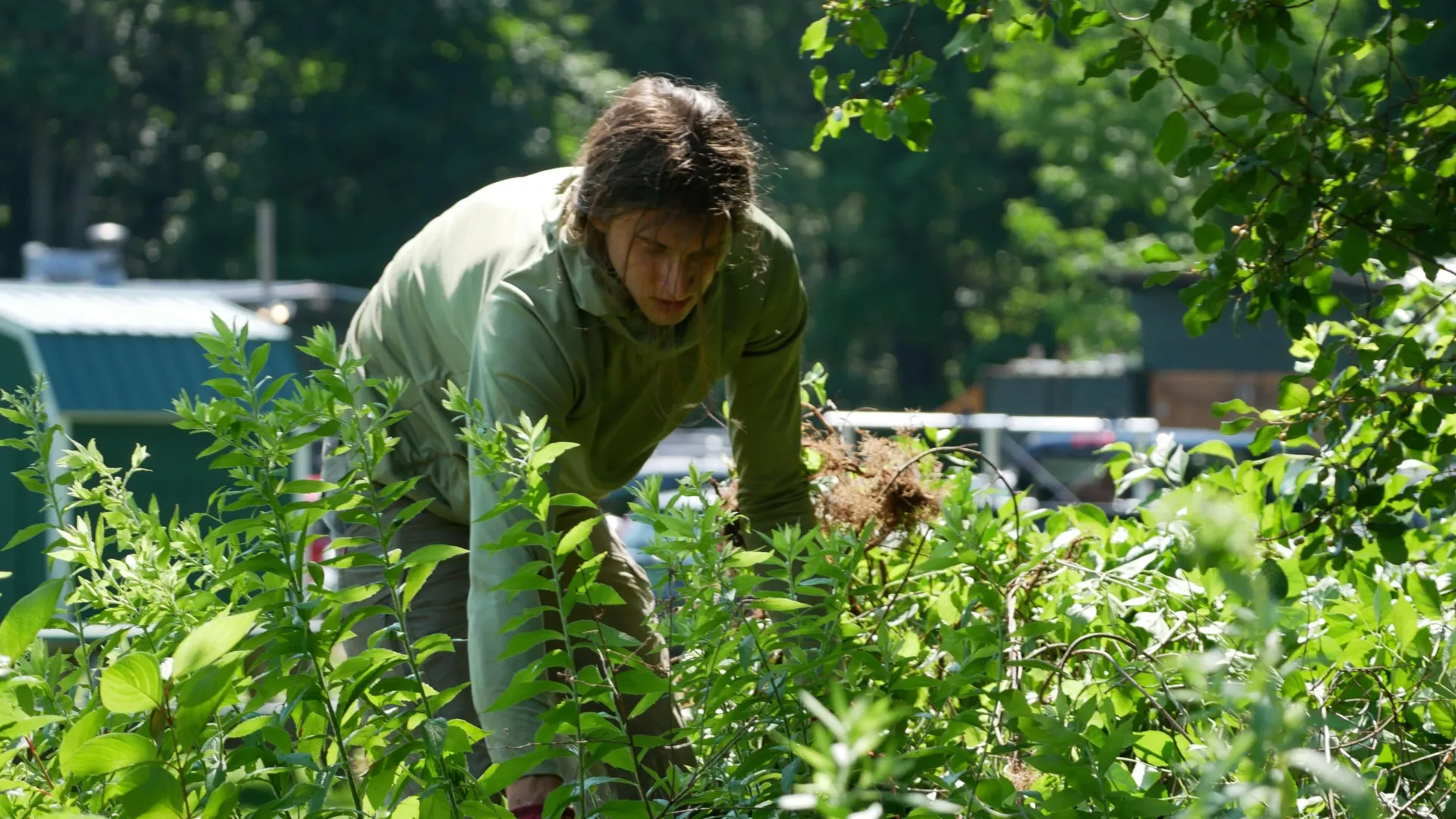
Just behind the sprawling Winston Prouty Center campus in downtown Brattleboro, Simon Rae ‘27 stands at the edge of a towering wall of vegetation, ripping apart a dense mass of branches, thorns and vines that have climbed over trees and smothered native growth along the 180-acre campus.
"I've seen so many native plants growing amongst the invasive stuff; I've got to rescue these so they can fill in and start fruiting for the birds as soon as possible," Rae said. "I was looking for Norway maples [an invasive species to the area] and just kept finding them. I couldn’t stop locating more trees. I literally ran out of flagging tape."
Thanks to the Leahy Institute for Rural Partnership’s statewide internship cohort, Rae spent his summer mapping, tagging and removing invasive species, in hopes of developing a long-term approach to ecological restoration. Rather than attempting to clear entire stretches dominated by invasive plants, he prioritized areas where native shrubs and trees were already present to give them a chance to thrive.
"If I get an area clear that's next to a native tree that's really good at seeding into disturbed areas, that's a great area to focus on," Rae said. "I'm basically rushing before all the invasives start dropping their berries, because at that point it's going to start contributing to the seed bank again."
Much of this physically demanding work centered on removing species such as Asian bittersweet, glossy buckthorn, Japanese barberry, multiflora rose, and Norway maple. These invasive plants crowd out native vegetation and disrupt ecological relationships that support birds, pollinators, and other wildlife.
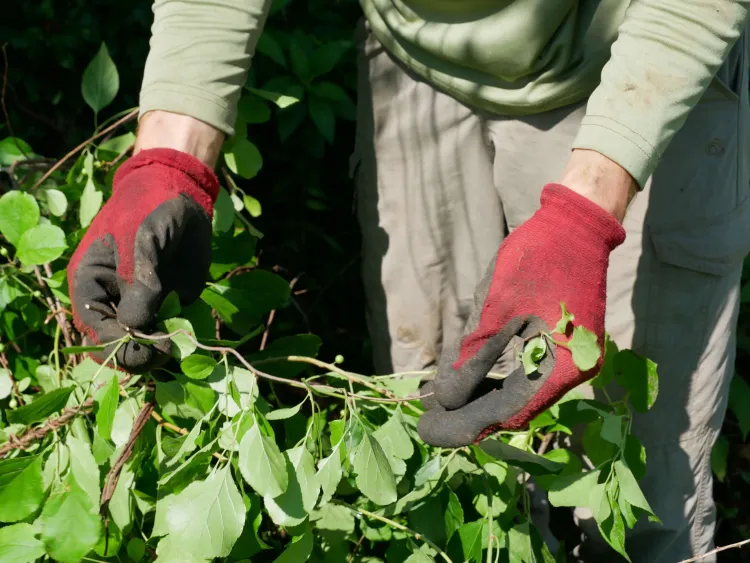
"They're not host plants for insects," Rae said. "Usually there are very few insects that feed on invasive plants because they didn't evolve here. That impacts birds, pollinators, and the larger ecosystem."
Winston Prouty’s ongoing ecological restoration efforts address a concern as this sprawling campus of community programs prepares for future development – including a planned addition of 30 housing units to help ease Brattleboro's housing shortage.
“Having Simon has been wonderful,” said Emily Webb, Campus Director at Winston Prouty. “This was a perfect opportunity to have somebody passionate about [habitat restoration] be their sole focus for the summer. Often, I'm dealing with the buildings and don't have time to deal with the 180 acres of land that we have here on campus. I'd like to continue to build on Simon's work to make sure that in five years, we're looking back and saying, ‘Wow, we're making a dent in this.’”
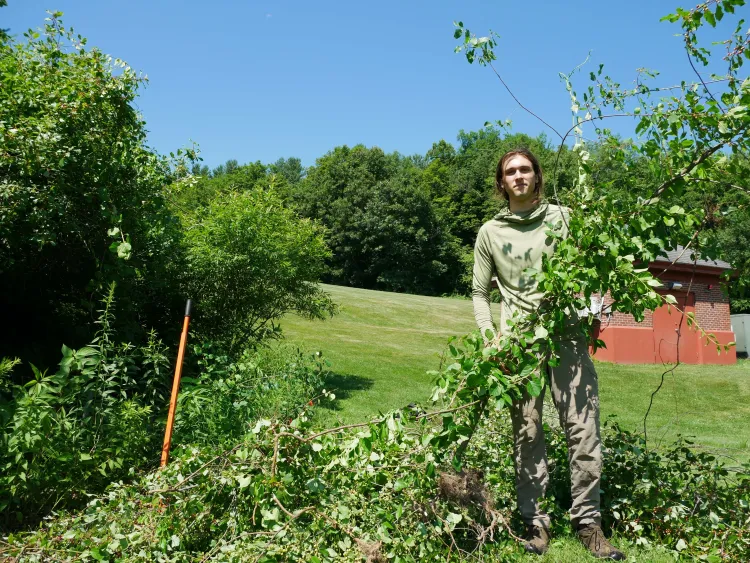
Founded as an early childhood and family support organization, Winston Prouty today serves as a hub for a wide range of educational, health care, and social service organizations. The campus houses childcare programs, family support services, hearing specialists, mental health providers, community nonprofits, and a family shelter, while also welcoming visitors to its recreational facilities and extensive trail network.
In addition to fieldwork, Rae has used mapping technology to document infestations and identify areas where restoration efforts can have the greatest impact. He is also developing educational signage to help visitors better understand both native and invasive plant species found throughout the campus.
“I think it's important for people to know the plants that are in their area. We need to be more involved in our ecosystems. They're not going to function the way they did historically if we just take a hands-off approach.”
"I hope people learn about the native plants that are here and develop an appreciation for them," Rae said. "I don't want the focus to just be on invasive species. There are a lot of really amazing native plants with unique relationships to birds and pollinators."
Rae’s internship offered him real-world experience in balancing ecological goals with limited resources.
"It's taught me how to use time effectively and think strategically about restoration," he said. "You can't tackle everything at once. You have to focus on where your efforts will have the biggest long-term impact."
The experience also helped illustrate the importance of active local community engagement when it comes to environmental stewardship.
"I think it's important for people to know the plants that are in their area," Rae said. "We need to be more involved in our ecosystems. They're not going to function the way they did historically if we just take a hands-off approach."
Simon Rae '27 recently completed the Leahy Institute's Statewide Internship Cohort and will graduate from the Rubenstein School for Environment and Natural Resources in spring 2027.