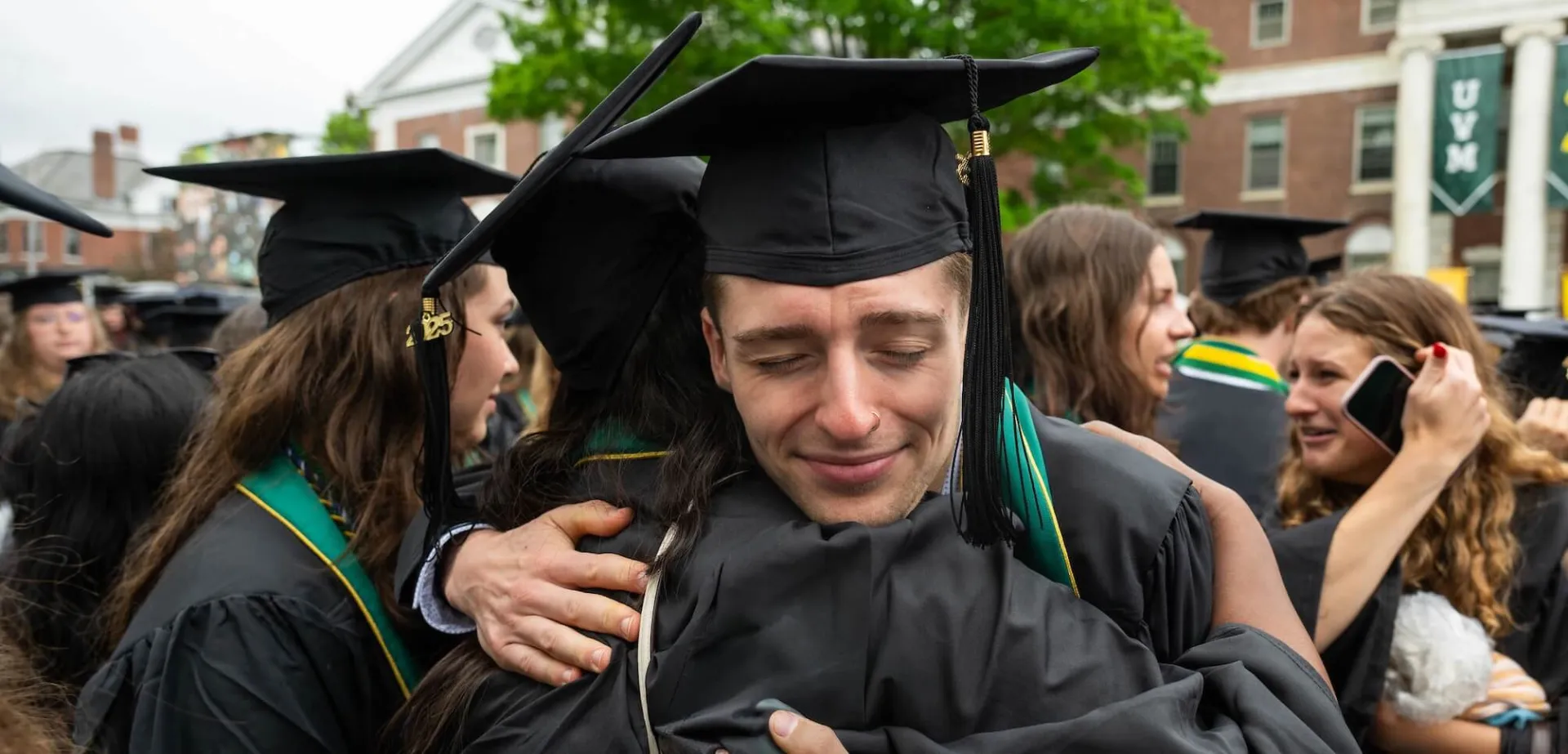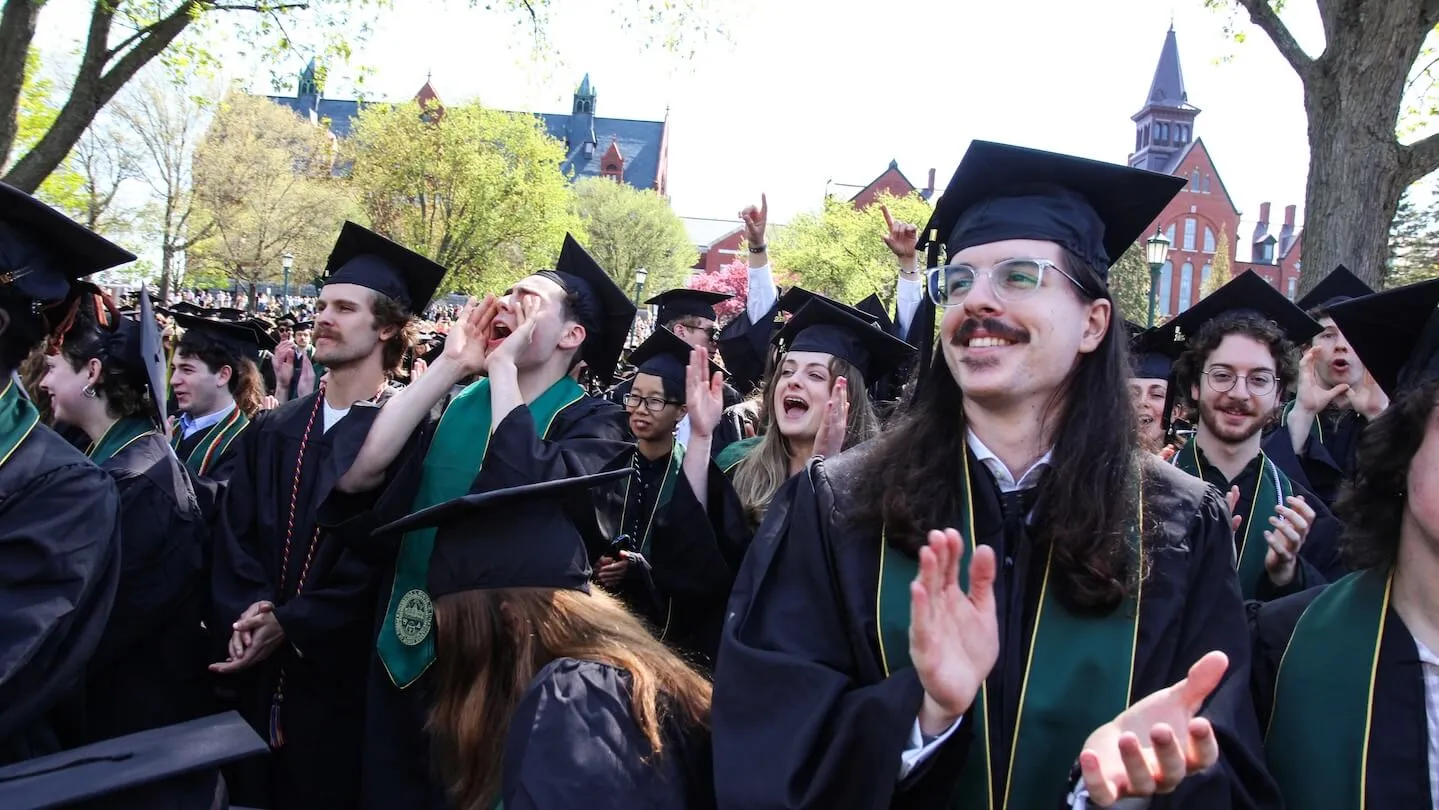
These are just a few of the ways that 300 UVM College of Agriculture and Life Sciences (CALS) undergraduates will go on to shape the world around them after receiving their diplomas on Saturday, May 16.
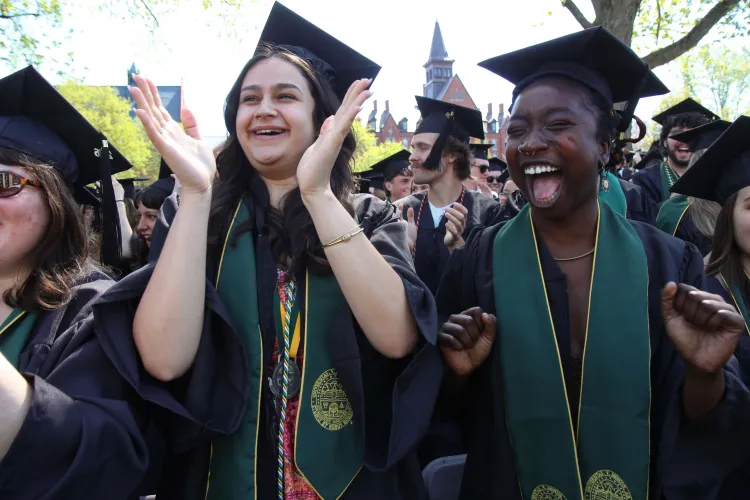
Before this weekend's commencement festivities, the CALS Class of 2026 — which includes 55 students from Vermont — already had an impressive and eclectic list of accomplishments, including:
- co-authoring a peer-reviewed study on Western diet, binge drinking and liver disease
- earning top honors in a Montpelier-based landscape architecture design contest
- founding the Vermont Green Building Network Student Chapter
- building a mushroom farming business
- winning the James D. Caponetti Undergraduate Student Research Award from the American Fern Society
During their college years, many of these CALS students combined hands-on research with on-the-ground experience in community — and fun.
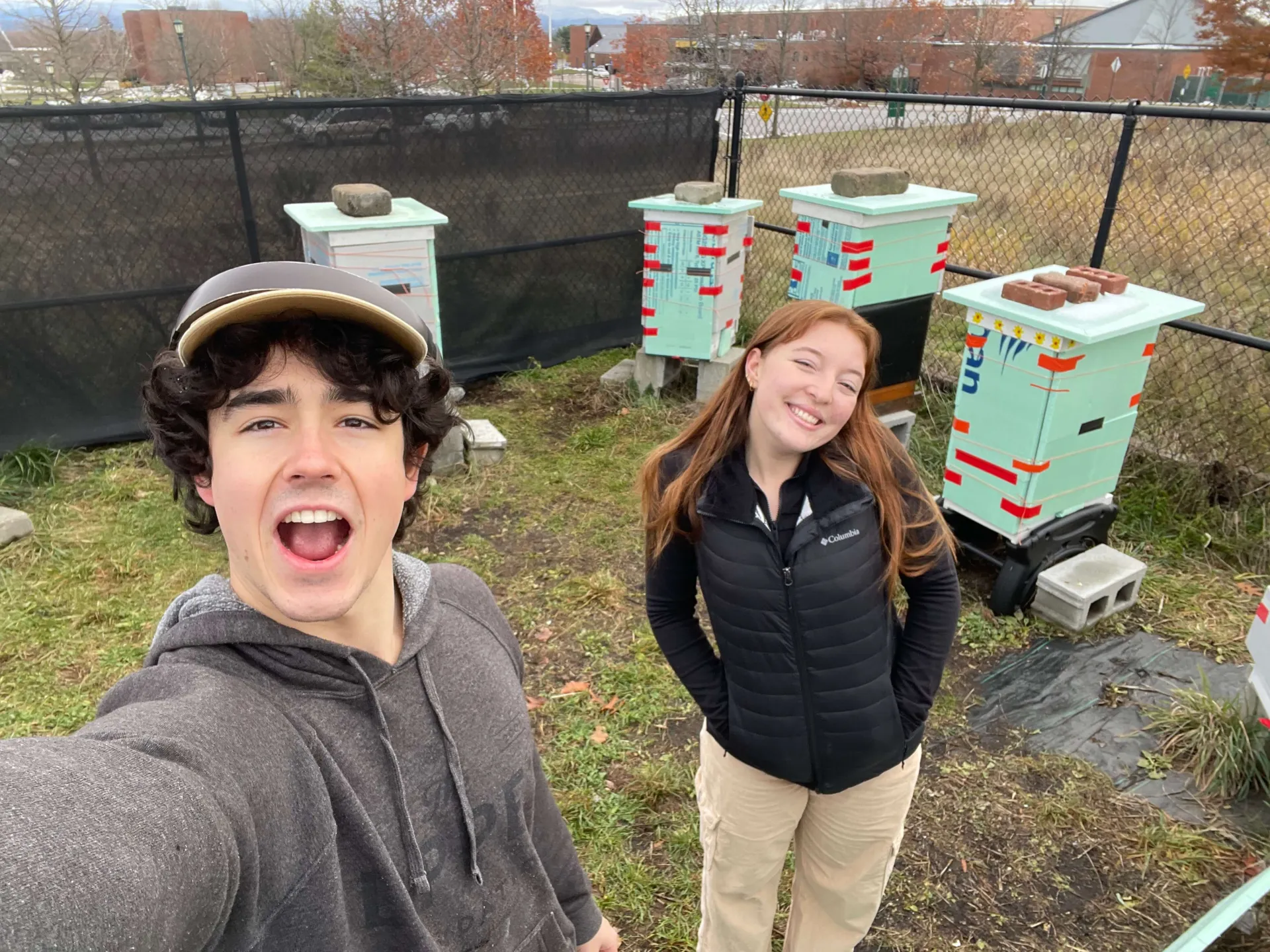
Like Ian Gregory Lee. He majored in microbiology, studied which environmental factors influence Listeria persistence in cheese-processing environments, volunteered locally with Bridges to Health as a Spanish-to-English interpreter and acted as President of the Beekeeping Club.
Lee won CALS' Lawrence K. Forcier Outstanding Senior Award for academic achievement and outstanding service. He was also chosen as CALS' commencement student speaker. And he encouraged his peers on Saturday to apply what they've learned, in the classroom and outside of it, to whatever they do next.
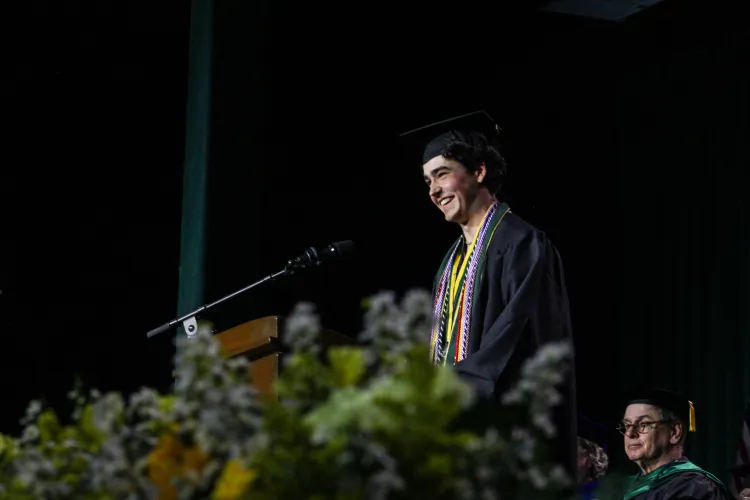
"You’ve met friends, professors, principal investigators, researchers, graduate students, and other UVM faculty that supported you, challenged you, and advised you whenever you needed it," Lee said. "This sense of community is and will be essential for the next stages of your life."
He added that one of the biggest lessons college has taught him is to prioritize spending time with the important people in his life, instead of doomscrolling (and sometimes at the sacrifice of productivity).
"Success is best measured in the quality of the small moments, the ones spent with friends, and maybe with a glass of wine, or cheeseballs, or bad reality TV," Lee said.
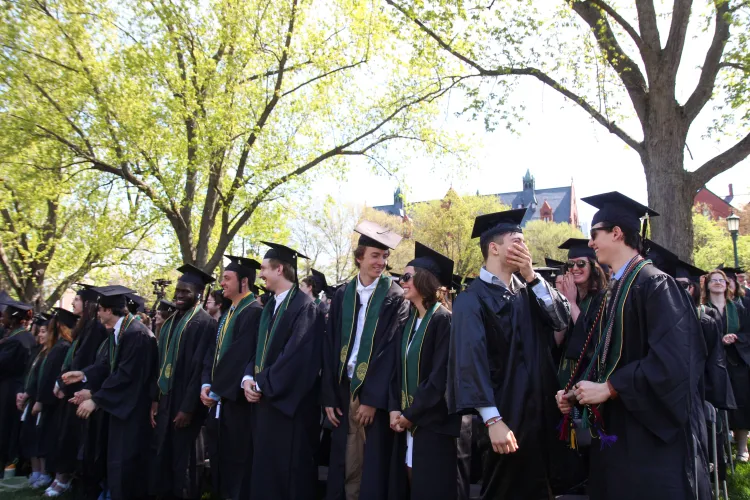
As for what success looks like for CALS graduates — Lee said carrying forward the college's vision of scientific discovery and excellence for the benefit of communities, will take courage.
"You’ve spent the last four years broadening your perspectives, fighting to understand complex science, and working alongside people from all over the U.S. and world," Lee said. "In an era where misinformation, particularly in the sciences, is wielded as a weapon, you are now uniquely equipped and wholly obligated to defend the integrity of your respective fields."
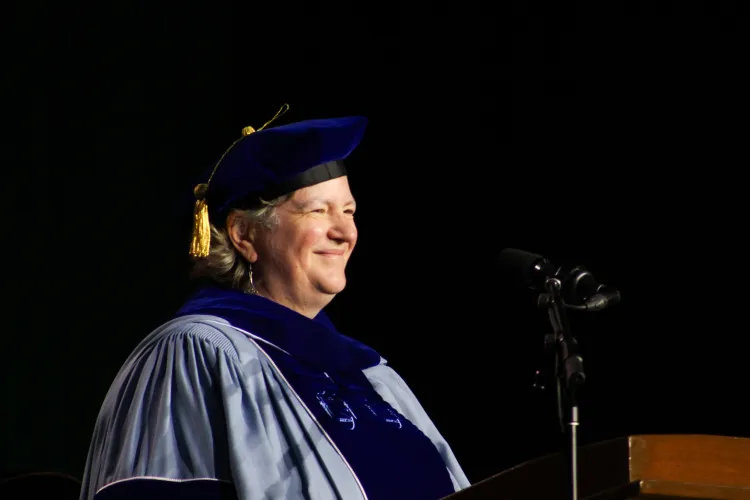
CALS Dean Dr. Linda Prokopy underlined the importance of what the graduating class will bring to the world, and the hope that each and every graduate inspires.
"You have studied food systems, ecosystems, health, biology, nutrition, policy, cells, communities, agroecology, design — not as abstract concepts, but as living, breathing challenges that shape people’s lives every day," she said. "You learned how to ask better questions, how to work across disciplines, how to listen, and how to persist when answers are not obvious. Those skills matter more now than ever."
Prokopy said that despite what the graduating class may have heard, these skills cannot be replaced by artificial intelligence.
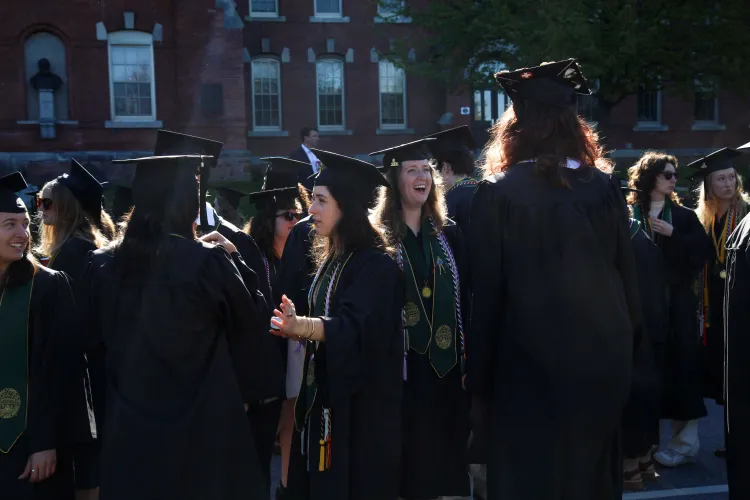
"AI can compute, predict, and automate, but it cannot love a place the way you have learned to love Vermont’s working landscapes and communities," she said. "AI cannot build trust with a farmer, an animal, a patient, a community, or a neighbor. AI cannot weigh ethics, values, and consequences with wisdom and compassion. Put simply, AI cannot care."
The effectiveness of the human act of caring is what student-elected faculty speaker Dr. Stephen Wadsworth imparted as the ceremony's final speaker. Wadsworth has been a veterinary dairy practitioner for more than four decades and has long served as a lecturer and advisor for CREAM, the on-campus dairy program.
"Cows are excellent judges of character," he said. "They don’t care about your GPA, your résumé, or your carefully curated social media presence. They care if you show up, if you’re calm, if you’re kind—and if you’re willing to do the work, especially when it’s cold, dark, and smells like…a learning opportunity."
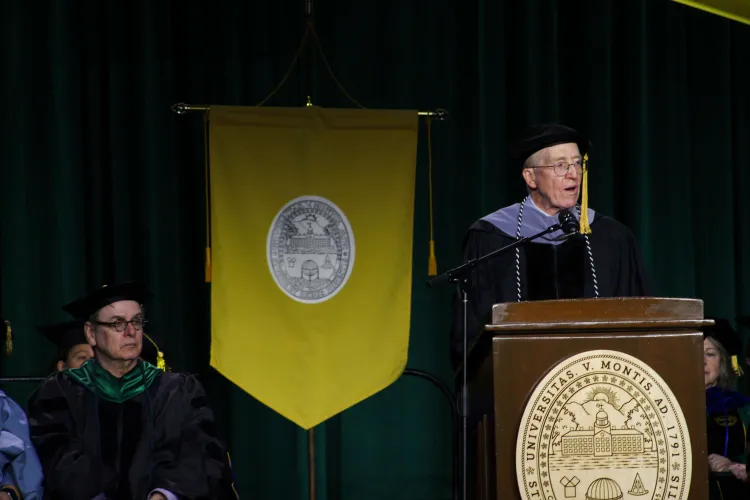
Wadsworth said that people, too, respond to the same humility, attentiveness — and ultimately, love.
"Unconditional love is not just for families or for close friends," he said. "It’s a way of moving through the world. It’s how you treat the people you work with, the animals you care for, the communities you serve."
So whether graduates end up in a barn, a clinic, a lab, or a boardroom, Wadsworth reminded them: "Be the kind of person a cow would trust."
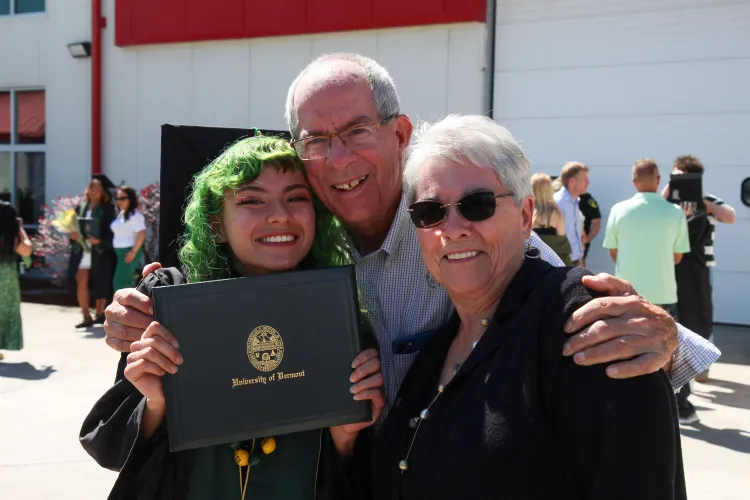
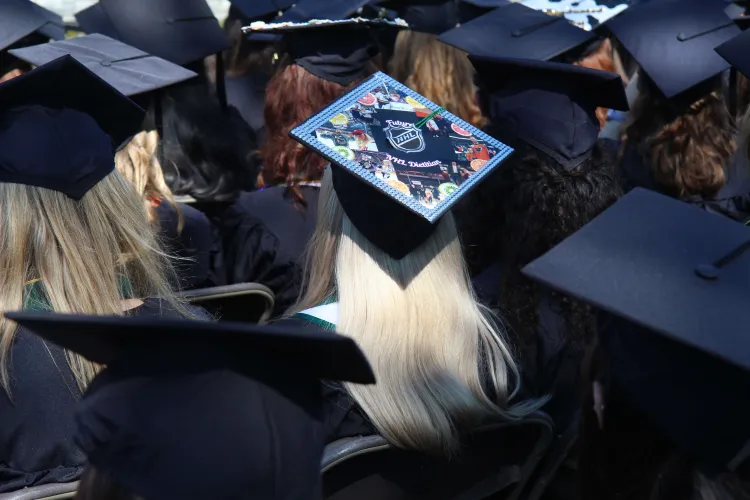
Following the commencement speeches, the CALS Class of 2026 walked across the stage to receive their diplomas. They sported graduation caps with sparkles and butterflies, cow-print and flowers, and messages like "Future NHL Dietician" and "I had the time of my life with you."
Three CALS staff and faculty members had the very special honor of presenting diplomas to their own, adult children: Associate Registrar for Student Success & Retention Jennifer Fath to Brendan Stephen Fath, Associate Registrar for Records and Registration RJ Sweeney to Connor Mark Sweeney, and Acting Chair of the Department of Plant Biology Stephen Keller to Samuel Wren Keller.
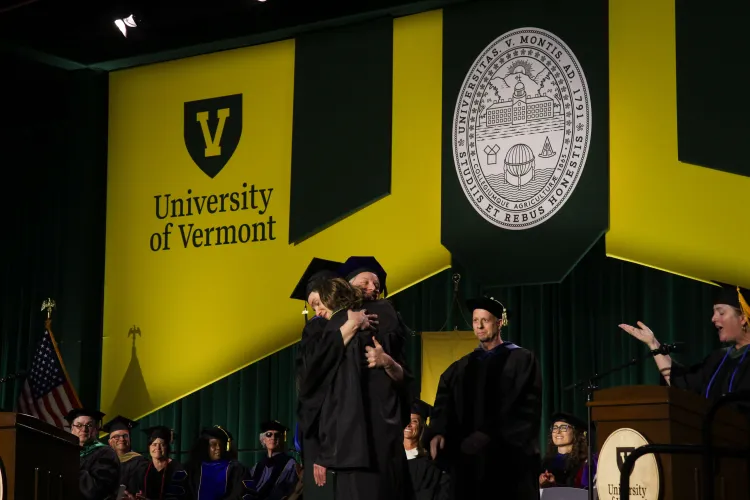
Congratulations to all of our graduates!
CALS video of highlights from both ceremonies here:
Full Live Stream of CALS ceremony here: