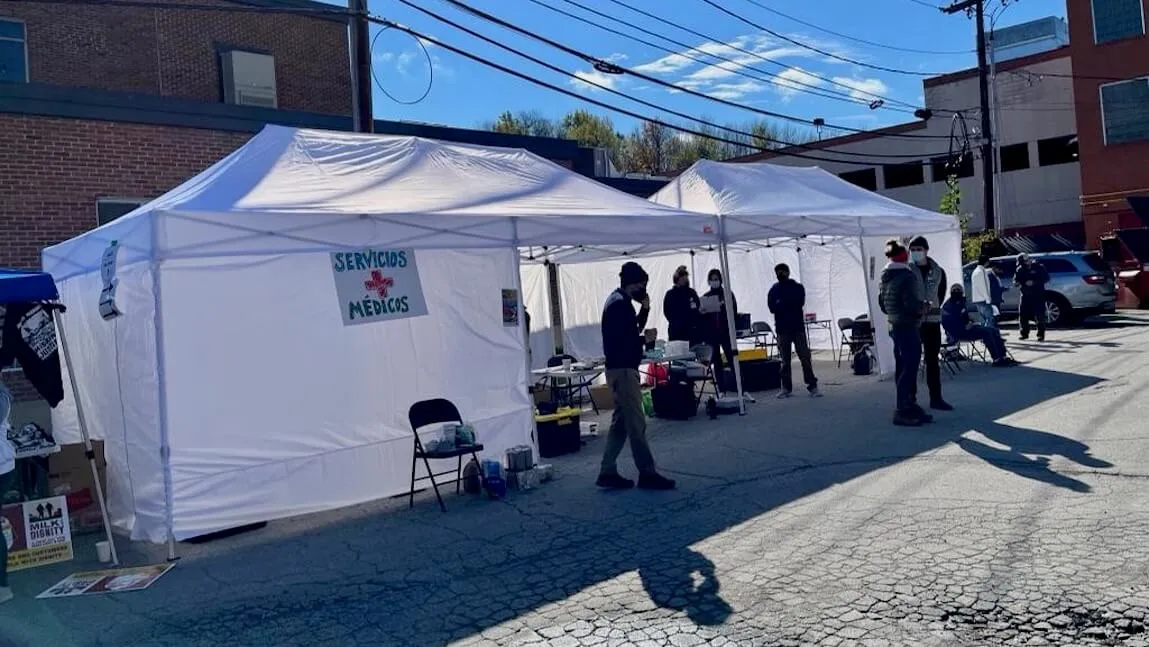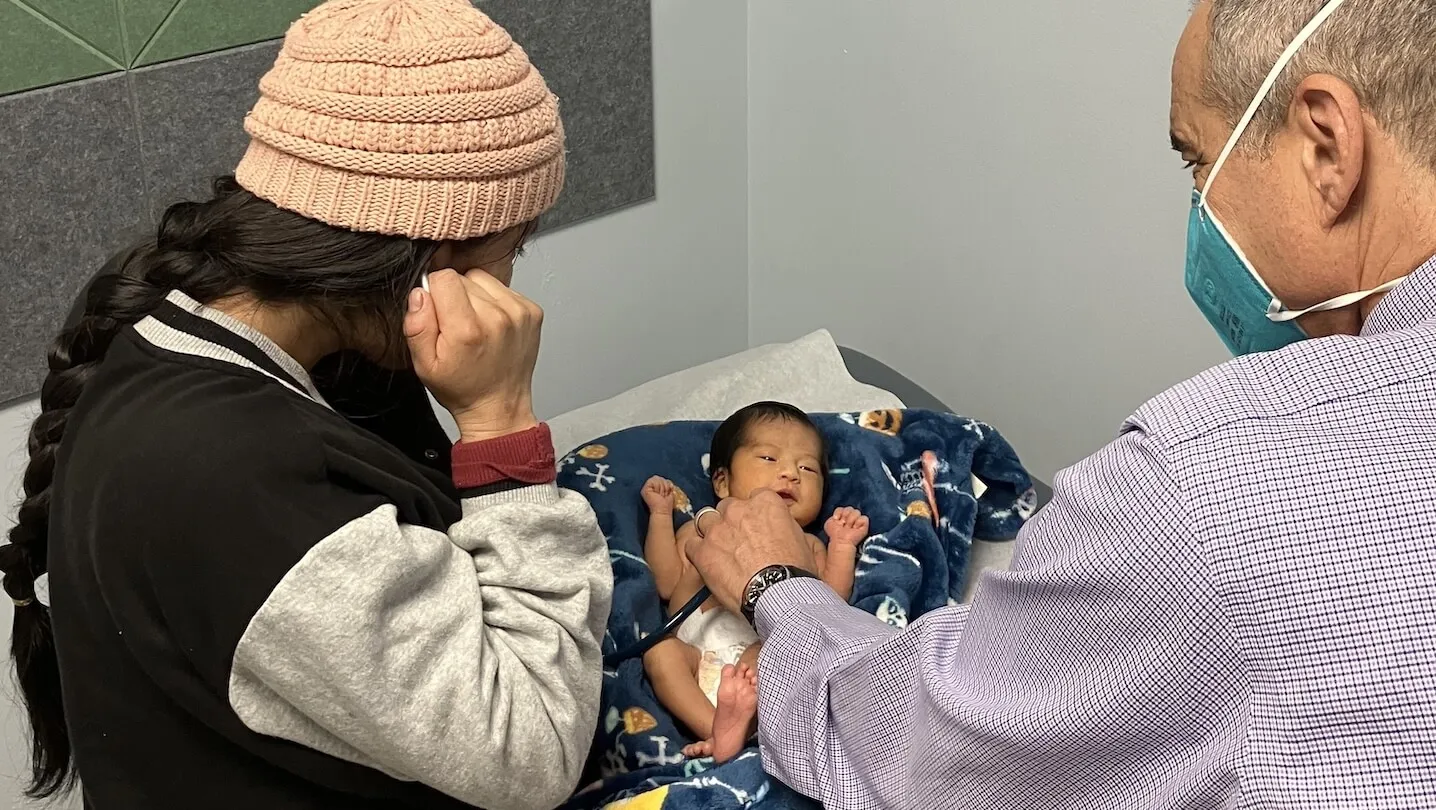
Everyone had the chance to get a plate of rice and beans, fettuccine alfredo and apples. Kids drifted to the center of the room to play while their parents fanned out to small tables at edges of the room. Around the tables, local service providers offered the adults Spanish-language interpretation and navigation through the forms for Vermont's health, social and educational systems.
Among the providers were several staff members and volunteers from the University of Vermont Extension program Bridges to Health. Fifteen families came to their table over several hours, completing insurance applications and renewals, community health center patient sign-up, and financial assistance requests. That's 15 families who, without this paperwork session that Bridges to Health helped organize, would likely have a more difficult life in a system that relies on their labor, but largely isn't set up to serve their needs.
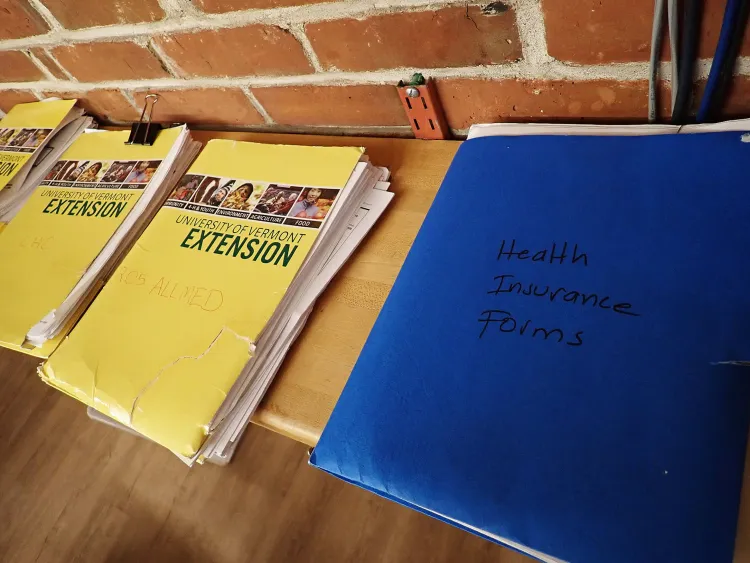
Several thousand immigrants and migrants fill workforce shortages in the Vermont economy. They do everything from milking cows to picking apples to building houses to cleaning hotel rooms. And when they get sick, or require preventative medicine like vaccines, these workers often encounter obstacles: long work schedules, not knowing where to go, lack of transportation, language and cultural unfamiliarity, prohibitive costs, all that paperwork.
Bridges to Health addresses these challenges. Led by Naomi Wolcott-MacCausland, the nationally-recognized program operates through building trusting relationships and is designed as a network of Community Health Workers, volunteers and local partners. As a result, Bridges to Health has helped connect thousands of immigrant families and migrant worker clients with care. The recipients of these services, as well as farm employers, health care providers, food security advocates and academic researchers, say the program's work is essential.
This necessary work was based out of UVM Extension for more than a decade. Now, Bridges to Health is about to take the next step in its evolution: Starting July 1, the program will become part of Vermont's Free & Referral Clinics (VFRC), the statewide association that gives funding, advocacy and technical support to health care clinics providing free services. With this move, Wolcott-MacCausland says Bridges to Health will be under the umbrella of an organization that has a clear mission alignment.
She's also hoping joining VFRC will provide more philanthropic opportunities. That's because Bridges to Health has long encountered funding challenges, and is actively fundraising to continue operations at VFRC with the staffing level – and service to clients – that’s needed.
Beginnings
Bridges to Health's roots go back to 2009. That's when Wolcott-MacCausland returned from serving in the Peace Corps in El Salvador and began milking cows on her family's dairy farm in Franklin County. She also started working for UVM Extension's Vermont Migrant Education Program, where her job was to visit farms and identify whether there were workers under the age of 22 who could be students in the program. She noticed a pattern in the relationships between the farm owners and their employees, many of whom had migrated from Mexico to fill dairy labor shortages.
"There were a lot of issues that were centered around poor communication and different cultural perspectives and beliefs," she said.
In 2010, she helped secure grant funding from Extension for a labor management pilot project. As Wolcott-MacCausland fielded requests from both Franklin County farm owners and farmworkers, she realized that half of her logged calls were related to health.
"There were just so many questions about health care access," she said. "And so I was just trying to figure it out as I went along."
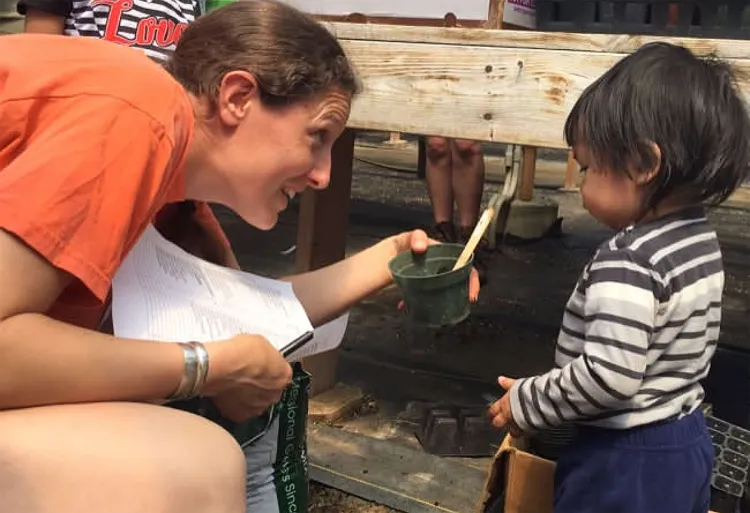
Wolcott-MacCausland secured funding from the Bi-State Primary Care Association and collaborated with NOTCH (the Federally Qualified Health Center in Franklin County) and the Family Medicine Residency program at UVM to offer monthly general wellness checks with farmworkers.
"I was able to talk to farmworkers and say, 'Is this something you would want?' And then go back to farm owners to say, 'The farm workers really would like us to come, is that okay? What's the space we could use?''' she said.
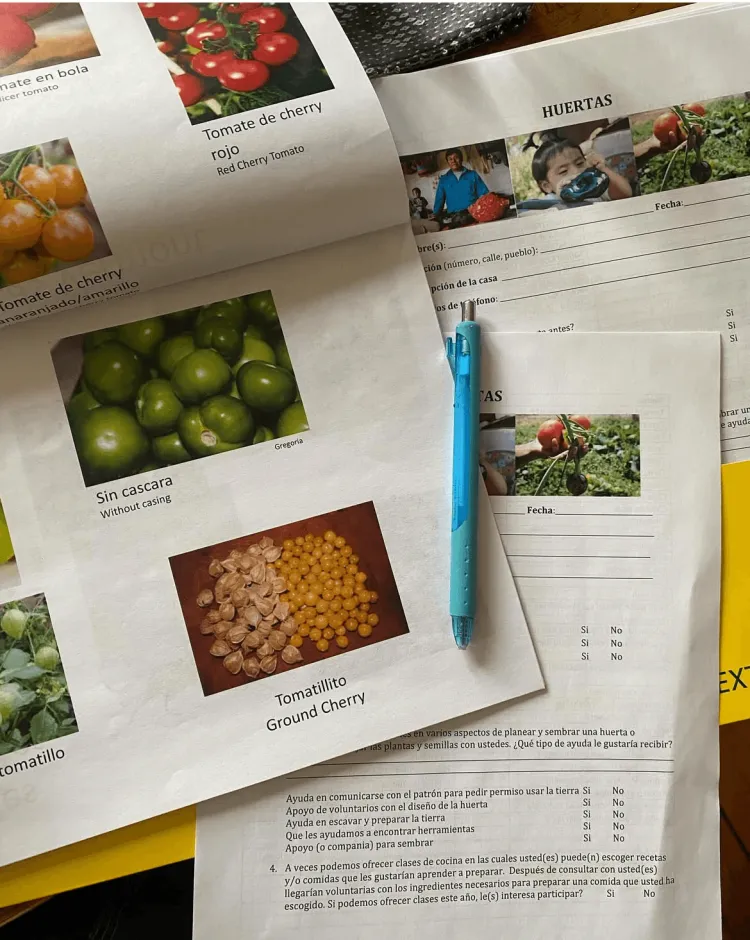
Somewhat inadvertently, but in response to what was needed on farms, Wolcott-MacCausland became Bridges to Health's early model of a Community Health Worker. She also shared extra seeds and plant starts with farmworkers, which gave birth to Huertas, the food security project.
What was needed
In its early years, Bridges to Health expanded by paying a small percentage of the salaries for Vermont Migrant Education Program bilingual outreach staff. When those staff then visited farms in key parts of the state, they could coordinate between farmworkers, health clinics and volunteer drivers to get farmworkers access to medical and dental care. The program also continued collaborating closely with the UVM [now-Larner] College of Medicine and Bi-State Primary Care Association, as well as Open Door Clinic, which started serving the Addison County migrant farmworker community in 2009.
From Open Door Clinic's and Bridges to Health's joint outreach efforts, they discovered the lack of — and need for — culturally- and linguistically-appropriate ways to address mental health. That led to El Viaje Más Caro/The Most Costly Journey, a series of stories about survival and resilience told by Latino Vermont farmworkers and drawn by New England cartoonists.
The nonfiction comics provided a tool for discussing mental health among farmworkers.
They also provided education for a broader community after El Viaje Más Caro/The Most Costly Journey became a published book first in English in 2021, then in Spanish in 2023. Vermont Humanities chose The Most Costly Journey as its "Vermont Reads" statewide book in 2022.
"Which resulted in thousands and thousands of copies of that book being read, something like 120 community-read events happening around it," said UVM Associate Professor of Anthropology Teresa Mares, who helped produce El Viaje Más Caro/The Most Costly Journey. "It has this whole second life as, frankly, a way for white or non-immigrant folks in New England to learn about this community."
Mares studies the connection between food and migration. When Mares joined UVM in 2011, she said Wolcott-MacCausland was her first stop for learning about the Vermont farmworker community. That's how Mares got involved with the comics project, and how she became co-directors with Wolcott-MacCausland for Huertas. The kitchen garden project has operated for 15 years at several dozen Vermont dairy farms, with the help of nearly 40 UVM student interns.
A growing program for a growing population
The longevity, deep knowledge and cultural context built between Bridges to Health and the Latino dairy farmworker community would become increasingly appreciated during the pandemic. In 2020, Vermont health officials came to rely on this program and similar partners to reach underserved populations with public health information and services. And the state allocated funds accordingly.
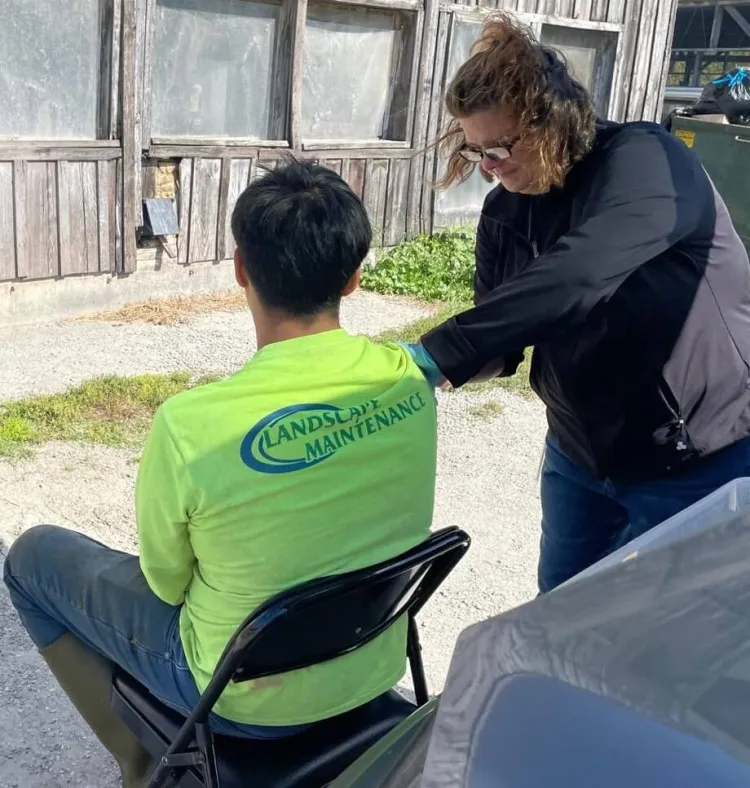
As a result, Bridges to Health hired part-time nurses and a nurse practitioner; provided on-farm COVID-19 screening, care, educational materials and, eventually, vaccines; coordinated immunization clinics; connected 70 households with over 1,000 meals; and surveyed Jamaican H2A workers on 30 farms about their health needs.
More funding in 2022 allowed the program to hire full-time Community Health Workers as well as a coordinator. The migrant worker and immigrant family population continued to expand in Vermont, reaching around 5,000 people in 2025. Bridges to Health has noted increasing instances of children and pregnant people, as well as more workers entering non-agricultural sectors.
"We've just seen this crescendo of people and of service need," said Claire Bove, the Bridges to Health Community Health Worker Program Coordinator. "As much as we grow the team, we find demand, and need to meet that, and it's been really fast-paced. The amount of clients we've worked with every year just seems to kind of exponentially grow."
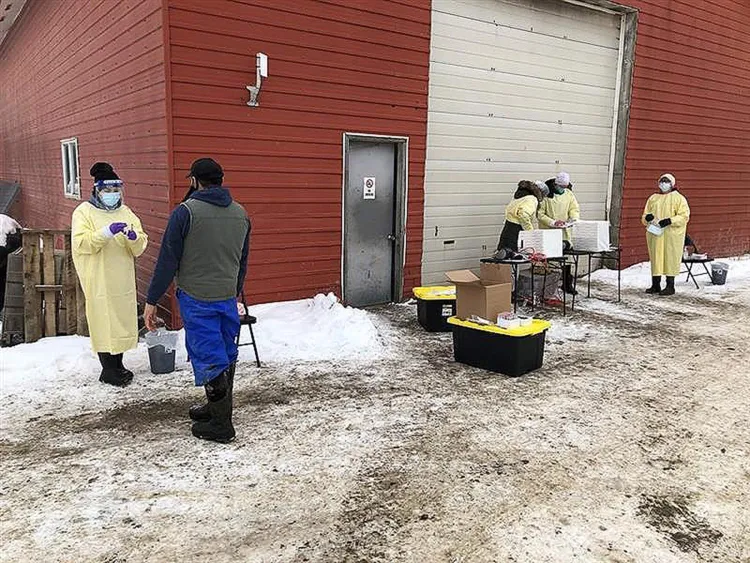
The Bridges to Health team currently has seven Community Health Workers. In the last year, the team served 1,461 immigrant and migrant workers and family members from 25 countries across 122 cities and towns within all 14 counties of Vermont. Day-to-day, that can mean confirming a clinic appointment with a client on WhatsApp, and finding a volunteer to drive a client, and being on-call 24/7 when a client is getting surgery or giving birth. And their outcomes can vary from arranging for a child to see the dentist, to reinstating a mother's WIC benefits, or helping a young man secure a brain tumor diagnosis and treatment.
Several team members have also been pursuing additional training, as well as advanced degrees at UVM, to enhance their skillset. One Community Health Worker became a doula last year to better support clients giving birth. Another is currently finishing a Master's in Clinical Mental Health so she can offer counseling in Spanish.
"A lot of the team has been with the program since that transition during or right after COVID," Bove said. "Which just speaks to, I think, our team and just how much we all love what we do, the kind of specificity of our work. I think it really is a calling for many of us."
A lasting impact
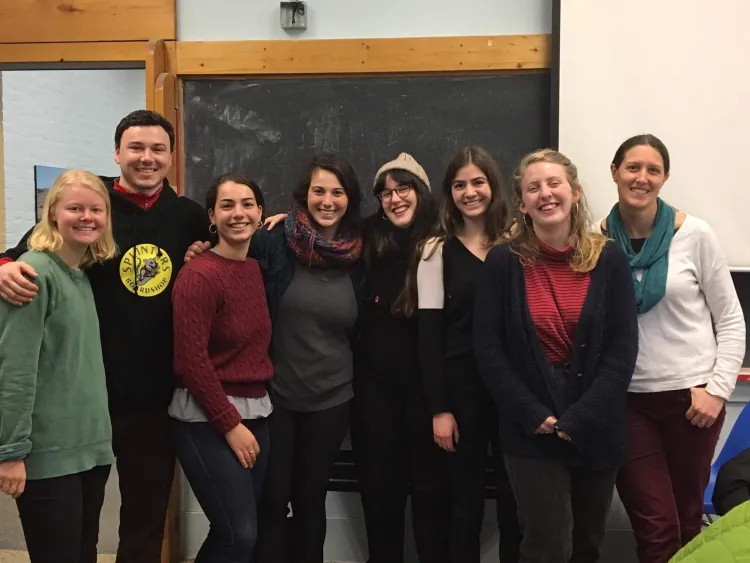
The Bridges to Health team is noticing some reduction in barriers overall because of its 60-70 volunteers, and because of reciprocity from dozens of community organizations. People and providers beyond the Bridges to Health staff are giving rides, offering interpretation services, and setting up on-farm vaccination clinics.
“There are these internal champions and partners helping us increase our reach," Wolcott-MacCausland said. "The more that the systems can include the work of filling those gaps, the more people we can help."
Bridges to Health's attention to filling those gaps has been recognized nationally by the National Organization of State Offices of Rural Health, which named Wolcott-MacCausland a 2023 Community Star. That award is given to individuals and organizations who "exemplify the true spirit of collaboration, turning challenges into opportunities, ensuring access to quality care, and fostering a sense of unity and support within our rural communities."
The value of Bridges to Health's work is also recognized across Vermont, first by the clients themselves.
"For me, the most important things about the Community Health Worker are that they are friendly and navigate my needs with a lot of discretion," a client said in a feedback survey last year. "She listens and helps me with information about all different aspects of health. She provides these services with patience, comprehension, empathy and, above all, humane treatment."
Dairy farmers, too, appreciate the program.
"Our farmer‑owners consistently tell us that when a farmworker is sick, injured, pregnant, or in crisis, Bridges to Health is who they call," wrote Agri-Mark Vice President, Economics & Legislative Affairs Catherine de Ronde in recent legislative testimony. "The program’s presence helps farms deliver improved farmworker well‑being, which in turn ensures smoother operations and enhanced animal care."
Food security advocates have called Bridges to Health "an essential resource" for immigrant families and migrant workers in the state. Hunger Free Vermont has said the population is the "most vulnerable to experiencing severe hunger in our state," according to research and that organization's own community outreach.
And numerous health providers praise the care, plus the health system cost savings, that Bridges to Health makes possible.
"Without support from their skilled staff and community health workers, most migrants forgo preventative and primary care until they are seriously ill and present in ER's for more costly and complicated care," said Paul Capcara, a registered nurse and epidemiologist who is also a Bridges to Health volunteer. "[The program] also helps ensure they receive the follow-up treatment and care they need, including prescription medications, which is crucial in reducing the severity, duration, and transmissibility of illnesses."
The National Center for Farmworker Health has praised Bridges to Health's "rockstar" partnership on a rapid community survey about avian influenza preparedness in March 2025. The resulting report was shared with the Department of Health — giving Vermont state officials a baseline understanding of dairy worker knowledge, current use of personal protective equipment, and comfort levels with a potential vaccine in case of a H5N1 outbreak.
And that's important not just for the agricultural community, but for the state as a whole, said UVM Community Development and Applied Economics Department Associate Professor Emeritus Dan Baker.
"People who don’t work directly with farmers or migrant farmworkers, depend on that kind of outreach and that early detection and that early information-sharing," he said. "Naomi [Wolcott-MacCausland and the Bridges to Health team] knows what's happening, and she knows what's happening oftentimes well in advance of other people.”
Baker added: “I think it's really important we continue to have ... that service."
The future
What is certain about Bridges to Health is that the program's priorities will remain the same as they always have been: the people they serve, and the team of community health workers, volunteers and local partners that enable that service.
"We couldn’t exist and do this work without them," Wolcott-MacCausland said.
To make a private donation, visit the fundraiser website organized by Vermont’s Free & Referral Clinics.