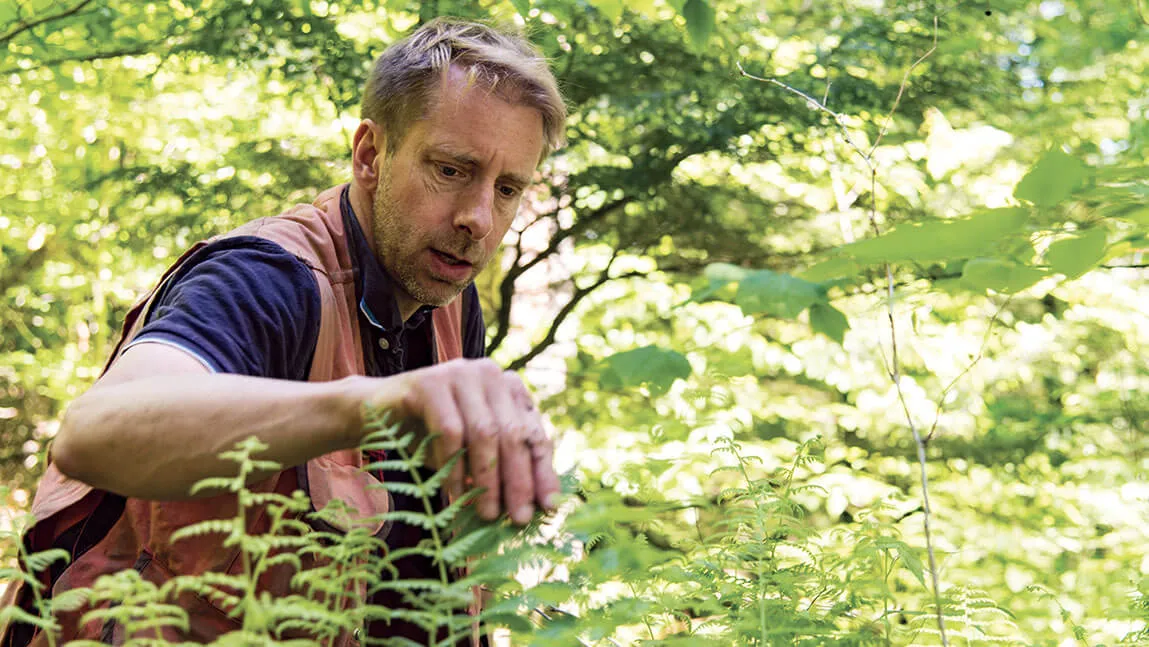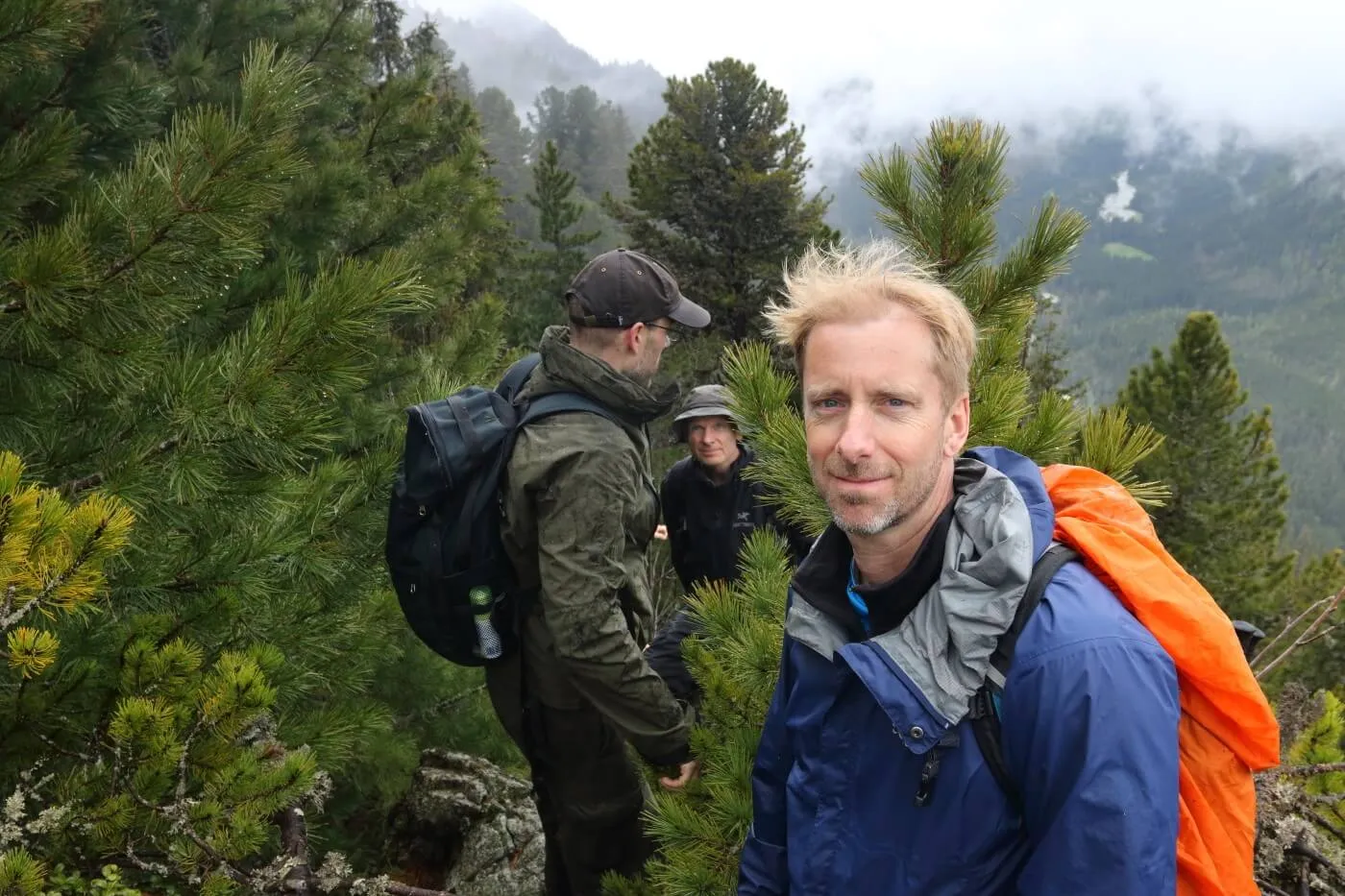
William Keeton is a boots-on-the-ground kind of guy. The ground, in this case, being forests, specifically old-growth forests.
“The experience of being in an old-growth forest is unlike anything else,” the forest ecologist said. “They are such rich, diverse environments.”
They really are. Old-growth forests serve as carbon reservoirs, keeping climate-warming greenhouse gas emissions out of the atmosphere. These structurally complex forests support a rich slate of plant, animal, and fungi species, and provide clean air and water.
Keeton, who is celebrating 25 years at the University of Vermont as a professor in the Rubenstein School of Environment and Natural Resources, has studied quite a few old-growth forests—in Vermont, the Adirondacks, the Pacific Northwest, Patagonia, Bhutan, and in Europe’s second-longest mountain range, the Carpathian Mountains.
Old-growth forests face a myriad of pressures from a warming climate and human activities. For Keeton, that’s also an opportunity. He studies, among other things, how new forestry practices could be used to both restore degraded forests, as well as emulate some of the structure and function of old-growth forests in younger forests, to benefit the environment, biodiversity and the climate.
“With so many terrible environmental crises in the world and so many things to be upset about these days, the idea that there was something really positive and beneficial that we might do by trying to restore something that we've lost, like old-growth forests, that idea really excited me,” Keeton said.
With what seems to be an endless well of curiosity and scientific rigor, the Gund Fellow has established himself as a valuable collaborator and trusted colleague. Thirty-five-plus years into his career, Keeton continues to bring excitement to his work, in the classroom at UVM and around the world into international climate policy.
Attached to Nature
Forests are in Keeton’s blood, but becoming a scientist wasn’t always a given.
Growing up outside of Ithaca, New York, he spent much of his childhood roaming through the forested lands. In high school, Keeton got his first taste of managing them, becoming the steward for some of his family’s property that was eventually donated to a local land trust for conservation.
“That experience of spending so much time in the woods, and of course, summer camp and everything else, I think, absolutely shaped who I am today,” Keeton said. “I developed this strong attachment to nature.”
But he also had other interests.
“I was also interested in history and other things and wasn't entirely sure what I wanted to study in college, but I ended up studying natural resources,” he said. He got a bachelor's degree at Cornell University, which he said provided a solid foundation. After a stint in Washington, D.C., Keeton got a master’s degree from what was then the Yale School of Forestry.
When he graduated in 1994, forest policy burst into the national spotlight.
In the 1990s, the so-called “timber wars” pitted environmentalists and the logging industry against one another. A few years later, the Clinton administration released the Northwest Forest Plan. It established a management model that aimed to protect endangered species like the northern spotted owl and its habitat, old-growth forest – a significant shift for the region.
Keeton wanted to be part of the action and took a role at The Wilderness Society in Seattle. Later, he would get his PhD at the University of Washington, where he worked with pioneering old-growth forest ecologist, Jerry Franklin.
It wasn’t part of the plan to move back to the East Coast, he said.
“Vermont was basically the only place east of the Mississippi that I would have considered moving,” he said. “And I thought, ‘OK, I'll give this a shot.’ I applied for the job, and I've been here ever since.”
Open to ‘New Ideas’
In 2001, Dana Warren was working on his master’s degree, when, at the Ecological Society of America conference, he ended up sitting next to Keeton, who was a newly minted professor at UVM.
The two chatted for an hour about old-growth forests in the Northeast and made plans to take a walk together later in the Adirondacks. Warren said it was an experience that changed the trajectory of his career.
“I had never taken a forest ecology class so the perspectives he was providing and the way he saw the forest were eye-opening to me and have continued to stick with me,” he said.
Warren, who is now a stream ecologist and an associate professor in the Department of Forest Ecosystems and Society at Oregon State University, has gone on to work with Keeton on a series of research projects. He counts the forest ecologist as an important collaborator and someone who has influenced much of his work.
“Bill is always open to talk about new ideas,” Warren said. “He cared about the content and ideas more than our respective places on the academic hierarchy.”
That ethos has permeated Keeton’s career, including more than 20 years of work thousands of miles away in the Carpathian Mountains.
Carpathians
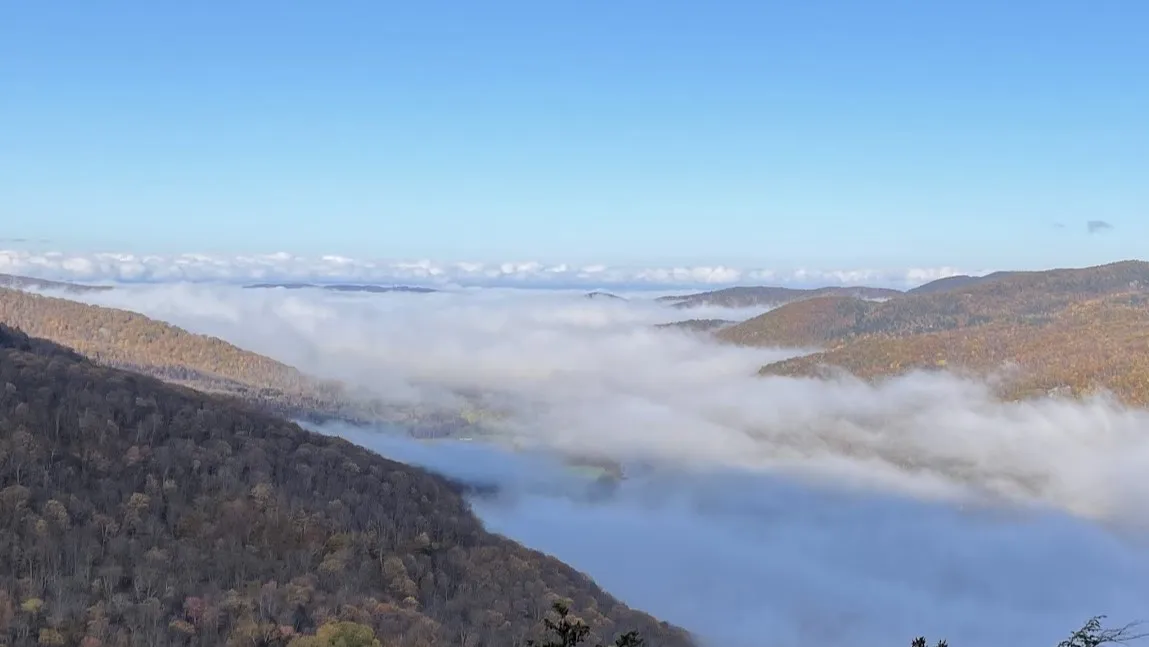
In 2005, Keeton learned about the Carpathians and its vast areas of old-growth forest. The more than 900-mile-long mountain range spans eight European countries: the Czech Republic, Poland, Hungary, Austria, Slovakia, Ukraine, Romania and Serbia. It’s critically important both environmentally and culturally.
“The Carpathians are sheltering or harboring substantial areas of old-growth forests, much larger areas than you can find in in most of the rest of Europe,” Keeton said. “And not just old- growth forests, but wildlife and biota that have been lost most places.”
That includes large predators like wolves, brown bears and lynx. Like many ecosystems, the region faces climate vulnerabilities like more fires and flooding. Invasive species and illegal logging are issues as well. All affect the amount of carbon stored in the forests, releasing the greenhouse gas into the atmosphere.
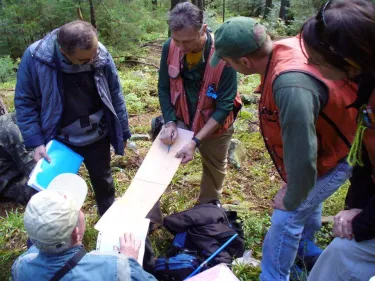
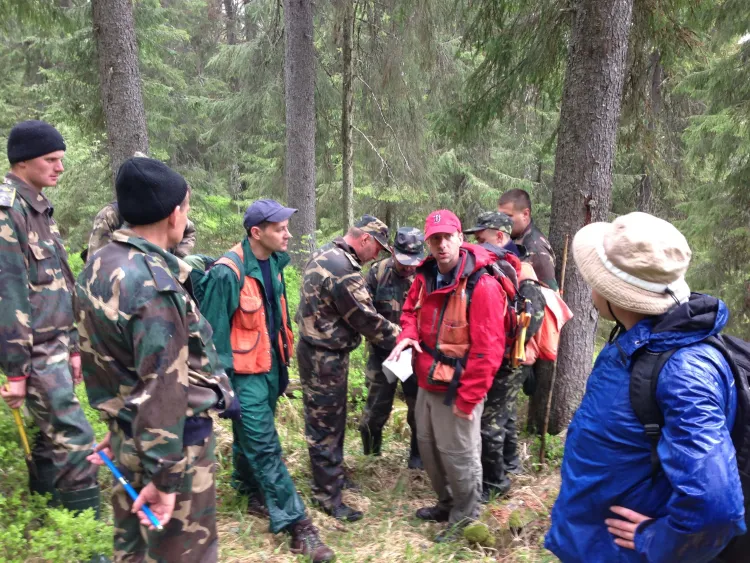
Over the years, Keeton led a travel course to Ukraine and has brought UVM grad students overseas to do research. He’s especially proud of his role in facilitating information exchanges across the Atlantic. With support from the Trust for Mutual Understanding, Keeton has hosted students and researchers at UVM from the region and sent many from UVM to the Carpathians. The Gund Institute for Environment has also provided financial support for Keeton’s scientific exchanges.
“We can learn a lot from each other,” he said. “We can share and transfer ideas and information. The Green Mountains and the Appalachians, are very similar ecologically to the Carpathians.”
Réka Aszalós, with the Centre for Ecological Research Hungary, participated in one of the exchanges. She said it "greatly broadened" her scientific perspective.
"We became familiar with concepts still little known in East-Central Europe, such as disturbance-based forest ecology and natural dynamics silviculture," she said.
As Keeton’s work in the region grew, so too did his reputation as a researcher and communicator. For years, he has worked with Science for the Carpathians, a network of scientists who study the range, and developed deep relationships across the continent.
That includes with Elena Matei, a professor of geography at the University of Bucharest in Romania.
“Dr. Keeton’s sustained commitment to international collaboration, scientific excellence, and the advancement of environmental research in the Carpathian region makes him an exceptional colleague,” she said.
In 2022, the university awarded Keeton an honorary degree for his contributions to faculty, students, and the field.
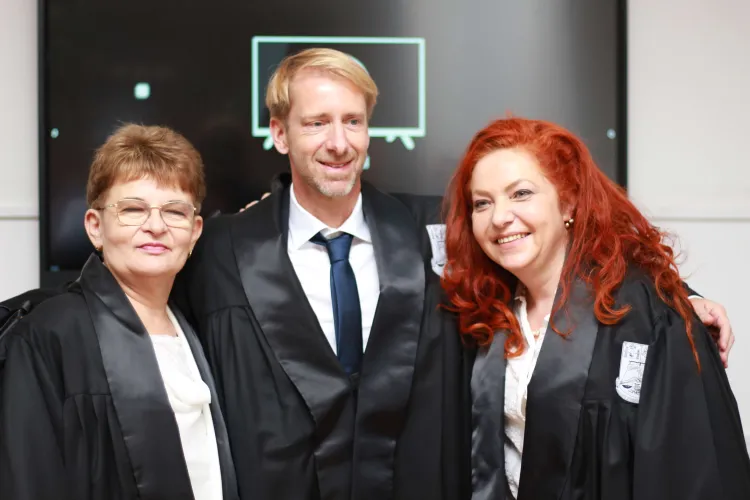
Martin Mikolas, a forest ecologist specializing in forest biodiversity in the Carpathians, called Keeton “one of the most experienced researchers” working in the region.
“But what I particularly appreciate is that, beyond academia, he actively bridges science and practice by engaging with foresters and decision-makers — for example through meetings of the Carpathian Convention — clearly communicating the importance of conserving old-growth forests and improving management quality,” he said.
Marcel Mindrescu, a professor in the Department of Geography at the University of Suceava in Romania has collaborated with Keeton for more than two decades on multiple projects, including a science-based initiative to establish a peace park on the eastern border of the European Union, in the Carpathians between Romania and Ukraine.
He described Keeton as both an “excellent collaborator” and a “true friend.”
“He has consistently helped refine ideas, responded thoughtfully to requests, and contributed to identifying the best possible answers to our scientific questions,” he said.
Future of the Carpathians
Signed in 2003, the Carpathian Convention is an international agreement that calls for seven Carpathian countries to work together to protect, preserve and provide guidance for sustainable development in the region. The Secretariat of the Carpathian Convention is hosted by the United Nations Environment Programme, or UNEP.
Keeton's reputation for collaboration was one reason the American was asked to compile a landmark assessment of climate risks to region, under the Carpathian Convention.
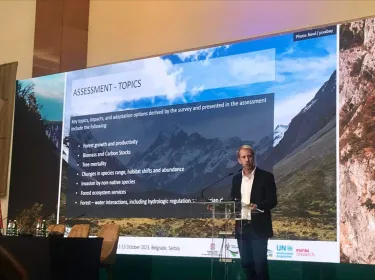
The 70-page document outlines both the risks and possible adaptation approaches. It was adopted by the Convention in 2023 and released publicly late last year.
“It’s really an experts-based approach,” Keeton said, “I'm very hopeful that now that we finally have this report that says, ‘this is what people think is important,’ that it'll help move the needle, and especially this process under the Carpathian Convention.”
For example, the report calls out reforestation, or planting trees, as a tool to help take carbon out of the atmosphere. It’s something, Keeton said, many countries are interested in doing more of.
Moving forward, he plans to continue to be one of the people doing that work.
“I think that’s where my interests lie in the next couple of years: working with people in the region to translate this into something that’s actionable."