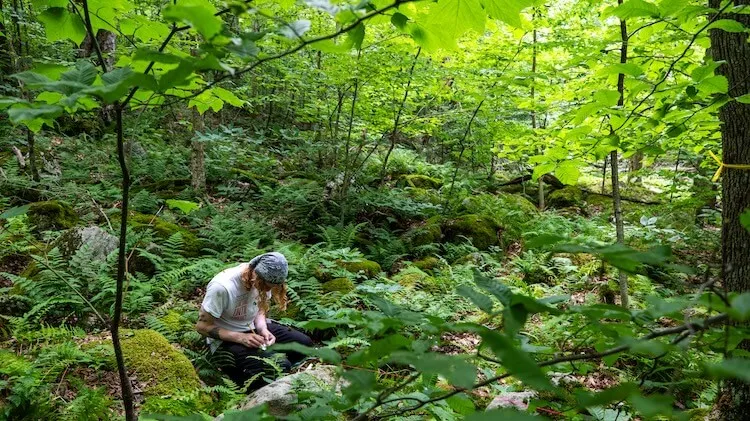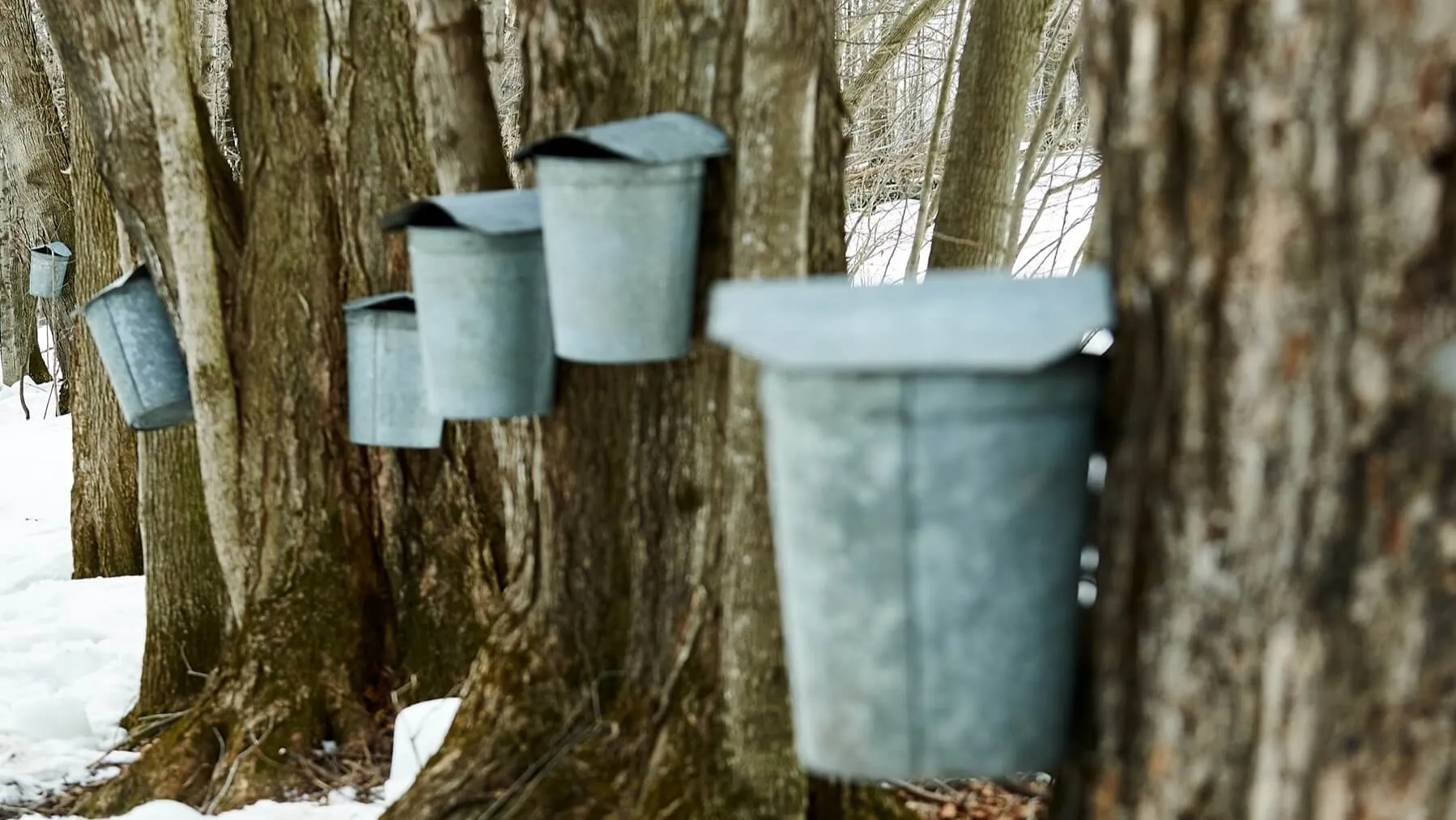
Steam billowing from sugarhouse stacks is a familiar site across Vermont’s soggy mud season landscape. Soon, the songs of returning migratory birds will echo above sugarbush floors spotted with yellow trout lilies and unfurling ferns, red efts maneuvering among them.
That rich tableau doesn’t happen by accident, according to a new UVM study.
“(Vermont sugarmakers) said that being forest owners, one of their objectives for doing forest management is to help wildlife,” says lead study author and Gund Institute doctoral alum Daniel Pratson.
In a state where most land is forested, and most forest land is in private hands, landowners’ choices have an outsized effect on overall biodiversity. Maple sugarmakers in particular face seemingly competing interests—between running a financially sustainable operation or keeping environmental concerns at the forefront.
But, says Pratson, their study, which appeared last month in the journal Trees, Forests and People, revealed otherwise.
“I think the coolest part about this paper is that it shows that sugarmakers with operations of all different sizes can do things that move the needle to enhance biodiversity, many at minimal costs,” says Pratson, now a natural resources extension specialist at the University of Maryland.
The researchers found that two-thirds of Vermont sugarbush operators were taking one or more steps to improve biodiversity in their forests—and that these biodiversity-friendly operations saw no increase in production costs, nor any loss in sap production.
Biodiversity-friendly practices in a sugarbush can vary from following a formal forest management plan, maintaining organic protocols, or participating in Audubon Vermont’s Bird-Friendly Maple project, to individual steps like leaving snags (standing dead trees) and removing invasive species. Some of these practices compound, helping the bottom line and biodiversity at once.
For example, says study coauthor and Gund Faculty Fellow Brendan Fisher, leaving snags in the sugarbush is cheaper than hiring or putting in the labor to remove them. And snags provide habitat for birds and other wildlife, as well as food for insects, which birds like woodpeckers eat.
“There’s a whole list of biodiversity-friendly ways that owners can manage their forests, and some of them are about not doing things,” says Fisher, a professor in UVM’s Rubenstein School of Environment and Natural Resources.
The team found that there was no difference in production per acre among sugaring operations using multiple biodiversity-friendly sugaring methods versus those employing only one or two.
In other words, says Fisher, “Regardless of whether they’re in the programs like organic or bird-friendly maple, they're still doing good stuff for biodiversity. And doing more of that good stuff doesn't cost you.”
Annually, Vermont produces about seven million annual gallons of maple syrup in operations that range from family sugar shacks to a handful of very large operations, and everything in between, the team says. The researchers looked at survey responses from 70 Vermont maple sugarmakers, covering the range from fewer than 100 hand-collected taps to automated outfits of over 90,000 taps.
They asked sugarmakers about their operational costs, such as forest management labor, repairs, and harvest-related expenditures, then converted these totals to how much each sugaring operation was spending per acre each year. They also looked at sap production for each operation and determined their average annual yield per acre. Comparing these figures allowed the researchers to conclude that biodiversity-friendly sugarmakers weren’t losing money or sacrificing sap production for their efforts.
It helped that the sugarmakers in the study tended to be a data-focused bunch, Pratson says.
“These sugarmakers are really good data collectors—even the ones running tiny operations,” he says. “When you go to a sugarhouse, oftentimes, people write on the walls, for each year, the date the sap starts running, the date it stops, and how much they collect in between.”
Looking forward, the researchers see application for the results beyond Vermont, because although the state is the largest American maple producer, many other states also make syrup, and Canada produces far more than all U.S. states combined.
“Maple production is a big economic driver, and these results could be really impactful for the syrup industry to take to heart and say, ‘great, our producers can reasonably manage for other good things, besides syrup,’” Pratson says.
***
In additional to Daniel Pratson and Brendan Fisher, study coauthors included Rachelle Gould, Gund Fellow and Professor, Rubenstein School of Environment and Natural Resources; and Anthony D'Amato, Professor, Rubenstein School of Environment and Natural Resources.