- Ph.D. Food Systems Ecological Economics Graduate Certificate (Gund Institute for the Environment), University of Vermont
- M.Ed. Critical Studies in Education, University of New Brunswick
- Apprenticeship in Integrated Organic Farming and Management, New Brunswick Community College
- B.A. Cultural Anthropology and Environmental Studies, Colby College
Gund Institute for Environment
Food Systems
Areas of expertise
Food Systems, Resiliency, Quality of Life (QOL), Farmer Mental Health, Sustainability, Participatory Action Research
BIO
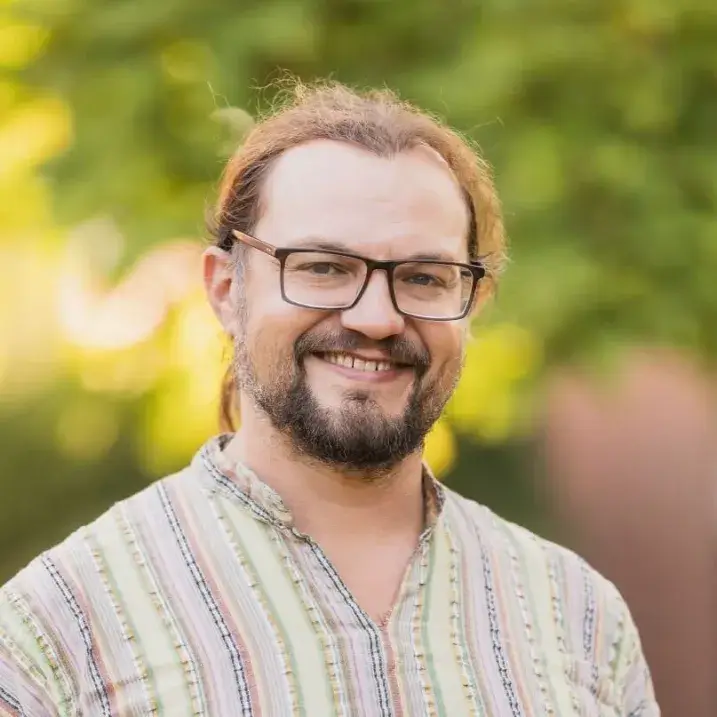
Josiah Taylor is a food systems researcher, author, farmer, and educator who currently works with David Connor and a team of collaborators to design and implement farmer-centered sustainability analysis with consumer facing farms in Vermont. He completed his PhD at UVM in the faculty of Food Systems, while also a Gund Institute for Environment graduate fellow and earning a graduate certificate in Ecological Economics. Taylor’s dissertation work involved impact analysis using mixed methods and participatory action research approaches to produce community driven research. For the first project he worked with Hunger Free Vermont and K-12 schools across Vermont to survey and interview school staff about changes in social climate, readiness to learn, school finances, and other fields since implementing universal free school meals. This work resulted in a publication that influenced the permanent adoption of universal free school meals in the state last year. Another dissertation project involved working with refugee and immigrant farmers participating in community farm and farm incubator programs in Vermont and Wisconsin, to investigate quality of life benefits and challenges for farmers in these programs. Lastly, Taylor worked with these same farms in Vermont and Wisconsin to develop and pilot a socio-ecological economic sustainability analysis toolkit for farms that was inspired by a white paper he co-authored in 2021 with Lisa Chase and others at UVM to inform the UVM Agriculture Research Service hub on holistic farm sustainability analysis.
While completing his PhD research, Taylor also did agriculture extension work in Vermont as a risk management educator and farm management teams’ facilitator and enjoyed getting to know farms and farmers around the state and collaboratively troubleshoot complex problems. Prior to work and studies at the University of Vermont he completed an M.Ed. in Critical Studies at the University of New Brunswick (Canada) documenting and revitalizing Wolastoq First Nations language and culture, focusing on community food systems. Taylor has also researched and farmed with William Woys Weaver in Pennsylvania working to preserve endangered, historic food plant varieties through propagation and dissemination. His most recent collaborative, peer-reviewed publication addresses making ecosystem services less anthropocentric and more ecocentric.
Bio
Josiah Taylor is a food systems researcher, author, farmer, and educator who currently works with David Connor and a team of collaborators to design and implement farmer-centered sustainability analysis with consumer facing farms in Vermont. He completed his PhD at UVM in the faculty of Food Systems, while also a Gund Institute for Environment graduate fellow and earning a graduate certificate in Ecological Economics. Taylor’s dissertation work involved impact analysis using mixed methods and participatory action research approaches to produce community driven research. For the first project he worked with Hunger Free Vermont and K-12 schools across Vermont to survey and interview school staff about changes in social climate, readiness to learn, school finances, and other fields since implementing universal free school meals. This work resulted in a publication that influenced the permanent adoption of universal free school meals in the state last year. Another dissertation project involved working with refugee and immigrant farmers participating in community farm and farm incubator programs in Vermont and Wisconsin, to investigate quality of life benefits and challenges for farmers in these programs. Lastly, Taylor worked with these same farms in Vermont and Wisconsin to develop and pilot a socio-ecological economic sustainability analysis toolkit for farms that was inspired by a white paper he co-authored in 2021 with Lisa Chase and others at UVM to inform the UVM Agriculture Research Service hub on holistic farm sustainability analysis.
While completing his PhD research, Taylor also did agriculture extension work in Vermont as a risk management educator and farm management teams’ facilitator and enjoyed getting to know farms and farmers around the state and collaboratively troubleshoot complex problems. Prior to work and studies at the University of Vermont he completed an M.Ed. in Critical Studies at the University of New Brunswick (Canada) documenting and revitalizing Wolastoq First Nations language and culture, focusing on community food systems. Taylor has also researched and farmed with William Woys Weaver in Pennsylvania working to preserve endangered, historic food plant varieties through propagation and dissemination. His most recent collaborative, peer-reviewed publication addresses making ecosystem services less anthropocentric and more ecocentric.