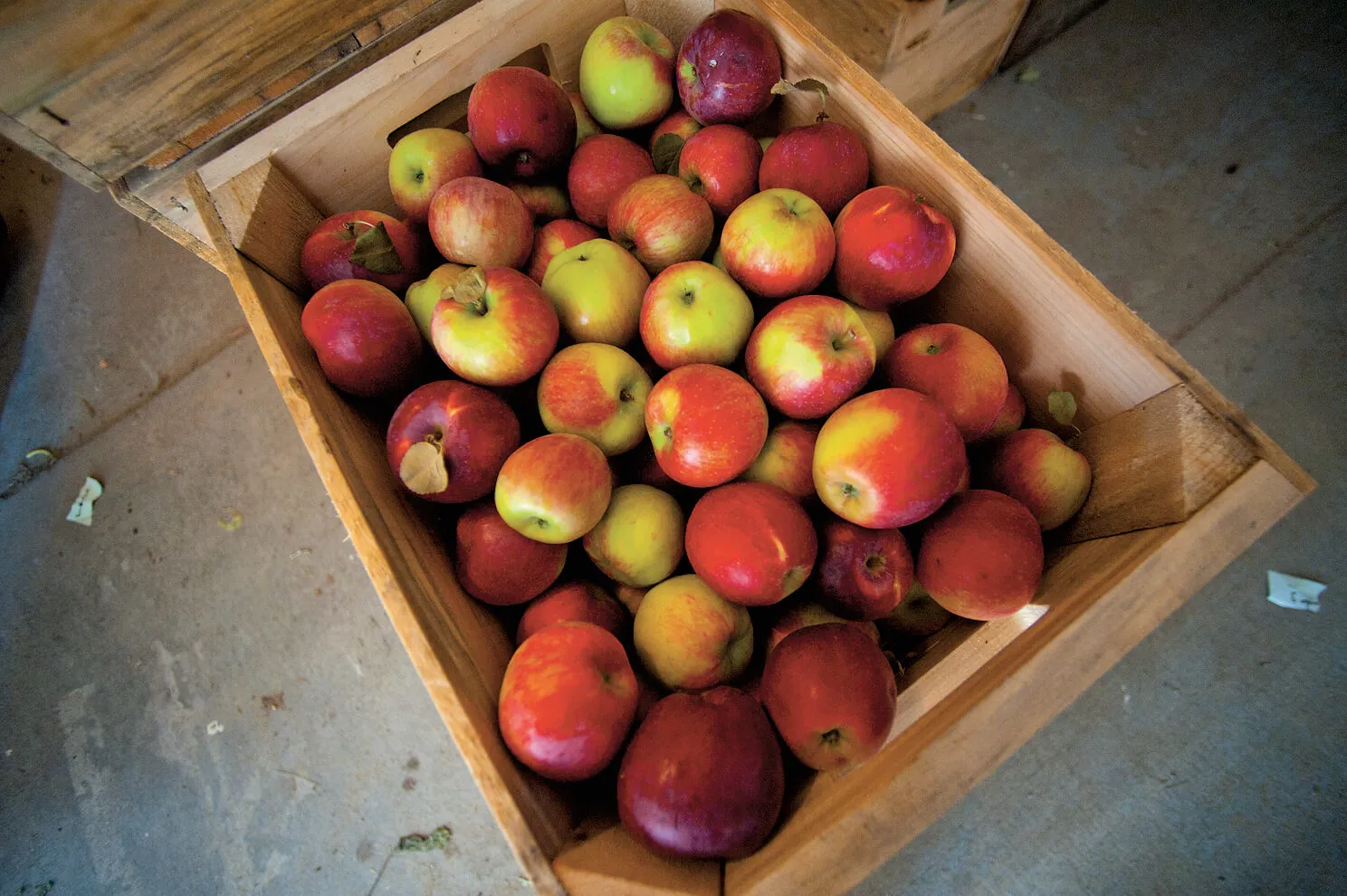
For many people, the allure of video games is that they offer players a chance to enter a world very different from their own: everything from fighting dragons in a mythical realm to racing cars on an obstacle-filled roadway. Researchers at the University of Vermont wanted to see what players would do in a more realistic world: playing as small farmers, their actions modeled after real-life decisions farmers in Vermont face each harvest season.
With real cash payouts ($1 paid per $40,000 of profit their orchard earned) riding on the profitability of their virtual orchards, players could opt for “community nourishment” (by providing apples to neighbors, even at lower price) or selling at the highest profit—and at an unaffordable price for many in their communities. It might not be the type of role to inspire anyone’s cosplay at a con, but players ended up becoming another sort of hero.
Most players, they found, chose to feed their neighbors.
“It's very heartening to see that the players of this game, when they walked in the shoes of a farmer, came out the other side saying they’re willing to support community nourishment alongside their ability to stay in business, theoretically,” says Carolyn Hricko, a recent Ph.D. graduate from the University of Vermont who cowrote the 2025 report.
A difficult choice
The researchers wanted to see how different agricultural policies might play out for small farmers, who must often choose between selling to venues that are more affordable for their neighbors—which is not generally profitable—or selling food at a high enough price to sustain their operations, which often puts their food out of economic reach for lower-income community members. It’s a real choice that many don’t realize small farmers face each harvest season.
“Basically, small farms struggle to make money,” says food systems scientist Caitlin Morgan, one of the original designers of the project “They rely on off-farm income.”
Morgan, who graduated in 2021 with a Ph.D. in Food Systems from UVM, notes that for most farmers it’s hard to build an economy of scale with smaller operations, especially in the Northeast, where geography doesn’t allow the vast, flat farm operations more common in the Midwest, driving prices up.
That affects consumers, too.
“In some ways, people in the Northeast, where farms tend to be smaller, are priced out of eating locally,” she says.
More than 1,000 people from across the United States played the game in the fall of 2023, with researchers able to observe their step-by-step decision-making—an advantage over a simple survey, which would provide one-time, hypothetical data. Players were recruited through crowdsourcing site Amazon Mechanical Turk.
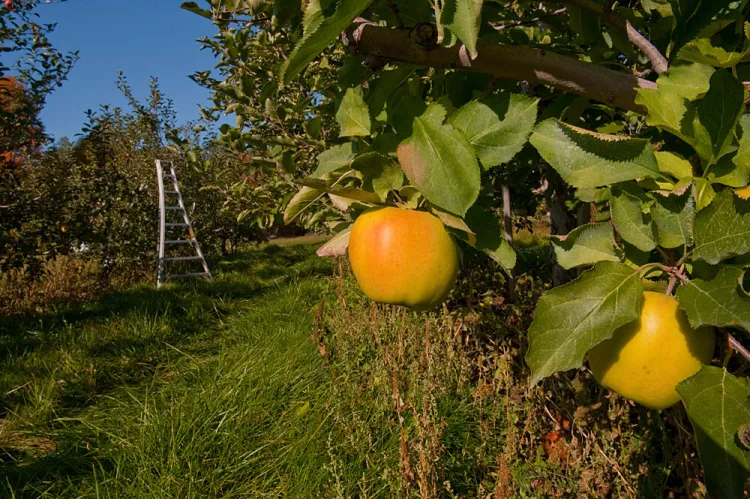
Morgan says stepping into a small farmer’s shoes also proved to be a rude awakening for many players.
One player lamented, “’this is terrible. It's so hard, it's so stressful, and I couldn't make any money,’” she says.
Despite that, the researchers were surprised to see that, as players moved through the game and realized the stark economic realities farmers face, they still chose to get their virtual apples into their neighbors’ kitchens, taking a financial loss in the process.
“We found that there was a very, very strong commitment to a value structure around community nourishment,” says Professor Amy Trubek, the Principal Investigator on the project.
But, she adds, that is not how our food systems are currently organized.
“We rely on charitable organizations, and sometimes the government to, in a sense, create a community nourishment approach,” says Trubek, who is also a Gund Affiliate and directs UVM’s Climate Kitchen.
The original research was intended to test policy interventions built into the game, the researchers said—but when they noticed that players had chosen to prioritize community nourishment, despite the intervention, they were inspired to create a policy brief to share their findings with policymakers, nonprofits and other interested parties.
They hope to show that the public want to see policies in place to support small farmers’ ability to feed their local communities while remaining sustainable as a business, and they’re now preparing to distribute the brief to a curated list of changemakers.
"The public really cares about community well-being and the success and livelihoods of farmers,” Hricko says. “That's great news.”
Interested in playing the game? You can find it here.
Researchers involved in this report include:
- Carolyn Hricko, 2024 Food Systems doctoral graduate and Gund Institute Graduate Fellow
- Scott Merrill, Professor in the College of Agriculture and Life Sciences; Director, Social-Ecological Gaming & Simulation (SEGS) Lab at UVM; and Gund Institute Faculty Fellow. Merrill designed the game.
- Rebecca Mitchell, UVM Food Systems Research and Action Coordinator
- Caitlin Morgan, UVM Climate Kitchen Associate Director and Gund Institute Graduate Fellow and Postgraduate Fellow alum
- Amy Trubek, Professor in the College of Agriculture and Life Sciences; and Director, UVM Climate Kitchen
The original research on which the policy brief was based is here.
