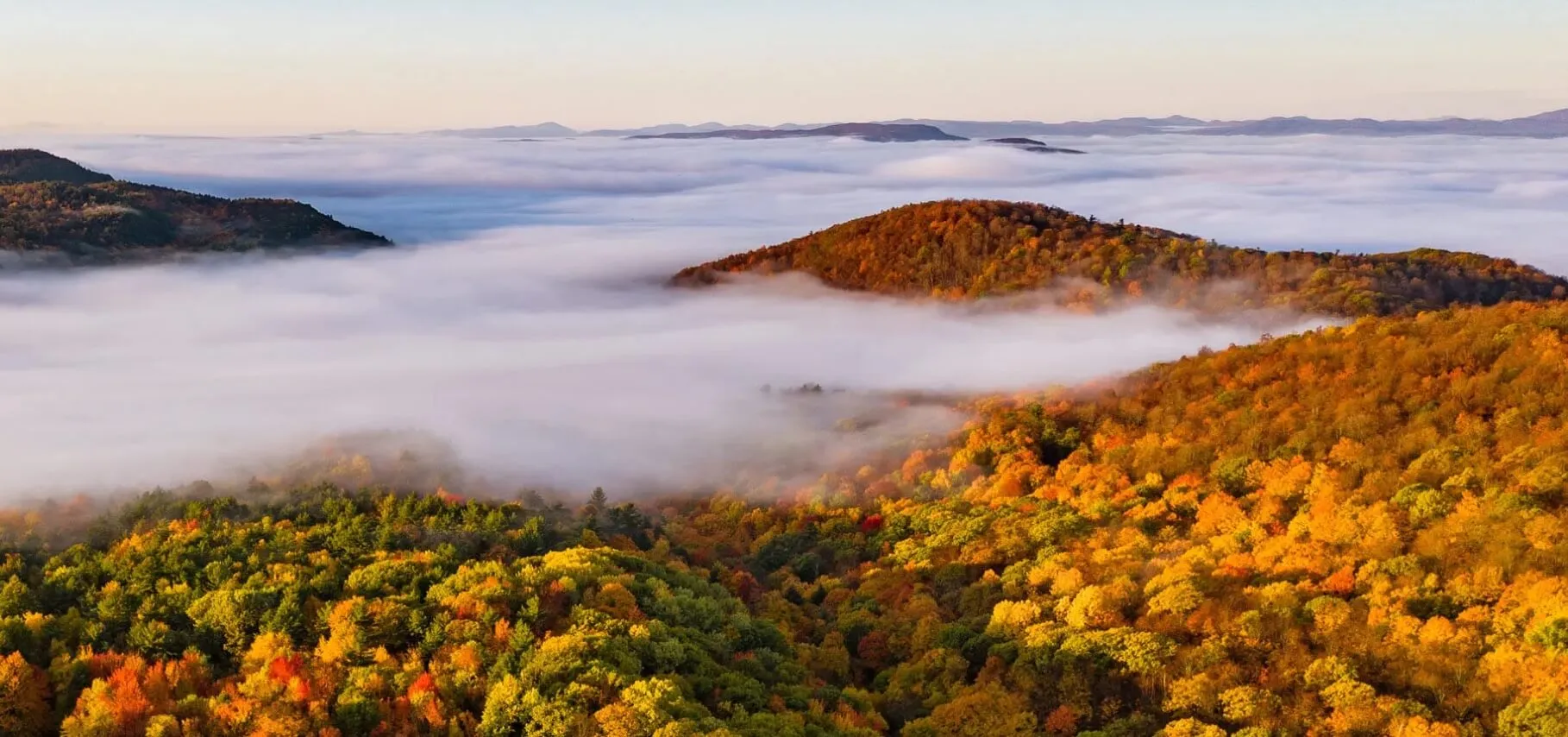
With leaf peeping season around the corner, University of Vermont researchers William Keeton, Ali Kosiba, and Lisa Chase explain the science behind why trees explode into colors each fall.
Besides dazzling the eyes, fall foliage generates over a billion dollars for the U.S. economy—over $600 million in Vermont alone, according to state data.
What do you expect for fall foliage this year?
Fall foliage in Vermont and New England always delights—and will again this year. There’s always a little mystery because the color and timing of the leaves result from a delicate dance of many different factors—some environmental, some in the tree—before a great reveal. That’s what makes it so exciting and special for so many people. Each year, there are subtle differences in the timing and brilliance of fall foliage that result from the weather and temperatures over the past two years.”
-UVM Prof. William Keeton
What’s the science behind fall colors?
Fall foliage is a chemical reaction, influenced by external factors including climate, water, and length of day. Parts of the process are still actually a bit of a mystery. That makes it tricky to predict how vibrant the colors will be.
The best conditions for fall foliage are cool evenings contrasted with warm daytime temperatures, paired with a shortening length of the day—known as the photoperiod. Together, these signal the tree to begin shutting down, and degrading chlorophyll and other key chemicals in the tree and leaf, which reveal and produce vibrant colors.
-UVM Prof. William Keeton
What causes the chemical reaction?
The chemicals in the leaves are mainly carotenoids and flavonoids, the same compounds that make carrots look orange and bananas look yellow. Reds and purples are produced by different chemicals called anthocyanins, but still not fully understood. They are produced during the fall and may play a role in protecting the leaves as they begin to shut down for the winter.
-UVM Prof. William Keeton
How is climate change affecting fall foliage?
As average fall temperatures rise—we are seeing a delay in the onset of fall colors, resulting in a shorter foliage period. The contrast between nighttime and daytime temperatures is key. If night temperatures are warmer later in the fall while the photoperiod remains the same, you don't have the same kind of degradation process for the chlorophyll. That also might mean that trees maintain their greenness longer with less of a reveal of colors. Or it happens a little later. Or it's for a shorter time period. Or maybe a little bit less vibrant.
-UVM Prof. William Keeton
What are other threats to fall foliage?
Air pollution, invasive species and tree diseases can impact tree productivity and foliage production. For example, Beech bark disease has decimated our large beech trees, which produce a beautiful, vibrant yellow color. In the future, Emerald ash borer may eliminate our ash. A major concern would be Asian Longhorn beetles, which attack Maple trees. Think of the future with no Maple trees, or much less. That would be devastating for both our economy and our culture.
-UVM Prof. William Keeton
What about the wildfire smoke?
“Extended cloudy periods can affect fall foliage, so the hazy conditions in Vermont and the Northeast from wildfire smoke could potentially have a similar effect. Leaves are designed to catch sunlight primarily from the top, but cloudy skies can reduce the amount of sunlight they get and deflect the rays in other directions. That can slow photosynthesis in the leaves and produce less vibrant colors—especially the reds—and a shorter foliage season. I think we’re seeing some of these effects in a lot of other green plants this year.”
-UVM Extension Assistant Prof. Alexandra Kosiba
How important is fall foliage to the economy?
Fall foliage peeping brings something like $800 million, maybe even a billion dollars, in revenue to Vermont alone. Our tourism industry depends on this heavily. I think with climate change and winter sports declining, ski resorts and other destinations are becoming more like four season resorts. They may be emphasizing summer recreation and fall recreation more, and it takes on even more of an economic significance. In terms of the culture, identity, who we are, and the sense of place, fall foliage is inextricably connected to that.
There's a reason Vermont looks the way that it does. As a state we’ve invested in the landscape and keeping our forests together. The fall colors that make Vermont an international destination are one of the many benefits.
-UVM Prof. William Keeton
Any recent economic and social trends?
“One trend worth watching are media reports of fall road closures in Vermont communities and businesses, which leaf peepers have made Instagram-famous and crowded, are temporarily closing this year for sustainability reasons. So people should check Vermont’s tourism website—or talk to a Vermonter—to find good places to enjoy nature’s show—and act sustainably.”
“In the face of natural hazards and climate change, the Vermont agriculture and tourism sectors continue to innovate. For example, we’ve seen maple sugar houses opening early to host foliage viewing experiences through the Maple 100 initiative.”
-UVM Extension Prof. Lisa Chase
What state has the best foliage?
Vermont is definitely the best in North America in terms of the vibrancy and diversity the colors—at least in my humble opinion. Fall in the Rockies is stunning, but they don't have as much of the reds and purples the way we do. The Appalachians have beautiful foliage there too, but it's probably more tilted towards reds. Other parts of North America have beautiful bright yellow foliage. But if you want that perfect mix of all the colors, you have to come to Vermont.
Bill Keeton is a Gund Fellow from UVM’s Rubenstein School of Environment and Natural Resources and Ali Kosiba and Lisa Chase are from UVM Extension.