This is an editorial by Rubenstein School of Environment and Natural Resources professor and Gund Faculty Fellow Brendan Fisher.
To earn a PhD in a scientific field, graduate students are expected to divine novel questions, use rigorous methods for data collection and evaluation, and interpret that data. They do all of this while considering both their research question and, perhaps, how their findings relate to the wider world.
It’s a huge lift, a giant challenge. Hopefully, more often than not, this effort culminates in a paper published in a peer-reviewed journal.
Lots of folks outside the work of academia often don’t understand the importance of publishing in the peer-reviewed literature, but for scientists, this is a core output of the scientific process. This is the validation of the work. And while the peer-review process (and science publishing in general) has flaws, being published in a journal means your scientific peers have kicked the tires on your work. They’ve looked for flaws, shinned light on the warts, and picked it apart, much like how my youngest son picks at almost anything on his plate – with incredulity that it could be any good.
This process is hard. Writing is hard. Award-winning novelist Ann Patchett says, “Writing is a miserable, awful business.” George Orwell said writing was like “having a long bout of some painful illness.”
I hear these sentiments from our graduate students all the time. On the flip side, the joy experienced and shared by a student when they get their first research paper published is visceral. It is such a great moment that (hopefully) they will remember forever. (I still remember the day my first paper came out. I felt like I was walking on air all day.)
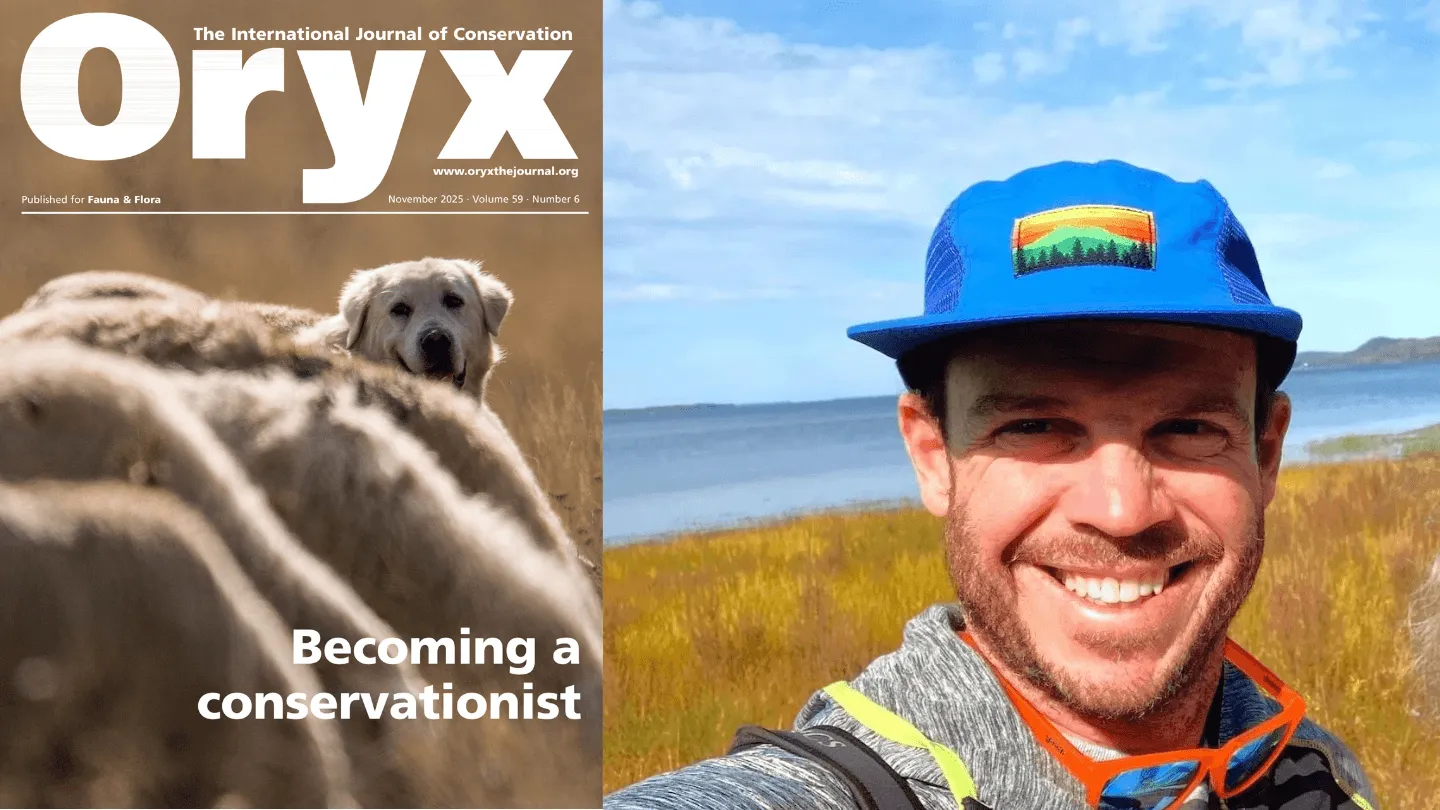
So, in order to diminish the pain side of this enterprise and accentuate the joy, editor Martin Fisher (no relation as far as we know) and I sponsored a special issue of Oryx – The International Journal of Conservation, where every paper would be written by first-time authors.
A special issue of FIRSTS!
Our hope was that we could foster joy in the writing and publishing process and collect a whole bunch of great first papers. We got over 80 submissions!
As any journal editor will tell you, it is hard to find reviewers these days. But when we reached out to expert reviewers for these papers and shared what we hoped to accomplish with this special issue, we got a totally different response.
We asked reviewers to not just rigorously evaluate the manuscript, but also develop a connection with the author, care about them, foster skills in them, and help them succeed.
While I don’t have the data, it certainly felt easier to find reviewers for these papers than many others I’ve handled over the past 10 years. Also, there was real mentoring going on, such that in the end we accepted ~40 papers for our “special issue.” So many that they will come out as installments.
These FIRSTS are incredibly diverse. You can read about tigers and toucans, orchids and shearwaters. You can dig into the shark fishing regulations to help improve futures for our finned friends or how guardian dogs affect interactions between pumas and livestock in Argentina. You can read about how our emotions guide conservation decisions or how animal programs drive our desire to own exotic pets.
You can read all of these and more in the latest issue of Oryx, and since the authors’ emails are provided, you could drop an author a line telling them congrats.
Oryx is an open-access journal published by Cambridge University Press for the conservation charity Flora & Fauna. Find the entire special issue here.