About
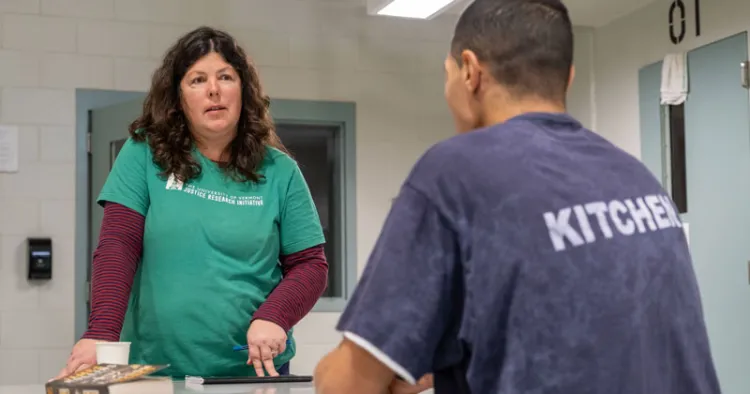
Centering Community in Research
Connecting the University of Vermont with local, regional, and national leaders, we advance community-engaged research methods to address issues at the intersection of public health and the US criminal legal system.
The Justice Research Center (JRC) is located within the College of Engineering and Mathematical Sciences and was established in 2019 as an interdisciplinary research group at UVM to support a hub for data-driven social and policy change. JRC serves as the research core for the National Center on Restorative Justice (NCORJ). The NCORJ is a partnership between the University of Vermont, the Vermont Law and Graduate School, the University of San Diego, and the US Office of Justice Programs Bureau of Justice Assistance. The NCORJ was established in 2020 with the purpose of improving US criminal justice practice and policy through education, training, and research.
The Prison Research and Innovation Network (PRIN)
PRIN is a research-practice partnership between the University of Vermont’s Justice Research Center and the VT Department of Corrections, which elevates the voices and experiences of people who live and work in prisons to better understand prison ecosystems, foster community connections, and advance meaningful systems change.
Vermont Prison Surveys
Prisons are among the least transparent and most understudied public institutions in the country, and too often the voices of those who know them best—corrections staff and incarcerated people—are missing from the data. Through PRIN, surveys are co-created with those living and working inside Vermont’s prisons to produce independent, anonymous insights into daily life. Grounded in community-engaged research, these data create a shared understanding of prison environments and are used to guide meaningful change. PRIN surveys also reveal how incarceration is connected to broader challenges shaping community health and wellbeing across Vermont.
Links to the Vermont Prison Surveys can be found below.
The Prison Quilt Project
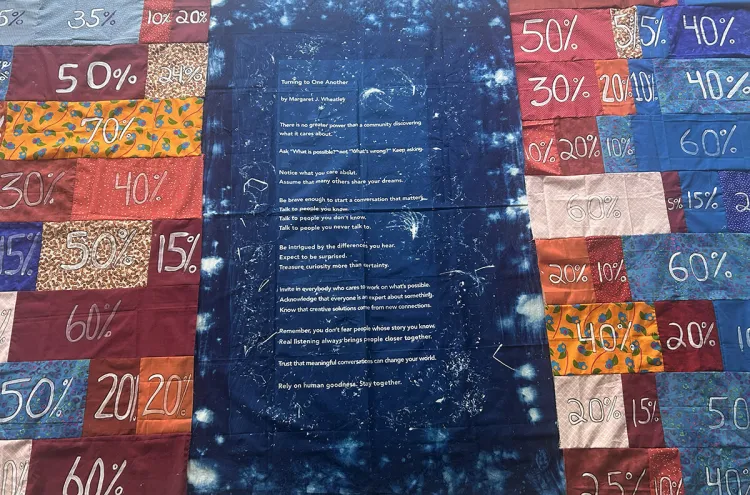
The Prison Quilt Project was designed, pieced, and painted by incarcerated participants in a workshop held at Southern State Correctional Facility (SSCF) in Springfield, VT, from September 2025 until March 2026. The project was facilitated by Interaction: Youth Services & Restorative Justice in partnership with PRIN. The goal was to provide a space for incarcerated men of SSCF to reflect on and share their experience of incarceration, while also tapping into the healing and transformational power of telling their stories through art. The collective storytelling aspect of the quilt highlights the potential for and power of community building within correctional facilities. The quilt adds texture, color, and a human touch to the story being told by the Vermont Prison Surveys about the state of Vermont’s prison ecosystem.
What the Quilters say about the Musical Border:
“Alli Cooper-Ellis, one of the UVM students who participates in the Prison Research and Innovation Network (PRIN), offered to visit our quilt workshop and play viola for us as we played. She was touched by how we worked together and was inspired to compose a piece of music, “Quilted Forest,” for the UVM Philharmonic. We decided to incorporate her score into the quilt. To us, it symbolizes the healing that comes from connection and the possibilities that arise when people on the outside are willing to be in relationship with us.”
The back of the quilt: Members of the PRIN Incarcerated Persons Council asked the quilters to include Vermont Prison Survey Results and Margaret Wheatley’s poem Turning to One Another on the back of the quilt. Wheatley’s poem captures the spirit of this work. Like the quilt itself, PRIN is built through many threads - different voices, experiences, relationships, data, and shared learning - stitching connections among people inside and outside the prison and holding space for reflection, healing, and the possibility of something better.
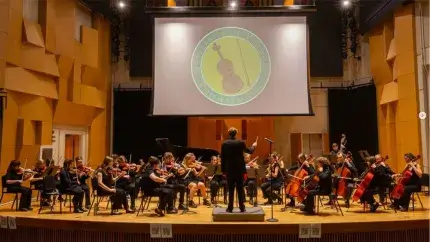
UVM Philharmonic Spring Concert - April 26 at 7:30 pm
Featuring Alli Cooper-Ellis' "Quilted Forest," inspired by her work with JRC
Research
Education
Statistics for Social Change
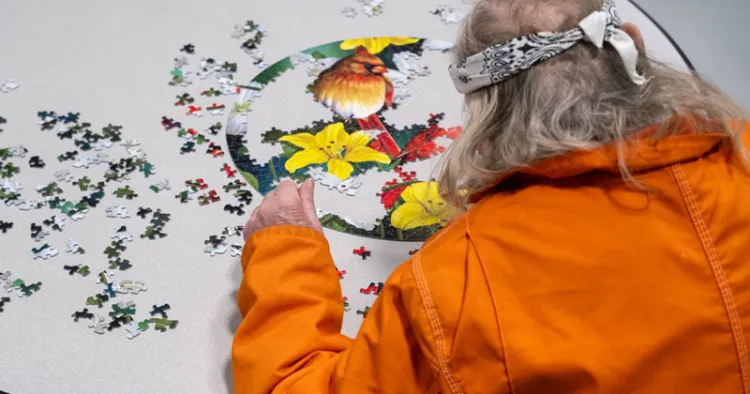
Statistics is a powerful science that is inherently interdisciplinary. It is an essential tool in advancing research for helping to identify what works, and what doesn’t, for meaningful social and policy change.
With funding from the National Center on Restorative Justice, we aim to help grow the next generation of justice researchers. JRI supports experiential training opportunities focused on quantitative community-engaged research methods for social change. A particular emphasis is placed on effective communication strategies, inclusive research methods, and building community partnerships.
- Postdoctoral Research Associate (Summer 2024)
- Graduate Research Assistantships (Fall 2024)
- Undergraduate Research Opportunities
People and partners
People and partners
- Abby Crocker
Associate Professor, Department of Mathematics and Statistics - Kathy Fox
Professor, Department of Sociology - Gail Rose
Research Assistant Professor, Department of Psychiatry - Sejung Yang
Post Doctoral Associate, Department of Mathematics and Statistics - Abby Moody
Graduate Student, Department of Mathematics and Statistics