Beginning in the fall of 2026, this fully online program (click here for even more information) for early and mid-career professionals combines rigorous academic study and practical application of theory in the real world.
Built by the UVM College of Agriculture and Life Sciences’ Department of Agriculture, Landscape & Environment and the Institute for Agroecology (IFA), this program grew out of collaboration and conversations with farmers navigating climate uncertainty, organizers building food sovereignty movements, policymakers grappling with inequity, and students asking for education that matches the urgency of this moment. Again and again, one theme emerged - transforming food systems needs more than technical fixes; it requires new ways of learning, leading, and working together.
“As a land-grant university, UVM has a public mission to connect knowledge with real-world needs,” says Linda Prokopy, dean of the College of Agriculture and Life Sciences at UVM. “This new graduate offering is a perfect example of how we do this, and I’m excited to see the global impact.”
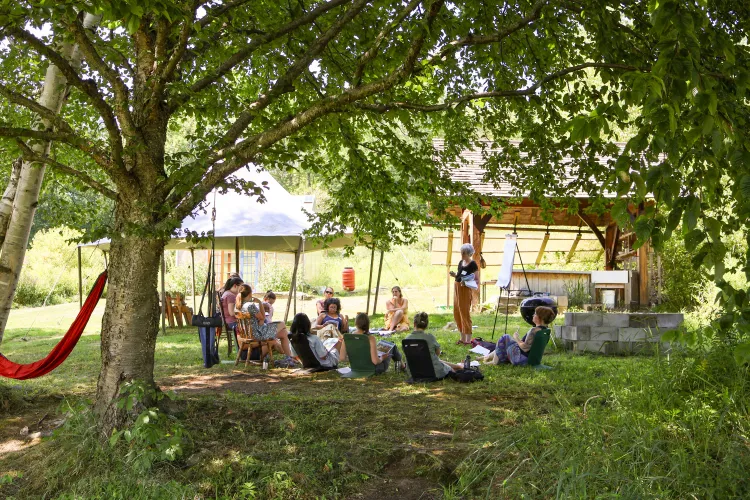
Transforming food systems is not only about changing how farmers grow food or what consumers choose from store shelves. It is also about policymakers shaping legislation, researchers partnering with communities, educators co-creating knowledge, and activists mobilizing communities to advocate for radical change. The power lies in the connections among these actors and sectors—the transdisciplinary collaborations that fuel movements for a just, regenerative, resilient food system. In the face of a neoliberal, extractive global food regime, it’s evident that foundational transformation is needed and agroecological education provides that pathway.
Among the program’s distinguished faculty is Ernesto Méndez, co-director of the IFA and professor of agroecology and environmental sciences at UVM, who brings more than 25 years of experience working with smallholder farmers and indigenous communities in Latin America. He earned his doctorate from the University of California and is internationally recognized for his leadership in participatory action research and transdisciplinary approaches. His work examines the complex relationships among agriculture, livelihoods, and environmental conservation across tropical and temperate rural landscapes, advancing scholarship that is both scientifically rigorous and deeply rooted in reciprocal, community partnership.
“This program reflects who agroecology learners actually are,” says Mendez. “They’re already doing important work and what they need is space to think critically, learn together, and strengthen their impact, without having to step away from their livelihoods or the places they care about.”
That emphasis on learning in place is central to the program’s design.
“This is about taking seriously the idea that learning doesn’t only happen on campus,” says Colin Anderson, co-director of the IFA and research associate professor of UVM. “Our students are already embedded in food systems. The program is structured so their communities, workplaces, and questions become part of the classroom.”
Anderson’s research centers community and people-led processes of social transformation, grounded in commitments to social justice, resilience, and well-being. His collaborative work advances participatory action research approaches that elevate grassroots leadership and democratic knowledge creation.
Other instructors also include Nils McCune, a research associate at the IFA, author, and food rights activist. McCune works at the intersection of political economy of food systems, agroecology, and food sovereignty. He is the former North American regional secretariat staff member at La Via Campesina, bringing global movement experience directly into the classroom.
“This master’s program arrives just in time to fill a gap for providing committed agroecology practitioners and activists with networks and perspectives that will help them learn by doing for the rest of their lives,” says McCune. “For people ready to transform themselves as they organize and carry out an agroecological revolution, this faculty team offers students mentorship rooted in scholarship, movement-building, and lived practice.”
The curriculum combines core courses in agroecology, participatory action research, and food sovereignty with a six-credit master’s project that integrates ecological, social, and political dimensions of agroecology. Whether a student is collaborating with farmers on social health, supporting policy reform, strengthening a food justice initiative, or advancing research in their own organization, the master’s project is an expression of the program’s purpose: weaving knowledge and action to build food systems that are equitable, regenerative, and resilient locally and globally.
“What excites us most is the community this program will continue to build,” says Emily Hoyler, the learning and culture lead at the IFA. “Agroecology has always been about learning with one another—across disciplines, across geographies, and across lived experience. This degree creates more room for that kind of shared work.”
Learn more about master's and the IFA on our webpage at “Agroecology at UVM: Cultivating a Thriving Planet through Knowledge and Action” on April 9, 2026 from 4:00 PM to 5:30 PM EDT. Attend virtually or in-person. Register here.