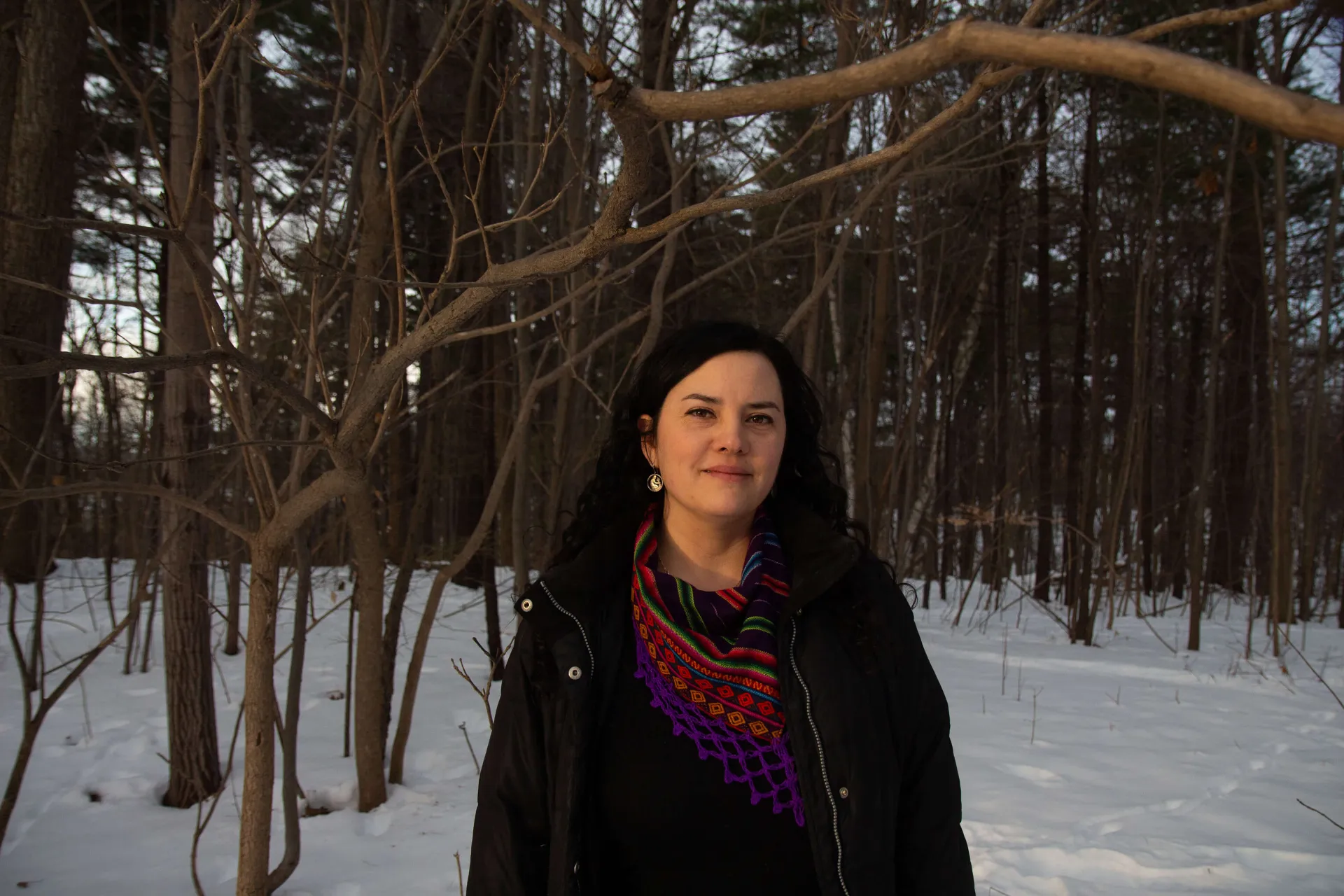
But when she moved to the U.S. a decade ago, she discovered her passion for nature's role in nourishment and well-being.
"I was doing a lot of volunteer work with programs relevant to nutrition, school gardens, and environmental education with public schools in Missouri," Carrasco-Torrontegui said.
She was also traveling to her home country of Ecuador to conduct research with Indigenous people and urban farmers. And when she thought about the common theme running through these projects, Carrasco-Torrontegui landed on food systems.
Which is how she ended up a Food Systems PhD student at the University of Vermont College of Agriculture and Life Sciences. The transdisciplinary program is the first of its kind in the U.S.
"I received a full scholarship, and I have been very lucky and grateful," Carrasco-Torrontegui said.
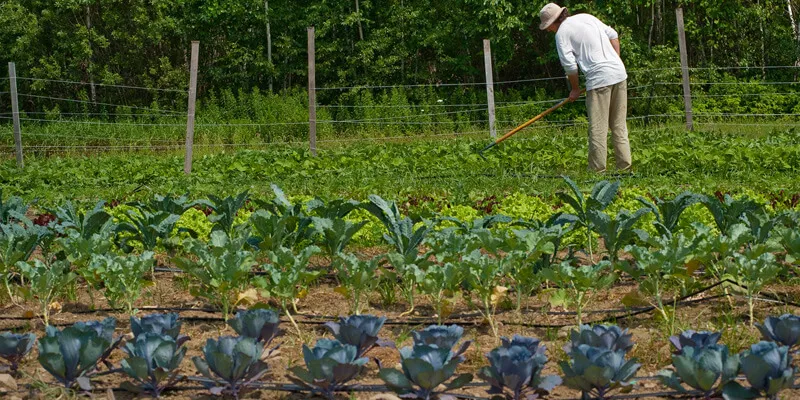
Though the start of her PhD was admittedly complicated — she began in 2020, during the COVID-19 pandemic. Classes moved online, and any new friends she might have made in Vermont, she had to keep physically distant. Then her agroecology classes started visiting a local farm.
"For me that was very meaningful," Carrasco-Torrontegui said. "The connections with the earth, with the food, with the cycles of seasons, the weather, the possibility to be outdoors with other people in a safe space."
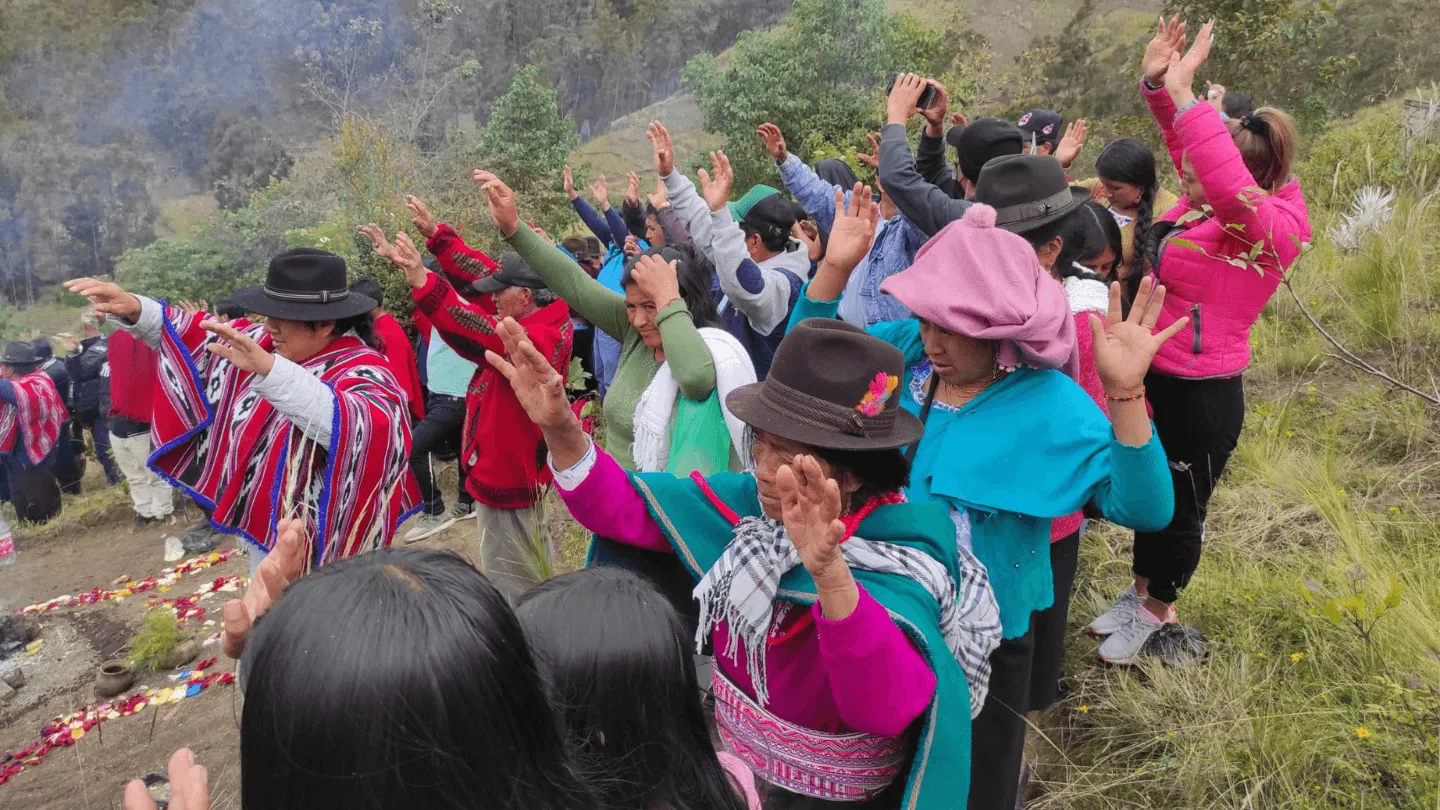
She said this made her fall in love with the Green Mountain State. At the same time, Carrasco-Torrontegui's graduate research allowed her to deepen her roots in Latin America by conducting participatory action research with Indigenous communities in Bolivia and Ecuador and Peru.
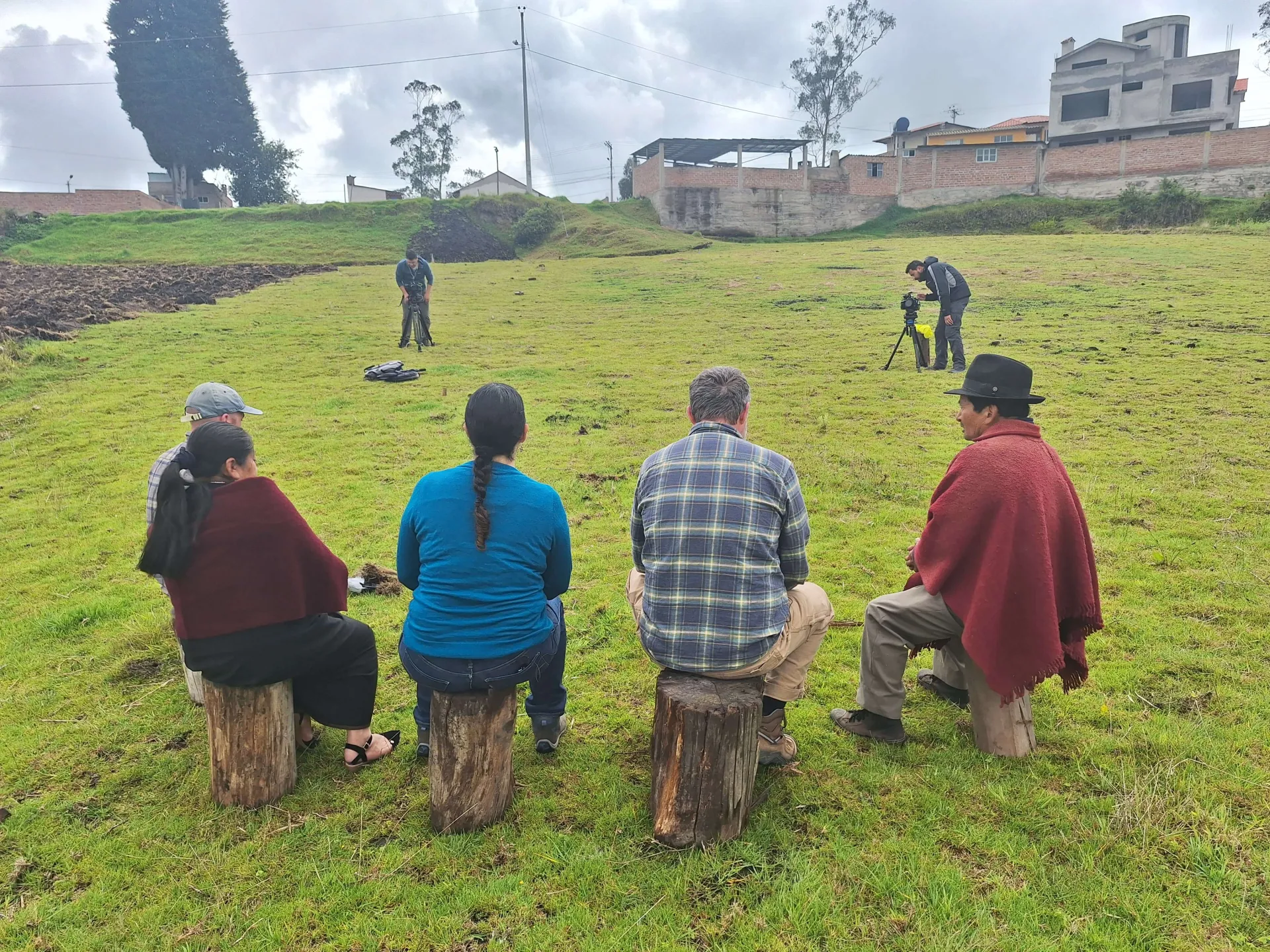
"We co-created the questions, the hypothesis," she said. "We went together to the field to collect the data. We are analyzing the data together, and we are publishing the papers together."
Carrasco-Torrontegui said this unique research approach, spearheaded by her advisor and CALS Professor of Agroecology and Environmental Studies Ernesto Méndez, is intended to solve the specific needs of specific people in their specific agroecological — ecological, social and agricultural — environments.
Like the Kichwa-Puruwa community of Caliata in the highlands of Ecuador. Carrasco-Torrontegui collaborated with community members there to understand what ways their food system is already sustainable, and in what ways it could improve over the next five years.
Among the ideas for improvement: creating a plastic repository (versus burning) for safer waste disposal, and developing agritourism opportunities by sharing ancient, Indigenous terraces.
"So we have an agroecological vision," Carrasco-Torrontegui said. "The action now for me is to find resources to make possible the vision that the community chose as a guideline for the next coming years."
She said participatory action research like this can bring a lot of satisfaction, because you see the results of your efforts more profoundly.
But the relationships that help accomplish this take time, trust, and humility. Carrasco-Torrontegui has been working alongside the Caliata community for years, since before her PhD program.
"There is something that we are doing in our Institute [For Agroecology] called the 'diálogo de saberes,'" in English, the dialogue of knowledge, Carrasco-Torrontegui said. "How you co-create a new reality between Western science and also the knowledge of farmers, of the Indigenous people that are living in a place — you need to learn how to negotiate and how to create something new together."
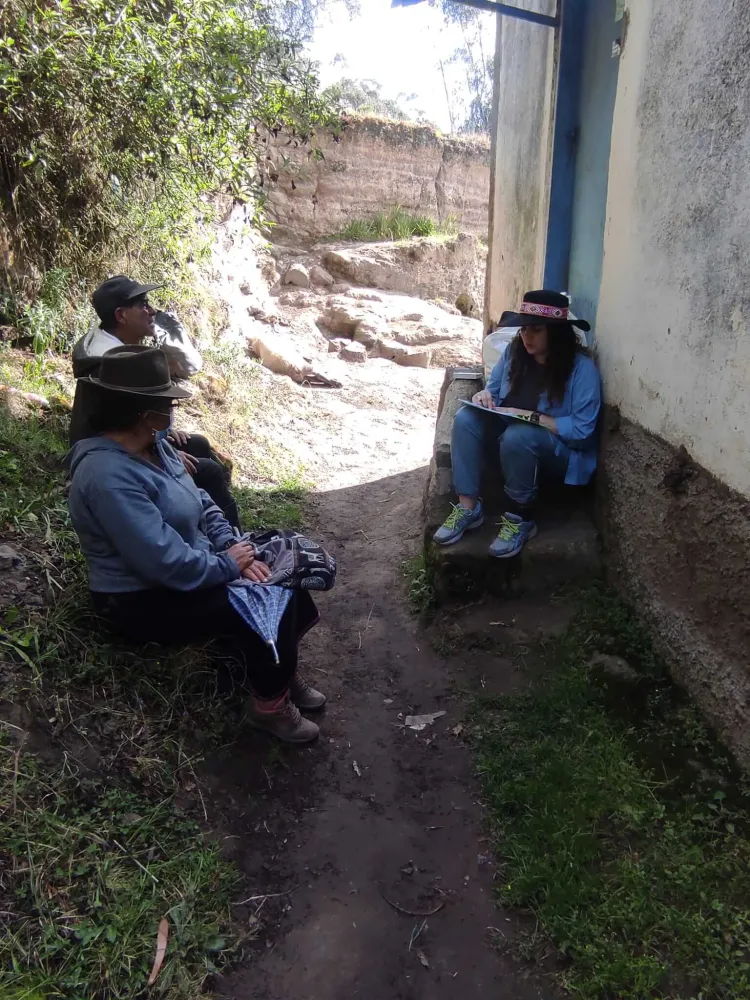
Now as a postdoctoral associate, Carrasco-Torrontegui is part of the Institute For Agroecology's recent efforts to co-create a participatory action research project in Vermont. She's also co-leading the institute's Agroecology and Planetary Health Program. That program explores the links between our environment — including what we eat — and our physical and mental well-being.
Specifically, Carrasco-Torrontegui is measuring cardiac coherence (heart rate variability) among Indigenous people in Ecuador across three ecosystems: traditional, rural with industrial agriculture, and urban.
"According to the first interviews and life stories that I have analyzed, I can see that people feel more stable and happy where they are in the landscape where they were born," Carrasco-Torrontegui said. "So imagine how protected you will feel if you are in the same place that your ancestors were born, you are playing the same field that your father and your grandfather played, with the same trees and the same mountains."
What she is imagining — what she's long imagined as a nature lover, as an environmental lawyer and as a CALS Food Systems PhD graduate and Institute For Agroecology postdoc — is how strongly people relate to this planet.
Carrasco-Torrontegui said UVM should feel proud of its role in understanding environmental issues worldwide.
"I hope that we can keep promoting this as a common endeavor, because we have many things to say," she said.
Listen to Amaya Carrasco-Torrontegui share her story by pressing the play button below.