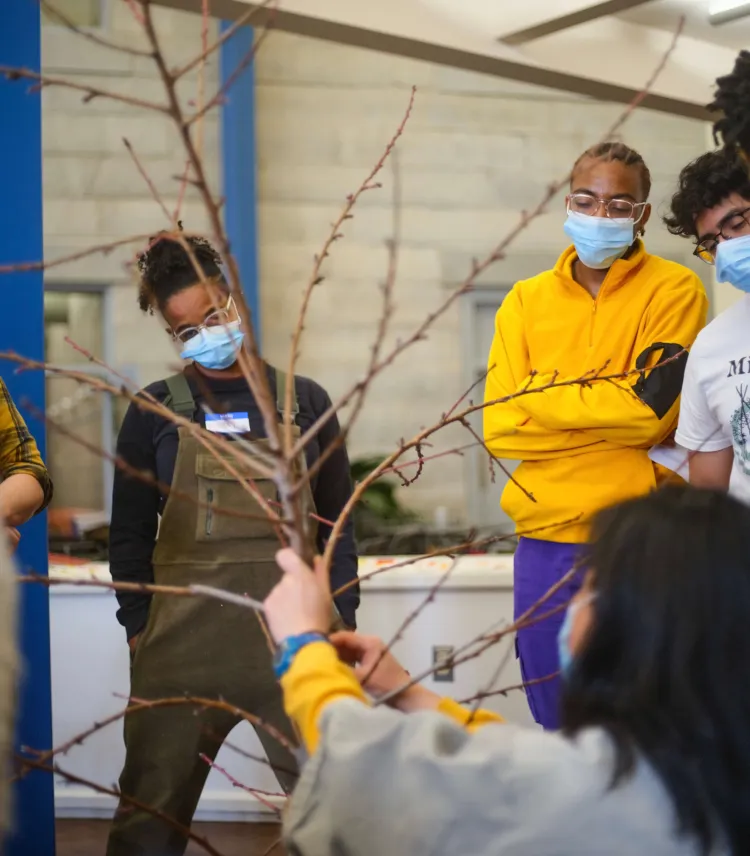
“Health cannot be separated from territory, culture, and ecology,” says Amaya Carrasco-Torrontegui and Carlos Andres Gallegos-Riofrio. “And agroecology is far more than sustainable agriculture, it is a cosmovision, a way of being in right relationship with Pachamama, Mother Earth.”
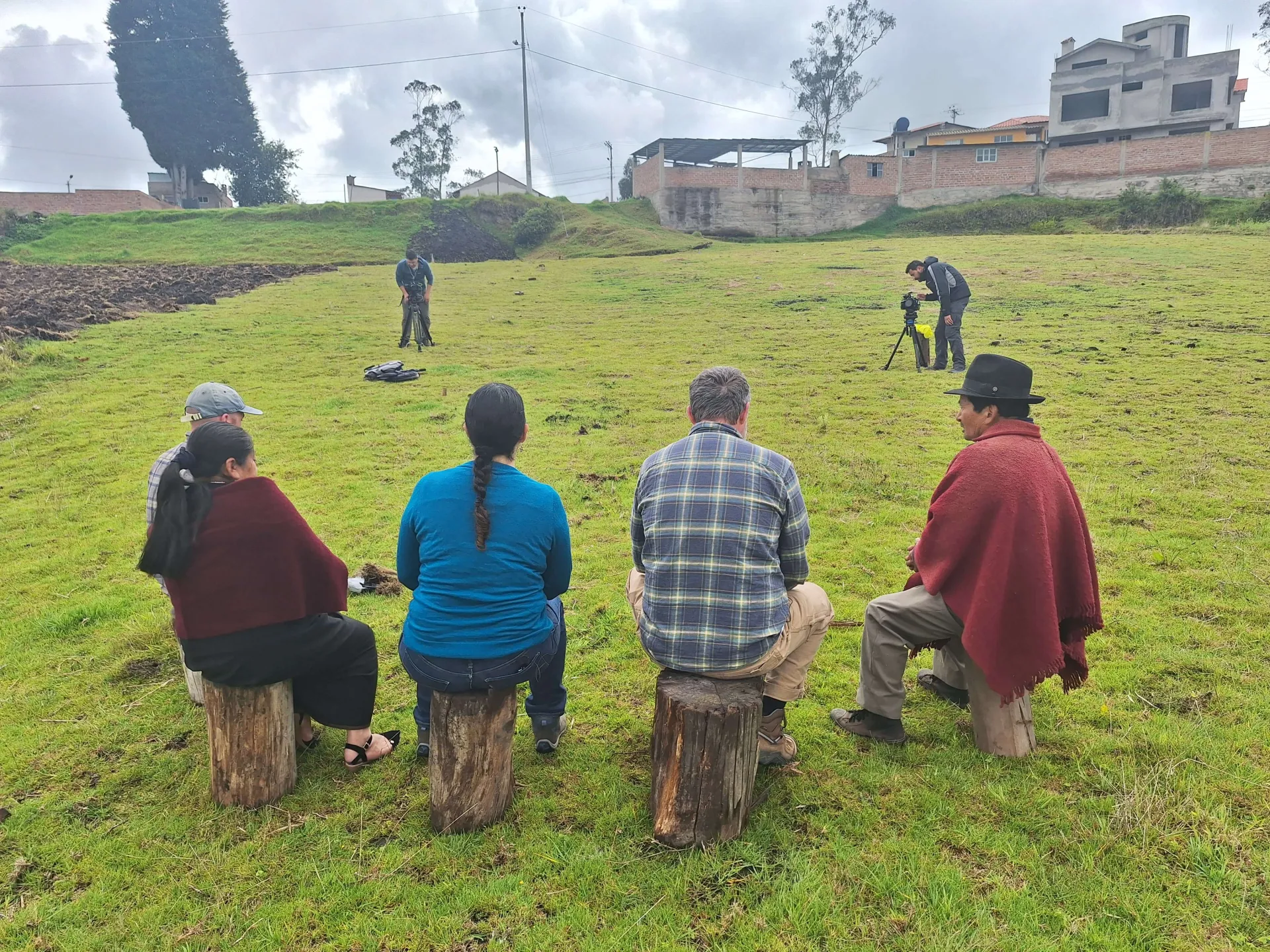
Amaya Carrasco-Torrontegui, a postdoctoral associate at the University of Vermont Institute for Agroecology (IFA), and Carlos Andres Gallegos-Riofrio, a research assistant professor at the IFA, have spent years working in the Andean highlands alongside Aymara, Quechua, and Kichwa communities. Through applied and participatory action research (PAR), they have been able to cultivate deep relationships rooted in reciprocity and trust (a key component of agroecological research) and are starting to see some interesting results.
“The SYMPHONY Project is generating early evidence on the biocultural mechanism connecting landscape, microbiome, diet, and mental health,” says Carrasco-Torrontegui and Gallegos-Riofrio. “Preliminary findings suggest that agroecological environments support both ecological balance and emotional wellbeing, providing a living example of planetary health in practice.”
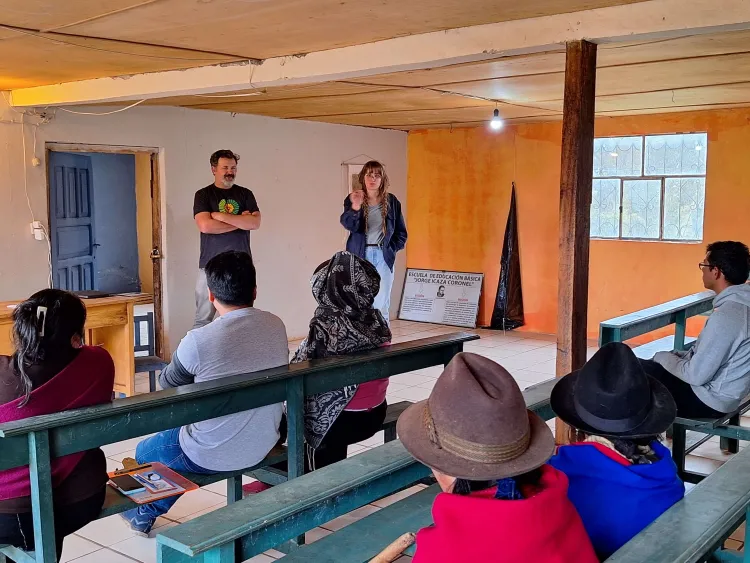
Carrasco-Torrontegui and Gallegos-Riofrio's goal is to take the lessons learned from the Andes and apply them to emerging relationships in the United States, particularly in Vermont. They have partnered up with Liberation Ecosystem (LEI), a Vermont-wide, BIPOC-led, climate and social justice organizing hub building power and opportunity centered in the needs of Vermonters of Color. LEI has four focus areas: Land, Environment, Agriculture, and Foodways.
“We are collaborating with Liberation Ecosystem to co-develop a transdisciplinary, Participatory Action Research project exploring the intersections of food, nature, and health from culturally grounded and community-led perspectives,” says Carrasco-Torrontegui and Gallegos-Riofrio. “Rooted in research at the intersection of agroecology and planetary health, this partnership aims to redress epistemic injustice in nature–health research by centering Indigenous, land-based, and ancestral wisdom alongside scientific inquiry.”
This formative research will help to identify how PAR, where LEI members shape every stage of the process, can create conditions to better understand how non-human nature affects human health. It will also confront the massive systemic bias that dominates the field, rooted in research over-represented by Western, Educated, Industrialized, Rich, and Democratic populations, methods, and concepts (i.e., the WEIRD bias), by demonstrating that lived experience, culture, and power profoundly shape the meaning of “nature” and “wellbeing.” Through connecting agroecology with food justice, ecological stewardship, and mental health, Carrasco-Torrontegui and Gallegos-Riofrio intend to build an inclusive model of environmental belonging, where Black, Indigenous, and Communities of Color define planetary health in their own terms and reclaim their right to both land and health.
“We are building a foundation of participatory and relational research grounded in care, reciprocity, and collective agency,” says Carrasco-Torrontegui and Gallegos-Riofrio. “This partnership demonstrates that research can, itself, become a process of healing—one that builds trust, amplifies community leadership, and restores the link between people and place.”
For LEI, this partnership and body of research will directly impact the lives and experiences of the LEI community and aid them in policy advocacy and other important community work. Just as importantly, the PAR approach being taken by Gallegos-Riofrio and Carrasco-Torrontegui mirrors the type of systems change they want to see – truly community-owned processes – not just in research, but also in local governance and other community decision-making processes.
“This work is rooted in the experiences of everyday Vermonters of color and should serve as a model for how to engage local communities,” says Samantha Langevin, director of Partnerships and Community with LEI. “To participate doesn’t require you to have a degree or be a researcher, it simply asks, ‘are you a person who lives here?’ and that is enough.”
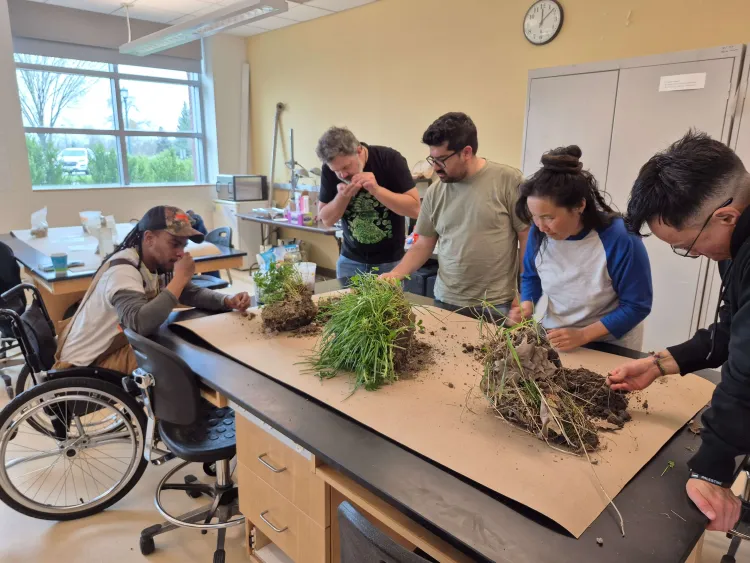
Gallegos-Riofrio and Carrasco’s work in the Andes and with LEI in Vermont is part of the IFA’s Agroecology and Planetary Health research program. The program’s goal is to advance the agroecology–planetary health nexus as an evolving field, a living practice, and a movement for systemic change, all anchored in just transitions and agroecological transformation. By expanding who participates in defining the very terms “nature” and “health,” concepts that, in many ontologies, are not fixed but in constant flow, intertwined, and expressed as parts of a greater whole, the program showcases how to creatively and innovatively bring scientific inquiry into deep dialogue with cultural, spiritual, and embodied ways of knowing.
“Agroecology and planetary health are, by their very nature, woven together and have an important role to play in identifying and pursuing innovative solutions to building a future food system that works for everyone” says Colin Anderson, co-director of the IFA. “We’re excited for the critical work and partnerships being forged in our home state and abroad and look forward to continuing to support these critical relationships.”