Translation provided by Maria Aguirre.
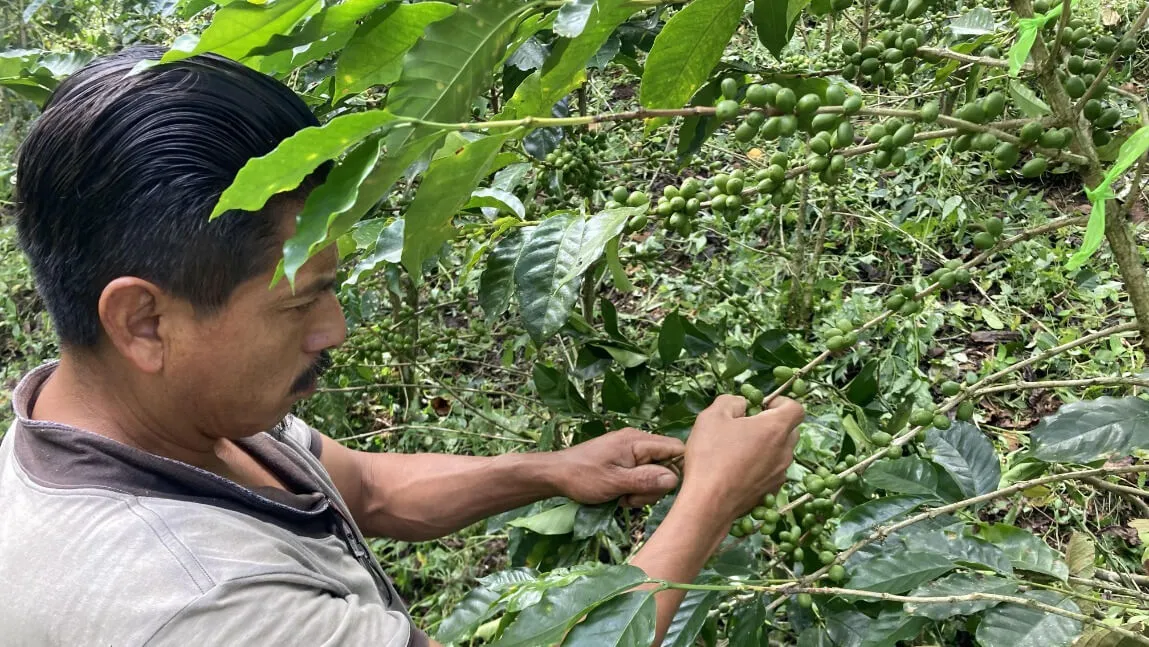
Israel Vazquez Diaz knows coffee. Around the age of 7 he began harvesting coffee cherries with his father on their farm in the northwestern highlands of Guatemala.
Fifty-four years later, Vazquez Diaz, who goes by don Israel, is still cultivating the crop on the same land. The work is demanding, but it’s what he loves.
“With coffee, you have to work on it from the moment it's picked from the plant,” he said in Spanish. “You have to sort it, wash it, carry it to where it will dry, and then every day [for a week of more] spread it out in the sun. And then, to sell it, we have to find a way to transport it.”
Don Israel sells his organic coffee through his membership with ASOBAGRI (the Asociación Barillense de Agricultores), a cooperative comprised of about 1,900 small-scale coffee producers in Guatemala.
These days, with coffee prices experiencing large fluctuations, a changing climate and increasing pressures from plant pests and diseases, it’s become harder to turn a profit growing organic coffee. Some farmers say more technical assistance, including a better understanding of their soil, could help.
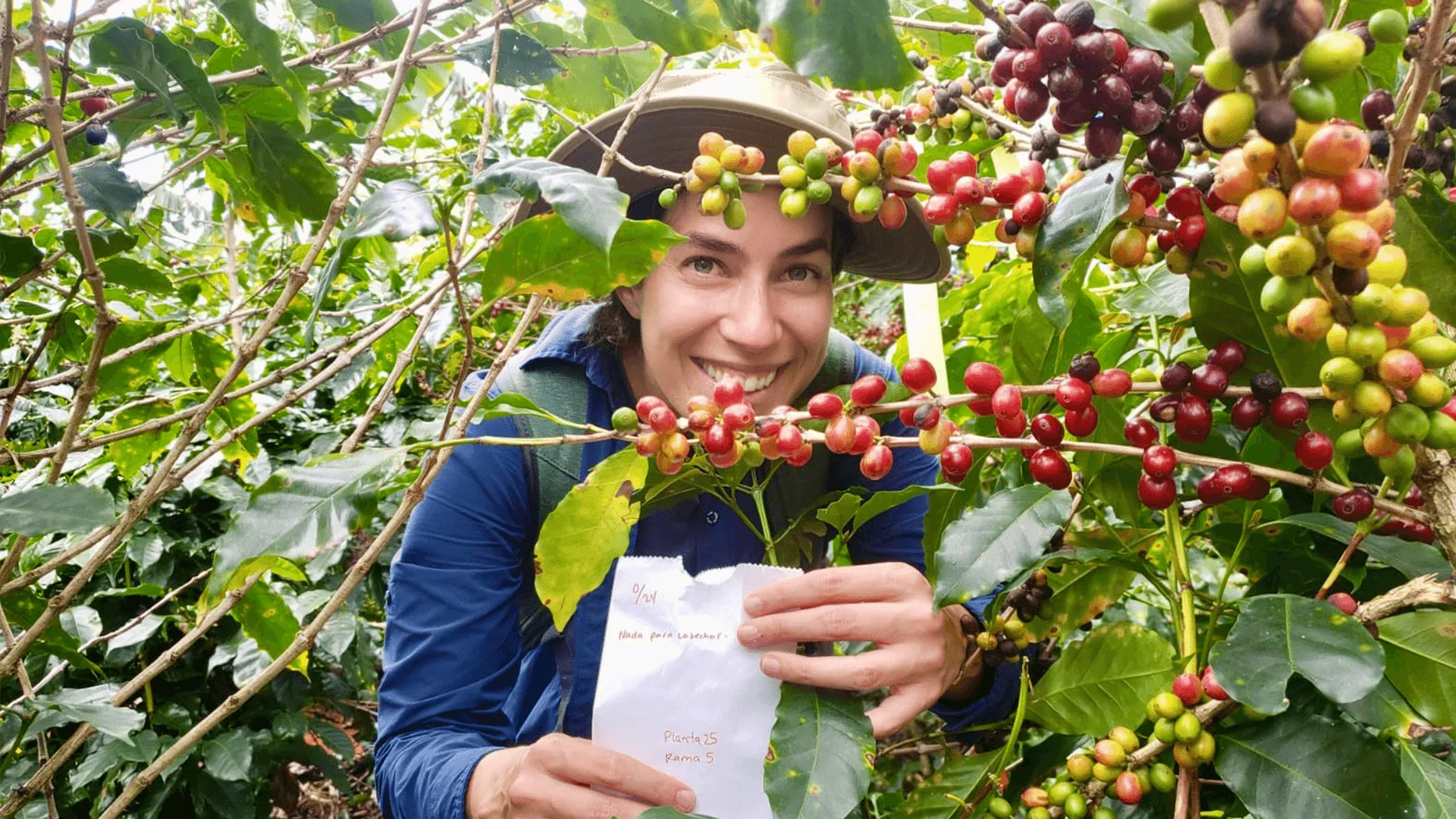
In 2022, through his association with ASOBAGRI, don Israel got that opportunity. He was one of roughly 60 organic coffee producers in Mexico and Guatemala, who participated in a soil analysis study run by University of Vermont (UVM) researchers Ernesto Méndez and Joshua Faulkner, with funding through the Gund Institute for Environment’s Catalyst Award program. The research team worked with trusted partners in the region, including ASOBAGRI and the CESMACH cooperative (Campesinos Ecológicos de la Sierra Madre de Chiapas) in Mexico.
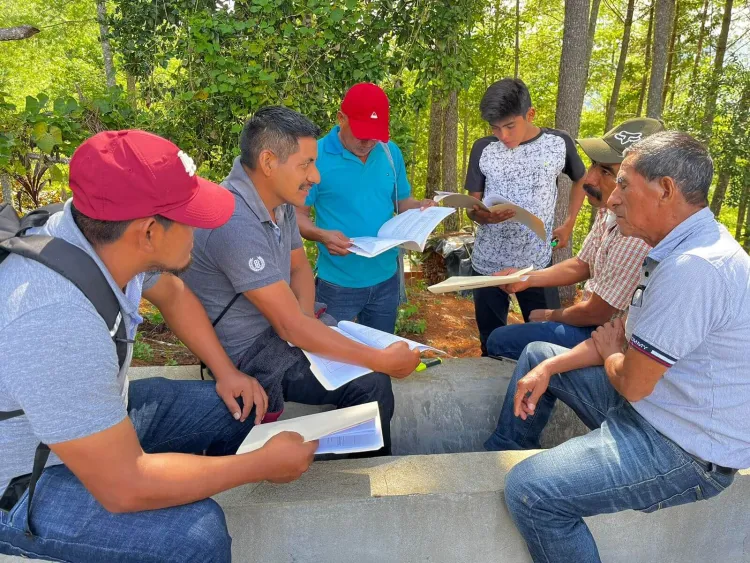
While the researchers tested soils for standard properties like nutrient composition, pH, organic matter and texture, they also widened their scope to include key indicators of soil health, like active carbon, particulate organic matter, bulk density, aggregate stability and the composition of soil macrofauna communities. The team received support from Dr. Steven Vanek and Dr. Steven Fonte of Colorado State University, who have compiled these methods into the Smallholder Soil Health Assessment toolkit.
The study also employed a Participatory Action Research approach. It was designed to involve cooperative technical staff in data and sample collection, soil sample analysis, and the interpretation of findings into personalized recommendations for farmers that didn’t require extensive training, fancy equipment, or bank-breaking investment in services.
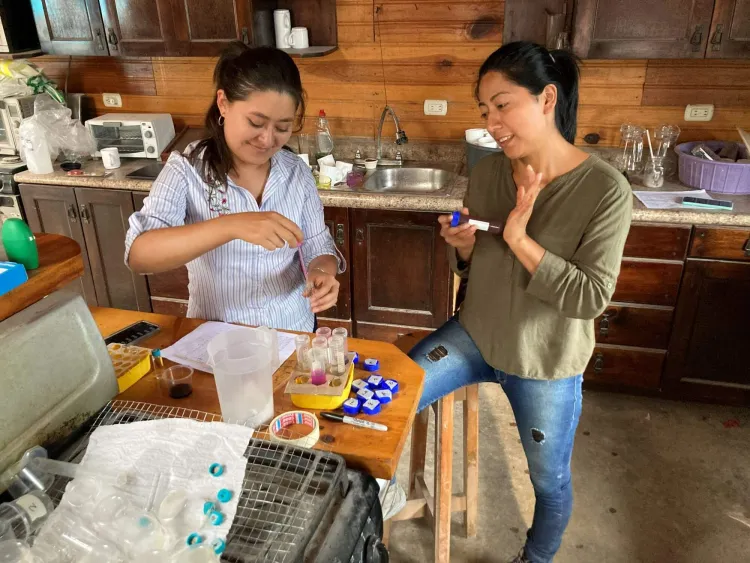
The research helped fill a gap. Small-scale farmers in Mexico and Guatemala don’t have access to public agricultural extension programming and the cost of soil testing is often out of reach. A standard soil test is twice as expensive in Guatemala and four times as expensive in Mexico compared to what UVM charges. That doesn’t consider the sharp disparity in disposable incomes of Guatemalan producers compared to Vermont farmers and gardeners.
For don Israel, the soil analysis and subsequent technical assistance he received from ASOBAGRI have fundamentally shifted how he does his work. He uses more organic fertilizers and now builds and maintains terraces around his newly planted coffee plants as a soil conservation measure.
“I saw a real change,” he said. “It's a real step forward to have professional people by our side. Sometimes we farmers work in our own way, and we don't always manage to improve our production on our own.”
Some of the soil test results threw into question assumptions both the farmers and cooperatives had about growing coffee in the region.
For example, the results showed that some plots were not as acidic as previously thought, calling into question a recommendation commonly delivered to producers in the tropics that they apply lime to raise the pH of their soils. Other plots showed high levels of organic matter, which encouraged some farmers to try out new liquid fertilizers, which are easier to manage and apply than compost.
“While there is lots of value in weaving together different ways of knowing, farmers seem to like that we’re having discussions based around measurements and quantitative data,” said Andrew Gerlicz, a PhD candidate in UVM’s Agriculture, Landscape and Environment program and a Gund Graduate Fellow who joined the project in 2022.
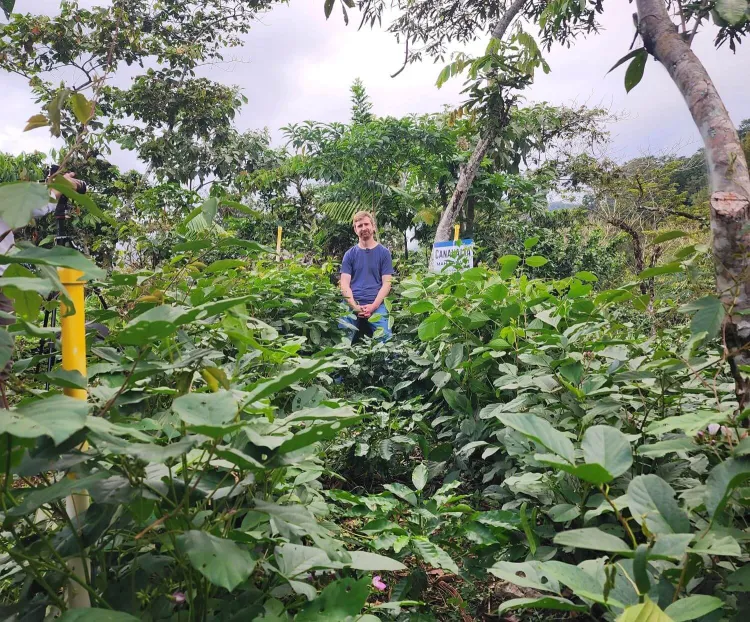
“They’re curious about what these methods say about their on-farm conditions and involving them and cooperative technical staff in an extension-like process built around inquisitiveness, testing and problem-solving—rather than just blindly promoting whatever new technique or initiative external actors have latched onto— has been an important shift and outcome of the Catalyst project,” he said. “It’s definitely allowed us to do better research.”
Post Catalyst Award
The Catalyst Project wrapped in 2024, but it caught the eye of Catholic Relief Services (CRS), an international humanitarian agency. The group began partnering with ASOBAGRI in 2024 to implement the Iniciativa Horizontes (Horizons Initiative), a 10-year, multi-pronged effort to boost the use of regenerative agricultural practices in the region.
The program director heard about the soil research and asked for a meeting with Gerlicz, who now lives full-time in Mexico.
“They got very good first impressions that it was possible to coordinate this type of work mainly on coffee plots,” said Wilvy Reyes, a regenerative agriculture specialist with CRS who works on the Horizons Initiative.
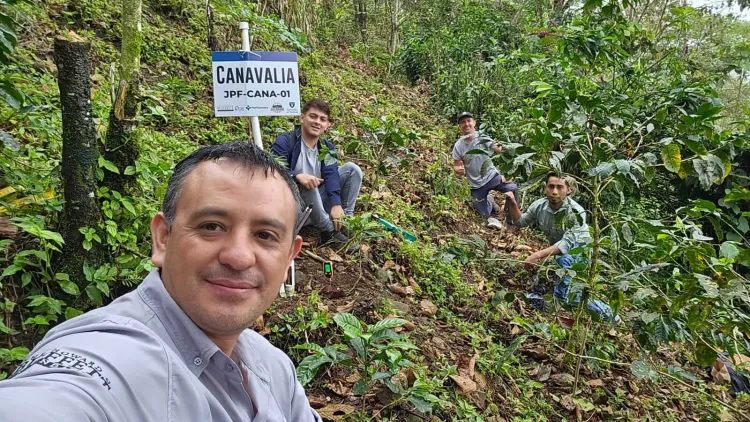
CRS agreed to provide three years of funding to investigate the use of cover crops within recently replanted coffee plots to reduce soil loss, accumulate organic matter and improve soil structure.
Coffee plot replantings, sometimes called renovations, have been a common activity among growers in the wake of losses from the coffee leaf rust outbreak over a decade ago.
Farmers replace old, unproductive coffee trees with new seedlings, which improves yields and income. But it also leaves the steep plots more exposed. With the old coffee trees gone, much of the shade disappears, and farmers often thin the taller canopy as well, leaving the soil vulnerable to heavy rain and erosion.
The window before the new coffee plants fill out offers an opportunity, too. Farmers can grow cover crops that pull nutrients back into the soil, loosen compacted ground and form a natural, terrace-like barrier that slows rainwater as it moves downhill.
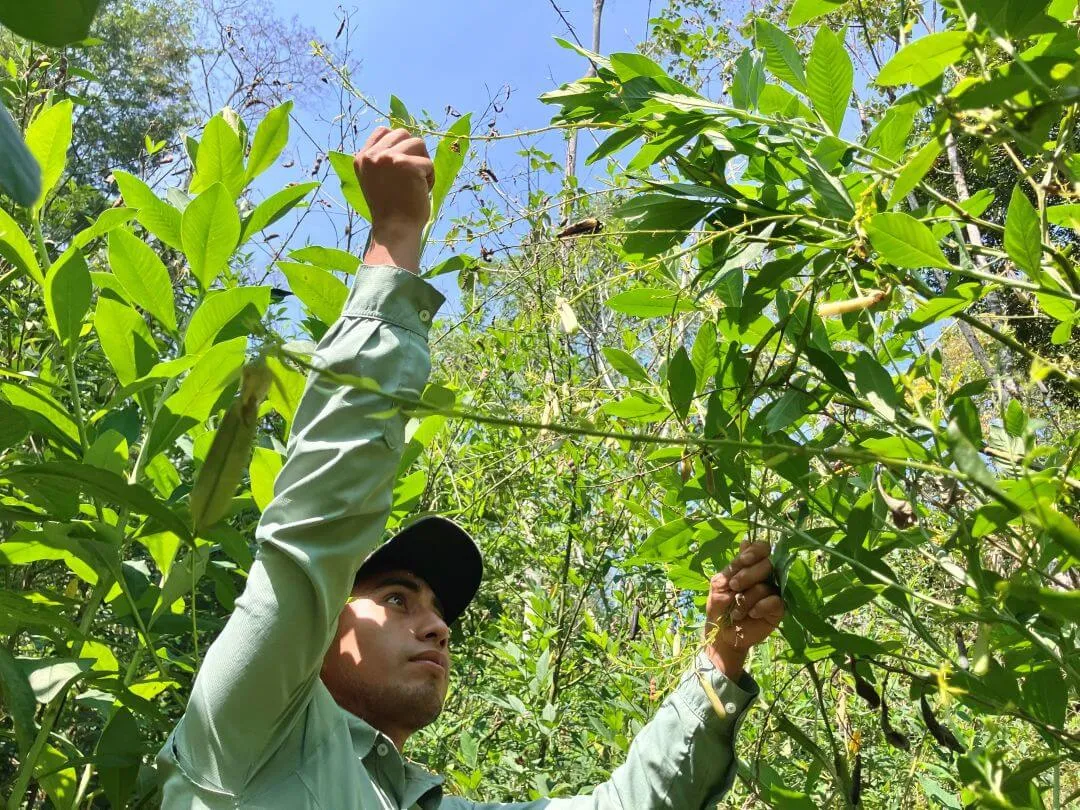
Four crops are being tested: sweet potato, Vetiver grass and two legumes—jack bean and pigeon pea. So far, Gerlicz is working with six farms, with more in the pipeline. Farmers who participate actively co-manage the experimental plots with a small monthly payment to cover labor costs.
CRS doesn’t have a research arm, which is why partnering with UVM and ASOBAGRI is so valuable, Reyes said.
“We see the effects that cover crops have on the soil, and farmers see them too, but what's missing is scientific information showing measurable, replicable results that can guarantee that cover crops have an effect on the soil and, later on, effects on improved production,” he said.
With the proof, he hopes more farmers will adopt cover cropping, which will improve soil health, and provide better harvests and more income for farmers.
Francisco Sebastian Leon is a technician with ASOBAGRI. He offers advice and assistance to producers. He’s also a farmer himself and is participating in the cover cropping experiment. He said the plots where the cover crops are planted were very compacted; the land was barren.
“Before the soil always looked infertile, and now there's a lot of moisture and a lot of leaf litter,” he said. “The jack bean leaves a lot of leaves, and its roots are very deep, and that's what I've seen in the experimental plot.”
Don Israel is another participant in the current experiment. After spending hours together over the course of the last few years, he said Gerlicz has become a friend. His trust in the young researcher was one reason he wanted to participate in the second experiment.
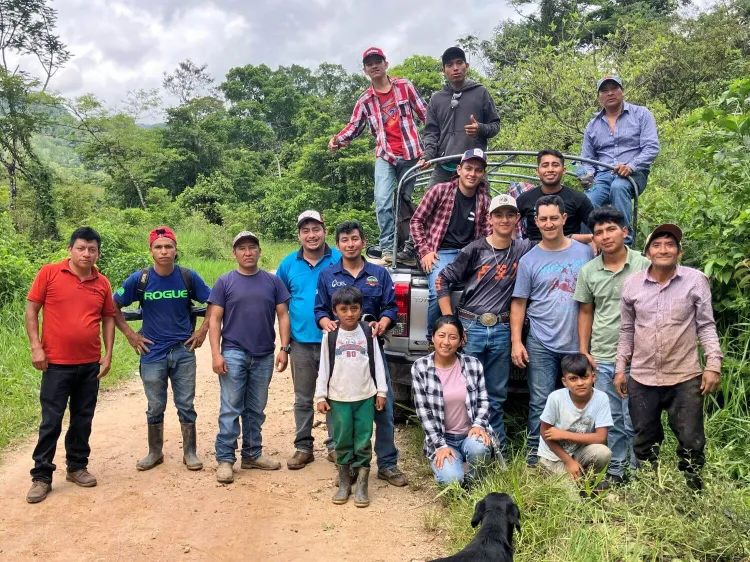
It’s early days, but he, too, is impressed so far.
“In some areas, the soil is very hard, reddish clay, but with these crops planted, the soil becomes softer, more fragile,” he said. “So, we see improvement in the land itself, and also more organisms living in the soil—all of this benefits both the plants and the soil.”
And, he hopes, growers across Guatemala.
“I wasn’t only interested in soil improvement, but I wanted to know what I was doing in my work. And not only for me. I also wanted my colleagues … to have the same practice, the same experience,” he said. “I wanted them to feel the best, to work in their own plots and have better produce.”
Catalyst Award participants included: Ernesto Mendez, professor of Agroecology and Environmental Studies in UVM’s College of Agriculture and Life Sciences, co-director of the Institute for Agroecology and Gund Faculty Fellow; Josh Faulkner, research associate professor with UVM Extension, director of the Agricultural and Environmental Testing Lab, director of the UVM Center for Sustainable Agriculture and Gund Faculty Fellow; Andrew Gerlicz, Ph.D student with UVM’s Agriculture, Landscape and Environment program and a Gund Graduate Fellow; Alejandra Guzman Luna, Universidad Veracruzana; Mareli Dominguez Gomez, Ines Perez Gomez and Rosa Lopez Valentin with CESMACH coffee coop; and Hanory Lopez, Crisbel Tejax, Julio Lopez and Cesar del Valle with ASOBAGRI coffee coop.
Want to learn more: Gerlicz will be presenting on this project and a new experiment with organic corn production in Chiapas as part of the Raymond Seminar series on Friday, 9/25, at 1:10 p.m. in Jeffords Hall, Room 110.