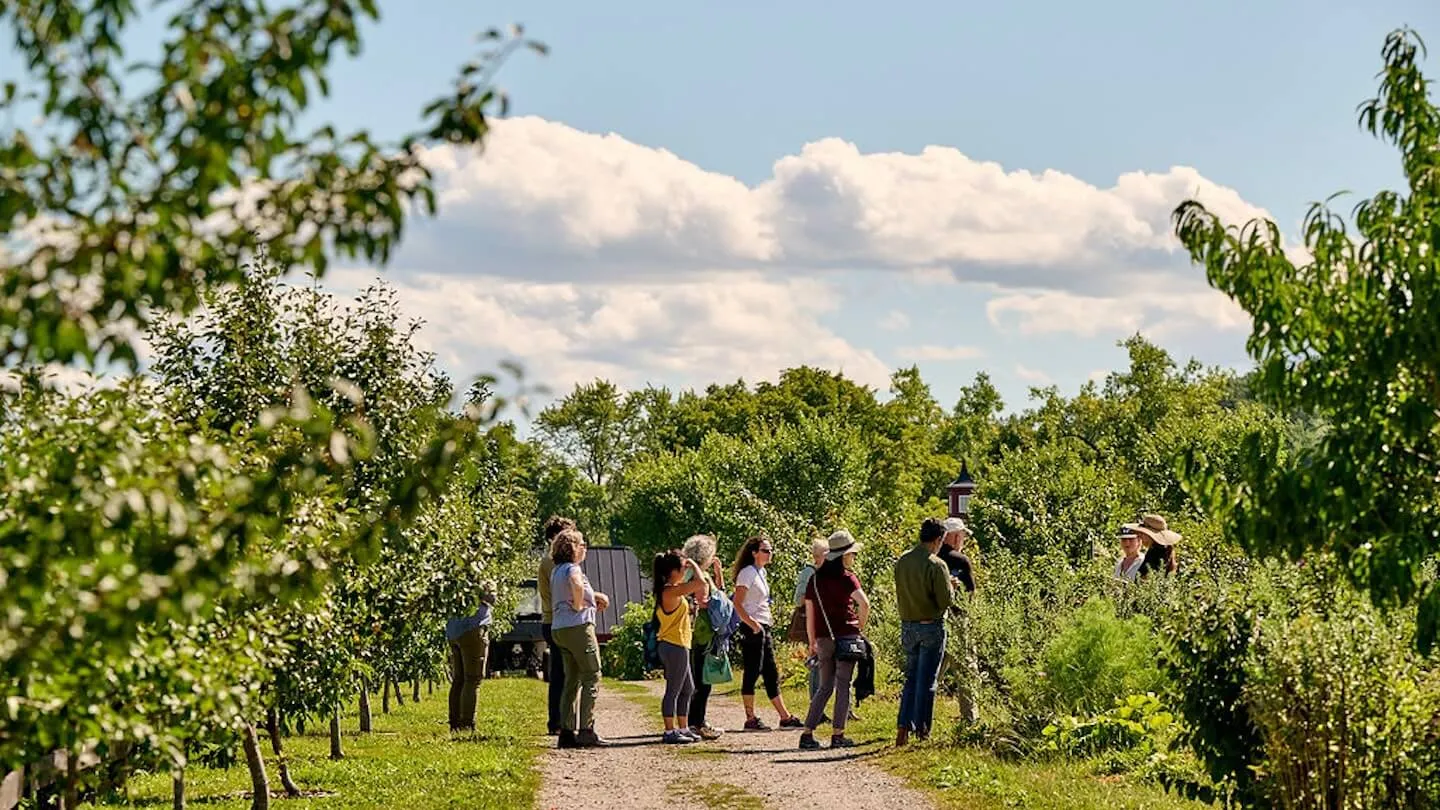
A new national agritourism study has been released by the University of Vermont and U.S. Department of Agriculture, in partnership with the National Extension Tourism Network. Findings show that while three-quarters of respondents increased farm revenue through agritourism, many farmers report needing more help with funding, infrastructure, marketing assistance and visitor data collection.
"Seventy percent of responding farms wanted support in the form of grants and financial resources, which is not surprising given that there are almost no dedicated grant programs for agritourism, which can require upfront investment," said UVM Center for Rural Studies Research Specialist Claire Whitehouse, one of the study's authors. "Many wanted to make their spaces safer and more accessible to visitors, creating pathways and parking areas, building a visitor bathroom, or making an existing bathroom ADA-compliant."
Data were collected through short and long national surveys and in-depth interviews with 10 farms around the country, between 2023 and 2026. It builds on the first in-depth national agritourism survey led by UVM from 2019-2020, as well as the 2024 survey led by Penn State. Findings from all three studies indicate that farms across the United States are welcoming people onto their land, inside their barns, and into their homes, not only to diversify their income, but to connect with their neighbors.
"Some farms don't have making money as their primary goal," said UVM Extension Professor Lisa Chase, who led the UVM studies. "They are motivated by educating visitors and building community. In rural places, sometimes farms are the best spaces for communities to come together."
Which rural place might determine how easy or hard it is for agricultural operations to invite visitors on-site. The new national agritourism study shows that regulations vary across states.
"Ninety percent of respondents from Oregon and 78% of respondents from California said they experienced challenges with regulation, compared to 46% of respondents from Maine," Whitehouse said. "It's important for us to look to these lessons from other states in the midst of the conversation Vermont is having around Act 181."
The practice of humans getting together around the production of food is an ancient one. For example: Native peoples like the Abenaki and Ojibwe have marked early spring with maple sugaring since time immemorial. But the term "agritourism," and farms offering tourism experiences, is relatively new.
Because of that, Chase said the customer service, hospitality and marketing pieces can be challenging for farmers used to production agriculture.
Both Chase and Whitehouse see opportunities for strengthening these skillsets. They said technical assistance could help farmers as well as researchers in gathering the consumer data needed to understand what draws visitors to farms, and what's worth investing in.
"First of all, helping farmers decide, 'Do I even want to move into agritourism?'" Chase said. "And for those that do, providing training, resources and support, focusing on: who is coming to your farm, who do you want to come to your farm, and how do you reach out to different potential markets?"
A webinar to discuss the new national agritourism study and its findings is scheduled for 2 p.m. EST on Oct. 6, 2026. Registration is open now.
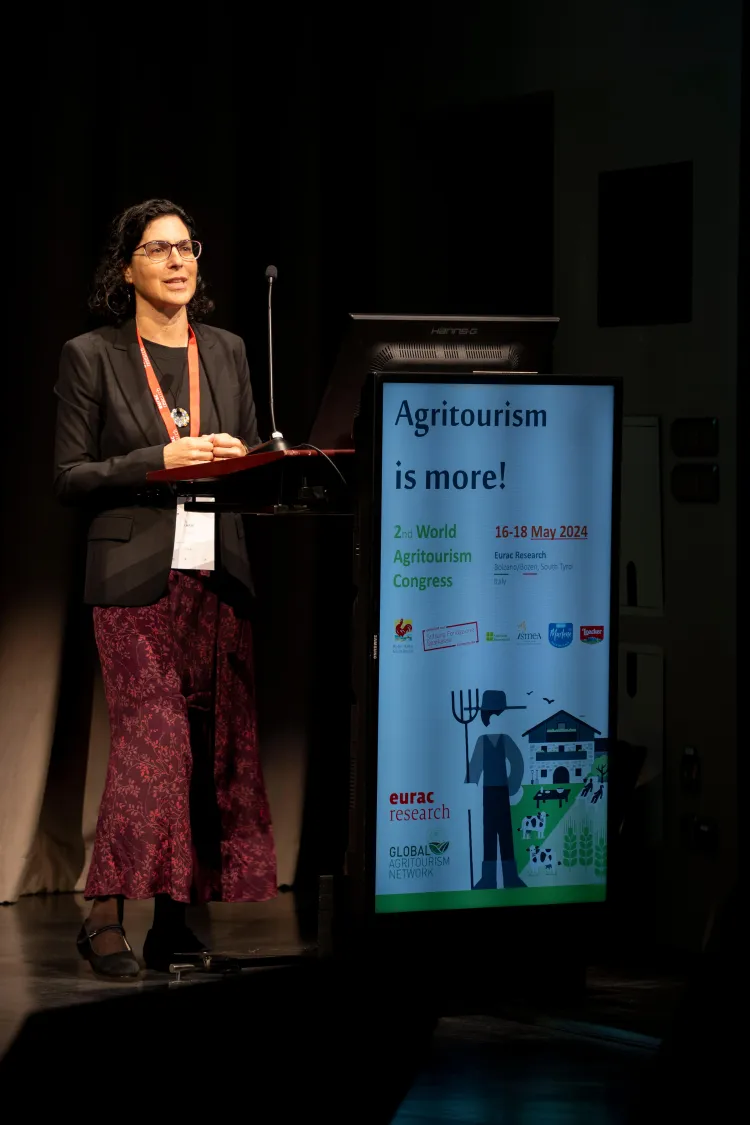
This study is UVM Extension's latest effort in working with partners around the world to provide agritourism research, education and practical tools. In 2022, Burlington, Vermont hosted the International Workshop on Agritourism, with Extension Professor Lisa Chase acting as conference chair. The Global Agritourism Network (GAN) then formed in 2023 -- Chase was elected as the founding president.
In just three years, the GAN has gathered over 1,400 members across 118 countries. The goal is to build capacity for agritourism worldwide, and to promote practices that sustain the natural environment, local cultures, and social and economic wellbeing of rural communities.
What the GAN provides, which doesn't always happen organically, Chase said, is a chance for farmers to gather around a table and talk with one another.
"Very often, it takes a convener like Extension to bring people together and help foster those networking opportunities," she said.
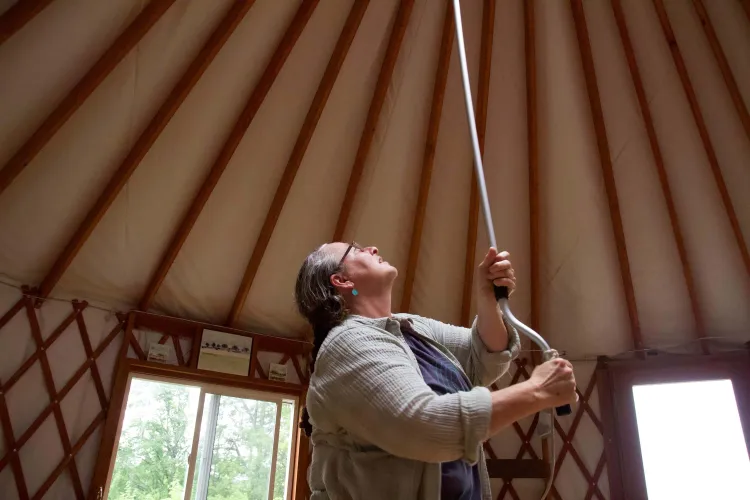
Jenn Colby is one such farmer using these networking opportunities. She operates Howling Wolf Farm in Randolph.
"I describe us as a biodiversity-forward livestock and agritourism farm," Colby said.
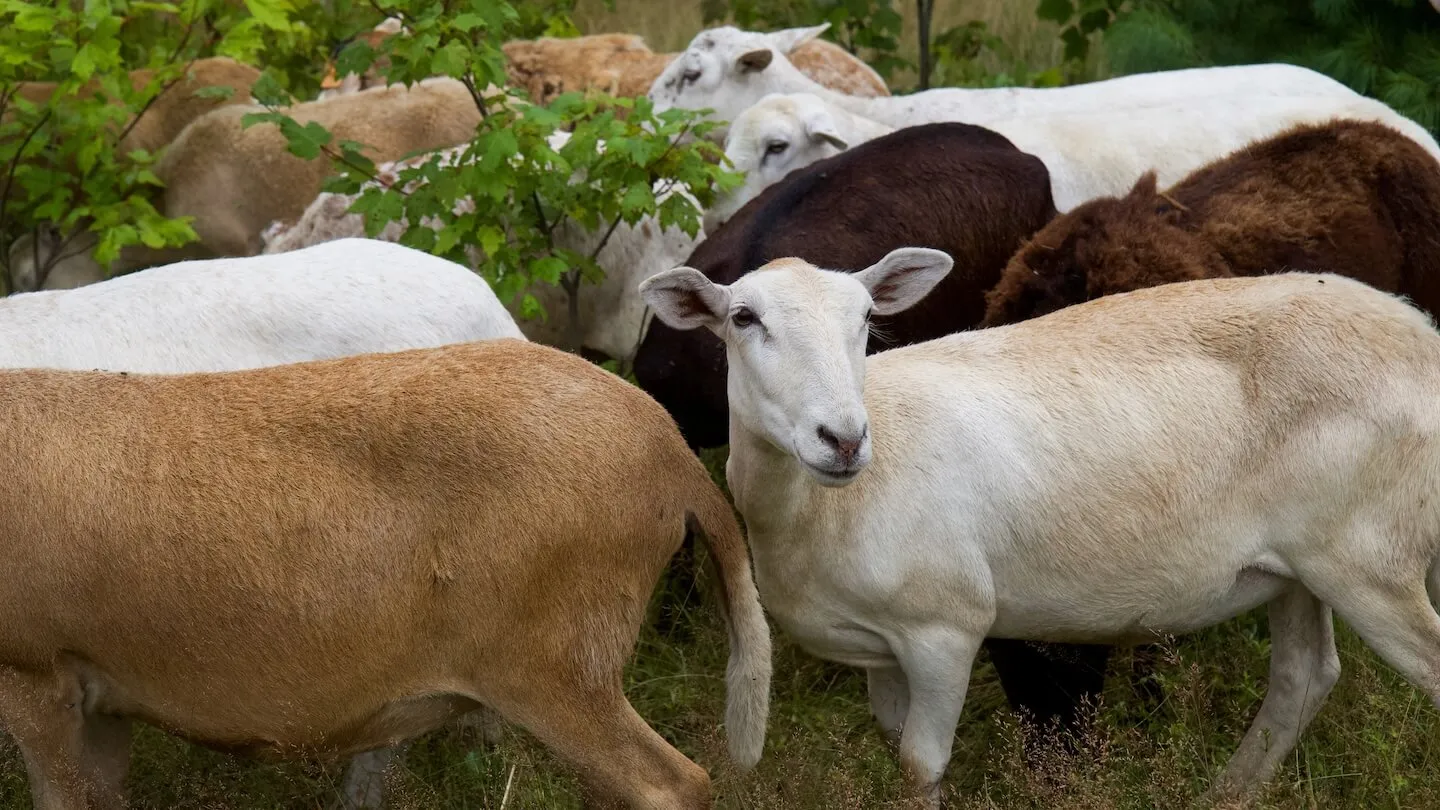
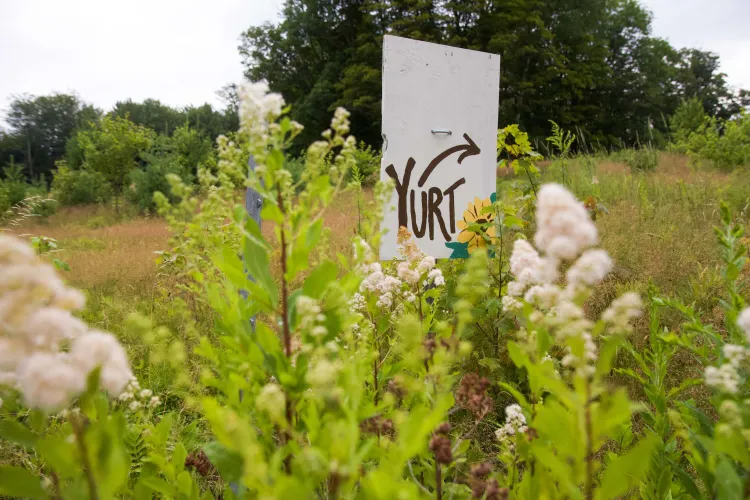
The farm sits on a hill at the top of a tiny dirt road, about a mile from the center of town. Just beyond the dooryard, a giant, multi-variety, decades-old blueberry bush blooms. Further up the hill, Katahdin sheep graze patches of pasture surrounded by forested land. Above the sheep, a hand-painted sign points the way to a yurt overlooking the layered ridges of Orange County.
Colby has been livestock farming for 26 years. She previously worked for UVM Extension for nearly two decades, and she recently returned to UVM as the Research Farm Coordinator for the Food Systems Research Station. At the same time, along with her husband, Chris, she's been fine-tuning a years-long, iterative agritourism project.
"I've tested lots of different models," Colby said. "The thing that we keep settling on over and over that we just love so much, is farm stays."
She added that she felt like she was figuring out a lot of this on her own -- until she heard about the International Workshop on Agritourism that Vermont hosted in 2022. She decided to attend.
"It was amazing to just hear what some of the folks in other countries do for farm stay hosting," Colby said. "What I took away from the conference was that there are many, many ways to do this, just do it the way that you do it and ... the people who also like the same thing will come to you."
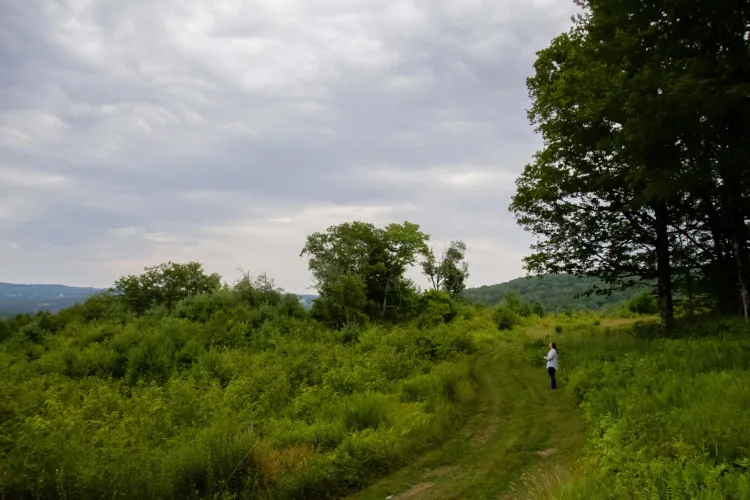
What Colby likes to do, in addition to farming livestock and perennial crops and offering a yurt for farm stays, is emotional healing through process-based art and somatic techniques. She actually gave a presentation about it at the GAN's 2026 conference, held this past summer in Aberdeen, Scotland.
"The benefit of the network is about building relationships, so that the things that I do here can be useful for someone else, and the things that they do can be applied here," Colby said.
Whether GAN participants are asking one another about farm stays, or people management, or marketing, Colby said that having the chance to be connected like this, through the efforts of UVM Extension and its partners, is "incredibly valuable."