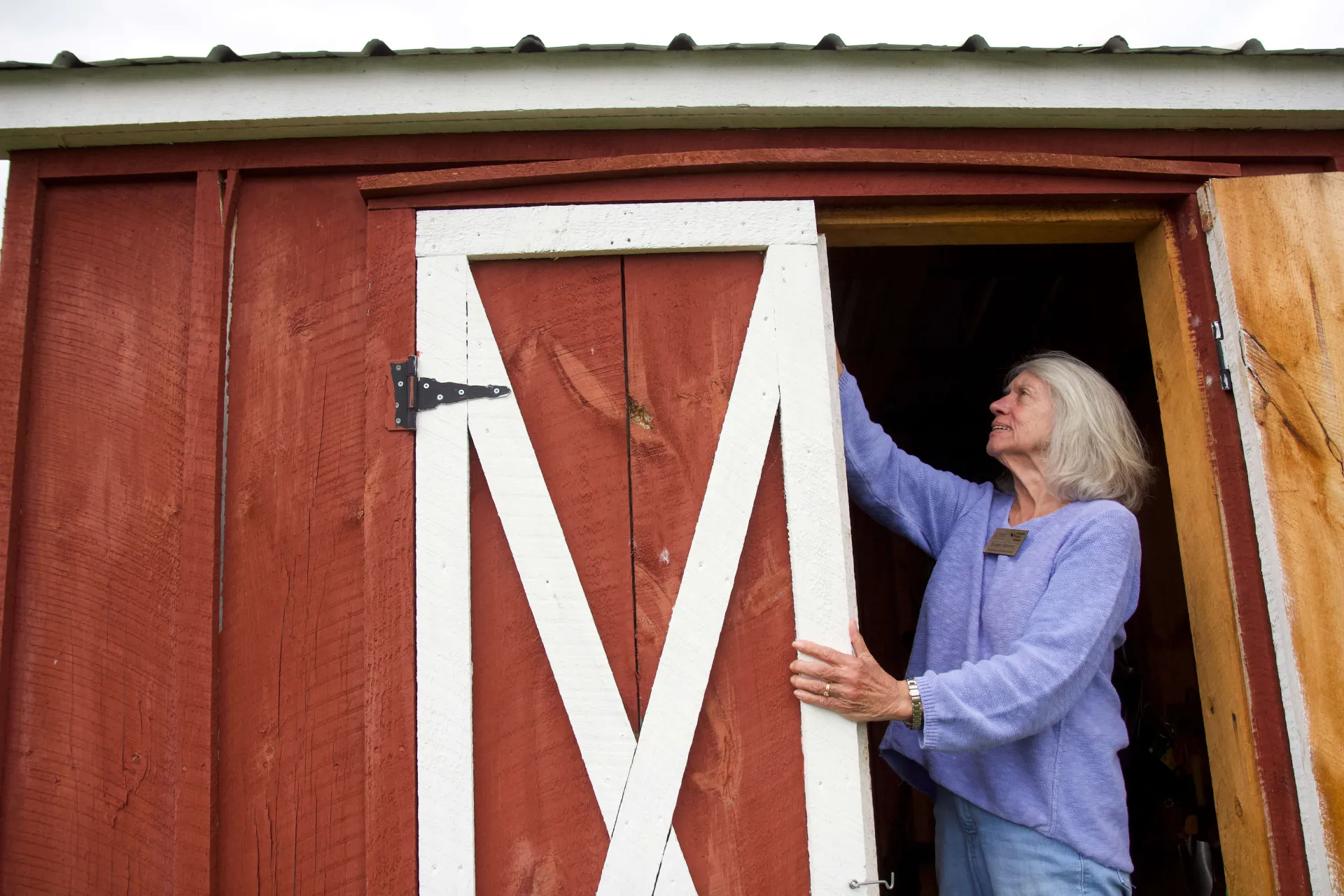
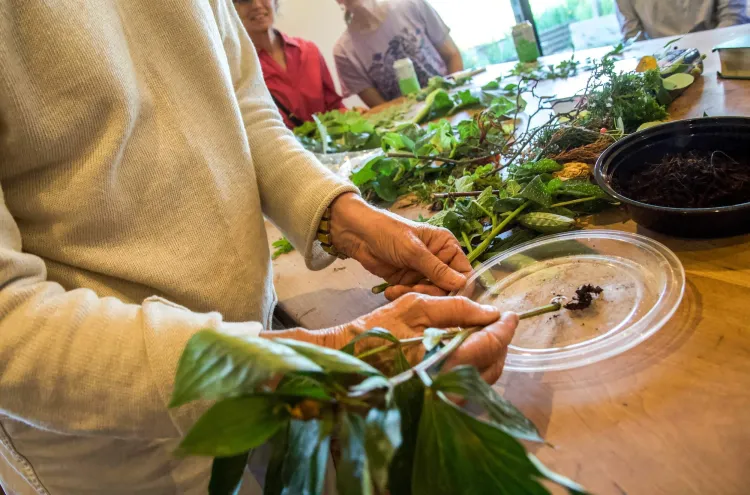
On a wooden table, she laid out a variety of sick Northeast plant samples, many of which came from her own garden. About a dozen local gardeners trickled in and filled up the seats around the table.
For the next hour, Hazelrigg created an open, comfortable space to discuss questions, worries and treatments for common plant diseases — a kind of gardening group therapy.
"You need the pathogen present, you need a susceptible host, and you need the right environment," Hazelrigg explained. "So any disease we're trying to control, we're just trying to manipulate those."
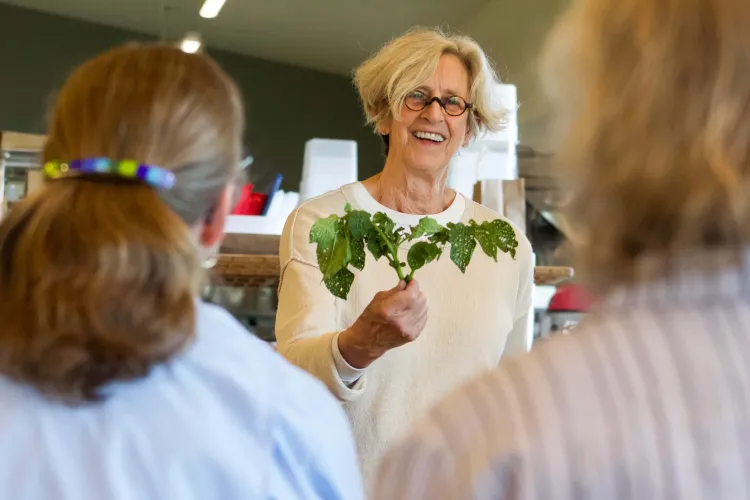
For brown patches on evergreen and rhododendron plants that otherwise have healthy new growth? Hazelrigg said that's likely winter injury, not something infectious, and they can just be trimmed. What about dark fungal spots — anthracnose — on red maple trees? She said that can spread when leaves stay wet for six to eight hours, so opening up the area to air and light, and raking up infected leaves to destroy them in the fall, can help.
Then there's the jumping worm, which Hazelrigg said is "here to stay," but its spread can be reduced through measures like washing the soil off newly-purchased plants. She and workshop attendees batted around ideas for what to then do with the potentially-jumping-worm-egg-infested water. Let it sit in the hot sun? In the oven? And dump it ... where?
Hazelrigg joked: "Well, if you have a bad neighbor..." Everyone in the room laughed.
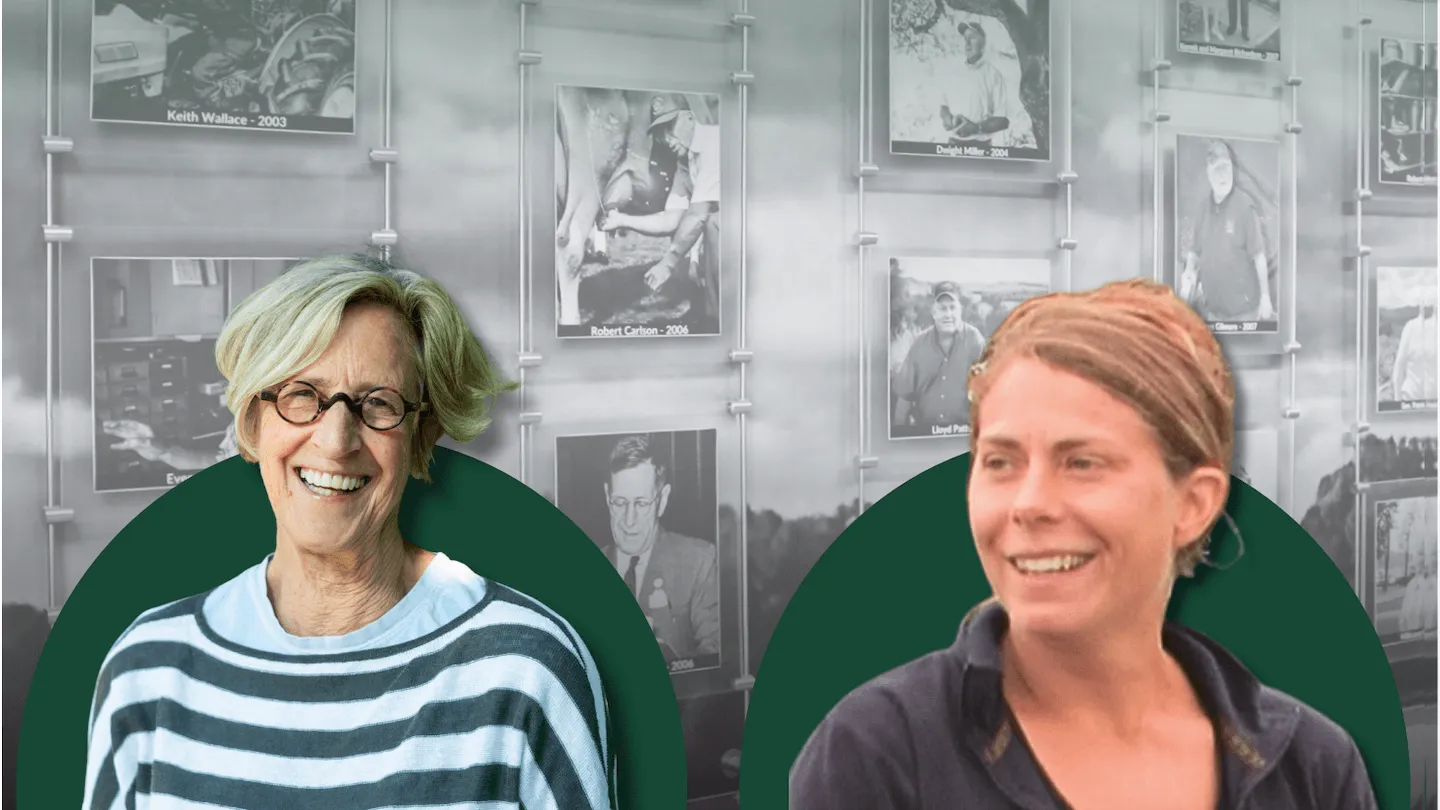
This jovial approach, in-depth knowledge, and give-and-take conversation with community members (not to mention a willingness to work irregular hours) are — according to colleagues, growers, gardeners and the Vermont Agricultural Hall of Fame — what make Ann Hazelrigg so effective in her UVM Extension role as a bridge between the university and Vermonters.
And as she retires after 44 years with UVM, Hazelrigg's character and achievements are being celebrated even as her departure is being lamented.
Charlotte flower farmer Hillary Maraham shared both sentiments during Hazelrigg's plant disease workshop.
"Your relationship to these things is so different than mine is — with [my] lack of understanding comes a level of concern or fear," Maharam told Hazelrigg. "It's a huge comfort that you have all these things in your own yard, and instead of feeling distress about them, you feel like, 'this is what it is,' and there's this curiosity about them."
Maharam later added: "She'll be really missed."
Snow, Solar and a University
Hazelrigg has always been interested in diseases and microorganisms. But during her undergraduate years, at Colorado State University in the 1970s, she initially thought she wanted to diagnose and treat animals. She started on a track to become a veterinarian.
"Then it was sort of the back-to-the-land time," she said. "So I took a horticulture class, and then I took a plant pathology class, and my professor was so funny. I thought, 'Oh my gosh, I'm going into plant pathology.'"
After earning her Master's at Cornell University, Hazelrigg said she and her husband, a solar engineer and "huge skier," were looking for a spot that could cater to their needs: a university for Hazelrigg to do her work (and eventually earn her Ph.D.), snow for skiing, and "alternative culture" open to renewable energy. She received several position offers, including one as a woody ornamentals technician at UVM.
"So we said, 'Yeah, let's come to Burlington,'" Hazelrigg said.
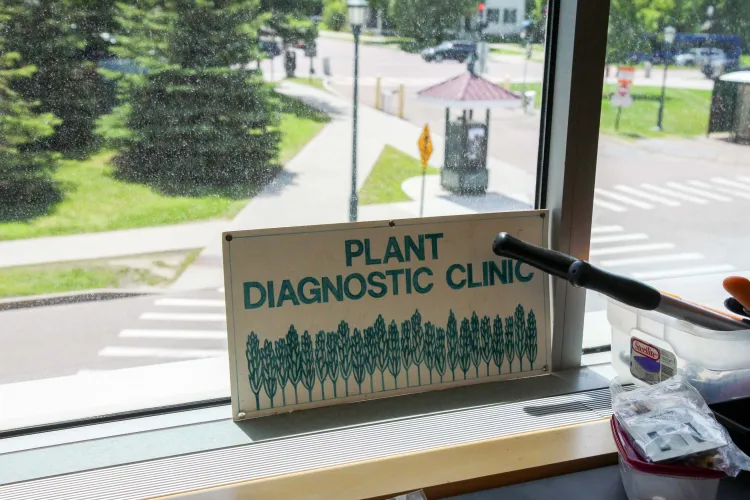
That was 1982. A couple years in, a role opened in the Plant Diagnostic Clinic, and for the next four decades, Hazelrigg never left. Her role and responsibilities did evolve and expand, to the point of overseeing four separate programs in UVM Extension: the Plant Diagnostic Clinic, Master Gardener, Integrated Pest Management, and Pesticide Safety Education.
Intermittently throughout her career, Hazelrigg also volunteered through USAID's Farmer to Farmer program to provide technical assistance to growers in Nepal and India. For one project, she taught women farmers how to graft tomato plants as a way to circumvent a soil-borne disease.
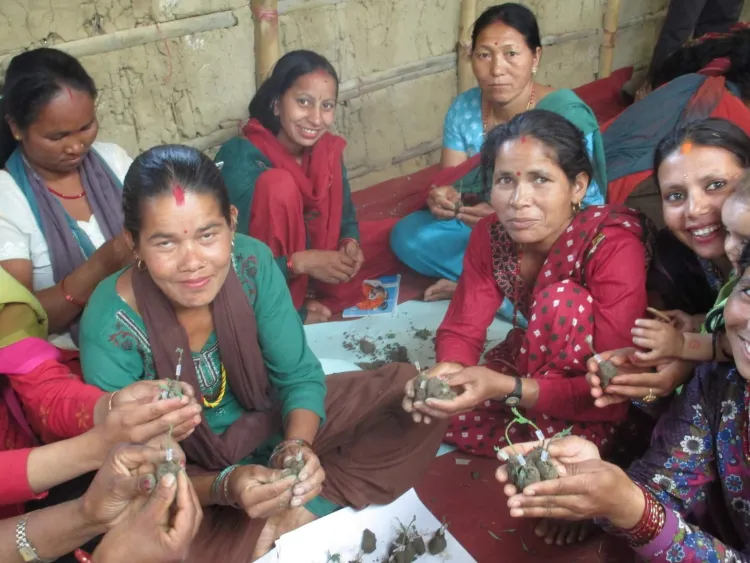
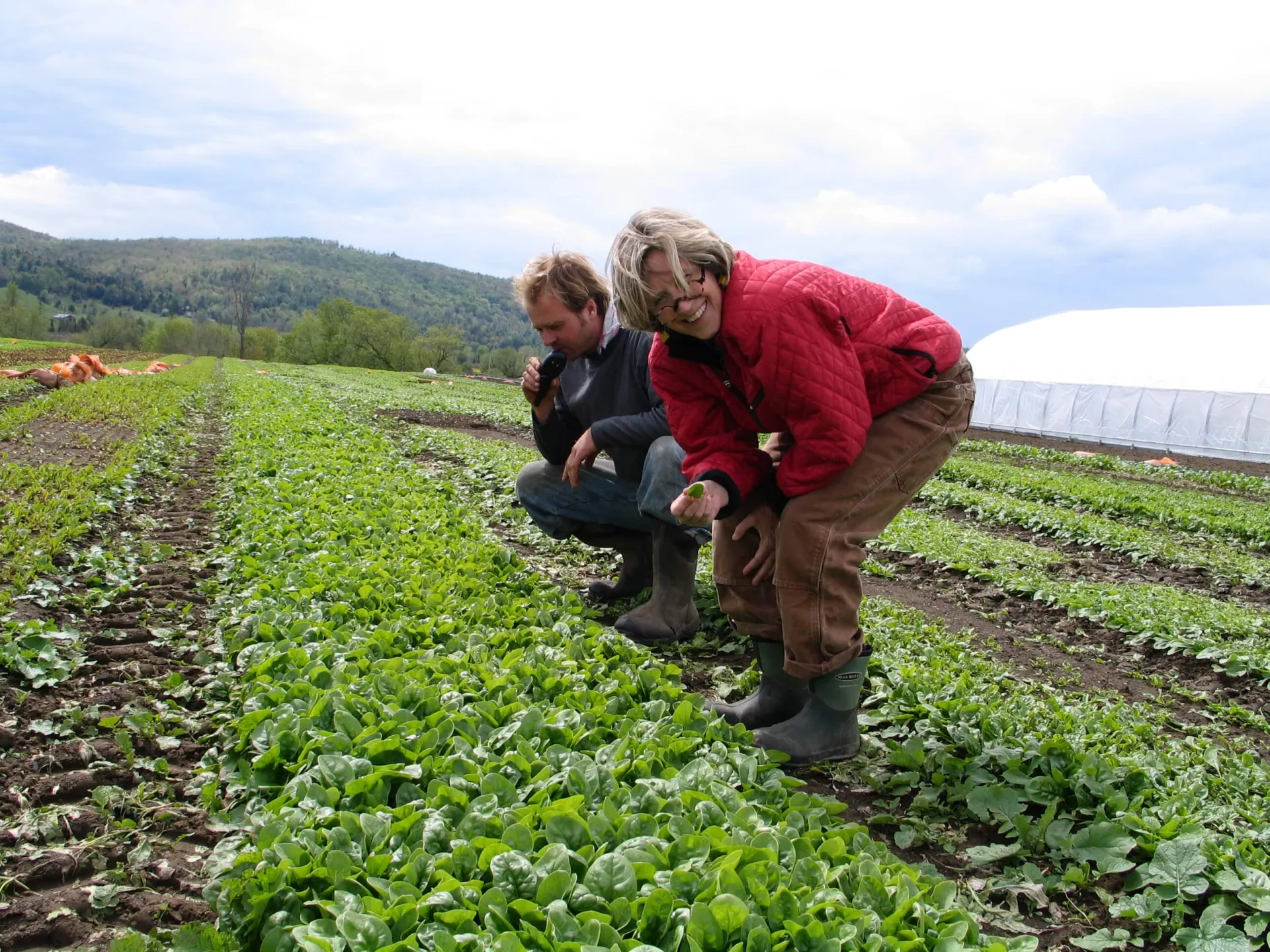
"I am a kind of a jack-of-all trades and master of none," Hazelrigg said. She added that she liked it that way, because it meant she was in the lab, and writing press releases, newsletters and grant proposals at her desk, and giving guest lectures to students and presentations to the public, and visiting farms and gardens with growers.
"I've loved this job, because it's been such a great combination of science and people," she said. "It's never been boring."
Where Science and People Meet
Hazelrigg's ability to use science to support people is what has made her so successful, according to longtime colleague, fellow Extension professor and Vegetable and Berry Specialist Vern Grubinger.
"Ann has a special talent for helping people understand plant diseases and what to do about them," Grubinger said. "She always provides practical, effective recommendations for managing problems on the farm, in the garden, or anywhere in the landscape that plants are grown."
Hazelrigg just received the honor of Lifetime Achievement this summer from the Vermont Agricultural Hall of Fame. The award recognizes individuals who have played an active role in Vermont agriculture for at least 30 years, and who have made a significant contribution to its advancement, improvement, or development.
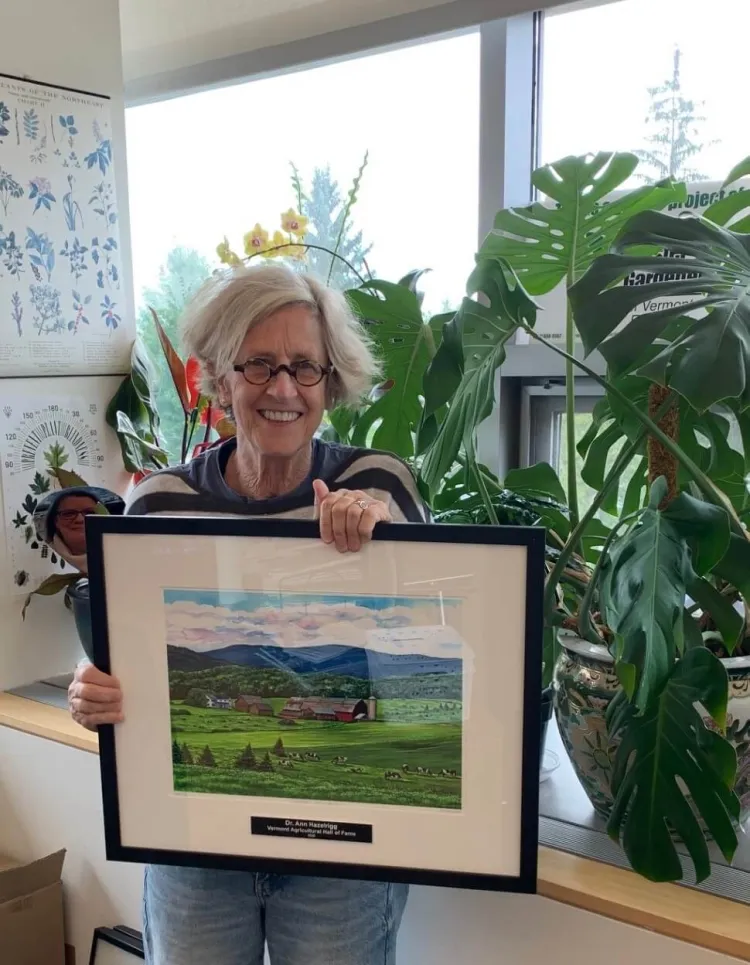
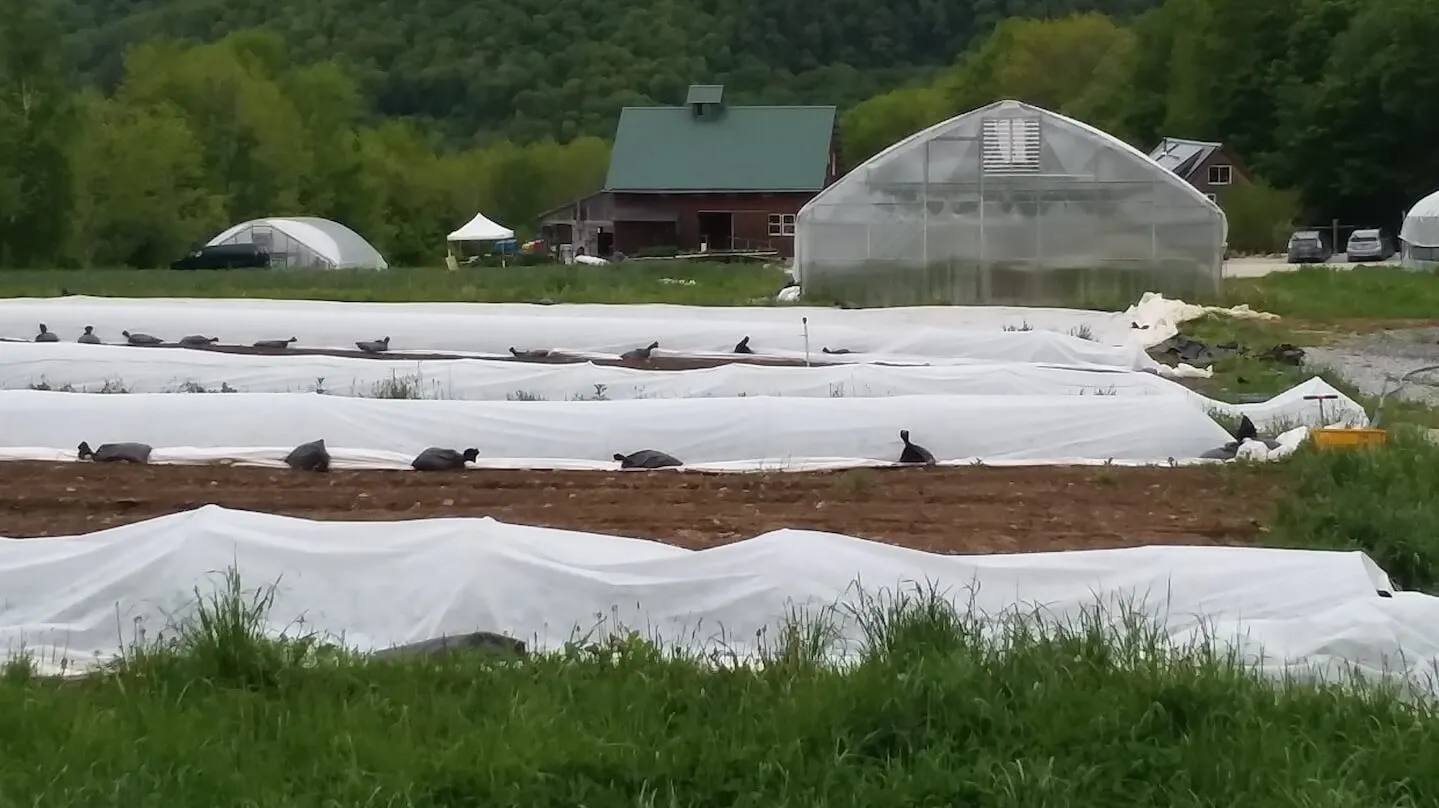
And according to members of the Vermont Vegetable and Berry Growers Association, Hazelrigg has been a "vital resource," a "key part" of farm success and "excellent person in [their] lives."
"[Ann] even invited us to [her] home one evening to urgently examine some blueberry cuttings we feared were affected by Botryosphaeria (they were)," said Rob Meadows and Patricia Rydle of Sunshine Valley Berry Farm in Rochester. "[She] sliced the canes open right there in [her] kitchen!"
Receiving plant samples at home and answering 11 p.m. emails is one way Hazelrigg has made plant disease diagnosis, treatment and information accessible to growers. She's also ditched the "academic" Latin terminology in favor of familiar terms, and contacted other experts whenever she hasn't known the answer.
"Ann was always willing to go the extra mile and contact the potato pathologist in Maine or the cucumber specialist from the Southwest that might have an idea about what ailed us," said Andy Jones from the Intervale Community Farm in Burlington.
And as she did during her plant disease workshop this past summer, Hazelrigg has delivered less-than-easy news with gentleness, and humor.
"I'll miss the joy and agony of [Ann's] 'preview of coming attractions' talk," said Chuck Wooster of Sunrise Farm in White River Junction. "How are we going to know what new plague is about to befall us? [Without Ann's] cheerful diagnosis of all of our disasters over the years... getting wiped out by fusarium or late blight won't be nearly as fun anymore."
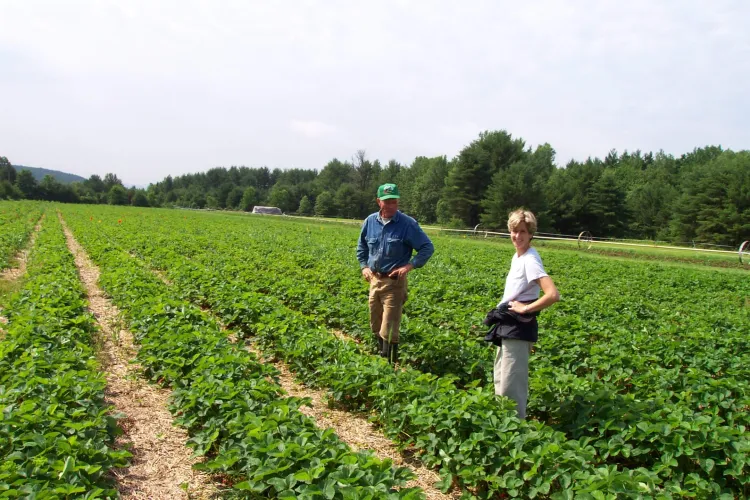
When it's your job to diagnose and treat diseases, like a doctor, or like a plant pathologist, even while you're valued, you're not exactly who people want to have to call. But UVM Extension Agronomic and Soils Specialist Heather Darby said Hazelrigg's responsive, humble demeanor made it easy for anyone to reach out. That includes Darby, who once thought her farm's watermelons were dying.
"They had some verticillium wilt," Darby said. She messaged Hazelrigg, who came right out to the farm and walked the field.
"And I'm sitting there going, 'Oh no, I can't believe this is happening,'" Darby said. But Hazelrigg reassured her it was going to be OK.
"She goes, 'You know — they just need some water,'" Darby said, laughing. "They were starting to fruit, so they were taking a ton of water."
Darby added that Hazelrigg's approach, in addition to being informed by long-term, region-specific knowledge, is decidedly solutions-based.
"She's able to conduct research that's really applicable," Darby said.
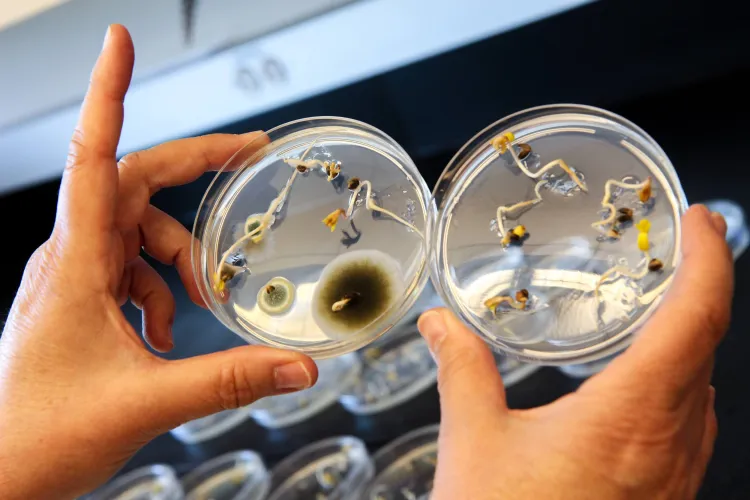
Darby and Hazelrigg have both been part of the larger team researching Integrated Pest Management (IPM), which won the UVM College of Agriculture and Life Sciences' Teamwork Award in 2025. This research and the subsequent share-out of the latest plant disease and pest management practices aim to reduce pesticide use, reduce pest and disease losses, decrease production costs, and reduce human and environmental risks.
"The feeling is in Vermont, nobody's in this business to spray pesticides," Hazelrigg said. "Growers need to use any tool available... so they are eager for any of that information."
Based on a survey of Plant Diagnostic Clinic users in 2025, correct diagnosis and IPM recommendations saved clients an average of $485 in reduced pesticide use, salvaged one grower's eggplant crop, eliminated for another grower the need for a private landscaper, and provided information that could be further disseminated to one local greenhouse employee's coworkers and customers.
"Don't know what to do without them," one user wrote. "They are a central point for spotting trends in Vermont [agriculture] threats.”
A Legacy of Curiosity
Throughout her career, Hazelrigg said she's seen the threats to Vermont agriculture evolve and grow over the past 40 years.
"With climate change, we are definitely seeing different diseases, different pests," she said. "And we are global community, things are coming in and out."
Hazelrigg added that these ever-shifting plant diseases and pests have made for "dynamic" work, which she finds fun and interesting because she's always learning something new. But also, the endlessness of that learning can also mean the endlessness of work.
"You could work 24/7," she said. "Sometimes it's hard to know when to sort of turn it off, and say, 'No.'"
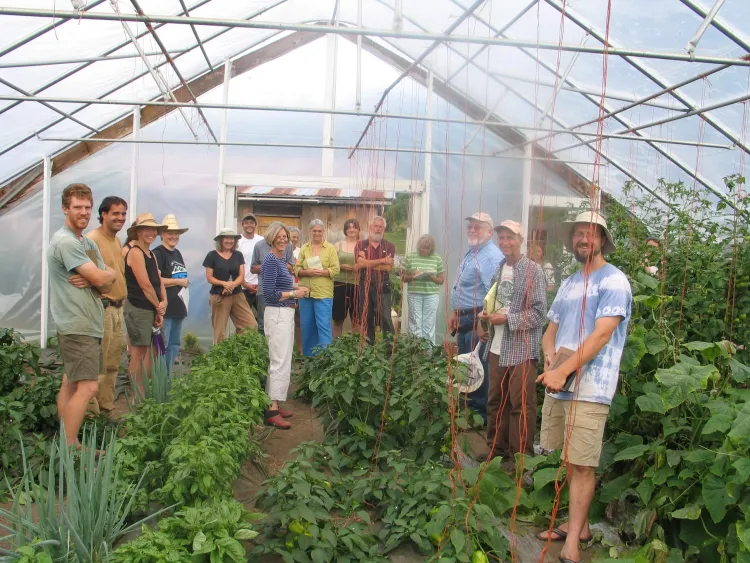
Because time isn't endless, Hazelrigg figured while she's still healthy and able to do other things, she's ready to pass along the torch. (She's also ready to no longer worry about securing enough funding to keep her "awesome" staff employed.)
"We need plant breeders, we need plant pathologists, we need entomologists to solve some of these problems," she said. "I think people are out there that'll carry it on."
That's true at UVM Extension, where Giovanna Sassi, Deb Heleba and Lisa Chouinard, and Sarah Kingsley-Richards will take the lead for the Plant Diagnostic Clinic and Master Gardener and Pesticide Safety Education programs, respectively.
They'll also bring forward the lessons they've gained from Hazelrigg's mentorship. Sassi recalls a particularly memorable example of problem-solving with Hazelrigg that involved a broken stake, a pest trap, the need for new hole in the stake to attach the trap, and a drill press.
"I had never worked with a drill press before, and neither had she, but she just went for it," Sassi said. "No fear, just get stuff done."
She added that she now has a new motto: WWAD, What Would Ann Do.
"It's been a privilege to learn from her," Sassi said.
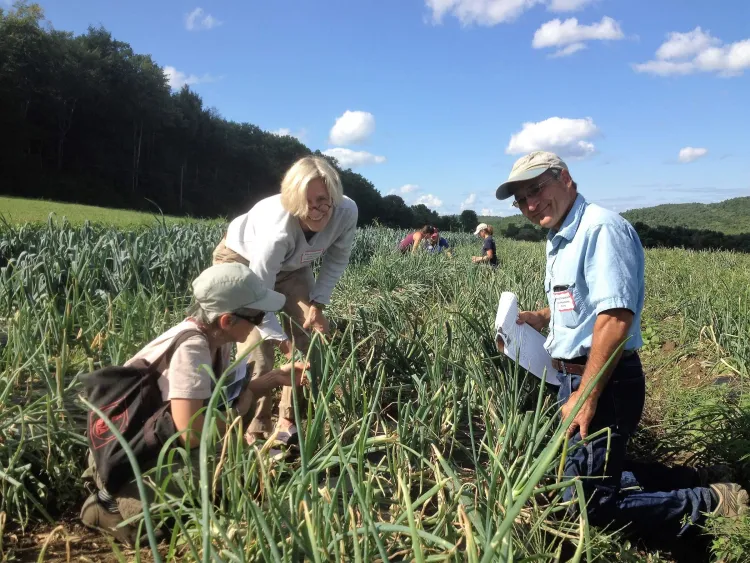
Heleba said Hazelrigg's encouragement to have fun, and to always be curious, are "infectious" (pun intended). Hazelrigg inspired Heleba to pursue a doctoral degree, and to find enjoyment in her educator role with Extension.
"Her enthusiasm has rubbed off!" Heleba said.
What's Next for Ann?
Hazelrigg plans to redirect her enthusiasm toward different pursuits after officially retiring from UVM on Sept. 1, 2026. She's already spent a week in the Dolomites, and her next destination is Scotland, where her daughter is in school for a semester.
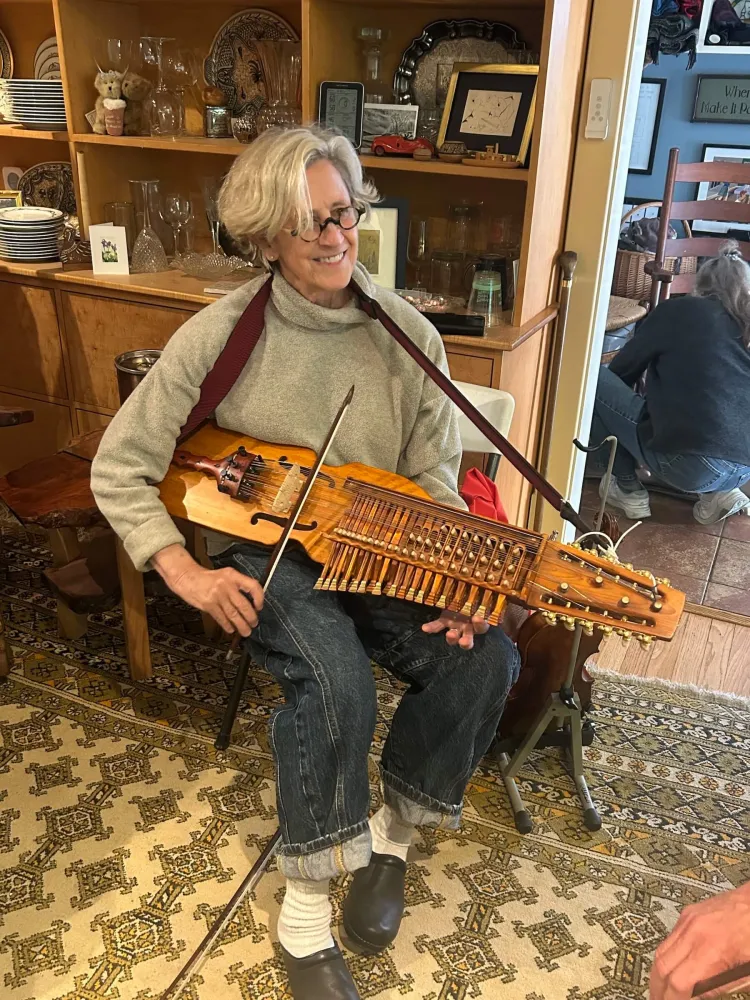
"So I'm going to hike and go to Edinburgh," Hazelrigg said. "And I'm a struggling fiddler and nyckelharpa player."
The nyckelharpa, which is a keyed fiddle and the national instrument of Sweden, dates back to medieval times.
"I won't live long enough to ever be good," Hazelrigg said. But, she added: "I like to be challenged."
While growers in Vermont said it will be a challenge for them to stop saying, "Let's ask Ann," they also wished her happiness, free from sick plants and pests.
"We will be tempted to drop off some diseased tomato or cucumber plants on [Ann's] porch," said Christa Alexander and Mark Fasching of Jericho Settlers Farm in Jericho. "But we’ll refrain and hope we cross paths on the ski trails instead!"
As Vegetable and Berry Specialist Vern Grubinger said in an ode to Hazelrigg, written for an Extension conference this past spring:
"Now it’s [the] time for retirement congratulations
May the future bring you many happiness sporulations!"