Sue Stanne picked up the receiver.
"UVM Extension Master Gardener Helpline," she said. "This is Sue speaking."
On the other end, a caller from Windsor County tried to describe a displaced, overabundant and "weird" vine. Sue Stanne suggested what might help is for the caller to go through the Helpline's online ticket system, and send a photo of the vine in question.
"Our online system makes it so much easer to identify problems," she said.
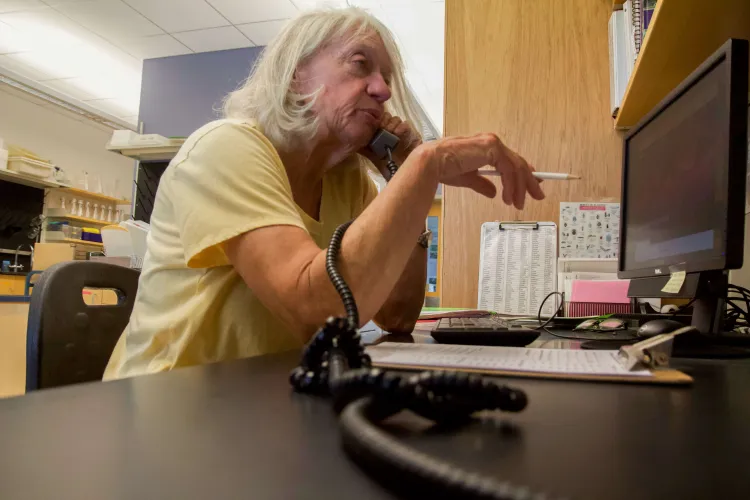
Using the caller-provided photos, the Vermont Invasives website and the Extension Foundation's "Search Extension" tool that finds science-based resources from Extension organizations across the country, and in consultation with Deb Heleba and Lisa Chouinard from UVM Extension's Community Horticulture Programs (which includes Master Gardener) — Stanne was able to provide some answers. That vine? It was bittersweet.
The caller had some pigweed and yellow rocket growing, too. For all three plants, Stanne shared more information and management tips, including hand-pulling.
"Normally we might say something about solarization to smother the plant," she said. "But this was in her garden, you can't smother everything else."
Answering the Helpline phone from 9 a.m. to noon on Thursdays between April and October, then following up afterwards with callers, is part of Stanne's role in providing science-based gardening education as one of Vermont's 442 Master Gardener volunteers.
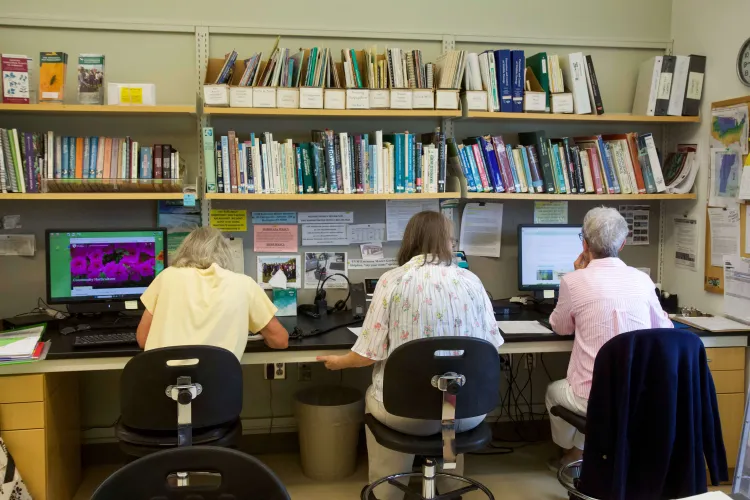
Stanne has been a Master Gardener since taking the certification course in 2003, and she's personally been gardening "pretty much forever." During her childhood, her father grew flowers, blueberries and strawberries.
"You think you know something about gardening until you take the course," Stanne said. "Then you realize how much you don't know, but you learn."
She's been continually learning for 23 years now. She's received a Lifetime Achievement Award, given to Master Gardeners who have volunteered for 1,000 hours. Her projects have included:
- leading the gardens at the former Vermont Respite House in Williston for 13 years;
- managing a plot at the Williston Community Garden, where all the produce was donated to the Williston Community Food Shelf;
- answering any questions fellow gardeners had at the Williston Community Garden;
- and tabling at local fairs, farmers markets and the Vermont Flower Show.
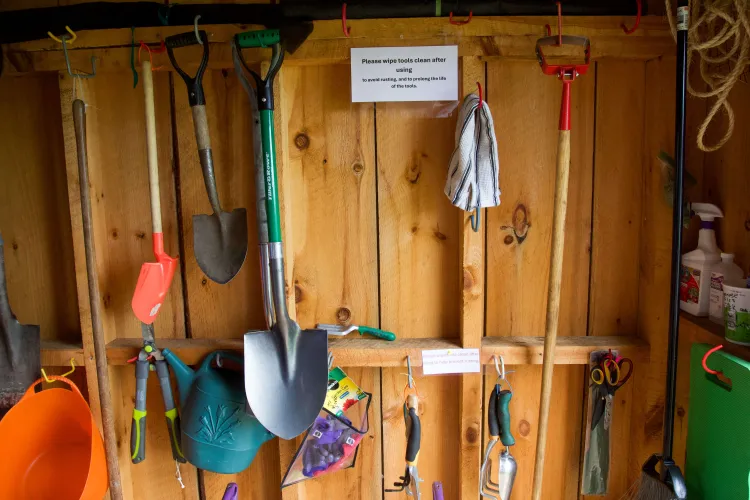
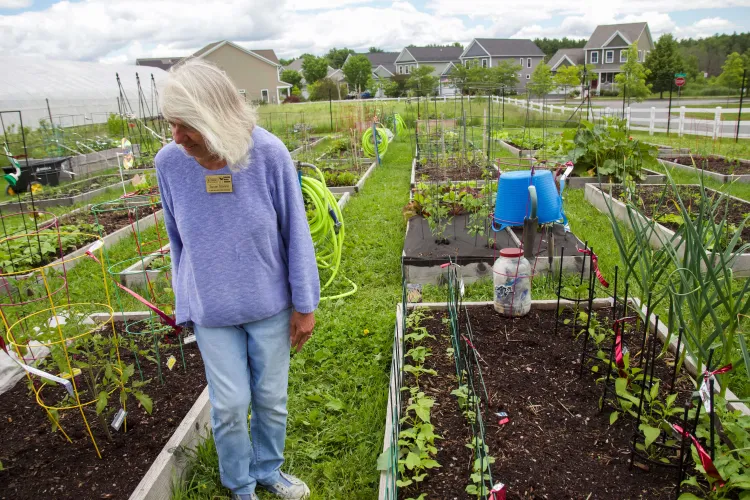
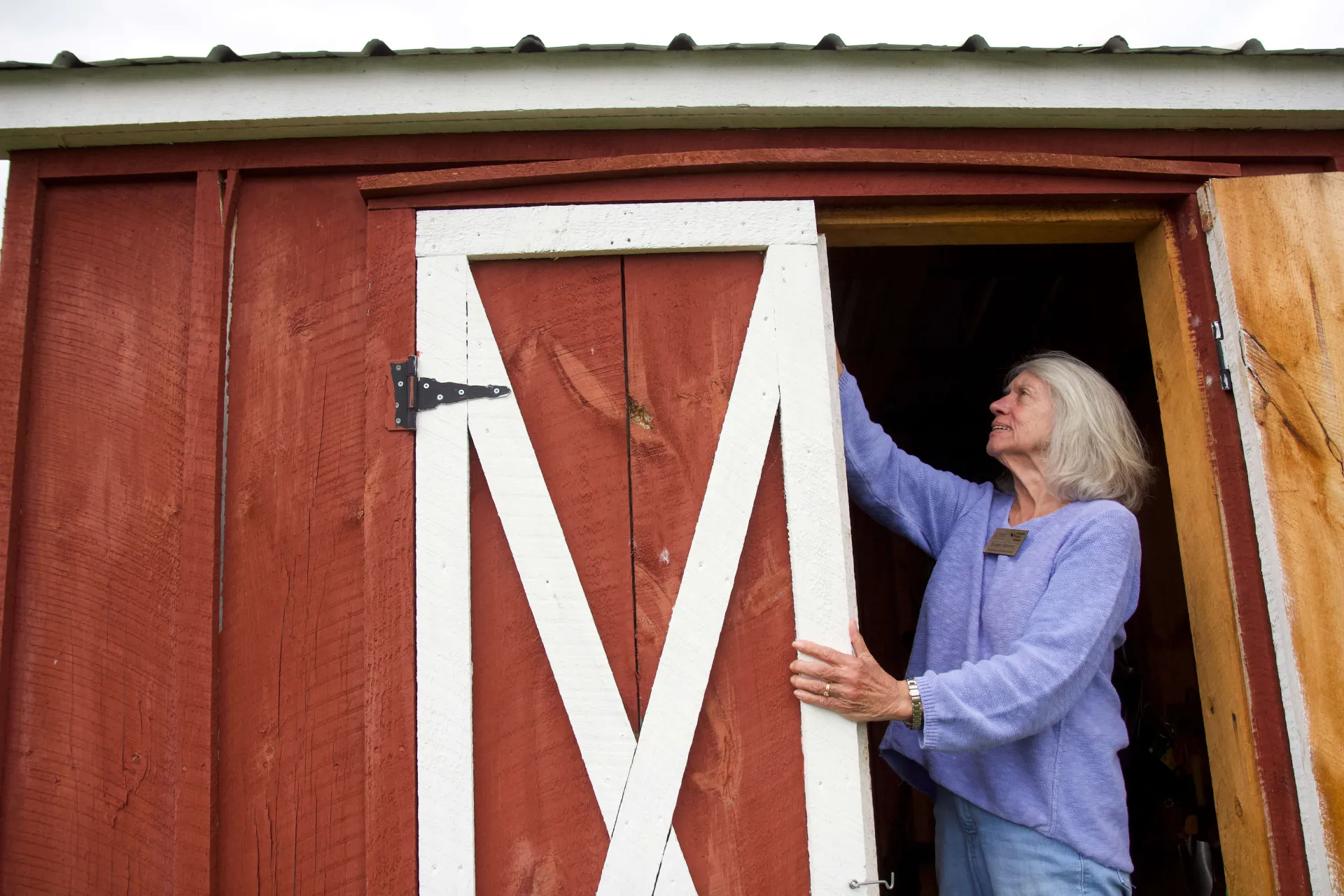
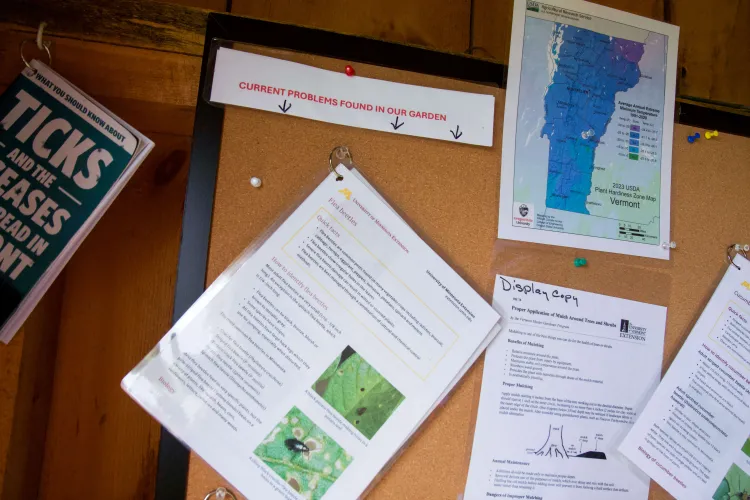
More recently, in addition to volunteering for the Helpline, Stanne has taken on a new project: a community gardening shed at The Farm at South Village, which is an "agrihood" development in South Burlington. Along with members of the South Village Stewardship Committee, she's set up the shed as a hyper-local resource hub. Gardeners can access donated seeds from Harts, borrow tools, look over a provided planting schedule and get the latest information packets tacked under the "Current problems in our garden" sign.
"I'm starting to warn people about cucumber beetles," Stanne said during an interview this summer. "And flea beetles are already here."
It's efforts like this that make Stanne the embodiment of what the Extension Master Gardener Program values in its volunteers. That's according to Deb Heleba, who leads the Extension Master Gardener and Vermont Master Composter programs.
"Not only is she among the kindest humans I’ve met, but she is also committed to sharing her deep gardening knowledge with fellow Vermonters," Heleba said. "We are incredibly fortunate to have volunteers of Sue’s caliber representing UVM Extension.”
Stanne said being a Master Gardener gives her something useful to do in her spare time. And in fielding questions about soil test results, how much compost to apply, what to do with flooded gardens, and many, many more topics, she said it's rewarding, to learn enough about an issue to be able to provide some answers.
"They really feel like they're stuck on a problem, and they call in, or they put in a ticket, and realize, oh, it's not as bad as they think," she said. "They really appreciate being able to get the information. "