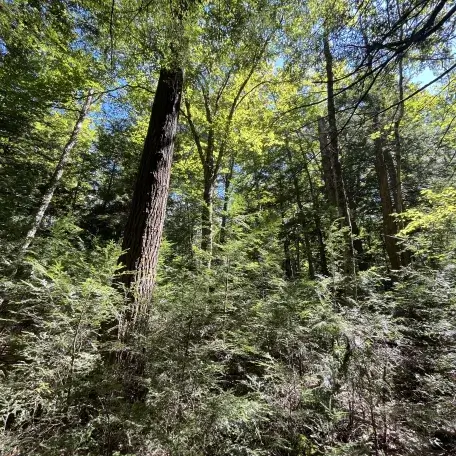
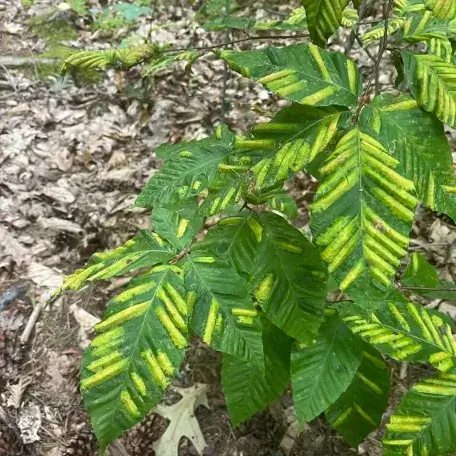
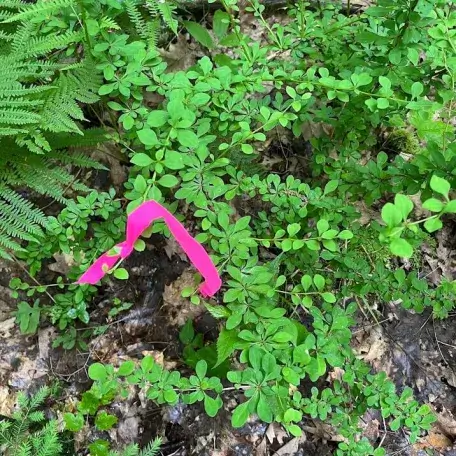
Whether you are just beginning to think about biodiversity or have been stewarding your land for years, your actions matter. Below are actions you can take to promote biodiversity in your forest.
Embrace Messiness
Dead trees and downed logs provide food and shelter for countless species. Unless they block a road, trail, or structure, leave dead trees and branches where they fall, including those that land in streams, where they help form pools and habitat for fish and other aquatic life. Cutting and leaving diseased or slow-growing trees to decompose on the forest floor adds nutrients back into the soil and supports fungi, insects, and the wildlife that feed on them.
Encourage Plant Diversity
Maintaining and supporting a mix of plant species — especially the less common ones -- is a critical part of supporting biodiversity. Each species supports different wildlife. For example, a single conifer (softwood) in a hardwood stand can double the number of bird species using that area.
Grow Trees of Different Ages
A mix of young, middle-aged, and mature trees gives wildlife a variety of habitats and ensures new trees are ready to replace older ones after storms or other disturbances.
Connect Habitat Areas
Connected habitats allow plants, animals, and fungi to move into areas to feed, reproduce, seek cover, and adapt as conditions change. Even small features such as a row of shrubs or trees can serve as travel corridors across open areas. Where introduced plants are not a concern, reduce mowing in these zones to allow native plant cover to develop. Otherwise, planting native trees and shrubs can help jump-start the process.
Resources
General Biodiversity Stewardship
There are many resources to help you steward your backyard or woods depending on your time, resources, and interests.
- Managing Diversity: Forest management practices that promote biodiversity
- Wildlife Habitat Management Manual (PDF): Species ecology and habitat management guidance for landowners
- Vermont Town Forest Recreation Planning Natural Resource Guide (PDF): Guidance on identifying and managing important natural resources in town forests
- Create Habitat in Your Backyard Woods (YouTube): How to create wildlife habitat at home or in the woods
- More than Syrup: Supporting Biodiversity in Your Sugarbush (PDF): Biodiversity best practices for sugarbush management
Young and Old Forest Stewardship
- Young Forest Guide (PDF): Tips for creating and maintaining young forest habitat
- Restoring Old Forest Characteristics (PDF): How to identify and enhance old-forest traits in younger stands
Birds, Bees, Bats, and Bringing Back Wild Trout Stewardship
Birds
- Birds with Silviculture in Mind (PDF): Bird-friendly forest management guidance from Audubon
- Bird-Friendly Maple Sugarbush Management with Birds in Mind: Sugarbush management practices that support birds
Bees and Insects
- Seeing the Forest for the Bees: Introduction to forest pollinators and their ecology
- Bees in the Woods (PDF): Forest bee ecology and stewardship guidance
Bats
- Managing Forests for Bats: Forest management practices that support bat habitat
- Managing Woodlands for State and Federal Endangered Bats: Bat ecology, threats, and management considerations
Bringing Back Wild Trout
- Bringing Back Wild Trout: Trout habitat restoration through strategic woody additions.
Get Help from Organizations and Professionals
You do not need to do it alone. Learning from others and accessing professional support can save time and resources, improve outcomes, and help you steward your forest with confidence. Below are website resources of organizations that host regular events and workshops.
- Audubon Vermont: Bird-friendly technical assistance for landowners
- Natural Resources Conservation Service (NRCS): USDA program offering cost-share and financial support for forestry projects
- University of Vermont Extension Forestry: Science-based forestry resources and education
- Vermont Biodiversity Alliance: Collaborative network promoting and stewarding biodiversity in Vermont
- Vermont Center for Ecostudies: Research and community science on Vermont’s species, communities, and ecosystems
- Vermont County Foresters: Free site visits and technical assistance for landowners
- Vermont Department of Forests, Parks and Recreation: Education, programs, and events led by state forestry staff
- Vermont Coverts: Woodlands for Wildlife: Peer-to-peer education and training for wildlife-friendly forestry
- Vermont Fish and Wildlife Department: Education, programs, and events led by state wildlife staff
- Vermont Natural Resources Council: Technical assistance and policy solutions to protect natural resources and reduce forest fragmentation
- Vermont Woodlands Association: Workshops, walks, and resources on sustainable forestry