Resources
Simplified Forest Structure
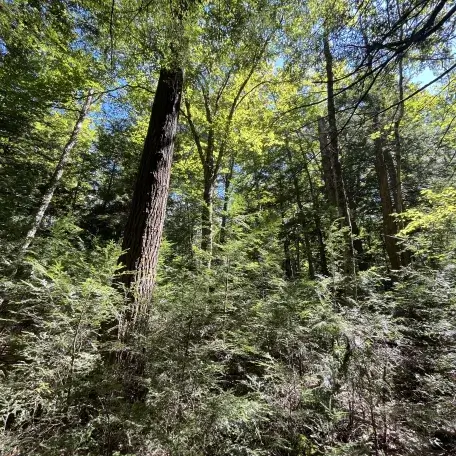
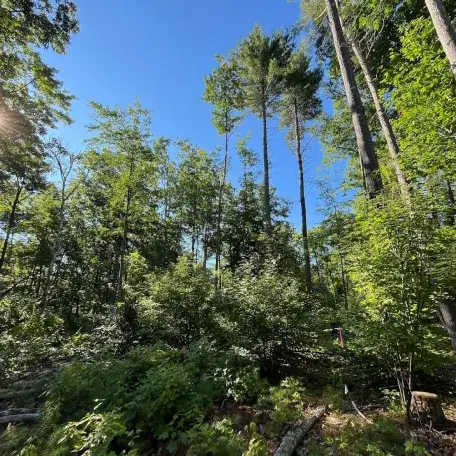
Because of past land use, today most of Vermont’s forests are relatively young and simplified. Many are “even-aged” stands that established after intensive clearing or were “high-graded” for the most valuable lumber. These forests often lack the variety of tree species, large trees, dense understories, and decaying wood that many species depend on. This simplification has reduced the diversity of habitats across the landscape, impacting species tied to the extremes of forest development – very young forests and very old forests.
Resources
- What is Forest Stand Structure and How Is It Measured?: Overview of forest structure, age and size classes, and how to create complexity
- 12 Steps for Climate Resilience: Managing your woods with climate change in mind (PDF): Beginner guide to stewarding resilient, diverse, and complex forests
Habitat Loss and Fragmentation
Vermont continues to lose roughly 5,000 acres of forest each year to other land uses. This conversion fragments formerly continuous forest blocks into smaller patches, limiting the movement of animals, plants, and fungi, reducing available habitat, and increasing vulnerability to invasive species and climate stress.
Resources
- What Is Forest Fragmentation and Why Is It A Problem?: Impacts of forest fragmentation on biodiversity
- Vermont Forest Cover Assessment (PDF): Analysis of forest land cover gains and losses statewide and by county
Introduced Invasive Species
Introduced Invasive plants, animals, insects, and pathogens – often spread through trade, travel, and landscaping – outcompete native species and lack natural predators. Invasive insects such as emerald ash borer and hemlock woolly adelgid threatened keystone tree species and the many organisms that rely on them. Invasive plants such as Japanese barberry, honeysuckle, and buckthorn crowd out native wildflowers and tree seedlings, alter soil and light conditions, and offer poor-quality food for wildlife.
Resources
- Learn About Different Introduced Invasive Species & Pests and Control Options: Identification and management resources
- Report Invasive Species to Help Experts Track Them: Help experts track introduced invasive species statewide
Overbrowsing by Deer
High browsing pressure from white-tailed deer reduces regeneration of tree seedlings and wildflowers, leading to simplified forests dominated by a few unpalatable plants. This lowers habitat quality for birds and pollinators and reduces resilience.
Resources
- Effects of Deer on Forest Ecosystems And the Use of Slash Walls for Forest Regeneration: Deer ecology and impacts on forest biodiversity and regeneration
- Addressing Deer Over-browsing: Impacts of deer overbrowsing and strategies to reduce damage
- Landowner – Hunter Connection: State resource connecting landowners with hunters to reduce deer impacts in their forests
- Resilient Forests Initiative - Managing Deer Impacts: National Park Service Landing Page of addressing Deer Impacts in national parks and monuments.
Climate Change
Warming temperatures, shifting precipitation patterns, and more frequent storms are already changing Vermont’s forests. Species that depend on cold conditions — such as balsam fir and moose — are declining, while southern species move north. Extreme weather events can damage trees, increase erosion, and stress regeneration.
Resources
- Climate Change Impacts on Northeastern Forests (PDF): How climate change is affecting trees and forests in the Northeast
- 12 Steps for Climate Resilience: Managing your Woods with Climate Change in Mind (PDF): Beginner guide to stewarding resilient, diverse, and complex forests