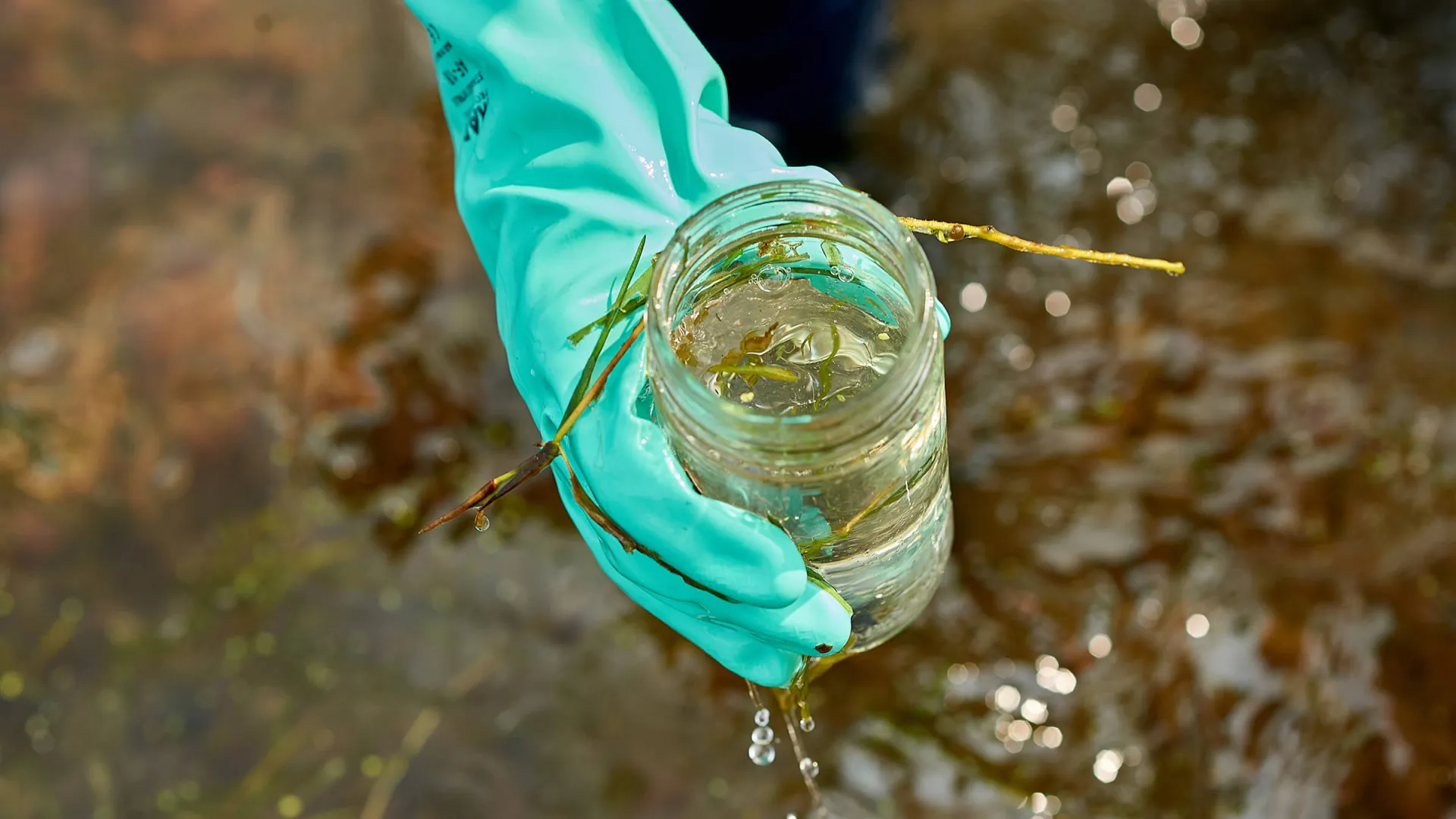
Per- and polyfluoroalkyl substances, commonly known as PFAS or "forever chemicals," have become one of the nation's most pressing environmental challenges. Used for decades in industrial processes and consumer products such as non-stick cookware, stain-resistant textiles, food packaging, and firefighting foams, these highly persistent synthetic compounds can remain in the environment for decades, moving through soil, water, wildlife, and ultimately into people.
Now, researchers from the University of Vermont's College of Engineering and Mathematical Sciences (CEMS) are helping lead a statewide effort to better understand how PFAS move through Vermont's ecosystems and what those pathways mean for human and environmental health. The UVM team has received $950,000 in funding as part of the newly established PFAS Environmental Research Network (PERN), a four-year, $7.9 million initiative supported by the National Science Foundation's EPSCoR Research Incubators for STEM Excellence (E-RISE) program.
Led by Bennington College faculty member Tim Schroeder, PERN brings together researchers from UVM, Middlebury College, Landmark College, state agencies, and community partners to generate new knowledge that can help guide future environmental management, public health decisions, and policy development. At UVM, researchers will contribute expertise in environmental engineering, advanced computational modeling, artificial intelligence, and data science to address critical questions surrounding PFAS contamination and exposure.
Engineering Better Answers
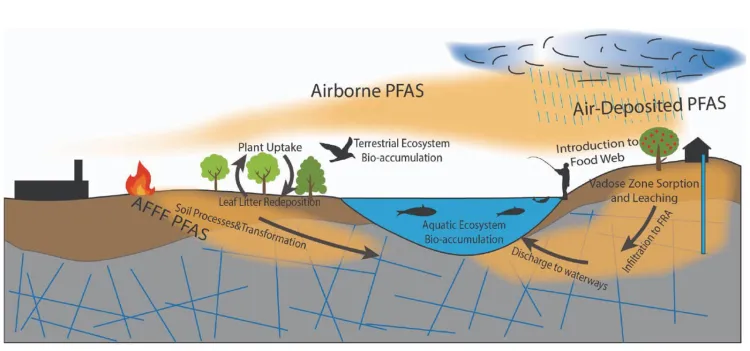
PFAS contamination has been detected in Vermont drinking water supplies, soils, rivers, and even the blood serum of residents. While scientists are increasingly aware of the environmental and health concerns associated with these compounds, significant questions remain unanswered. How do PFAS move through groundwater? How do they spread into streams, forests, and wildlife? Which pathways present the greatest risks to human health?
The UVM research team will use advanced computational tools to help answer those questions.
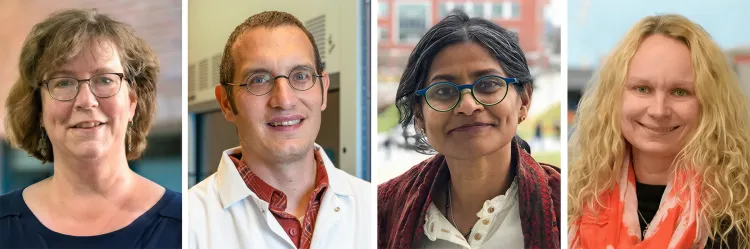
"Our institutions have each been studying different aspects of PFAS for years," said Kristen Underwood, research associate professor in the Department of Civil and Environmental Engineering and UVM's principal investigator on the project. "These new resources allow us to collaborate more intentionally, share expertise, and generate research that can better inform decision-making and policy around these forever chemicals."
Underwood will lead efforts to develop sophisticated data-driven and probabilistic models that create a more complete picture of PFAS distribution, persistence, exposure pathways, and potential health impacts across Vermont. Using Bayesian analysis, machine learning, and shared data resources, her team will work with collaborators statewide to identify where contamination occurs, how it persists, and how people and ecosystems may be exposed.
Joining the effort is Matthew Scarborough, associate professor of civil and environmental engineering, whose expertise in biological process modeling and contaminant transport will help researchers better understand how PFAS move through the natural environment. Ultimately, this work will help uncover the overall role of biological processes in PFAS cycling and improve predictions of how PFAS interact with the biosphere.
Following PFAS Through the Food Webs
One of the greatest unknowns surrounding PFAS is how these compounds accumulate in plants and animals and how that accumulation may affect people, particularly in rural communities where hunting, fishing, foraging, and other wild food gathering activities are common.
Co-principal investigator Bindu Pannikar, associate professor in UVM's Rubenstein School of Environment and Natural Resources, will partner with researchers at Middlebury College and build on previous health surveys to advance understanding of the human health impacts of PFAS exposure.
Researchers will measure PFAS concentrations in fish, wildlife, plants, and fungi commonly consumed in Vermont to better understand how contamination moves through food webs and may contribute to human exposure. The work will help create a clearer picture of potential risks faced by rural communities across the state.
In UVM's College of Agricultural and Life Sciences, Professor Jana Kraft will provide fatty acid analysis of fish tissues using lipid extraction methods, helping network researchers better understand how PFAS move across ecosystems and accumulate through the food web.
Building Vermont's PFAS Data Infrastructure
In addition to conducting field, laboratory, and modeling research, UVM will play a central role in developing the digital infrastructure needed to support PFAS research across Vermont. Drawing on the university's investments in data science and advanced computing, researchers will help build a scalable data platform capable of supporting scientists, educators, students, regulators, and community partners throughout the network.
Working collaboratively with colleagues across PERN, UVM will help create a centralized database and web-based platform that enables users to share standardized PFAS data, analytical tools, and research findings. Beyond supporting current research, the platform will serve as a resource for education and workforce development by integrating PFAS research and data analysis into academic programs across participating institutions.
“We all deserve answers about how PFAS contamination is affecting our water, food, and environment, and I’m proud to see Vermont institutions coming together to tackle that challenge head on.”
Representative Becca Balint (VT-AL)
Collaboration Across Vermont
The PERN initiative reflects a growing recognition that addressing complex environmental challenges requires collaboration across disciplines and institutions. Engineers, geologists, biologists, chemists, environmental health researchers, and data scientists will work alongside state agencies, including the Vermont Department of Environmental Conservation, Vermont Geological Survey, the Vermont Department of Health, and the Agricultural and Environmental Laboratory, to improve understanding of PFAS contamination and develop practical tools for managing its impact.
For CEMS researchers, the project represents an opportunity to bring together engineering, data science, and environmental expertise to tackle one of the most significant environmental challenges facing Vermont and the nation. By combining advanced modeling, artificial intelligence, environmental engineering, and shared data resources, UVM researchers aim to create new tools that help communities, regulators, and policymakers better understand where PFAS contamination occurs, how it spreads, and how potential risks to human and environmental health can be reduced in the years ahead.