UVM Cancer Center’s 29th Annual Women’s Health and Cancer Conference Celebrates Voices in Cancer Care
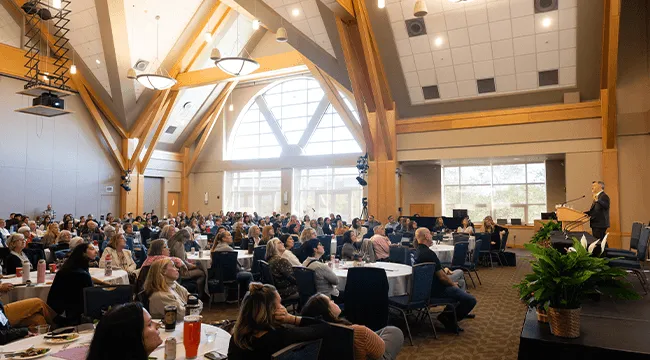
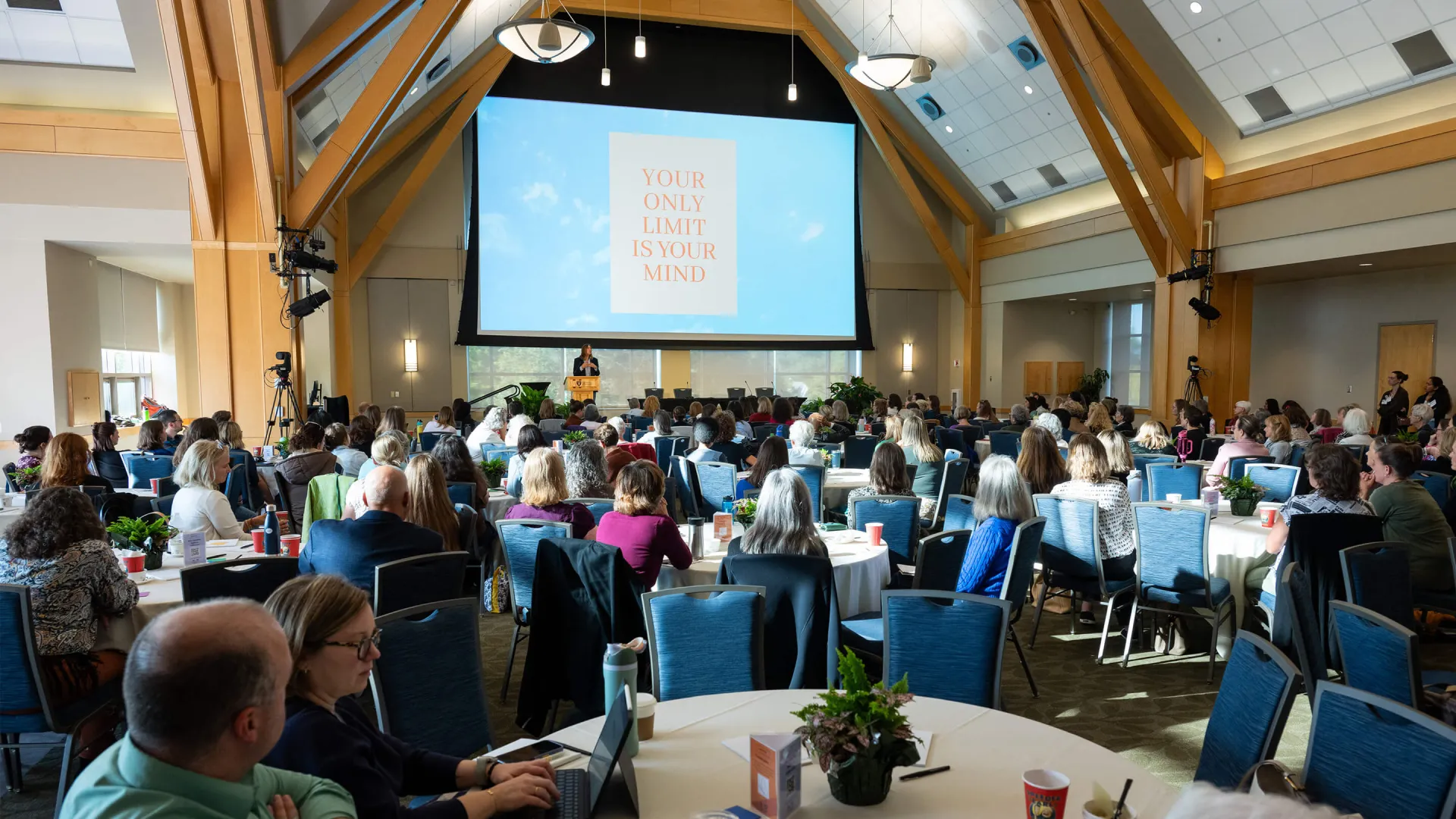
Held on September 18, 2025, at the Dudley H. Davis Center on the UVM campus and virtually via Zoom, the WHCC drew more than 700 participants from 30 states and 7 countries.
The theme of this year’s program centered on voices that shape oncology: the insights of providers, the strength of caregivers, the discoveries of researchers, the lived experiences of patients, the quiet internal voice, and the legacy of those no longer with us. Sessions highlighted the value of communication, emotional wellness, and patient empowerment, as well as advances in cancer therapeutics and the new landscape of increasingly personalized treatment options.
“We wanted this year’s conference to focus not only on scientific progress, but also on the lived experience of patients and families,” said UVM Cancer Center member and conference executive director Molly Barry, M.D., a medical oncologist and associate professor at the Larner College of Medicine. “Cancer affects every aspect of a person’s life, and this program reflected the importance of caring for the whole person, both during and after cancer treatment.”
Conference Highlights
Opening Plenary: How Are You, Really?
Author, speaker, and podcast host Nora McInerny opened the conference with a powerful and humorous keynote focused on grief, resilience, and the realities of navigating illness and loss. Drawing on personal experience and her nationally recognized work, McInerny encouraged attendees to embrace honest conversations about hardship while finding connection and meaning in difficult circumstances.
The Stories We Carry: What Is Narrative Medicine?
UVM Cancer Center member Sakshi Jasra, M.D., oncologist and assistant professor of hematology and medical oncology at the Larner College of Medicine, introduced participants to the field of narrative medicine. This session explored how storytelling can strengthen patient-provider relationships, enhance empathy, and improve the delivery of care.
When a Parent Has Cancer: Helping Children Understand and Cope
Child psychologist Ali Waltien, M.A., Child Life Specialist Jess Rabidoux, CCLS, and Camp Kesem counselor Celia McClintock shared practical strategies for supporting children whose parents are facing a cancer diagnosis or treatment. The session emphasized age-appropriate communication and resources that help families navigate uncertainty together.
Surgical Decision Making for Breast Cancer
UVM Cancer Center member Michelle Sowden, D.O., a surgical oncologist and assistant professor of surgery, led a discussion on the complex choices surrounding breast cancer surgery. Joined by a panel of patients, she highlighted shared decision-making approaches that help align treatment plans with patients’ goals and values.
Writing as Healing
Author and educator Patricia Fontaine, MACP, MATLA, explored the therapeutic potential of writing and reflective practice. Participants learned how creative expression can support emotional processing, recovery, and resilience during and after cancer treatment.
Keynote Address: From Social Media to the Clinic
Eleonora Teplinsky, M.D., a board-certified medical oncologist specializing in breast and gynecologic cancers, delivered the keynote luncheon address, “From Social Media to the Clinic: Bridging Real-World Questions with Evidence in Women’s Health and Cancer Care.” Teplinsky examined how social media has transformed health communication and discussed the importance of helping patients distinguish evidence-based information from misinformation while empowering them to engage actively in their care.
Cancer Therapies 101: A Patient-Centered Overview of Treatment
Hematology and oncology fellows Sienna Searles, M.D., and Meredith Ryan, M.D., provided an accessible overview of modern cancer treatments. Their goal was to help attendees better understand how chemotherapy, immunotherapy, targeted treatments, and other approaches are used in contemporary cancer care.
Caring for the Whole Person: Supporting Emotional Wellness After Cancer
Giselle K. Perez, Ph.D., of Massachusetts General Hospital and Harvard Medical School, addressed the emotional and psychological challenges many individuals face after treatment ends. Her presentation focused on evidence-based approaches for supporting mental health, quality of life, and long-term survivorship.
Closing Plenary: The Evolving Landscape of Cancer Therapy
Shahid Ahmed, MBBS, assistant professor of medicine at Emory University’s Winship Cancer Institute, concluded the conference with an overview of advances in cancer treatment. He discussed targeted therapies, immunotherapies, and emerging treatment modalities that are reshaping care across multiple cancer types.
Collective Remembrance Art Installation
Virtual attendees contributed memories, messages, and tributes honoring loved ones affected by cancer as part of the conference's Collective Remembrance Art Installation. During the conference, volunteers from Burlington City Arts' Art from the Heart program transferred each submission onto plantable seed paper and incorporated them into a collaborative quilt-inspired artwork. The installation will be exhibited this winter at the Osher Center for Integrative Health before being planted at the American Cancer Society's Hope Lodge in the spring.
Visit the website for the 2026 WHCC.