If I were to ask you to describe Vermont you might include the words “green mountains”, “maple syrup” and “forests”. What you probably wouldn’t include is that Vermont has a very high rate of skin cancer. In fact, few Vermonters are even aware that Vermont has the 3rd highest incidence of melanoma in the country. But what about our green mountain state contributes to these high rates?
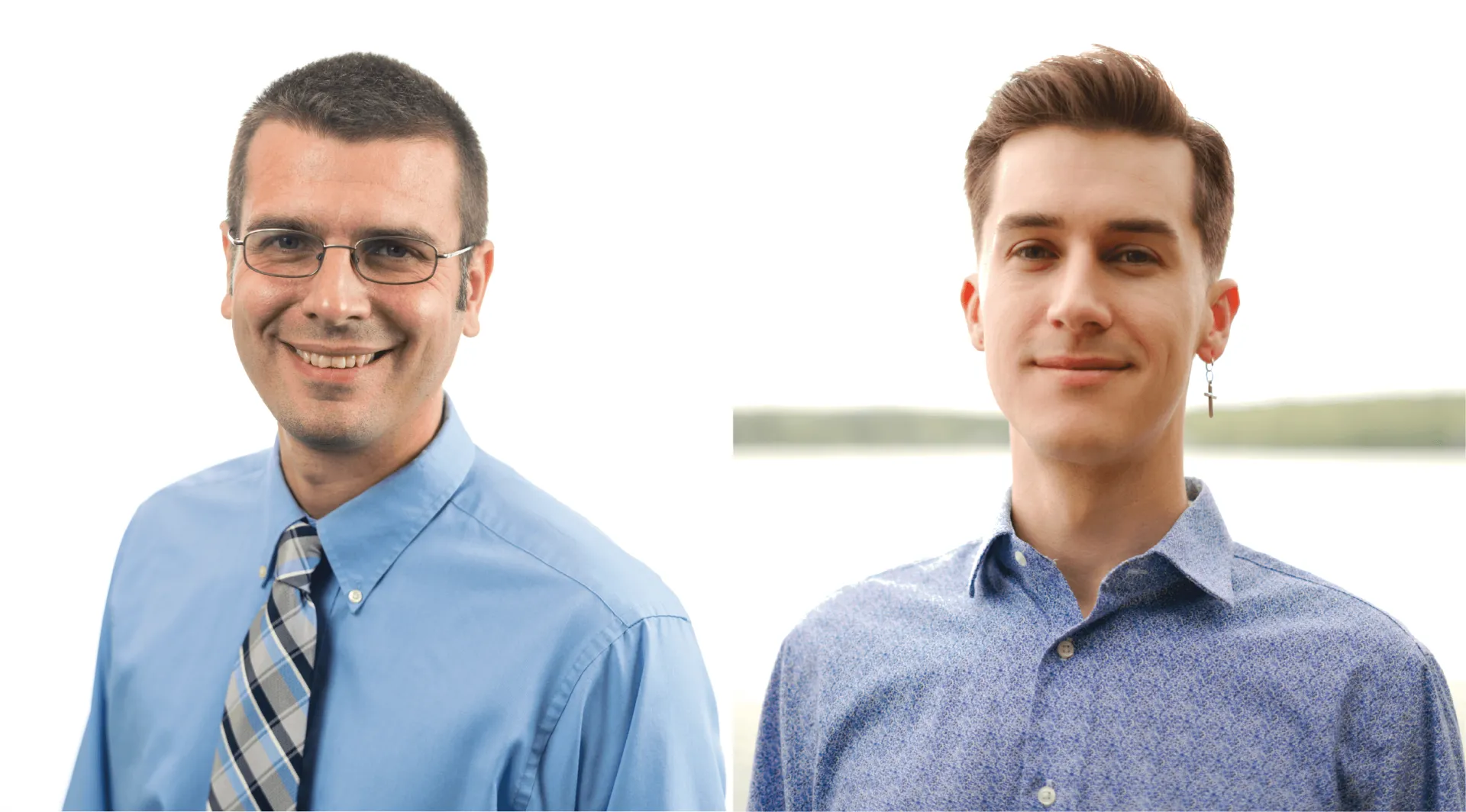
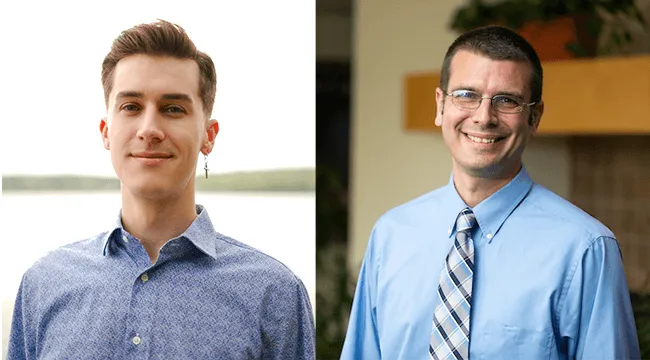
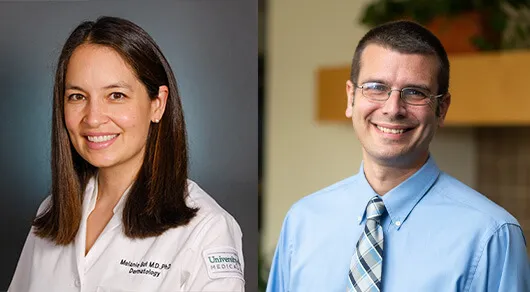
UVM Cancer Center members Steven Roberts, PhD, and Melanie Bui, PhD, MD, aim to get at this question with a new R01 grant from the National Institute of Environmental Health Sciences (NIEHS) at the National Institutes of Health. The multi-institution grant, led by UVM, will investigate the conditions that promote the formation of rare types of DNA damage that drive melanoma. Investigators will sequence the DNA of individual skin cells from people exposed to different cancer-causing conditions to identify new types of DNA signature mutations and what drives them.
Ultimately, the investigators hope they will learn not just which mutations are present, but why they occurred and therefore how to prevent them. For example, understanding what solar exposures are driving rare damages could lead to the development of new sunscreens that can prevent these types of rare DNA damage.
Initially supported by a UVM Cancer Center Interprogrammatic Pilot Award, Roberts and Bui are excited to expand on that project with colleagues John Wyrick, PhD, at Washington State University, Gregory Poon, PhD, at Versiti, Kathir Salvem, PhD, at South Florida University, and Tomohiko Sugiyama at Ohio University. The team hopes to provide new insight into why certain states, like Vermont, experience such a high incidence of melanoma while lacking common features typically associated with skin cancer incidence.