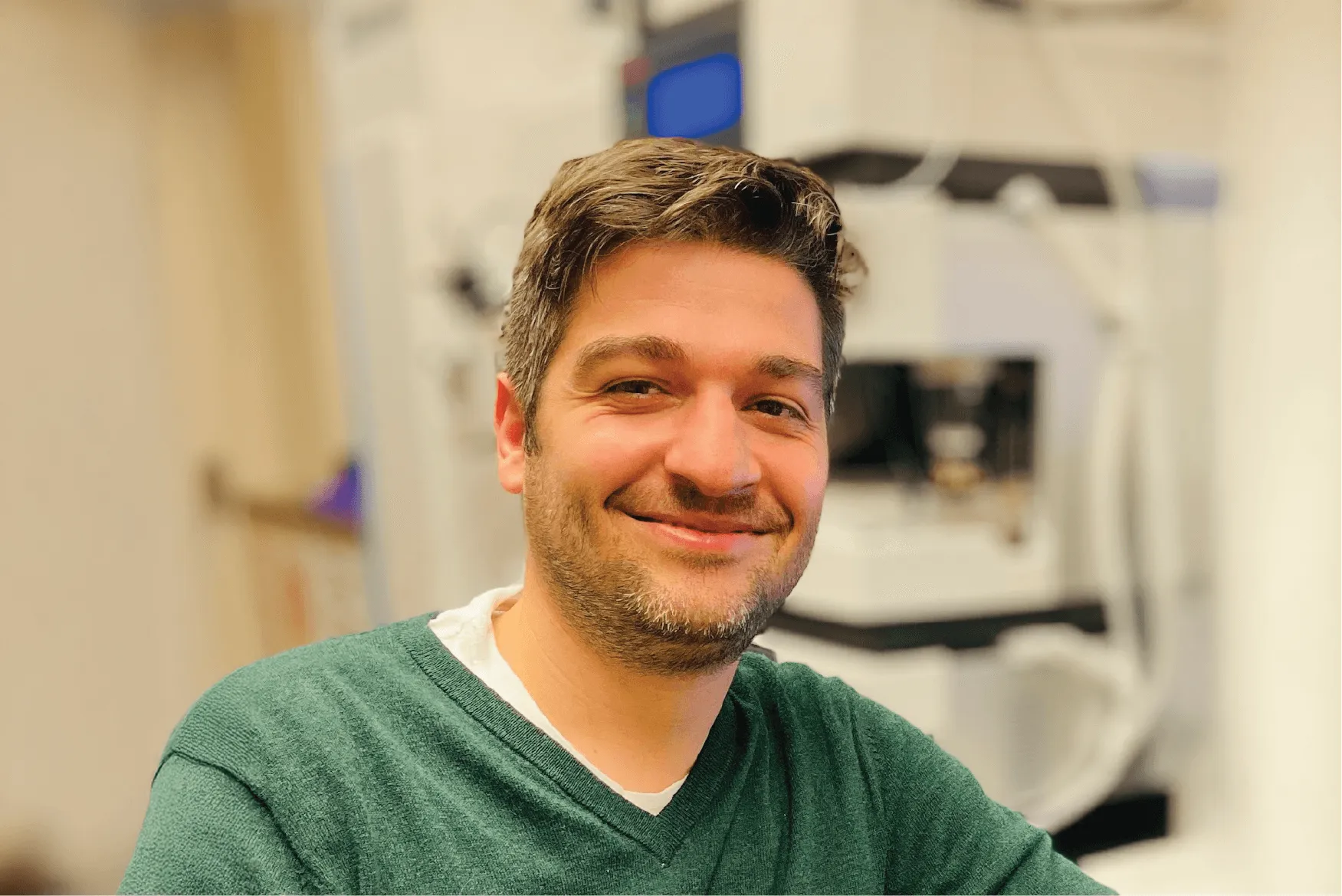
The UVM Cancer Center Cancer Cell research program has many incredible members. Today we are excited to highlight Brian Eckenroth, PhD who was recently promoted to Assistant Professor. Dr. Eckenroth is an expert in the recognition and repair of DNA damage. Read on to learn more about his research and the impact it could have on our communities.
Why did you join the UVM Cancer Center?
I have contributed cancer-based research for many years at UVM with the research group of Sylvie Doublie, PhD. I am excited to bring my experience as an in-lab professional performing biochemical, biophysical, and macromolecular structural work to the Cancer Center, now as an Assistant Professor. I have also served as a technical resource for trainees for many years and look forward to continuing to support the next generation of cancer scientists.
Tell us about your research. What is the biggest takeaway?
Our research investigates DNA replication in the context of DNA damage and repair outcomes, in particular DNA polymerases that replicate our genome and glycosylases that remove damaged DNA before a mutation can result. Understanding how these enzymes perform their native function will help us predict outcomes when mutations arise in these genes in patients. This work is important in the context of cancer as many front-line cancer therapeutics are DNA damaging agents and cancer cells can upregulate or rely on the expression of these genes.
Why cancer research?
Cancer touches nearly every family, including mine, and understanding the molecular mechanisms of DNA damage and repair is central to understanding underlying factors that lead to cancer and to develop better treatment options.
How does your work directly impact the UVMCC catchment area?
The fundamental mechanisms of DNA damage and repair is central to our understanding of many cancers including the high-priority cancers for the UVM Cancer Center catchment area. We know that UV exposure can lead to DNA damage and ultimately skin cancer. With Vermont having one of the highest rates of melanoma in the country, understanding mechanisms of DNA damage and repair that lead to cancer could lead to better outcomes for skin cancer patients. In addition, oxidative damage via environment or smoking can also result in DNA damage and alterations in DNA repair pathways, leading to lung cancer and other diseases. By better understanding the fundamentals of DNA damage and repair we can improve outcomes for communities in the UVMCC Catchment Area.
Is there a finding from your research you are particularly proud of?
Determining the molecular structures of the repair enzyme NEIL2 DNA glycosylase alone and in the presence of damaged DNA was very challenging as it is a structurally dynamic complex. This feature is not currently captured in structure prediction programs and experimentally determining this feature provides unique opportunities for therapeutic design.
What is an interesting fact about you or something you’d want people to know?
I spent several years in industry prior to graduate school with experience in manufacturing, quality control and R&D within rapid diagnostics platforms.
Is your work supported by any grant mechanisms?
I was recently awarded a renewal of a National Cancer Institute R50 Research Specialist Award (R50-CA233185 Structural Investigations Critical to Understanding DNA Damage Recognition and Repair in Cancer) for a second 5-year period. This mechanism, pioneered by the NCI, provides direct independent support for professional scientists to serve other NCI-funded research programs. The award serves NCI research under the direction of Dr. Sylvie Doublié, PhD: R01-CA281044 Fidelity Mechanisms of DNA Polymerase Beta, P01-CA2477730 Polymerase Theta, Genome Instability, and Cancer & previously P01-CA098993 Structure and Function of DNA Repair Enzymes and Cancer.
You can learn more about Dr. Eckenroth’s research by reading his publications.