From the kitchen gardens of early colonial days, to the American Revolution when herbs such as lemon balm and mint were grown as a substitute for imported tea, and during all the years to follow, people kept gardens for food, medicine, and other needs.
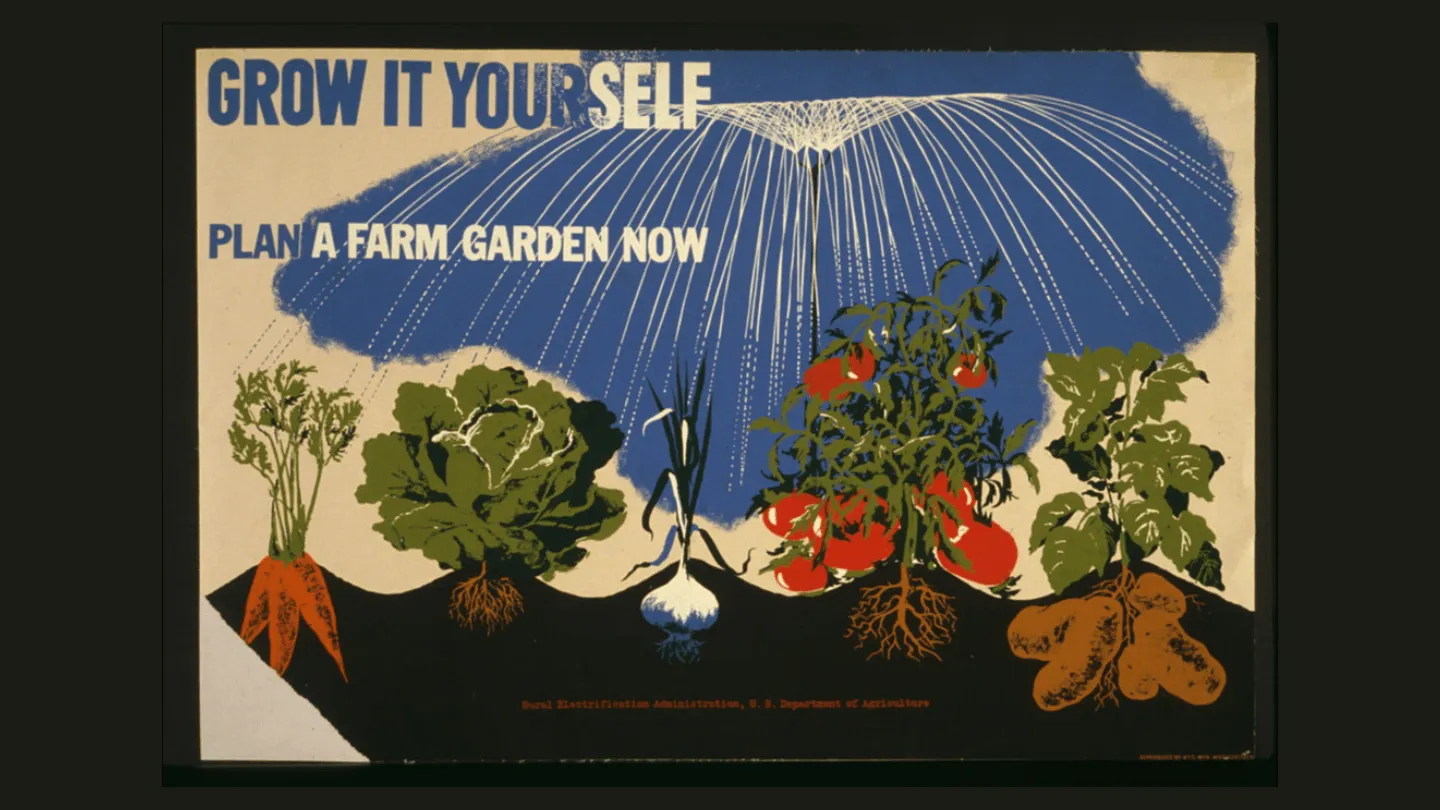
When America entered the First World War, home gardens took on new importance. “Liberty gardens” became patriotic acts to help feed a nation at war. During World War II, the federal government called them “victory gardens” and campaigned for their establishment across the country. Families were also urged to raise “victory flocks” of chickens for eggs and meat.
While a home victory garden was deemed patriotic, it was also a necessity for many. A shortage of imported fertilizer combined with fewer available workers (and at times poor weather) contributed to lower production of some crops even as demand increased. Much of the food produced was processed and shipped overseas for the war effort, causing shortages and limited availability at home. Gasoline, tires, and other supplies were directed to military use, causing difficulty or delays in distribution of food to grocery stores.
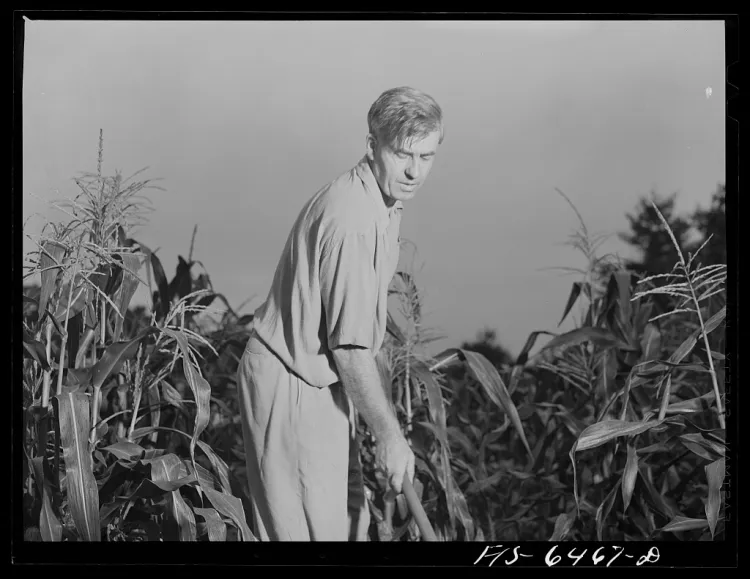
Scarcity led to rationing. Imported items such as sugar, coffee, and cooking oils could only be purchased when presenting an appropriate ration coupon. Familiar foods such as butter, meat, milk, eggs, and many vegetables also required ration coupons to purchase, though having a ration coupon didn’t guarantee an item would be available. To feed their families, Americans not only embraced the idea of victory gardens, they provided 10 billion pounds of produce from more than 20 million such gardens during the war.
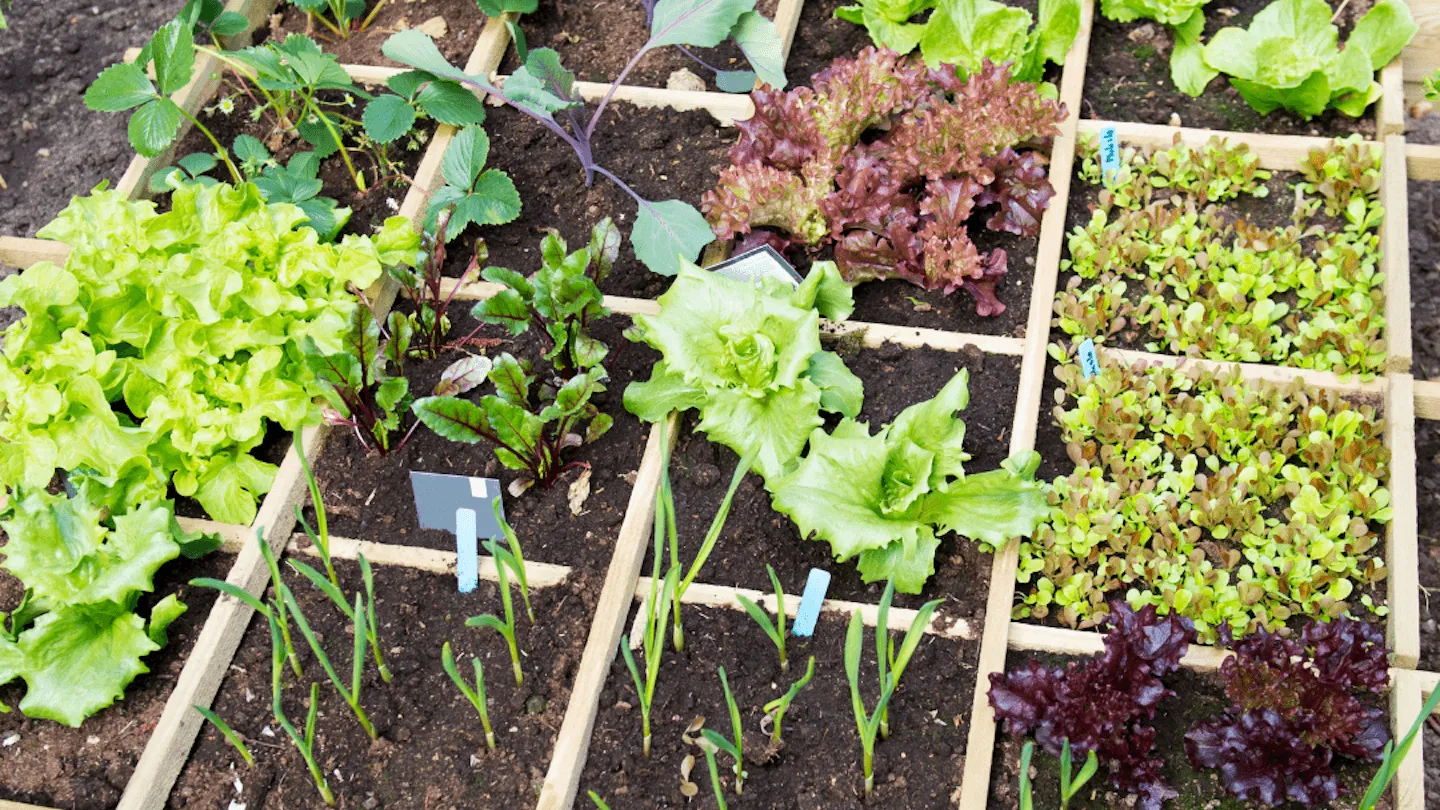
A victory garden could be an already established plot in the back yard, a newly dug patch in place of the front lawn, a vacant lot in the neighborhood, or even a rooftop. If there was soil, water and sunshine, almost any space might become a garden.
Crops grown in victory gardens were selected for their nutritional value, calories to provide energy, and ability to be stored or preserved. Potatoes, sweet potatoes, peas, tomatoes, cucumbers, onions, beans, carrots, turnips, radishes, beets, and greens such as lettuce, chard, and spinach all had a place in a victory garden. Succession planting was encouraged.
After World War II when food supplies stabilized and ration books became a thing of the past, it became easier for people to purchase what was needed rather than grow it themselves. Most victory gardens were abandoned—but not all. Through the efforts of gardeners and their supporters, two World War II-era victory gardens continue to operate.
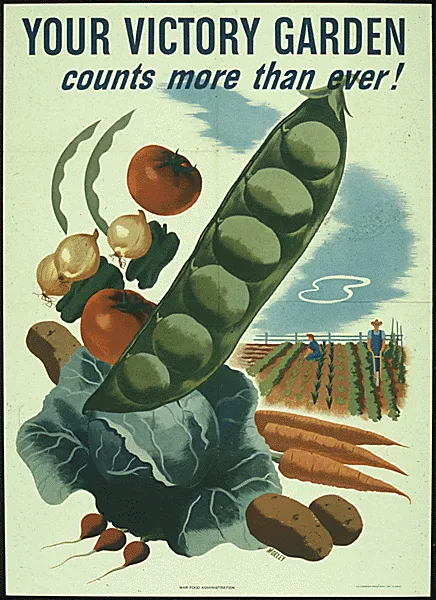
According to the National Park Service, Fenway Victory Gardens in Boston, Massachusetts, was established in 1942. Now known as the Richard D. Parker Memorial Victory Gardens, it encompasses 7.5 acres of land with over 500 garden plots. In Minneapolis, Minnesota, the Dowling Victory Garden was started in 1943 as a neighborhood victory garden. Renamed the Dowling Community Garden, it’s housed on three acres of land and includes nearly 200 plots.
Today, the victory garden lives on in the home garden, whether it’s a plot in the backyard or a collection of pots on a balcony. Community gardens are springing up across the country, empowering people who are without the ability to garden at home to grow their own food.
If you have questions about starting your own home garden, contact the University of Vermont Extension Master Gardener Helpline online at https://go.uvm.edu/gardenhelpline or by phone (802-656-5421, Thursdays, 9 a.m. to 12 p.m.) from April to October.