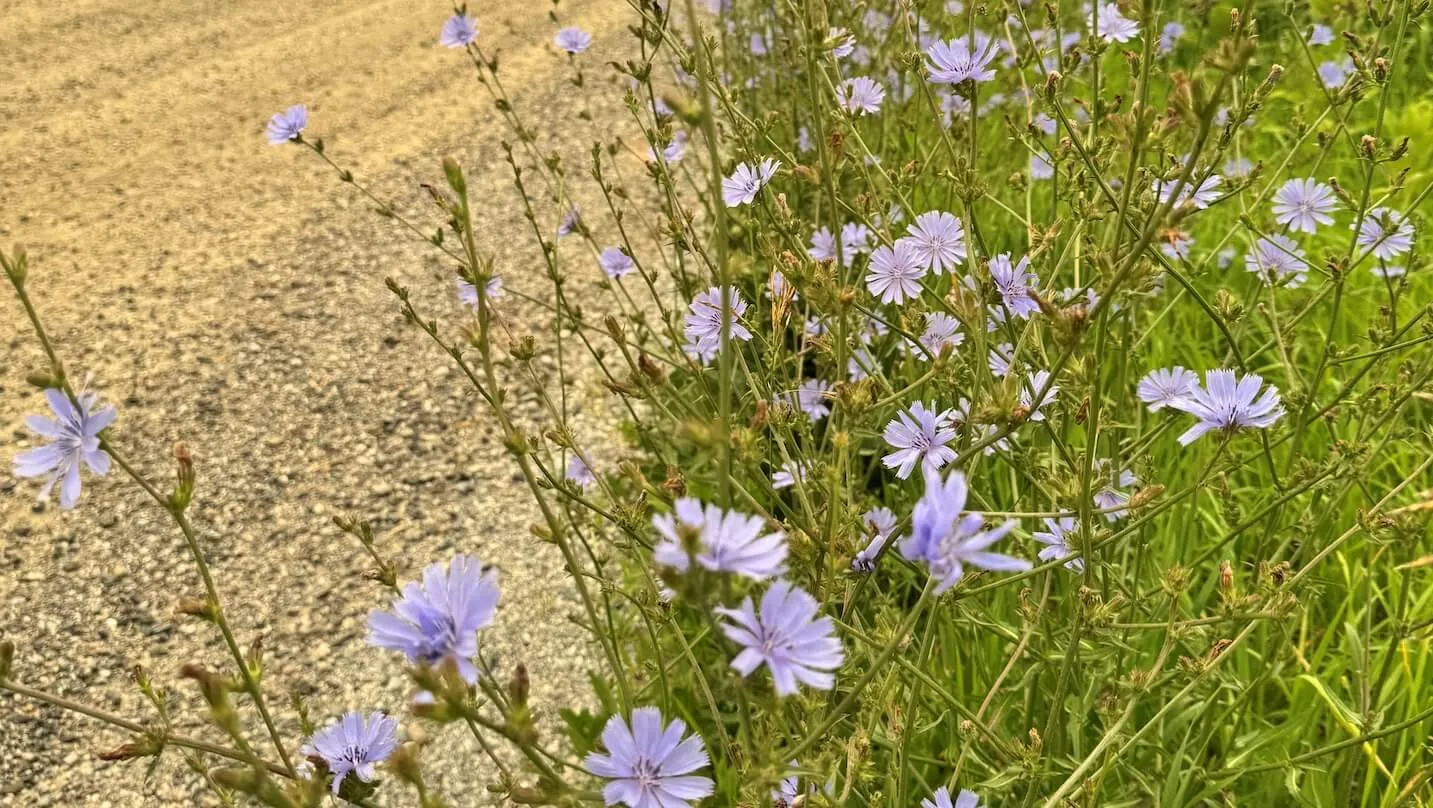
Chicory is also the common name of a wildflower, Cichorium intybus, that is known as blue sailors, coffeeweed, and cornflower.
Chicory is an herbaceous perennial with light blue flowers on stems that can reach over 3 feet tall. Each flower opens only once, usually just for that morning. Each day, new flowers open.
Chicory was introduced to North America by colonists who grew it for food, animal feed, and use in folk medicine. It spread across the continent and can now be found growing in United States Department of Agriculture Hardiness Zones 3 to 9. Look for a swath of blue in fields or at the side of the road.
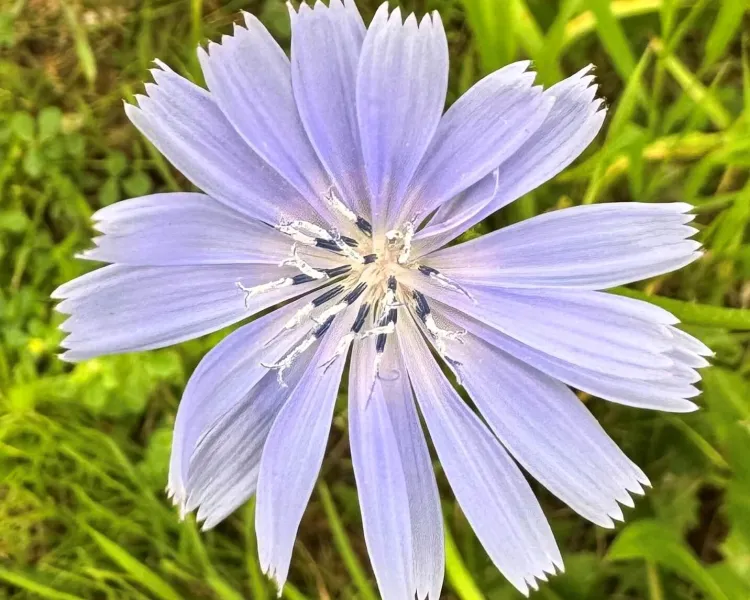
If you’d like to add chicory to your flower garden or wildflower patch, finding starter plants or seeds locally may be challenging, but both can be found online. Whether you purchase starter plants or begin them from seed indoors yourself, transplanting can be tricky. Great care must be taken to avoid damaging the plant’s long taproot. Instead, consider sowing seeds directly in garden soil.
In early spring, select a sunny location with rich soil that drains well. Sow seeds according to package directions several weeks before the last average frost date for your area. You can find your last average frost date at: https://garden.org/apps/frost-dates/ using your zip code.
Chicory can also be directly sown in late summer or early fall. Do so well before your location’s anticipated first frost date to allow roots to become well-established before the ground freezes. Don’t be concerned if the above-ground growth dies back after a hard frost. With healthy roots, new growth should emerge in the spring.
Chicory’s initial growth forms a rosette of toothed leaves similar to a dandelion. The plant won’t produce flowers during that first year, instead spending its energy on developing strong roots. During its second year as the soil warms after the cold of winter, it will send up flower stalks with smaller leaves and put on a continuing show of blue blossoms through fall.
While chicory doesn’t do well as a cut flower, its leaves, buds, flowers, and roots are all edible. Young leaves can be added to salads. As the season progresses, leaves will grow more bitter. They can be boiled like spinach to reduce the bitter taste. Flower buds can be eaten raw. Freshly picked flowers make a lovely edible garnish, though they may be bitter. As always, be sure to positively identify any plant you intend to consume and be certain it hasn’t been treated with pesticides or other toxic substances.
Chicory root can be boiled and eaten as a vegetable, but perhaps the best-known use is as a coffee substitute. For centuries, it has been roasted and ground to brew a naturally caffeine-free beverage. At times when coffee was scarce or cost prohibitive, chicory root has been used on its own or combined with coffee.
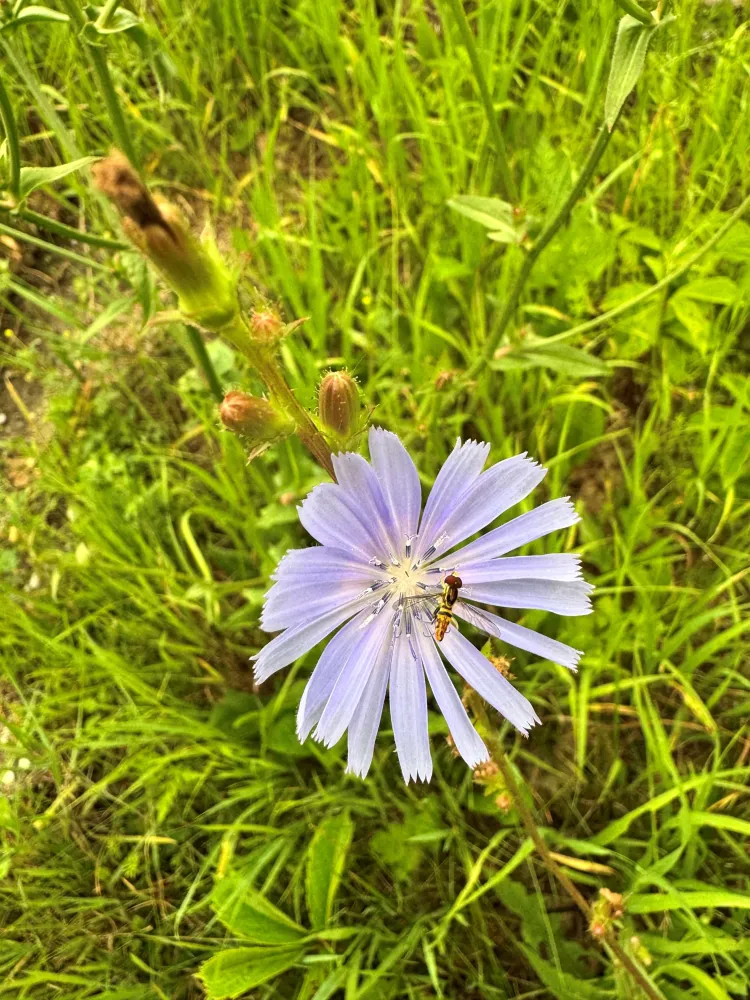
In addition to its value as an attractive, edible plant in the garden, chicory attracts pollinators and beneficial insects. Its extended bloom time provides them with a reliable food source for months during the growing season.
If you have questions about growing chicory or home gardening in general, contact the University of Vermont Extension Master Gardener Helpline online at https://go.uvm.edu/gardenhelpline or by phone (802-656-5421, Thursdays, 9 a.m. to 12 p.m.) from April to October.