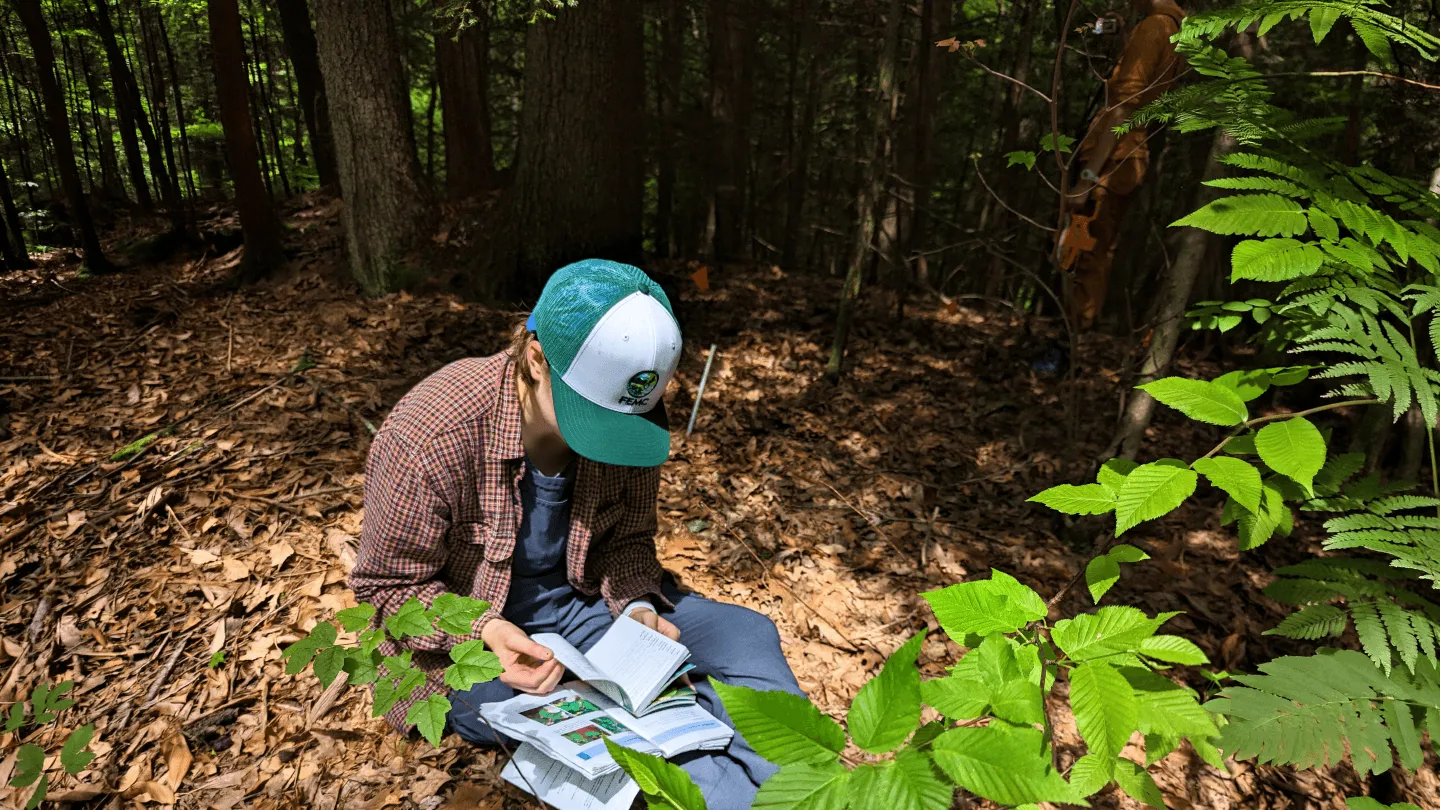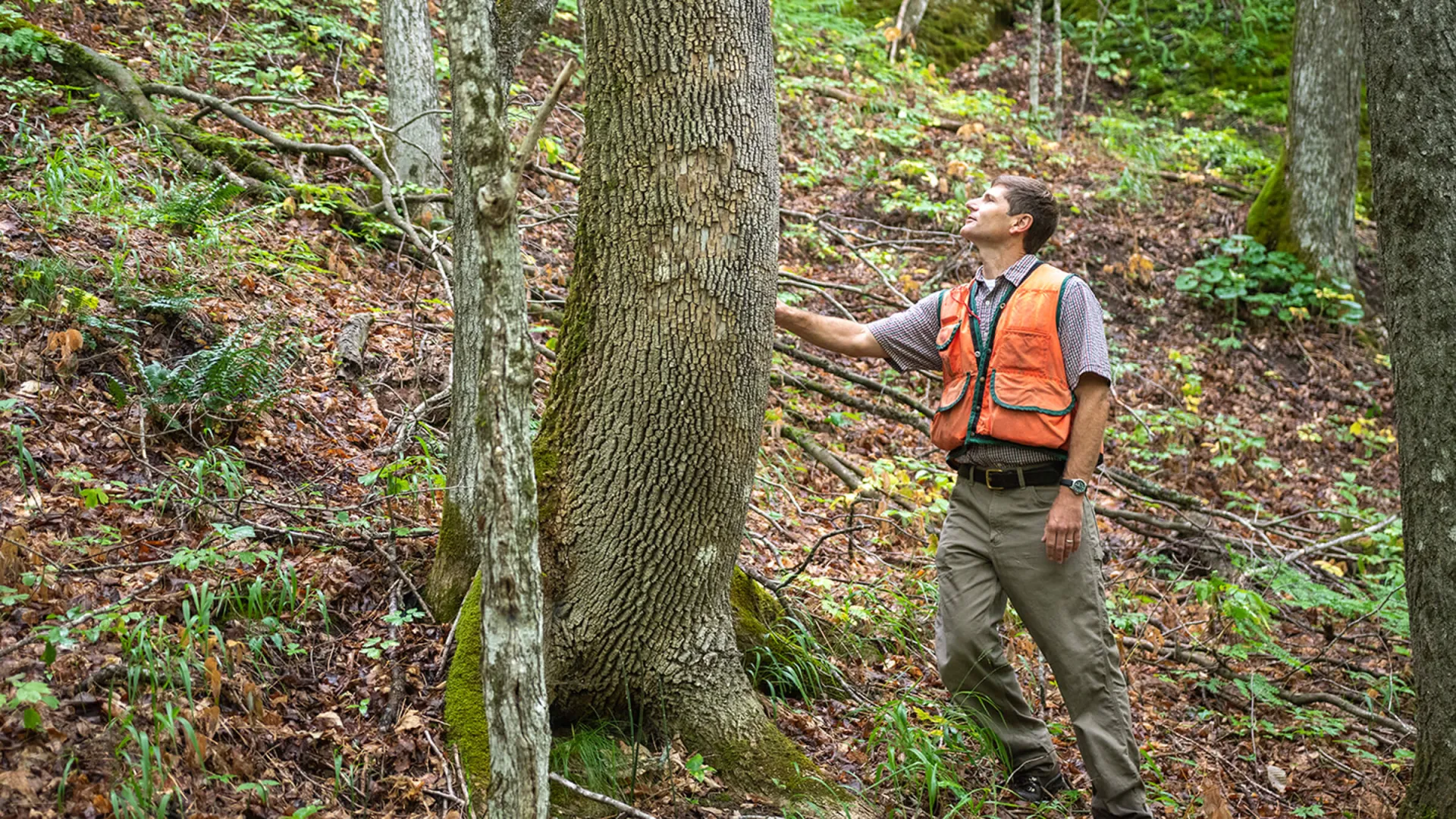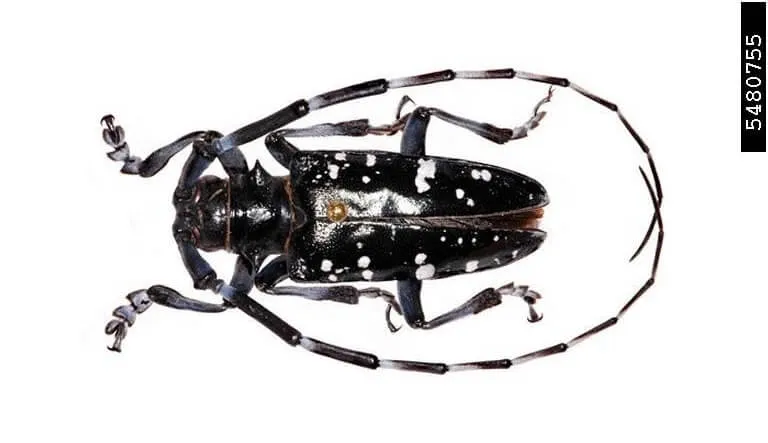
August is especially an excellent time to spot symptoms that could indicate the presence of the Asian longhorned beetle, also known as the starry sky beetle.
Asian longhorned beetle (ALB) attacks multiple species of healthy hardwood trees and can kill them over time. Early detection is critical to preventing its spread and protecting Vermont's forests, communities, and maple industry, as maple is ALB’s favored host.
When checking trees, look for these signs of Asian longhorned beetle:
- Multiple small, bite-like marks in the bark where adult beetles have laid eggs.
- Perfectly round, pencil-to-dime-sized holes that extend at least an inch into the wood where adult beetles have emerged.
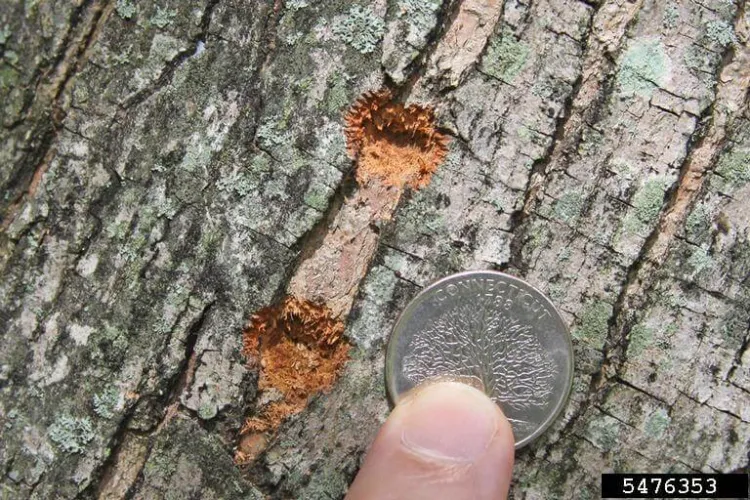
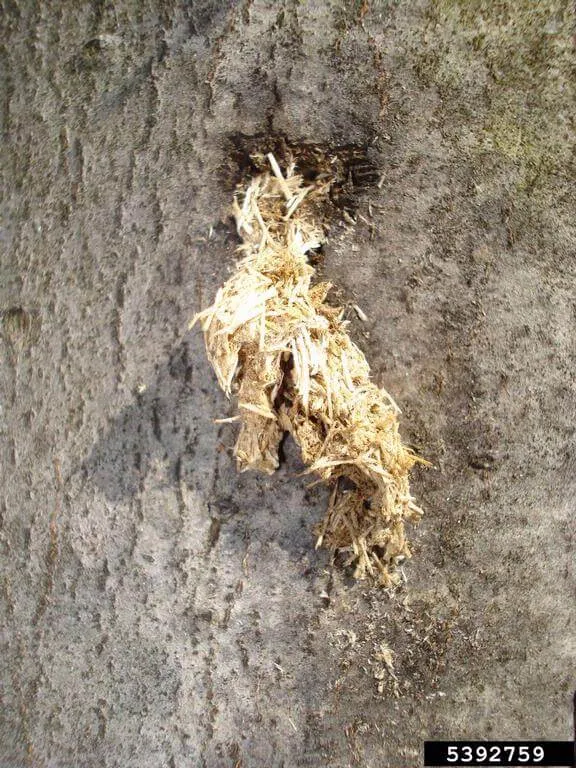
Small piles of sawdust-like material that collect in branch crotches or at the base of the tree.
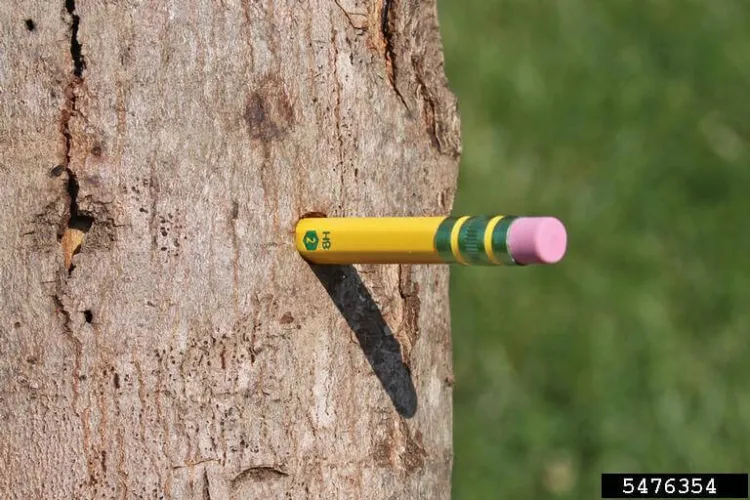
Photo of Asian Longhorn Beetle exit hole frass courtesy of Joe Boggs, Ohio State University, Bugwood.org
"If Asian longhorned beetle is found early, we have the best chance of stopping it before it becomes established," said Ginger Nickerson, UVM Extension’s Forest Pest Education Coordinator.” A few minutes spent checking your trees this August can make a real difference in protecting Vermont's forests."
Anyone who observes these signs or suspects a tree may be infested should report it promptly. For information about identifying Asian longhorned beetle, checking trees, or reporting a suspected infestation, visit VTinvasives.org.
Tree Check Month is a reminder that everyone can play a role in protecting Vermont's trees. Whether you own a single shade tree or simply enjoy spending time outdoors, taking a closer look this August can help keep Vermont's forests healthy for generations to come.
Learn more or report a suspected infested tree at VTinvasives.org.