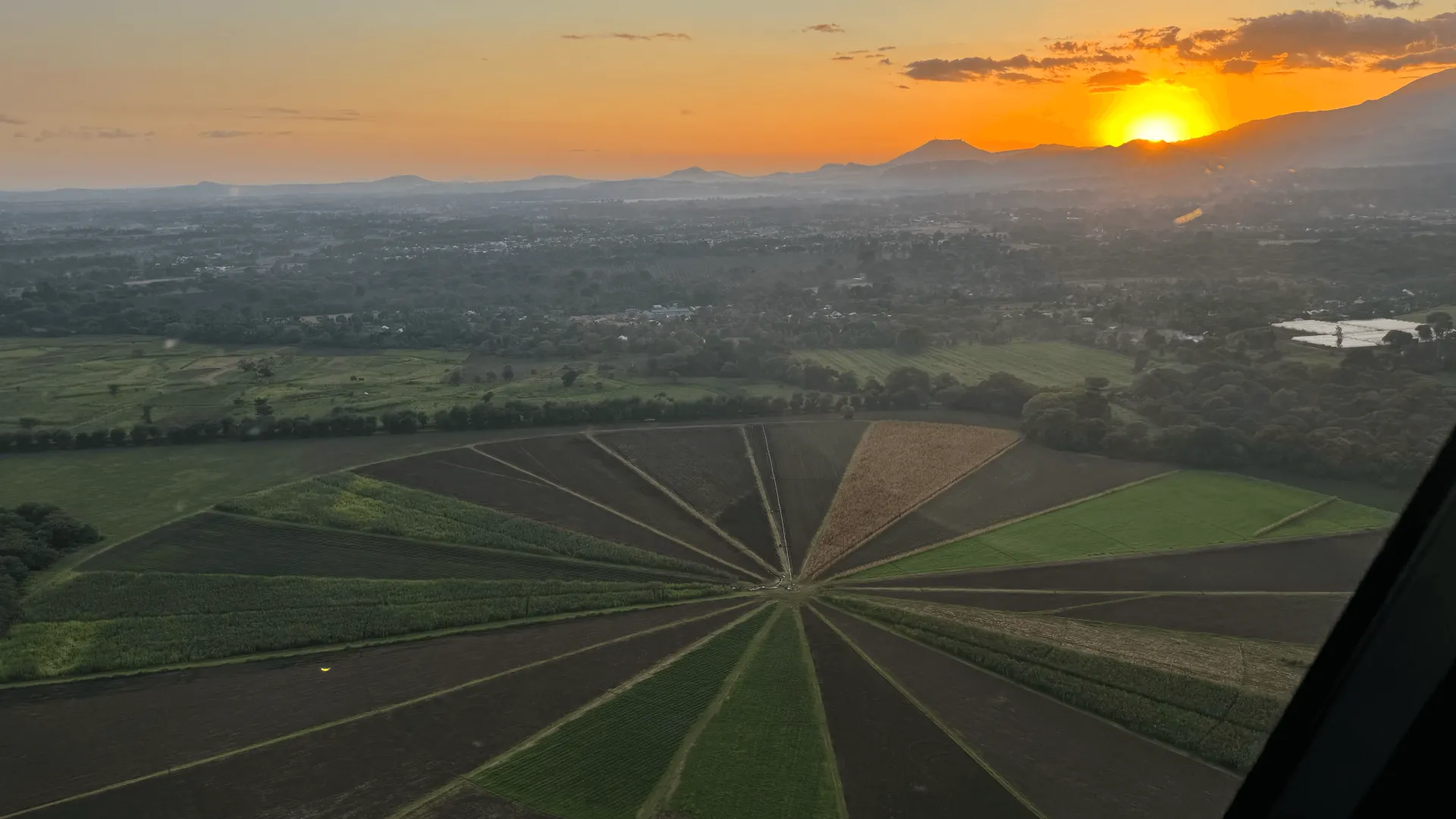
Drawing on nearly a decade of Tanzanian panel data, the researchers found that labor constraints, gender inequalities, and household demographics—not access to technology—are the primary forces shaping how rural families use their land and time.
Published as On Repeat? The Logic of Agricultural Modernization, the Choices of Tanzanian Small-scale Farmers, and Implications for the Second Green Revolution analyzes how household composition influences agricultural labor, land allocation, and production intensity. Lead author Daniel Tobin, associate professor in UVM’s College of Agriculture and Life Sciences, says the findings call into question long-standing modernization models that assume farmers will scale up or intensify production when provided improved seeds, fertilizers, and market access.
“Farmers’ decisions do not follow the one-size-fits-all logic embedded in many development programs,” Tobin said. “Modernization repeatedly fails when it ignores the realities, priorities, and constraints facing small-scale farmers.”
Gender Shapes Who Works and How Much
Across all models, the study found stark gender disparities. Women farm managers consistently worked more days, cultivated smaller plots, and demonstrated higher labor intensity than their male counterparts. Women in women-headed households were the most constrained group, with limited ability to adjust land or labor use even when household conditions changed.
These inequities, the authors argue, remain largely unaddressed by major development programs—and contribute to the persistent mismatch between policy expectations and on-the-ground outcomes.

Feed Your Spark Tanzania Safari Adventure Experience
Labor, Not Technology, Limits Production
Contrary to dominant modernization narratives, the study shows that household labor availability is a stronger determinant of land use and production decisions than access to inputs or markets. As households gain off-farm wage opportunities, farmland under cultivation often decreases, particularly for male-headed households. And while expanding land area increases total labor, it reduces labor intensity, evidence, the authors say, that many farmers are constrained by labor, not land.
These findings run counter to AGRA’s theory of change, which assumes farmers will intensify production through new technologies when provided the opportunity.
A Century of Repeating Mistakes
The research places AGRA within a long history of top-down agricultural modernization, from Soviet collectivization to U.S. industrial agriculture to Tanzania’s own villagization policies, each built on the belief that smallholder farmers can be reshaped through technology and centralized planning.
“We see the same logic repeated over and over,” Tobin said. “Development planners imagine an ideal future farmer and design interventions to create that farmer, rather than working with real farmers.”
Toward Farmer-Centered Development
Instead of promoting or rejecting modernization, the authors advocate a pragmatic approach grounded in farmers’ own experiences and constraints, including risk management and household wellbeing. They point to historical models, such as Germany’s regionally tailored breeding and extension programs, as evidence that supporting farmers’ priorities can lead to more sustainable and equitable agricultural development.
“If development efforts are to be successful, both humanitarianly and ecologically, they must start by taking the viewpoints of farmers into account,” Tobin said. “Not as imagined future entrepreneurs, but as they are today.”
Feed Your Spark Tanzania Safari Adventure Experience
About the Authors:
Daniel Tobin is an associate professor at the University of Vermont’s College of Agriculture and Life Sciences, specializing in agrarian change, agricultural development, and rural livelihoods. His co-authors include researchers examining gender, labor, and the political economy of rural development.
Leland Glenna is a Professor of Rural Sociology at the Pennsylvania State University. His research focuses on the sociology of science and technology
Lizah Makombore is a PhD student at the University of Vermont’s College of Agriculture and Life Sciences and a Fellow at the Gund Institute for the Environment, the Institute for Agroecology, and Leadership for the Ecozoic. Her doctoral research focuses on scaling agroecology by designing just and resilient economic systems that prioritize collective wellbeing.
Travis Reynolds is an associate professor at the University of Vermont’s College of Agriculture and Life Sciences, specializing in agricultural development, small- and medium-scale farm viability, and food and agricultural policy.