
She had studied in multiple disciplines she found compelling, including Community Development and Food Systems, and she knew they had value, but there wasn’t a specific path she felt was calling to her. So, after graduation, she worked as a marketing director for a food coop, then as a line cook, and then baking bread. She was looking for a creative outlet, and so she also pursued her hobbies such as cooking.
Like many of us who love food and books, Kristina Zontini often purchased cookbooks to add to her growing collection. One fateful cookbook purchase was Hello! My name is Ice Cream. In 2019, she began trying a few recipes. Then the pandemic happened, and the shutdown was a good opportunity to make more ice cream. She got so into making ice cream that her freezer quickly filled up. So naturally she thought she’d just give some away to friends and family. “Of course, if you bring anyone homemade ice cream, they’ll say, ‘This is so good!’” she laughs.
But she didn’t want to drive around with melting ice cream, and it was the pandemic, so a friend who owns a store on Main Street in Bethlehem, NH, gave her a chest freezer, which she installed in the ski-tuning shed behind her house. She wrote a joking email with the subject line of Super Secret Ice Cream Club and sent it to friends and family with the tag, "Don't share this with anyone.”
To document the project, she launched a private Instagram account and jokingly referred to it as the "Super Secret Ice Cream Club." Soon, neighborhood children were whispering to their parents asking to take trips to the shack in the woods to get some "Super Secret Ice Cream," and a brand was born.

The timing turned out to be unexpectedly perfect. New neighbors and families looking for small outdoor adventures heard about the hidden ice cream shed. Eventually, as news spread and more people wanted in on the now not-so-secret secret, she began taking weekly pre-orders. The novel experience attracted a devoted following and gave Zontini the confidence to take the next step.
“I just got really obsessed with making ice cream,” Zontini explains. “Then the name stuck, and my friends said, ‘You can’t change your name now’.”
She decided they were right, that the name had launched her, so she kept it when she started taking her ice cream to farmer’s markets. When a storefront became available on Main Street, she decided to go all in, buy the building, renovate it, and become a year-round brick-and-mortar business.
“I think I was just naive enough to go for it.” Zontini: “It was 2021. I had to put ice cream making on pause, renovate the building, and just become a construction worker during the six months it took to renovate.”
This was when the idea of starting a small business became very real for her, and her confidence faltered under the pressure of what she was committing to.
“I was like... I can't just start a business, you know? But then I started thinking about the Community Entrepreneurial class I took in college, and that we had done all this conceptual work of setting up a theoretical business in class. Remembering that was pretty pivotal, because it gave me the confidence to believe I could do this.”
She credits multiple other experiences in the College of Agriculture and Life Sciences (CALS) for giving her a solid foundation in multiple disciplines she now navigates: Sustainable Farming and Permaculture in her plant and soil science courses, Josh Farley’s Ecological Economics course, and a Food Systems cooking course she took with Cynthia Belliveau.
“Cynthia’s course was just so fun. It covered how not to waste food. How to break down a chicken. How to cut an onion. I think it just sparked a love of cooking and food. I also did the Oaxaca program, which was a food systems-focused travel program in Mexico. I think that was huge, learning about different food systems and chocolate. Mexico was just so awesome. In my CDAE classes, I learned all the negatives of industrial food production, like big dairy. That is definitely a framework for how I approach running this small business. I ask questions like, ‘How do we make it better for our community? How can we buy local, create good jobs, be a good presence on Main Street? All those aspects really come from the classes that I took.”
What distinguishes Super Secret Ice Cream is not just its playful name but Zontini's philosophy. Her UVM experiences are reflected in nearly every scoop served at Super Secret Ice Cream. Rather than relying on commodity ingredients and artificial flavorings common in the ice cream industry, she focuses on whole ingredients and relationships with farmers. Local milk and cream form the foundation of the business. Seasonal fruits, herbs, honey, and maple sugar come from nearby producers. The result is a menu that changes with the agricultural calendar: rhubarb in spring, strawberries in summer, and creative flavor combinations inspired by the region's seasonal harvests.
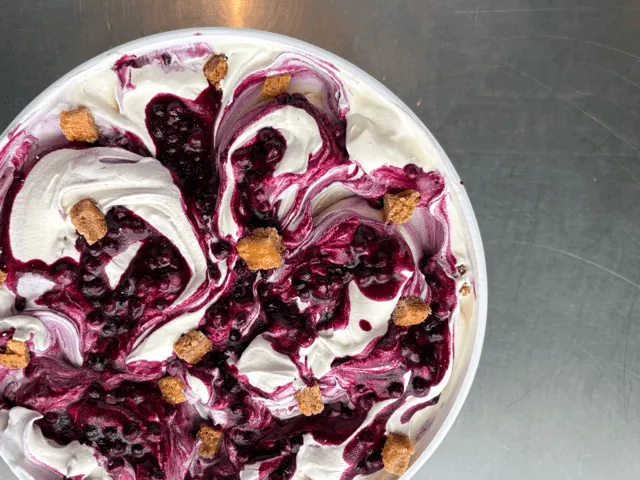
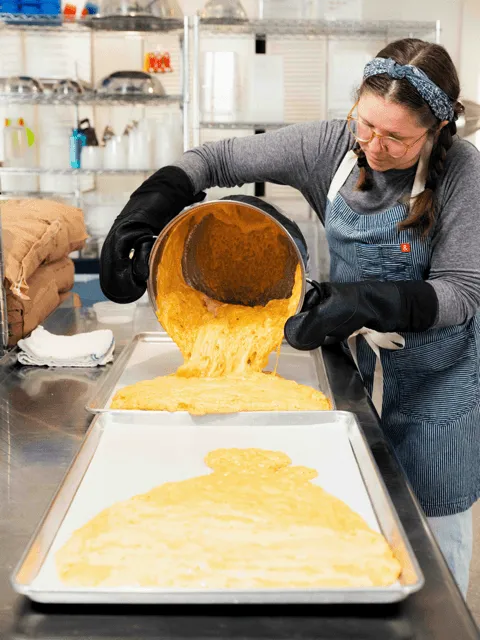
One of the shop's signature flavors, Honeycomb, was one of her first batches of ice cream she made from the cookbook, and it has been on the menu almost since the beginning. Made with sweet cream ice cream and house-made honeycomb candy crafted from local honey, it has become so beloved that customers protest whenever the team removes it from the lineup. Other flavors showcase Zontini and her collaborators’ flavor creativity, including Strawberry Buttermilk, Blueberry Basil, Timur Pepper, and even an unexpectedly popular flavor of Soy Sauce made from Sugar Kelp.
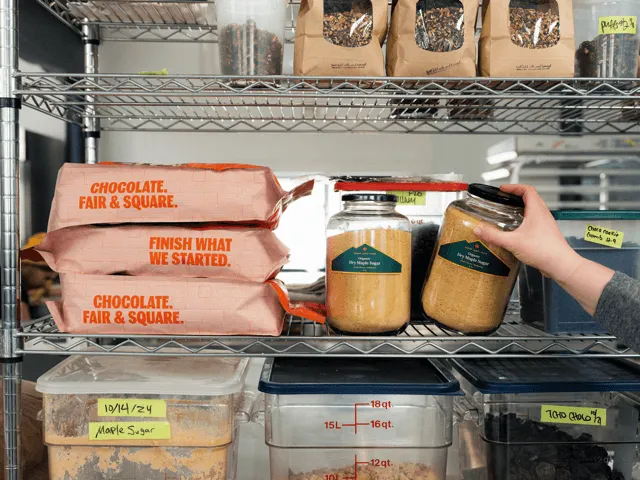
The same critical thinking Zontini developed at UVM helps guide sourcing decisions today. For items that cannot be sourced locally, she tries to emulate the kinds of relationships she has with regional farmers when acquiring ingredients from national and international food suppliers. Vanilla beans come directly from a small family farm in Hawaii. Her chocolate is sourced from a tiny farm in Tabasco, Mexico, and her single-origin coffee is roasted in-house and comes from a single farm in Honduras with a female proprietor. Her spices are selected not only for flavor, but also for transparency and ethical production methods. For Zontini, great ice cream begins with knowing where ingredients come from and who is producing them.
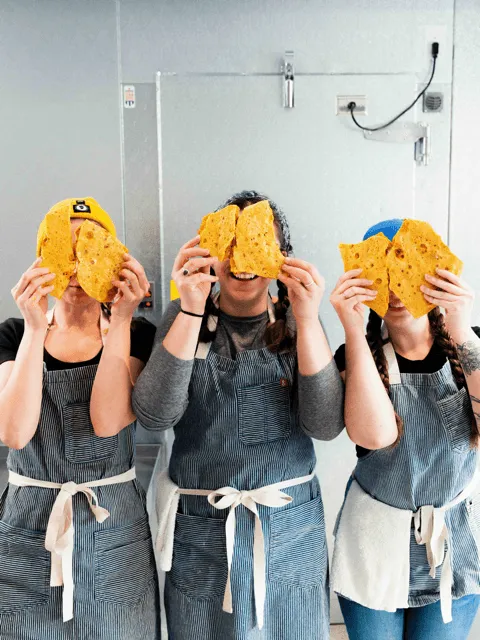
As her business has grown, so has her definition of success. Early on, Zontini worked grueling days making ice cream, serving customers, and managing every aspect of the operation herself. Over time, however, she realized that sustainability applies not only to food systems but also to business ownership. She has built new systems that allow the company to operate without her constant presence. She now prioritizes work-life balance. Today, one of her longtime employees, Aleks, has become a co-owner and the General Manager, helping Zontini run the business.
When asked about her leadership style, she laughs and quips unapologetically, “Don’t be an A-hole.”
But this is more than hyperbole, for Super Secret Ice Cream practices both open-book management and profit sharing with its employees. She strives to create a workplace where employees feel valued and supported. She wants staff members to leave their shifts feeling proud of their work, whether they are crafting a new flavor or serving a line of eager customers on a busy summer afternoon.
Those values have not gone unnoticed. Super Secret Ice Cream has earned James Beard Award nominations every year for the last three years, bringing national attention to her small-town ice cream shop. For Zontini, however, the recognition is less about prestige and more about elevating the craft of ice cream and highlighting the farmers, producers, and employees who make the business possible.
“Keep the idea of community in the foreground, and not just profit, profit, profit.”
Not having an empty business on Main Street for half of each year was also an important consideration as she was designing her business.
“Bethlehem is a tourist area, and there's definitely shoulder seasons, and ice cream can tend to be a seasonal operation. I would feel bad if we were closed part of the year. So, we're open year-round, and then we can also keep jobs year-round. It's super slow in the winter compared to our summer. But this past year we broke even, which is all I want in the winter, you know? We've been lucky enough that people want to come to us year-round.”
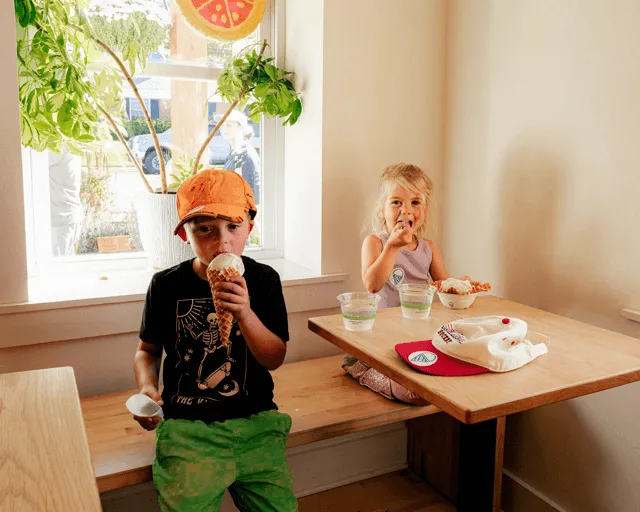
It’s not really luck, though, or just the supportive community she’s nurtured; SSIC’s super success probably comes down to just having really, really good ice cream.
“Some people think of our ice cream as “fancy,” but it's literally as simple as you can get. To me, “fancy” is getting a fake strawberry syrup that's been started in one country, went to a factory in another country, got bottled there, and then somehow got sent to you. We're just using whole ingredients. You have to get ingredients from places that care about what they're growing. We get inspired by that. Like our dairy, which comes from a local, family-owned farm. Then to make good ice cream, you just have to balance the salt, the sweetness level, and the scoopability; mix in a little math, and it makes all that stuff work.
As for the cookbook that started it all. Zontini got to meet the author of Hello My Name Is Ice Cream, Dana Cree, at a convention.
“I told her that without her, none of this would exist. Dana is great!”
Looking back, Zontini sees a direct line from her UVM education to the business she runs today. The entrepreneurial mindset, commitment to community, and food systems perspective she developed as a UVM CALS student continue to shape every decision she makes.
And if UVM CALS CDAE was an ice cream flavor?
She considers, and immediately remembers that while she was a student, she helped a local farm write a grant to grow ginger.
“I didn't know ginger could grow in Vermont! I always thought that was truly amazing. The flavor would have to be a combination of perfectly in-season local ingredients. I really love Adams Berry Farm, and I used to go to pick their berries when I lived in Burlington. So, it would be something gingery and herby, with a fresh, jammy swirl of Adams Berry Farm berries. It would be really cool, and fun, and interesting, and unique... kind of like being a student at UVM!”