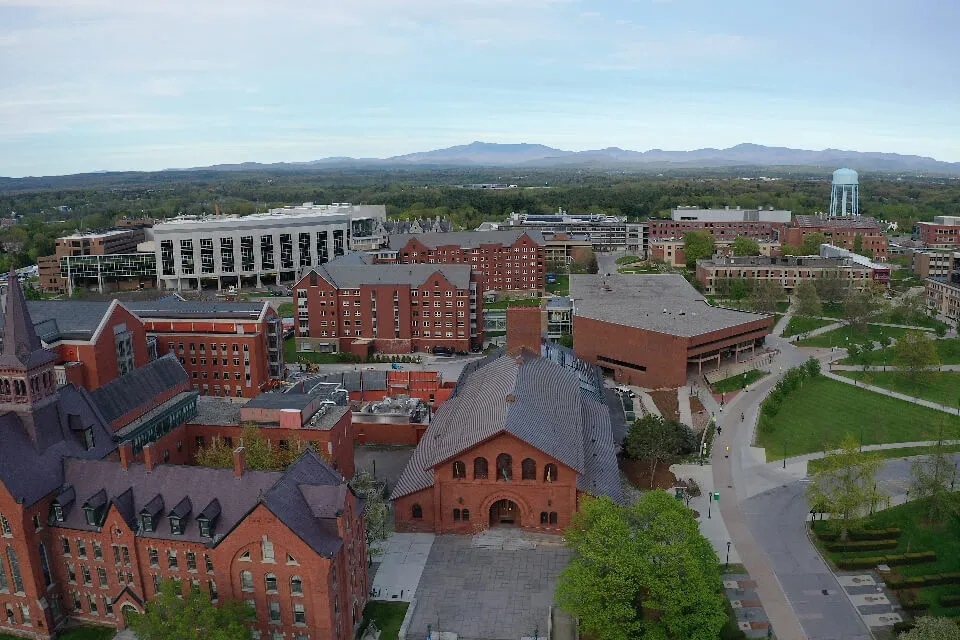
UVM has signed on to the Burlington 2030 District, joining forces with industry professionals, community members and other property owners within the city who are working to collectively reduce building energy consumption, water usage and transportation emissions.
“Joining the Burlington 2030 District further aligns campus sustainability frameworks and strategies with our neighbors and leverages shared resources to advance the University’s goals,” says UVM Office of Sustainability Director Caylin McCamp.
The Burlington 2030 District is a private/public partnership focused on developing realistic, measurable, and innovative strategies to assist signatories in collectively meeting ambitious shared goals aimed at reducing the environmental impacts of their facilities from construction through operation.
The initiative is led by the Vermont Green Building Network (VGBN). Their strength in green building creates a natural emphasis on the District’s building energy goals, which are also a focus of UVM’s Comprehensive Sustainability Plan (CSP).
One requirement for UVM’s participation is to benchmark eligible campus buildings in the EPA Energy Star Portfolio Manager system to track their performance over time. Students in the Sustainable Solutions Lab will work with Facilities Management staff to create building profiles, measure performance and identify opportunities for efficiency.
UVM first established a green building policy in 2004, boasts 20 LEED Certified buildings, including the LEED Zero Energy certified Aiken Center, and makes continual improvements to building systems for energy efficiency. Engineering studies completed this year on five energy intensive buildings identified ways UVM could reduce campus-wide scope 1 emissions by up to 17%. The CSP StoryMap showcases major chiller, boiler and air handler upgrades since the CSP launched in 2023.
Green building collaborations extend beyond campus operations and into our classrooms, labs and extracurriculars. Researchers in CDAE and CEMS have partnered with VGBN and the local design/build school Yestermorrow on a National Science Foundation proposal exploring applications of lower-carbon building materials like hemp. Innovative solutions like this are exciting to students, especially those in UVM’s green building minor, like junior Ethan Prince.
Prince is a student member of the VGBN board and co-president of the VGBN student chapter on campus that launched last year. The club connects students with professionals in the green building field to learn about the design, engineering, and construction of sustainable structures. They are also planning tours to visit local manufacturers specializing in alternative building products.
“The purpose of our club is to educate and involve students in the field of green building, which is directly relevant to all of our futures. We are excited about this new partnership as well as the possibilities this creates for student involvement in campus sustainability efforts,” said Prince.
A hands-on workshop will also be available to students in the fall, made possible by a Sustainable Campus Fund award Prince received. Yestermorrow instructors will guide students through the design process of a timber frame structure using UVM specifications. Students will iterate their designs with input from the University’s Campus Planning Committee with the hopes of participating in the building of a structure on campus next year.
“From improving campus operations to supporting student learning and research, UVM's partnership with us represents more than a commitment to sustainable buildings, it is an investment in collaboration,” says Jenna Antonino DiMare, Director of the Burlington 2030 District and Vermont Green Building Network.
By working alongside community partners, the University is creating new opportunities to exchange ideas, leverage shared expertise and advance sustainability initiatives that extend well beyond campus.