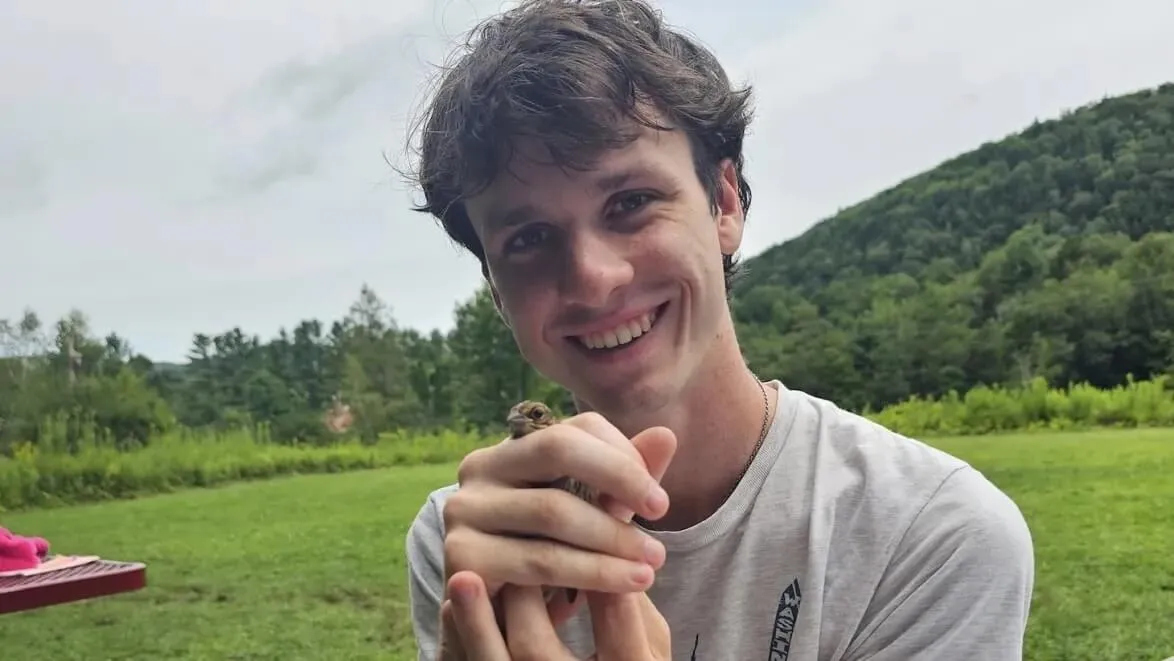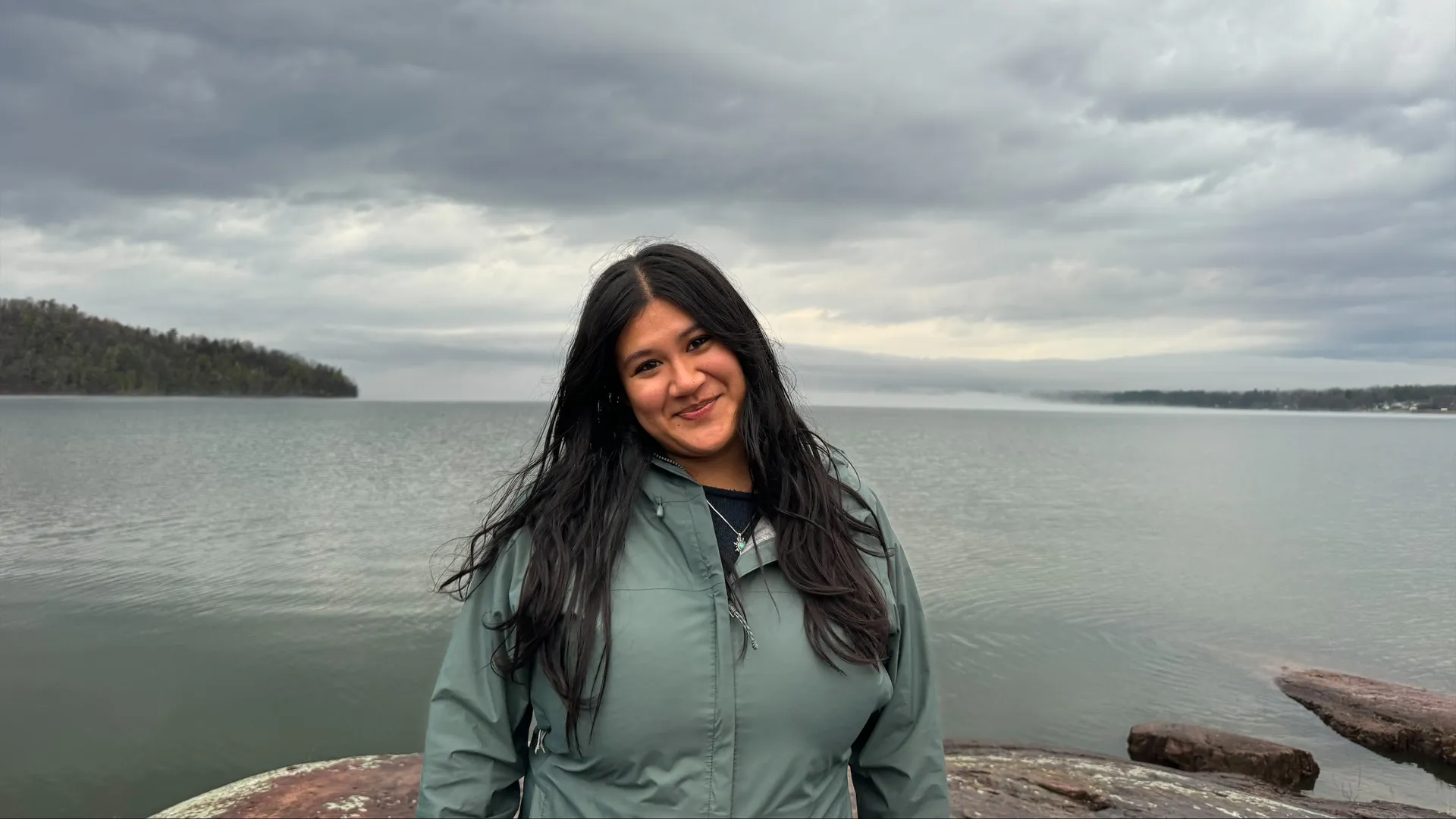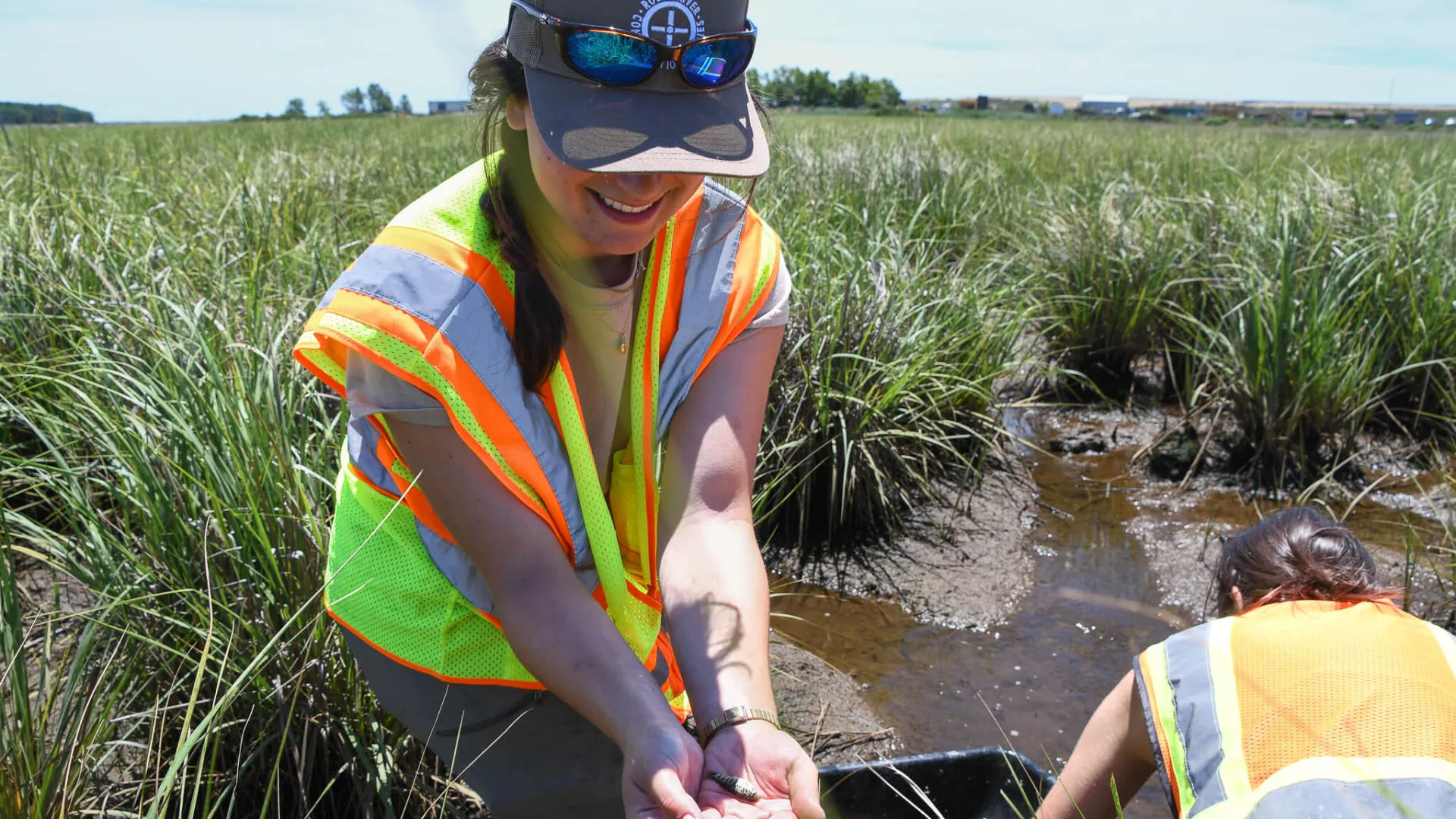
Sustainability, Ecology, and Policy major Liz Moty '27 applied her experiences from her courses to her work as a field technician intern with the National Oceanic and Atmospheric Administration's (NOAA) Chesapeake Bay Office over the summer.
She took the time out of her busy work schedule to answer some questions about her experience.
The following interview has been edited for clarity.
What interested you about this specific internship opportunity?
I absolutely love any opportunity to get covered in mud, spend time outside, and work with my hands. So, when I saw this internship listed through the Chesapeake Research Consortium, I knew that it checked all of those boxes and more. It was close to home and a direct pathway into the fisheries field. Additionally, the GIS component really excited me because I had not yet had an opportunity to apply my GIS curriculum to the real world yet.
What skills are you using on a day-to-day basis? Did any specific Rubenstein School courses or experiences prepare you well for your internship work?
I have been using my GIS skills from the Remote Sensing and Intro to GIS courses I took during my sophomore year. Both these courses prepared me very well with the fundamental skills to understand the bathymetric data that I have been working with. I also took Fisheries Methods and Biology, which was my first exposure to fisheries field sampling. It also gave me a foundational understanding of how fisheries research is done. I was able to carry this forward into this internship to the aquatic restoration research in the wetlands of Poplar Island. Overall, the teachings of this class helped me understand the “what” and why” behind the sampling technique we were using and how the data would be interpreted.
What’s been the most rewarding aspect of your experience so far?
It's been extremely rewarding to know that the work I'm doing is directly giving back to my home watershed that I grew up recreating in and around. I've been helping maintain data quality for programs that were recently referenced as resources for the National Ocean Service for the Chesapeake Bay Environmental Forecasting System. This system provides anglers, shellfish growers, coastal managers, scientists, and the general public with bay conditions. That information is crucial for people's livelihoods. This place will always have such a special place in my heart, and I am glad that I have been able to spend time leaving a positive impact on it this summer.
Tell us about your day-to-day tasks and what a typical day during your internship looks like. Where are you going, what are you doing, what kind of gear are you using, what kind of tests are being run?
As a NOAA field technician intern, I’ve been primarily responsible for aiding in field operations for the hypoxia monitoring program as well as the Chesapeake Bay Interpretive Buoy System (CBIBS) and Poplar Island fish restoration monitoring. One of the best parts of this internship is that no two days are the same; it's always a dynamic work environment. Whether I'm working in the office or on the water, I can expect to come home much dirtier and muddier than I was when I started the day.
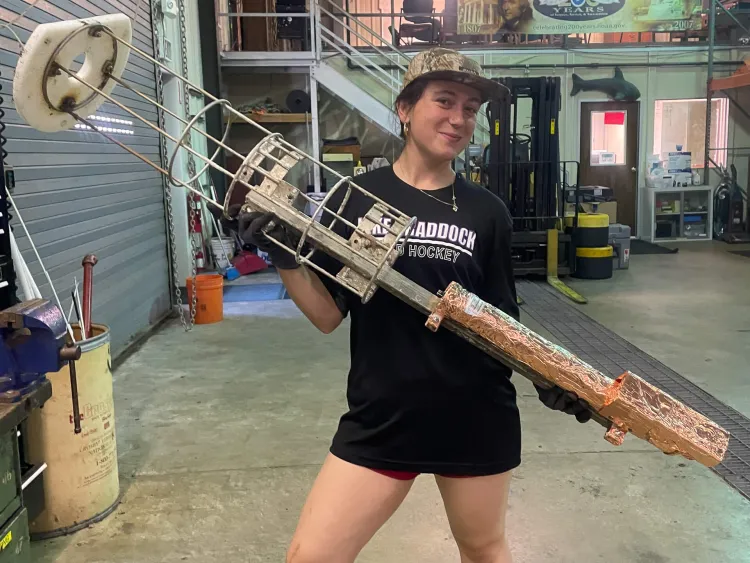
During days in the field for the hypoxia monitoring program, we head out early to the docks and load up the boat with all our equipment for the stations we are servicing. Typically, these are spare hypoxia sensors, copper mesh, zip ties, and a Conductivity, Temperature, and Depth (CTD) sensor.
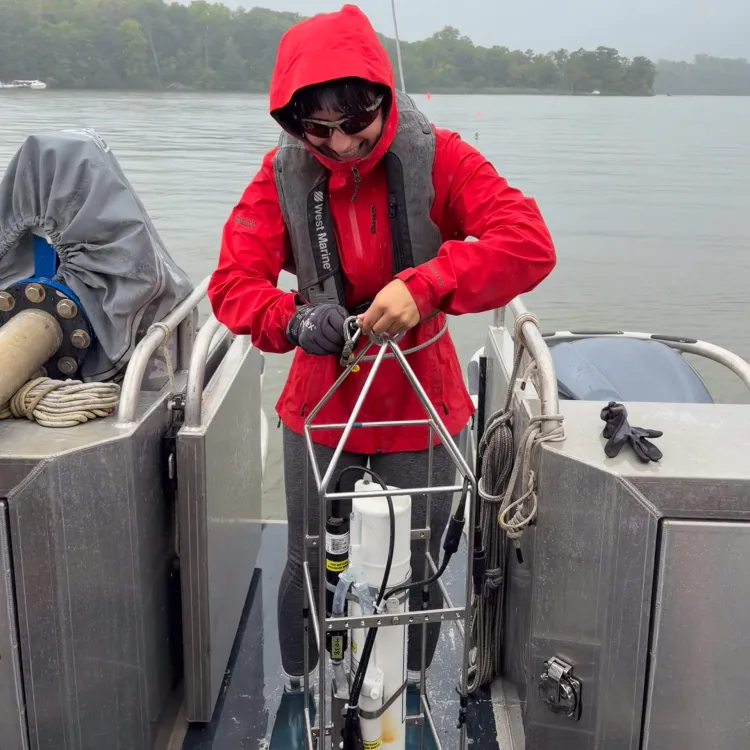
At each station we lower the CTD sensor, a much larger and more accurate version of the hypoxia sensors, next to the buoy both before and after servicing it. The buoy is supposed to provide us with data that can indicate sensor performance. To service the station, we retrieved the buoy out of the water cleaned the sensors and buoy equipment.
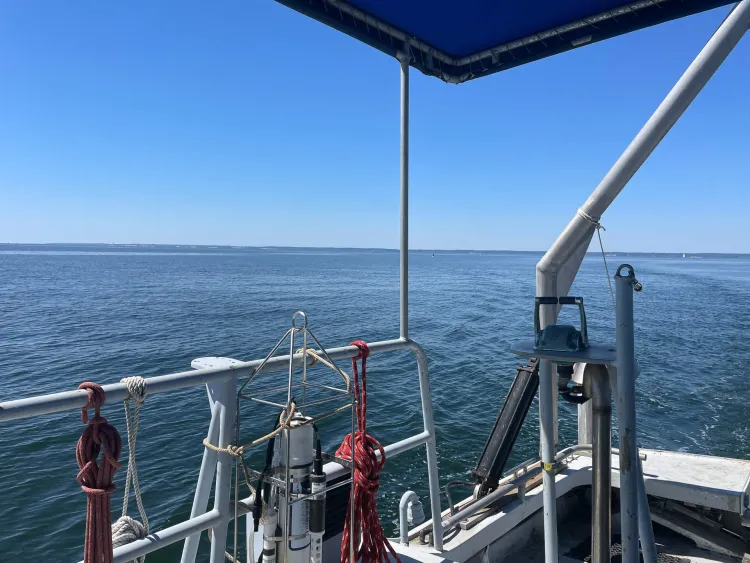
For the CBIBS field work, much of it occurs prior to sensor deployment: wrapping sensors in anti-biofouling materials, which help to prevent the buildup of algae and microorganisms, and attaching the sensor to a cage which can then easily slip onto the buoy on the water. These larger sensors are then transported to the stationary buoy locations and affixed to the buoy hulls.
For Poplar Island fish monitoring, we work for a week at a time every month. The goal of the project is to understand the species that move into the low and high marshes during tidal changes. The data we collect informs the marsh architecture that is being built in newer cells on the island. The construction and restoration of Poplar Island is such an amazing story, and I would recommend anyone to read more about it!
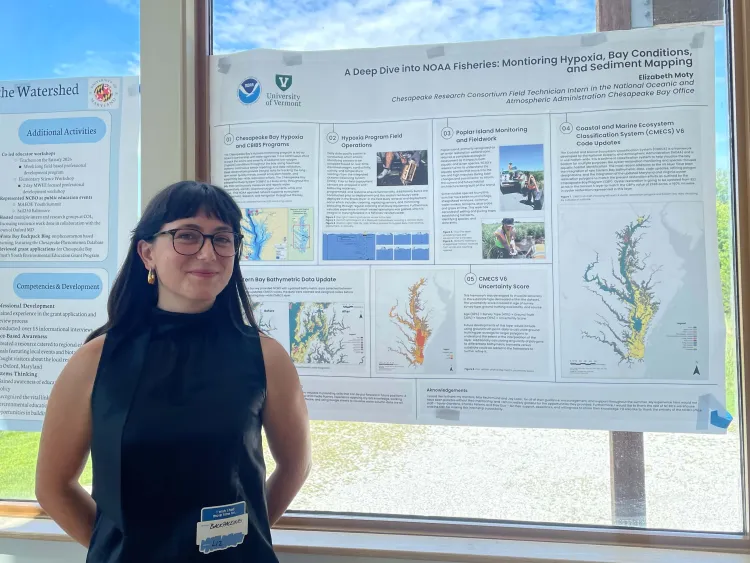
When I wasn't in the field, I was often updating the Coastal and Marine Ecosystem Classification System (CMECS) layer and preparing materials for the next field operation. The CMECS layer is a map that outlines a sediment classification for the entire extent of the Chesapeake Bay. This work consists of integrating new bathymetric data for tributaries, updating classification codes, and the most recent oyster restoration polygons, which increase the represented restored oyster content by 160%. This helps represent all the amazing oyster restoration work that has gone on in the past decade to improve the health of the bay.
What surprised you most about this work?
I was pleasantly surprised by the amount of building and construction I was doing. Going into this, I knew I would be out on vessels helping service buoys, taking samples, and aiding in field surveys, but I very frequently found myself constructing buoys from scratch, sawing through rebar, and putting sensors together for deployment.
Has this experience changed your academic or career interests at all, or steered them in a new direction?
Before I began this internship, I knew that I loved the field work side of ecology, and I wanted to steer myself in the direction of working as a field researcher after graduation. As an avid fisherman, I’m really passionate about salmonids, but wasn’t sure if I’d enjoy the day-to-day of working in a related field. Now, finishing this experience, I could very easily see myself working in the fisheries sector. Additionally, I realized that I'd love to incorporate my GIS skills into future career opportunities.
What advice do you have for other students who are pursuing internships, deciding what to apply for, or who want to know how to make the most out of their internship experience?
The biggest piece of advice I can give any student pursuing an internship: advocate for yourself and be curious. When applying to positions, do not shy away from sending a follow-up email expressing interest after you've submitted your application. Showing a hiring committee the real person behind the application is key to making yourself stand out.
Also, use your time with any organization you're working or volunteering for to speak with as many people as you can. Do not be afraid to be a beginner; people are more than happy to share their experience and knowledge. It teaches you about job pathways, what the day-to-day of a position would actually look like beyond what’s on paper, and most importantly, it helps you see that you can excel in a field even if it's not where you started your career.
For more information about internships in the Rubenstein School, please visit our internships page.
All photos courtesy of Liz Moty