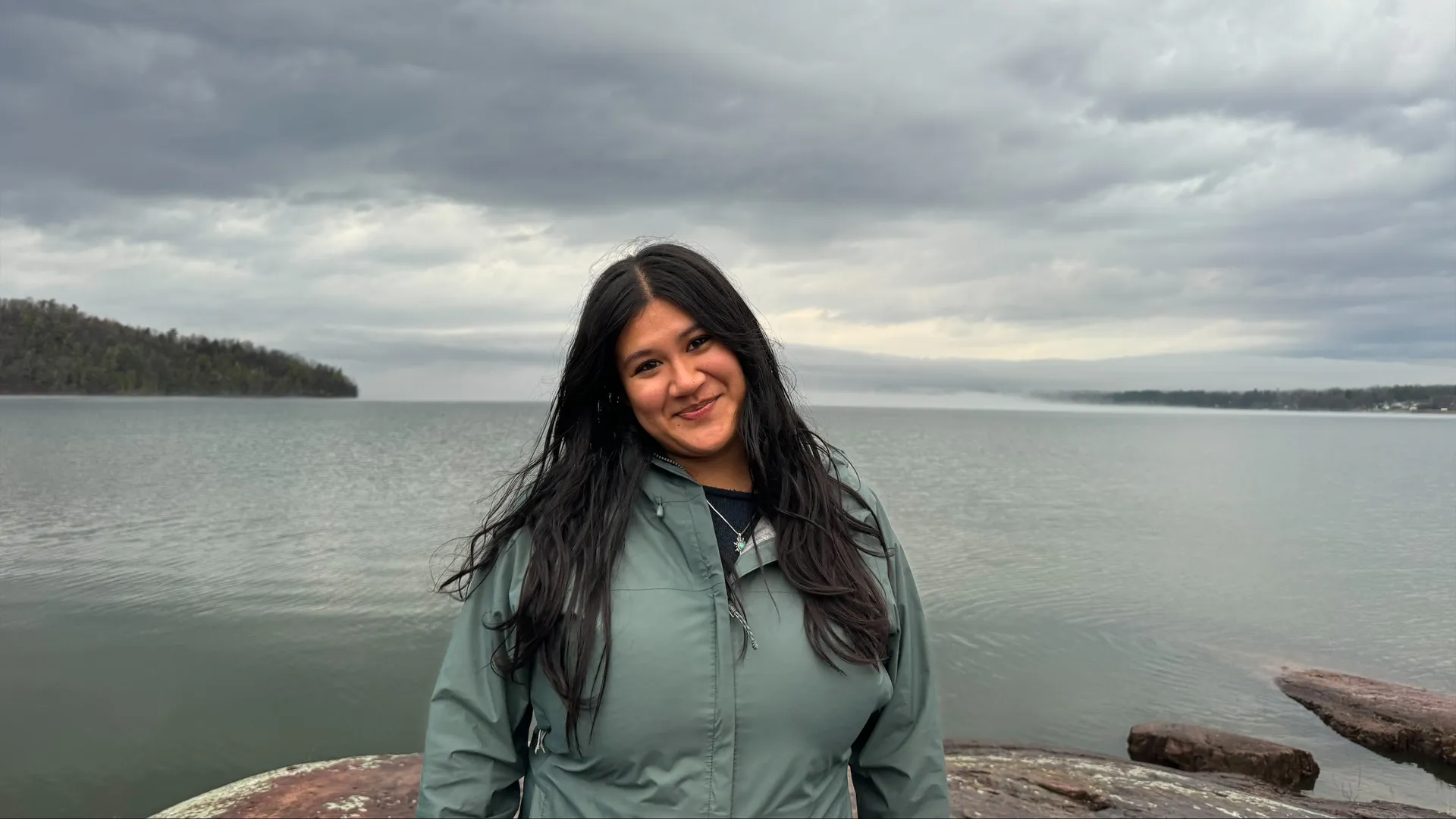
Like many UVM students, Nina works part-time in the food service industry. She's a manager at Leunig's, a staple of the Church Street restaurant scene. It was there that she ran into one of her favorite professors, Professor Emerita J. Ellen Marsden, who is a regular at Leunig's. They got to chatting about Nina's future and Ellen told her about the job.
"I cold emailed NPS about the job," Nina recollected, "and later I found out that it made a big difference. Reaching out directly and name-dropping Ellen got me the interview." Being a part of the wider Burlington community combined with a willingness to take risks set her up for post-grad success in a way that younger Nina never could have predicted.
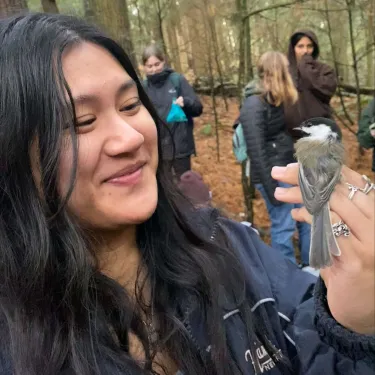
Nina's path to graduation and a future career is marked by a willingness to put herself out there and try things, even if they don't end up being for her. She began her first year at UVM as an Environmental Sciences major and added a double major in WFB less than a month into the semester. "I was taking classes in both majors because I wasn't sure what I wanted to do," Nina explained. "I knew I wanted to do conservation work and work outside."
The NR1010 class that all Rubenstein School students take as first-years was eye opening for Nina and she tried to clarify her path. "That class helped me so much because I got to sample all sorts of field work," Nina said. That enjoyment of the hands-on work that is so integral to the School's curriculum solidified her desire to pursue conservation.
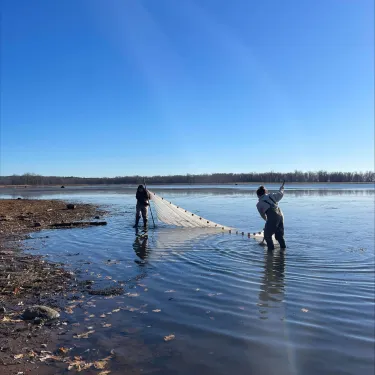
After dropping the double major and going full steam ahead on WFB, Nina began seeking out experiences in both of the program's areas of focus, wildlife biology and fisheries. "I don't have a concentration in either of them, so I mix and match," Nina said. She got her first true taste for fisheries work in WFB2010, a methods course for fisheries and wildlife. She went on to take both Ichthyology and Fisheries Biology and Techniques and found them both fascinating.
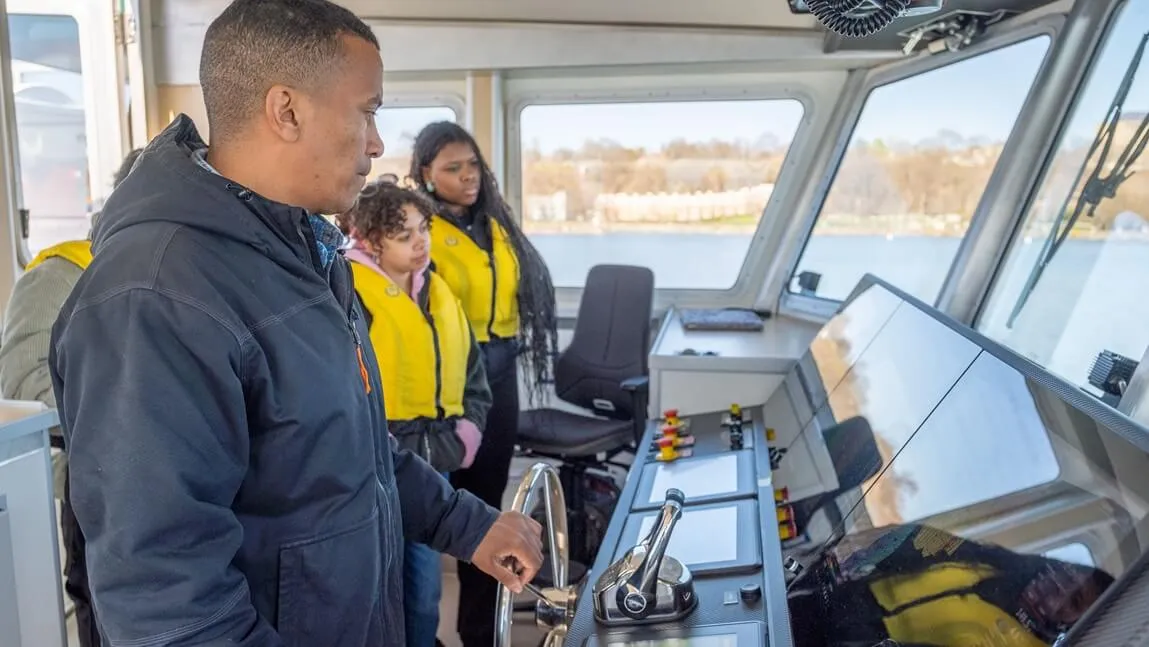
"I loved having labs in those classes down at the waterfront," Nina recollected. Fisheries labs are often held at the Rubenstein Ecosystem Science Laboratory on the Burlington waterfront, which just celebrated its 25th anniversary. Affectionately nicknamed the Rube Lab, it's also the home of the School's state of the art research vessel, the Marcelle Melosira. "Bianca Possamai and other postdocs and grad students would take us out on the boat to measure and observe fish, and I just had the best time and thought it was so awesome."
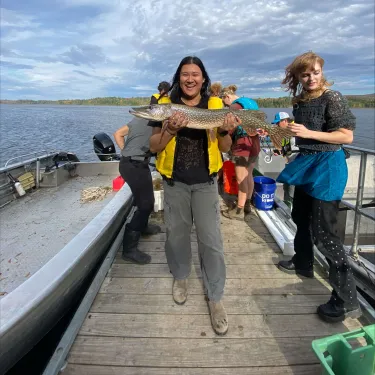
With her interest piqued, Nina began looking for more ways to work on the water. She landed a summer job with the Lewis Creek Association, a non-profit conservation organization that does sustainability and conservation work in towns of the middle Lake Champlain Valley, doing invasive management and working as a boat steward.
"I would talk to people and check their boat before they put into or pull out of the creek to make sure they're not spreading plants to different places," Nina said. The importance of that kind of direct outreach, centered around conversations with people using the environment for recreation, is explained and demonstrated to Rubenstein School students throughout their educational journeys. Nina is one of many students who learned the value of that work in a hands-on environment.
While Nina enjoyed and learned a lot from her interactions with boaters and other people recreating, her favorite part of the opportunity was leading teams of volunteers on invasive removal expeditions. "I took a group of retired folks out kayaking on Shelburne Bay, the La Platte River, and Town Farm Bay early in the mornings," Nina said. "We would ratchet strap laundry baskets to the fronts of their kayaks to pick up Frog-bit plants, which are floating invasives. It was really nice, and so rewarding to know that we were making a difference."
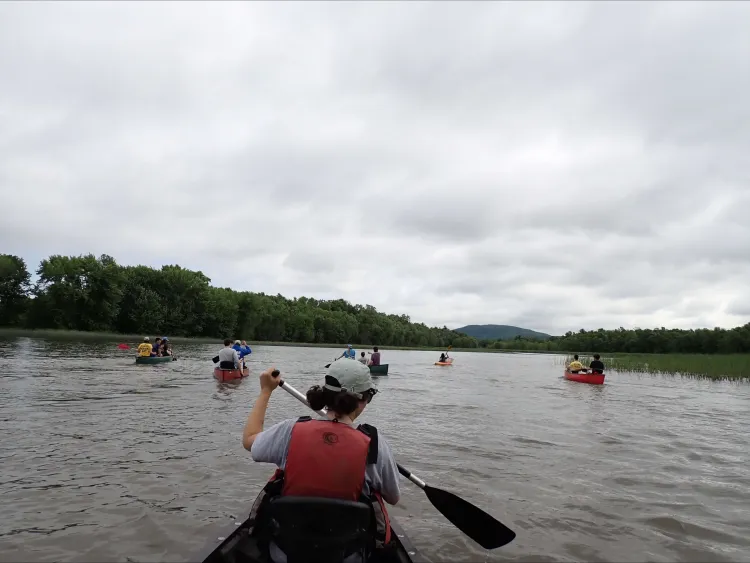
At the end of the summer, Nina wrote a report about the achievements of her volunteer cohort. "We removed about 3,000 pounds of Frog-bit from just one river," Nina said proudly. "One of the volunteers in my group is a retired UVM professor, and she's been working on the same knotweed patch for twenty years. I really valued talking to the volunteers and learning about their lives."
Both Nina's classroom and work experiences have prepared her well for this new role with the NPS's invasive management initiative, the goal of which is the conservation of native cutthroat trout. She just completed the Fisheries Management course, one of the highest level offerings of the WFB program. "I feel like I've learned so much in that class specifically," Nina said. "It can be intense, but we've learned so much about field methods, which is really useful."
During her interview for the NPS position, she realized what a leg up she had thanks to the hands-on, practical nature of her WFB classes. "During that process I learned that a lot of applicants for those roles haven't had much technical experience," Nina explained. "I'm just so grateful to have gained so much of it in my classes."
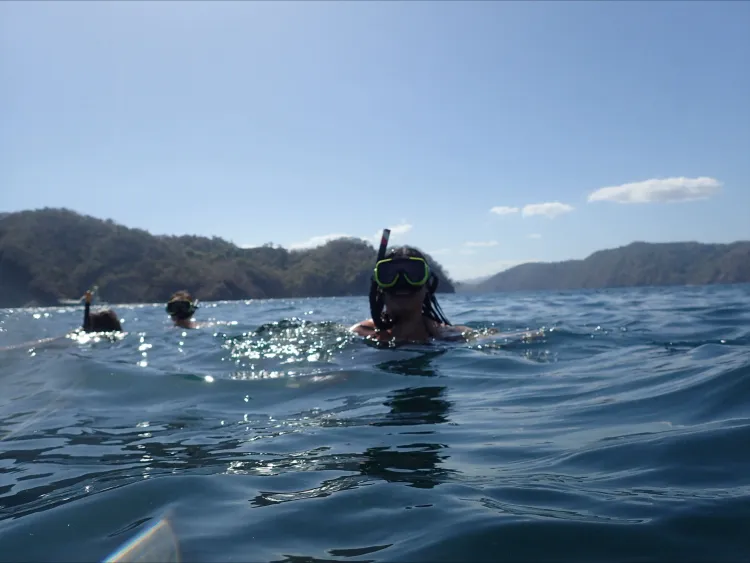
Nina concedes that at the beginning of her time at UVM, she underestimated the importance of reaching out to and building relationships with faculty. "I felt this mental block about cold-emailing professors about research opportunities," Nina said. "It felt weird. But that's how so many of my classmates got started down at the Rube Lab."
Eventually, it would also be how she landed her NPS position. "Something important I'm taking away from my time here is the importance of following through and making connections," Nina said. "Ellen told me about the job and recommended me, and then Jason (Stockwell) gave me advice for my interview, and both of those things helped me hugely in the hiring process."
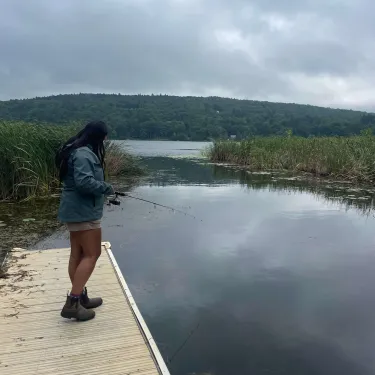
Like many Rubenstein School students, some of Nina's fondest memories of her time at UVM happened during NR1010 and NR1020. "Chris (Brooks) plays a song at the beginning of every class," Nina explained. "I thought that was so fun, and I loved it."
She made a playlist out of all the songs so she could continue to listen to them. Once Nina had completed the course, Chris reached out to her because other students had the same idea. "So now we have multiple classes of people contributing to this big playlist," Nina said. "I was able to bond with my professor over music and share my appreciation and gratitude."
all photos courtesy of Nina de Silva