Our MS and Ph.D. programs in Natural Resources run on a funded graduate assistantship model. This means that we do not accept general applicants to our program. Instead, students are encouraged to apply only when faculty obtain grant funding to support students and advertise their funded positions on this webpage and on other, discipline-specific pages.
Faculty who are actively recruiting or who are open to prospective student emails are listed below. We suggest only applying to the UVM Graduate College if you are interested in a posted position or if you are encouraged to do so by individual faculty with which you have corresponded. Faculty who are not listed below do not anticipate recruiting students though grant-funded positions this year.
One exception includes several competitive fellowship opportunities that prospective Ph.D. students may be eligible to apply for, listed at the bottom of this page. If you are interested in these opportunities, you are encouraged to discuss them with potential eligible faculty mentors, as specified for each opportunity.
Faculty Accepting New Graduate Students (See Positions Below)
Director, Parks, Recreation, and Tourism Program • Associate Professor • Affiliate, Gund Institute for Environment
kimberly.coleman@uvm.eduInstructional programs: Parks, Recreation, and Tourism
Research: Human dimensions of natural resources; Outdoor recreation and tourism; Planning and management of public land; Environmental justice;...
Research Associate Professor • Unit Leader of VT Cooperative Fish & Wildlife Research Unit
mark.henderson@uvm.edu- Fish population modeling
- Food web ecology
- Environmental DNA
- Acoustic telemetry
- Mark-recapture
- Fish ecology
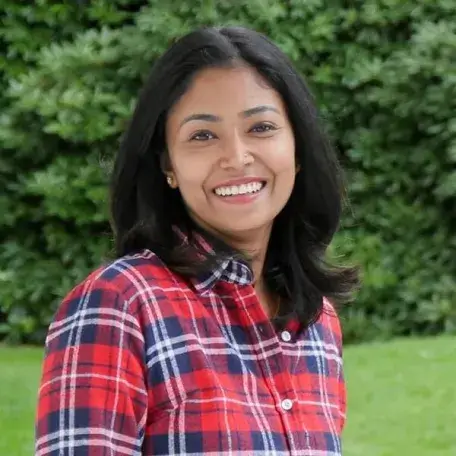
Assistant Professor • Affiliate, Gund Institute for Environment
helina.jolly@uvm.eduTraditional Ecological Knowledge, Indigenous Peoples and Local Communities (IPLC), Human-Wildlife Coexistence, Community-engaged Research, Conservation Sciences, Human Geography, Ethnography, Biocultural Systems, Land Stewardship, and Ecosystem...
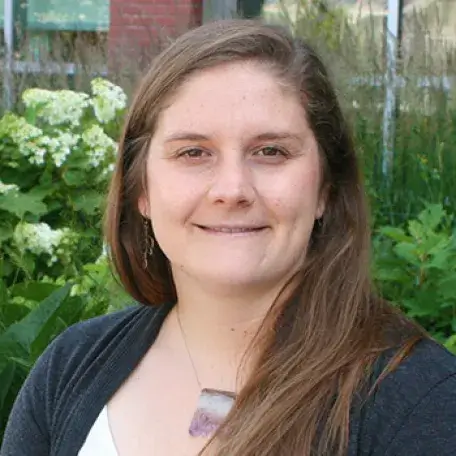
Associate Professor • Faculty Fellow, Gund Institute for Environment
brittany.mosher@uvm.eduWildlife ecology, conservation biology, conservation decision-making, herpetology, amphibians (frogs, toads, salamanders, etc.), reptiles (snakes, turtles, lizards, etc.), disease and population ecology, and quantitative ecology.
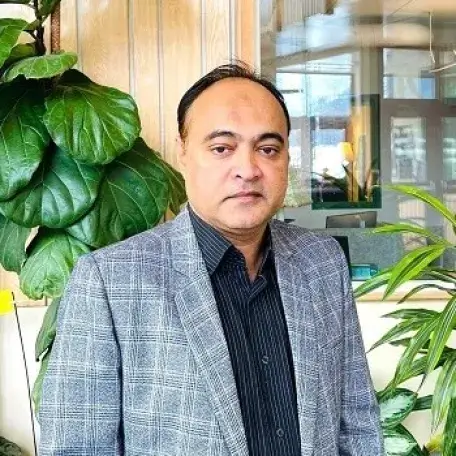
Assistant Professor • Affiliate, Gund Institute for Environment
muddin@uvm.eduImpacts of global environmental changes; climate change adaptation, mitigation and policy; resilience to climate change induced natural disasters; environmental justice and disaster governance; nature-based solutions; natural resources...
M.S. & PhD Funded Positions
M.S. Graduate Assistantship - Winter Weather, Snow, and the Outdoor Recreation Economy (Drs. Coleman & Uddin)
Position Overview
The Rubenstein School of Environment and Natural Resources (RSENR) at the University of Vermont is seeking a motivated and collaborative M.S. student to join a multidisciplinary research project examining the relationships among winter weather, snow conditions, and the outdoor recreation economy across Northern New England. The student will be advised co-advised by Dr. Kimberly Coleman and Dr. Salim Uddin, and will work closely with a regional network of researchers, outdoor recreation professionals, state agencies, nonprofit organizations, and industry partners.
- Degree Program: M.S. in Natural Resources, Rubenstein School of Environment and Natural Resources, University of Vermont
- Co-Advisors: Dr. Kimberly Coleman and Dr. Salim Uddin
- Start Date: Fall 2027
- Funding Support: Graduate stipend, tuition remission, and research-related travel support
Project Background
Winter recreation is a cornerstone of the economy in Vermont, New Hampshire, and Maine. Skiing, snowmobiling, winter tourism, and outdoor sporting events generate billions of dollars in economic activity and support thousands of jobs across the region. However, changing winter weather patterns and increasing variability in snow conditions create significant challenges for recreation businesses, event organizers, tourism planners, and rural communities. This project seeks to understand how outdoor recreation stakeholders use snow and weather information in operational decision-making, identify effective adaptation and resilience strategies, and translate research findings into practical tools and resources for industry professionals and policymakers.
The M.S. student will contribute to multiple facets of the project, including:
- Planning and facilitating stakeholder listening sessions and focus groups with outdoor recreation partners across Vermont, New Hampshire, and Maine.
- Conducting semi-structured interviews with key informants from sectors such as alpine skiing, snowmobiling, winter event management, tourism, and outdoor recreation.
- Managing, organizing, and analyzing qualitative research data.
- Conducting thematic coding and qualitative analysis using NVivo or similar software.
- Assisting with economic and policy analyses related to winter recreation and climate variability.
- Supporting the development of a Northern New England Snow Economy Report.
- Contributing to workforce development resources, training materials, and a recreation-focused snow data science micro-credential.
- Presenting findings at conferences, stakeholder meetings, and outreach events.
- Contributing to peer-reviewed publications and extension products.
Desired Qualifications
- A bachelor's degree in outdoor recreation or closely related field (e.g. environmental studies, natural resources, recreation management, geography, tourism, sociology, economics, public policy, climate science).
- Strong written and verbal communication skills.
- Interest in outdoor recreation, climate adaptation, environmental change, rural development, and stakeholder-engaged research.
- Experience with qualitative research methods, interviews, focus groups, or community-engaged research (preferred but not required).
- Ability to work independently and collaboratively within an interdisciplinary team.
- Willingness to travel occasionally throughout Northern New England.
The student will collaborate with recreation industry leaders, state outdoor recreation offices, nonprofit organizations, and academic partners while developing a thesis with both scholarly and applied impact. The project provides opportunities for publication, conference presentations, and engagement with decision-makers across the Northern New England recreation sector.
Application:
To express interest in the position, please email Drs. Kimberly Coleman and Salim Uddin with a brief description of your background and why you are interested in this specific assistantship. Please highlight any relevant experience with outdoor recreation and qualitative research methods. Please put “M.S. Assistantship: Snow & the Outdoor Recreation Economy” in the subject line of your email.
Dr. Salim Uddin, Assistant Professor, muddin@uvm.edu
Dr. Kimberly Coleman, Associate Professor, kcolema@uvm.edu
PhD Graduate Assistantship - Understanding Indigenous Perspectives on Forest Stewardship in Maine (Dr. Jolly)
Project: Understanding Indigenous Perspectives on Forest Stewardship in Maine (USA)
About the position: The Rubenstein School of Environment and Natural Resources (RSENR) at the University of Vermont (UVM) invites applications for a fully funded PhD Graduate Research Assistantship to join an interdisciplinary research team examining Indigenous and Tribal Nations' perspectives on forest health, stewardship, and forest-related adaptations to climate change. The incoming PhD student will work in close partnership with Tribal Nations and community knowledge-holders in Maine (USA), and members of the University of Maine. For this transdisciplinary project these partnerships are important, and the student will be interfacing across these collaborators, and institutions over time. The student will be co-supervised by Dr. Helina Jolly, Assistant Professor (study lead), and Dr. Rachelle Gould, Professor, both based in RSENR. The student will also work closely with a project team of foresters, social scientists, and economists, including collaborators addressing complementary economic and ecological research questions within the same initiative.
Key Highlights:
Fully funded for four years (tuition, stipend, and health insurance) through research & teaching assistantships
Opportunity to work with a transdisciplinary team that includes Tribal Nations and interdisciplinary researchers based at the University of Vermont and University of Maine
Note on timing: Our ideal arrangement is unconventional: an immediate start as a part-time employee, followed by enrollment as a student in January 2027.
Details: This position requires the student to be physically located at the University of Vermont, Burlington, VT, with extended periods of fieldwork in Maine. Remote work is not available for this role. The selected candidate will ideally join the project as a temporary (hourly/term) Research Assistant beginning this term (Fall 2026) and participate in project activities such as team workshops, relationship-building with members of the Tribal Nations, and a scoping study (number of weekly hours in the fall is negotiable). The candidate will then transition to full-time PhD student status in the RSENR PhD in Natural Resources program with Spring admission, beginning January 2027. This phased approach allows the incoming researcher to begin contributing to the project and building relationships with project members and tribal partners immediately, while completing the formal Graduate College admissions process for a January 2027 start as a fully enrolled, funded PhD student.
As a PhD student for this project, you are expected:
Build and sustain respectful, reciprocal relationships with Tribal Nations, community knowledge-holders, and partner organizations.
Conduct qualitative research work and travel for extended fieldwork.
Contribute to peer-reviewed publications, community reports, and other agreed-upon outputs, especially those that creatively and effectively share results beyond academic publications.
Assist with project administration, and coordination with project partners and collaborators when needed.
Preferred Qualifications:
Master's degree (or equivalent research experience) in a relevant field such as natural resources, forestry, environmental studies, anthropology, Indigenous studies, human geography, or a related discipline.
Excellent interpersonal, listening, writing and cross-cultural communication skills.
Will value highly:
Experience working with Indigenous or Tribal communities and/or doing course work on traditional ecological knowledge, Indigenous studies
Familiarity and/or experience with community-engaged work, and research methodologies (like doing interviews, surveys)
Application:
To apply, please submit a 200- 250-word summary of your interest in this project highlighting your previous experiences working with communities, Indigenous knowledge system, field work approaches and in general how your qualifications make you a good fit for the position, a CV, contact information for three references, and a writing sample. We will review applications on a rolling basis until the final deadline of October 05, 2026. Please email your application materials to Dr. Helina Jolly at helina.jolly@uvm.edu with the subject line: Prospective Graduate Student_TEK_Last Name.
We look forward to your application and the opportunity to work together in making a meaningful impact on environmental research and community engagement!
M.S. Assistantship - Movement Ecology (Drs. Mosher & Henderson)
Project: Drs. Brittany Mosher (Wildlife Ecology Research Lab) and Mark Henderson (Henderson Lab) at The University of Vermont’s Rubenstein School of Environment and Natural Resources are seeking a master’s-level graduate student to participate in research related to the movement of Spiny Softshells (Apalone spinifera) in Lake Champlain. The position is available beginning in either January or June 2027 and includes two years of funding (stipend, tuition waiver, and health insurance) in the form of both a graduate research assistantship and a graduate teaching assistantship. The student will be co-mentored by Dr. Brittany Mosher (UVM), Dr. Mark Henderson (USGS), and Dr. Luke Groff (Vermont Fish and Wildlife Department).
Project description: The Spiny Softshell is threatened and a Species of Greatest Conservation Need in Vermont and is endangered in Quebec. Native populations of Spiny Softshells are not found elsewhere in the northeastern US. In Vermont, the species has been listed as threatened since 1987 due to shoreline habitat destruction, the rarity of suitable nesting beaches, and small adult population sizes. Spiny softshell reports primarily come from northern Lake Champlain near the mouth of the Lamoille River, in Missisquoi Bay, and recently, near the mouth of the Winooski River. It is unknown whether these three areas represent distinct subpopulations or whether they are connected. Our limited knowledge about population interchange and movement patterns impedes Spiny Softshell management and recovery decision-making.
This project will use the existing Champlain Acoustic Telemetry Observation System (CATOS) to understand Spiny Softshell movement patterns and population connectivity in Lake Champlain and its tributaries. The objectives of this research project are to: 1) Determine whether there is interchange between Vermont’s Spiny Softshell populations. 2) Identify Spiny Softshell movement corridors and barriers. 3) Assess whether the Spiny Softshell has recolonized the Winooski River. 4) Share research findings with K-12 students and with local partners.
Qualifications: Bachelor's degree in ecology, biology, natural resources, environmental sciences or a closely related field. Applicants should have a strong work ethic, experience working as part of a field crew, and a strong interest in data analysis and scientific writing. Training will be provided, but experience working with large and/or spatial ecological datasets (e.g., in R), as well as familiarity with capture methods for freshwater turtle species are highly desirable. Comfort working in and around water and on boats is also desirable.
Application: The University of Vermont is committed to inclusive excellence and its admissions practices reflect that university-wide commitment. Using a nuanced, holistic, and multi-faceted admissions process, we seek to build a campus community with myriad talents, experiences, goals, backgrounds, perspectives, and interests. Applicants are strongly encouraged to share their unique lived experience with us as part of the application process. GRE scores are not required.
Interest should be expressed using the Google Form listed here: https://forms.gle/1btx2NsuvMVssF34A. On the form, you will be asked to answer three short questions (each 150 words or less) and to submit 1) a cover letter expressing their interest, experience, and qualifications and 2) a CV with contact information for three references. Applications will be reviewed as they are received, until September 15, 2026.
M.S. or PhD Assistantship - Human dimensions of fisheries in Lake Champlain (Dr. Bernos)
The Bernos F.I.S.H. lab is seeking a motivated graduate student for a funded MSc or PhD research assistantship focused on the human dimensions of fisheries in Lake Champlain, with a preferred start date of January or May 2027. In our multidisciplinary lab, we study the interactions between fish, peoples, and place. Learn more about our work on our website: https://bernoslab.wordpress.com.
The system: Imagine Lake Champlain - a large lake nested between Vermont, New York, and Quebec with five basins differing greatly in environmental conditions and fish communities. These ecological differences support a diverse fishery targeting species such as black basses, Northern Pike, Yellow Perch, Lake Trout, Atlantic Salmon, Walleye, panfish, Bowfin, and more. Some fishers are highly specialized, targeting trophy size salmonid and bass (more than 100 bass tournaments are held on the lake annually!); others are more generalist, targeting diverse fish species close to urban centers. The largest urban centers on the lake’s shorelines are Burlington, Vermont and Plattsburg, New York: both cities are experiencing population growth and are home to an increasingly diverse community, making them a potential source of new and underrepresented participants to the fisheries. Recreational and provisional fishing, which includes both open water and ice fishing, is an important part of the local culture, recreation, and economy. Understanding how fishers interact with the fisheries of Lake Champlain is critical for ensuring both ecological sustainability and positive recreational experiences.
The successful candidate will develop a M.Sc. or Ph.D. thesis focused on one or more aspects of the fisheries of Lake Champlain. They may draw from human dimension research (surveys, interviews, webscrapping, etc.) and fishery techniques (e.g., sampling, telemetry, genetics). While the research questions will be refined collaboratively, the thesis is expected to contribute to our understanding of one (or more) of the following topics:
- The “movement ecology” of fishers and fishes
- Heterogeneity in fishing behaviours, including fishing techniques, harvest rate, motivation, preferences, and decision-making.
- Social and knowledge networks within fisheries systems, including patterns of connections among fishers, management agencies, community organizations, and fishery-related concepts (e.g. stocking, catch and release, commercial harvesting…).
The University of Vermont is committed to inclusive excellence and its admissions practices reflect that university-wide commitment. Using a nuanced, holistic, and multi-faceted admissions process, we seek to build a campus community with myriad talents, experiences, goals, backgrounds, perspectives, and interests. Applicants are strongly encouraged to share their unique lived experience with us as part of the application process.
Qualifications: We welcome applicants of all backgrounds, experiences, and perspectives. International students are encouraged to apply. Candidates from a range of disciplines will be considered, including fisheries science, ecology, natural resources, human dimensions of natural resources, environmental studies, geography, sociology, anthropology, data science and network analysis, and other related disciplines. Students with interests in interdisciplinary research, quantitative and qualitative methods, modeling and simulations, stakeholder engagement, and social-ecological systems are especially encouraged to apply.
Applicants may apply for either an MSc or PhD position. PhD applicants are typically expected to demonstrate a strong foundation for independent research, which many students develop through a master's degree, research experience, professional work, or other relevant experiences.
How to apply: To promote a transparent and equitable selection process, we ask applicants to complete a brief Google Form (Click here) during the initial screening stage. Following this review, selected candidates will be invited for an interview. Finalists will formally apply through the UVM Graduate Application. The questions are designed to help us understand your research interests and long-term career aspirations, and to determine whether this position is a match for your goals and experience. Review of applications will begin on September 1 and continue on a rolling basis until the position is filled. Applicants are encouraged to submit their materials by September 1 for full consideration. If you are encountering issues accessing the form, please contact Dr. Thais Bernos (thais.bernos@uvm.edu) directly.
Competitive PhD Funding Opportunities
Rubenstein Doctoral Assistantship
Rubenstein Doctoral Assistantship Overview
This funding opportunity provided by the Rubenstein Graduate Program will support 2-3 new PhD students each year with 3 full years of assistantship funding to increase the number of highly qualified doctoral students who will bring unique perspectives, experience, and skills to the PhD in Natural Resources program. Please see the Overview attachment for further details on the qualifications, funding, and application process.
The University of Vermont is committed to inclusive excellence and its admissions practices reflect that university-wide commitment. Using a nuanced, holistic, and multi-faceted admissions process, we seek to build a campus community with myriad talents, experiences, goals, backgrounds, perspectives, and interests. Applicants are strongly encouraged to share their unique lived experience with us as part of the application process.
Prospective students must complete and submit an application to the UVM Graduate College on or before January 1st for our Fall start term cycle. Students should specifically reference conversations that have taken place with their intended faculty advisor in their Statement of Purpose.
Students must be nominated by a RSENR Graduate Faculty member, who will serve as your advisor, to be considered for this funding opportunity. If you think you are a good candidate for one of these fellowships, we suggest reaching out to potential faculty mentors to discuss this opportunity further.
Advisors will complete and submit the Request Form by January 25th of the calendar year in which the student intends to matriculate.
Gund Institute Ph.D. Fellowships
The Gund Institute for Environment at the University of Vermont supports outstanding PhD applicants interested in conducting interdisciplinary research on major global environmental challenges. With Gund PhD Fellowships, students receive attractive funding packages, world-class faculty mentors, real-world experience collaborating with leaders in government and business – and a deep understanding of complex global sustainability issues.
To qualify for this opportunity, prospective RSENR PhD students must identify and secure support from a Gund Faculty Fellow that is also affiliated with the Rubenstein School. If you think you are a good candidate for one of these fellowships, we suggest reaching out to potential faculty mentors to discuss things further.
Leadership for the Ecozoic (L4E) Ph.D. Fellowships
Leadership for the Ecozoic (L4E) is a transdisciplinary initiative based at the University of Vermont (UVM) and McGill University that advances collaborative research, teaching, and leadership for a just and sustainable future. L4E at UVM fosters scholarship that explores economics through the lens of sustainable scale and just distribution over efficient allocation.
Fall '27 funding opportunities and next steps will be posted soon!
Please connect with Julie Starr (julie.starr@uvm.edu) with any questions.Learn more about L4E
External Fellowship Resources
We invite you to review the UVM Graduate College's External Funding webpage for information on other competitive fellowships for which you may be interested in applying, such as the NSF GRFP.
Contact us