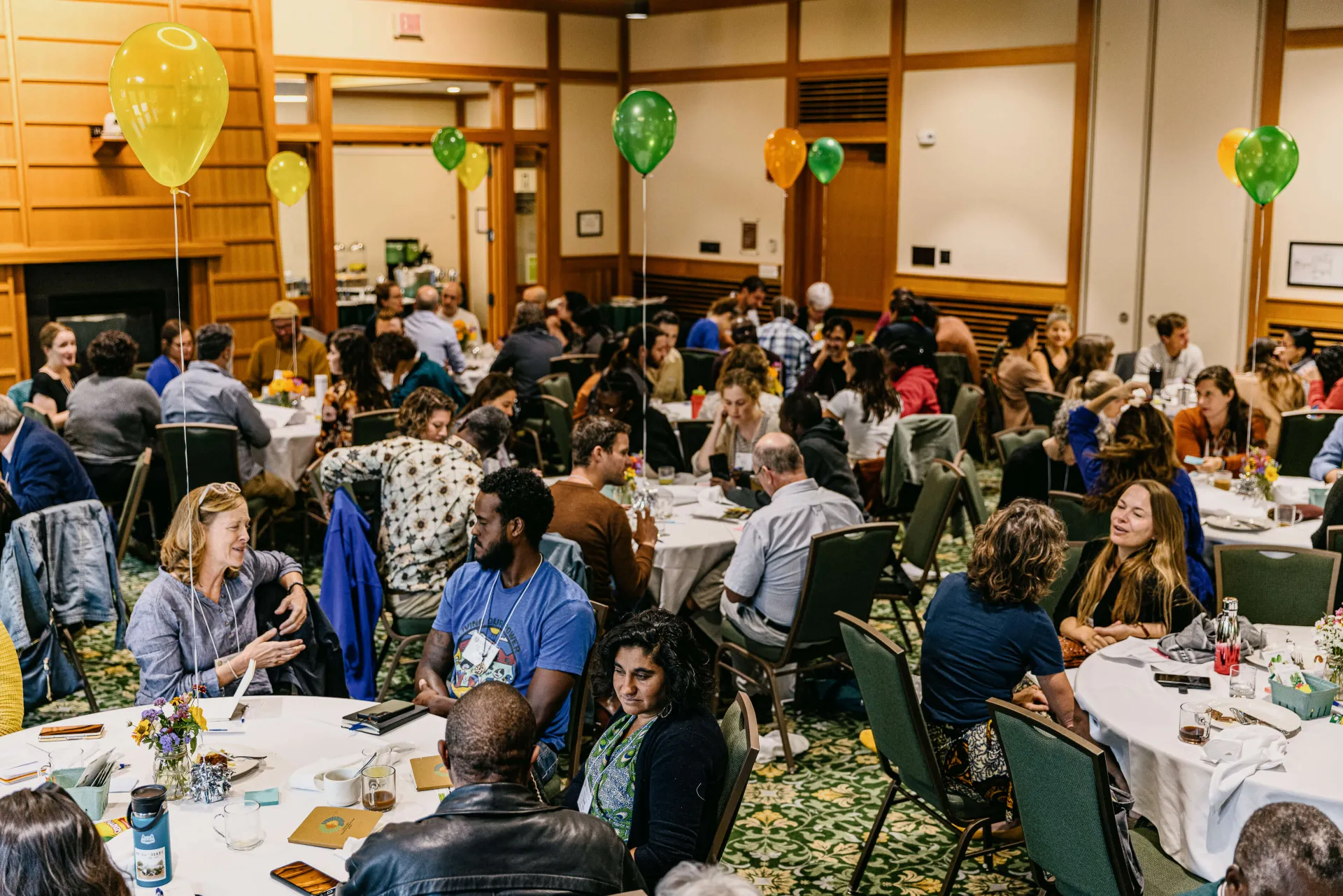
The University of Vermont will host the 2026 Agriculture, Food & Human Values Society (AFHVS) and Association for the Study of Food and Society (ASFS) conference - “Just Transformations: Reimagining Sustainable Food Systems and Cultures” - beginning on June 7. The conference is sponsored by several UVM partners - Food Systems Research Institute, College of Agriculture and Life Sciences, Leahy Institute for Rural Partnerships, Gund Institute for the Environment, and the Institute for Agroecology - among other community partners. It will unite scholars and practitioners from the United States and around the world to confront systemic challenges in agriculture and food while showcasing the pathways to an equitable and sustainable alternative.
Among the conference’s programming, two themed tracks anchor the week’s discussions around current research initiatives at UVM – agroecology and ecological economies. As the university is home to the Institute for Agroecology (IFA), the agroecology-themed track builds on the research, learning, and action that the IFA and its network of collaborators have undertaken. The track will provide a specialized series of paper sessions, panels, roundtables, and presentations that allow for co-learning and relationship-building for attendees interested in agroecology.
In line with the conference theme, the agroecology track will feature work on rights-based approaches, sovereignty and agency, political economies, climate resilience, social movements, and the co-creation of knowledge – to name a few.
“We are thrilled to be hosting agroecologists from far and wide to share research and perspectives across a wide range of topics and geographies,” says Colin Anderson, IFA co-director and member of the conference organizing committee. “The week promises to stretch people’s thinking and seed new ideas for building a more just and agroecological food future.”
Presenters include both IFA partners and a wide community of scholars from universities and organizations driving sustainable change. The varied topics that will be discussed at the conference illustrate the diverse application of agroecology in food systems transformation.
Roundtable discussions in the agroecology track will offer an opportunity for collaborative, peer-to-peer dialogue, with topics ranging from building education networks to agroforestry to planetary health. There will also be panels within the track, which take a traditional oral presentation format with Q&A. Practitioners from the North American Marine Alliance, Indigo Oyster Company, South County Fishmonger, and Grassroots International will host a panel on agroecology in the ocean commons and how to actualize agroecological frameworks in fisheries and aquaculture.
Most of the conference and agroecology track will feature paper sessions, where presenters discuss their own work. IFA’s Lizah Makombore will present a paper session on the role of public development banks in financing the agroecological transition. Public development banks are state-backed financial institutions that fund large-scale development projects with a responsibility to advance public policy goals; IFA and partners have researched how these institutions could be oriented toward creating more equitable, participatory, and ecologically grounded approaches to food system transformation.
"Public Development Banks, which channel nearly $2.5 trillion annually in pursuit of the public good, can no longer justify the continued underfunding of agroecology.” says Makombore, “I am excited to share more with colleagues about how redirecting finance away from industrial agriculture and toward agroecological systems would not only advance their public mandate, but also strengthen food security, food sovereignty, rural livelihoods, poverty reduction, and ecological resilience."
Many presenters will showcase work done outside of a U.S. context. Jaskiran Chohan of the University of Bristol will present on agroecological solutions, specifically how a feminist agroecological approach can mitigate desertification in northeast Brazil. On the topic of knowledge and agency, Chatura Pulasinghage of Wilfrid Laurier University (Canada) will present a remote paper session on seed sovereignty rooted in smallholder farmers’ knowledge, practices, and resistance.
“While agroecological research often presents findings grounded in localized contexts and solutions, the collective insights across the field have broad relevance for the wider movement,” says Anderson. “We hope that participants leave the conference with a taste of the flavor of agroecology in Vermont and the Northeast, learnings from researchers from other contexts, and new connections and inspiration to drive their work forward”
Further, the conference provides an important opportunity for early career researchers and more seasoned academics for mentorship and to strengthen networks. The conference also offers a highly reduced rate for community partners to register for the conference, opening a door for community-university co-learning and solidarity building.
For more information about the conference, click here.