Four Agroecology Examples That Improve Food Systems and Protect the Planet
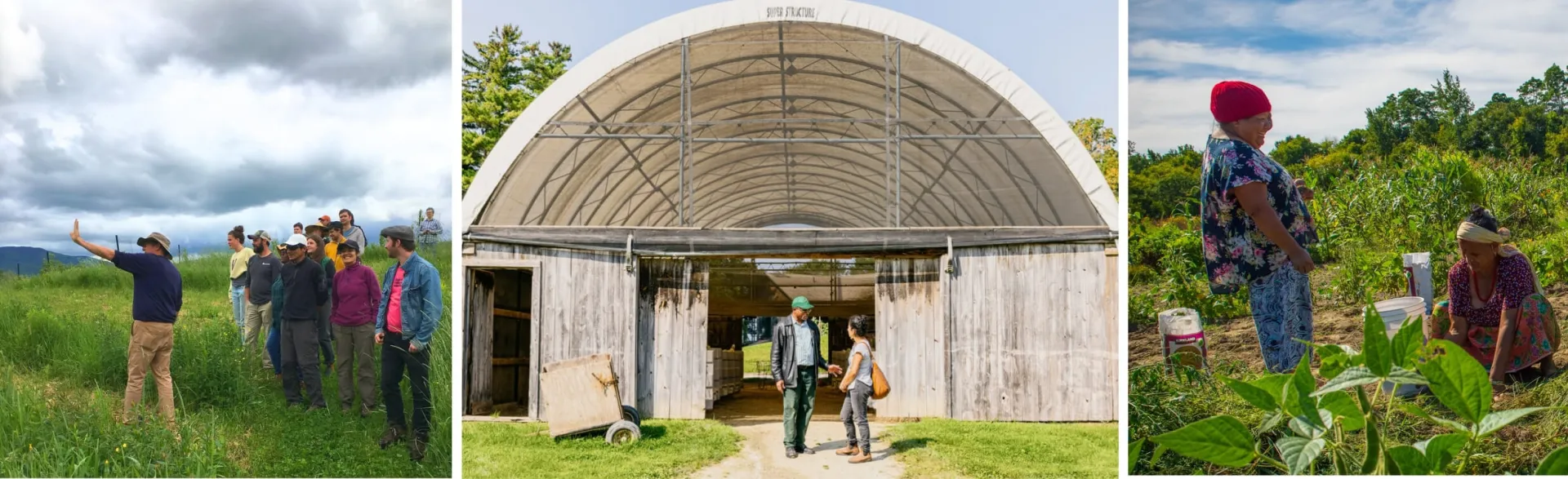
Agroecology is an interdisciplinary agricultural movement that combines traditional knowledge and practices, modern science, environmental sustainability, and social justice to build more equitable, sustainable, and regenerative food systems across all the ecosystems of our planet.
Many agroecological practices stem from Indigenous knowledge, have been practiced for hundreds or thousands of years, and are more important than ever to continue implementing. Current profit-driven food production is a major contributor to climate change. Shifting to agroecological systems is one way we can reverse some of the damage to our planet and live more sustainably.
But what does agroecology actually look like in practice? The examples below showcase agroecology practices and projects that colleagues and community partners of the University of Vermont Institute for Agroecology are implementing, studying, or learning from in support of more sustainable food systems.
Explore the M.S. in Agroecology program
Colorado Potato Beetles: Participatory Action Research
Participatory action research (PAR), a core tenet of agroecological practices, is a collaborative research approach where those directly affected by a problem steer and participate in research studies and projects. Led by Head of Undergraduate Agroecology Education Vic Izzo, the Vermont Participatory Action Research Team (VPART) is currently investigating the destruction of potato crops by pests in New England. Specifically, the Colorado Potato Beetle (CPB), an invasive pest found across North America, Europe, and parts of South America, can completely destroy potato plant yield. Mitigating Colorado Potato Beetle damage with pesticides is expensive and can cause additional damage to the environment, and some CPBs have become pesticide resistant.
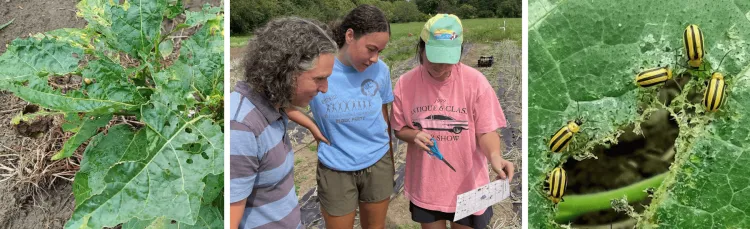
VPART is studying delayed planting as a strategy to reduce the damage Colorado Potato Beetles cause. Adult CPBs typically emerge in the late spring and will feed and lay eggs in nearby plant fields. If potato plants are not present at this stage, the beetles will move on in search of food. VPART works with farmers, researchers, and community members to observe and log pest sightings, experiment with late planting, and observe the effects on potato yields.
Taking advantage of participatory action research and ecological principles — knowledge and skills taught in UVM’s agroecology graduate degree — this program can ultimately help potato production be more environmentally and financially sustainable, reduce pesticide use, and reduce the amount of space needed to produce sufficient crops.
The West Africa Community of Practice: The Co-Creation of Knowledge
The co-creation of knowledge is at the core of agroecology. Research doesn’t come only from scientific experts, but also from the diverse skills and knowledge of all the people involved in a food system — including farmers, food producers, food and nutrition specialists, environmentalists, consumers, and more. This practice recognizes that the people living and farming in an area are experts on what works best.
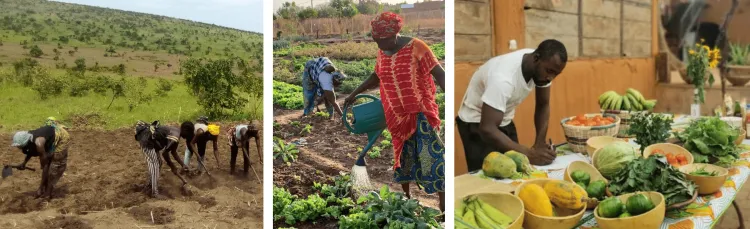
One way knowledge co-creation happens is through Farmer Research Networks (FRNs), such as the West Africa Community of Practice, which combines research and developmental organizations with local farmer groups to help solve local food issues and establish sustainable farming practices. For example, in the Sahelian region, peasant organizations and researchers have been working together to improve biodiversity and the nutrition of food grown in the area. Over years of experimentation, they’ve jointly accumulated knowledge around food production in the area to develop food products that are nutritious, desirable, and culturally relevant for the area.
Researchers at UVM are evaluating this project and others across West Africa in order to assess different methods of agroecological practice and knowledge co-creation, identify the advantages and common barriers, and ultimately share their findings with the broader agroecology community to help support food system transformations and knowledge co-creation initiatives.
The SYMPHONY Project: Examining the Connections Between Planetary and Human Health
While Agroecology is usually linked to planetary health, a project headed by UVM Research Assistant Professor Carlos Andres Gallegos-Riofrío and UVM Postdoctoral Associate Amaya M. Carrasco-Torrontegui is further exploring the connections between nature, ecology, and human health. The SYMPHONY project is working with 54 participants across agroecological, agroindustrial, and urban settings in Ecuador. Through the lens of the Andean concept of pacharuna — the connectedness of humans and nature — the study aims to promote a more inclusive understanding of both mental health and traditional knowledge as it applies to scientific research. This kind of interdisciplinary research is vital to agroecology and one of the focuses of UVM’s agroecology master’s program.
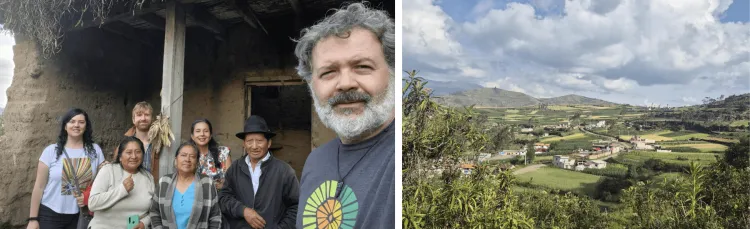
To examine how traditional agroecological spaces influence well-being and address the impacts of displacement and urban migration, they are collecting data from both participants themselves and their environment. Data collection includes “site analysis, biological and physical sampling, human and environmental microbiome, psychometric assessments, and a multicomponent questionnaire covering living conditions, health, nutrition, physical activity, agricultural practices, and landscape perceptions.”
Transforming Regional Governance in New England: Responsible Governance Policy Research
This project focuses on the responsible governance aspects of agroecological practice. Researchers at UVM are examining how regional government “can transform food systems in New England to be more ecological, equitable, and just.”
Using participatory action research that involves community members, farmers, food providers, and nonprofit organizations, UVM researchers are examining how regional governance approaches can transform food systems in New England to be more ecological, equitable, and just. They are investigating how multi-actor coordination on regional food systems can create new institutional arrangements, policies, and markets while strengthening democracy and civil society in our food systems.
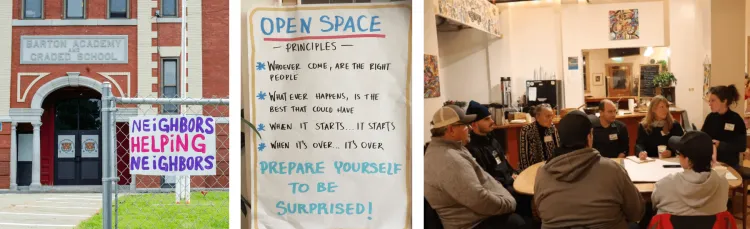
The project assesses past and existing food systems policies and research like 2014’s “A New England Food Vision,” evaluating their impact and investigating how they may apply to future and ongoing food systems issues. The UVM Institute for Agroecology is currently looking to advocate for a number of possible initiatives, including direct payments to farmers, “right to food” policies, agrarian reform, and more.
Ready to Become Part of the Agroecology Movement?
If you’re interested in contributing to projects like these, creating environmental change, and making a positive impact on our world, consider studying agroecology at UVM. Our M.S. in Agroecology is one of the first programs of its kind. It’s currently the only fully online synchronous program teaching agroecology in the world.
This online format allows students to continue doing the important work they’re already doing in their communities and apply new skills, knowledge, and research techniques right away. UVM is part of a budding global agroecological community where knowledge and support can be shared freely in order to help save our planet.
Explore the M.S. in Agroecology program at UVM or register for an upcoming information session for more information.