Authors
Maura Muldoon
Kathryn Wrigley
Dorothy Chesshire
Monika Derrien
About
Recommended citation for chapter
Muldoon, M., Wrigley, K., Chesshire, D., & Derrien, M. 2026. Chapter 9: Recreation and Tourism. In Galford, G.L., Balerna, J.A., Turner H.C., Sardonis, A., Peplinski, H. (Eds), The Vermont Climate Assessment 2025. Burlington, Vermont: Climate Measurements Center of Excellence, Gund Institute for Environment at the University of Vermont. DOI: 10.5281/zenodo.20272849. Accessed online at https://vtclimate.org.
Author Contributor Roles Taxonomy (CRediT) statement
Maura Muldoon: Conceptualization, Investigation, Writing – Original Draft, Writing – Review & Editing, Visualization, Project Administration; Kathryn Wrigley: Conceptualization, Investigation, Writing – Original Draft, Writing – Review & Editing, Visualization, Project Administration; Dorothy Chesshire: Conceptualization, Investigation, Writing – Original Draft, Writing – Review & Editing, Visualization; Monika Derrien: Conceptualization, Investigation, Writing – Original Draft, Writing – Review & Editing, Visualization.
Acknowledgements
We thank Kimberly Coleman, Al Freeman, and Claire Polfus whose thoughtful review and contributions helped refine and strengthen this chapter.
Downloads
Please use the following accessible downloads for your own needs.To find downloads of other chapters in VCA 2025, please go to Downloads.
9.0 Executive summary
Outdoor recreation and tourism are cornerstones of Vermont’s cultural identity, physical landscape, social fabric, and economic resilience. Climate change is shaping Vermont’s seasonal temperature and precipitation patterns, altering access to and availability of outdoor recreation and tourism opportunities across the state.
This chapter is most relevant for outdoor recreation managers, parks and public land stewards, tourism service providers, recreators and tourists, and policymakers interested in the outdoor recreation and tourism sector.
Climate change is impacting outdoor recreation and tourism in Vermont in direct and indirect ways, many of which are interacting and compounding:
- All seasons in Vermont are warming, and winter temperatures are warming the fastest.
- Shorter, warmer winters with increased nighttime low temperatures, reduced snowpack and ice, and increased precipitation in the form of rain will increase reliance on snowmaking and shorten the winter sports season overall.
- Longer, milder shoulder seasons result from shorter, warmer winters. However, inconsistent freeze-thaw cycles and increased variability and unpredictability of temperature and precipitation in the shoulder season risks damage to infrastructure and a mismatch between weather expectations and conditions.
- Extreme weather events including flooding, drought, extreme heat, harmful algal blooms, and poor air quality days are increasing in frequency, which pose health risks to outdoor recreators and workers.
Many outdoor recreation managers are already implementing adaptation strategies and innovative practices to mitigate the impacts of climate change on their operations, including:
- Advances in snowmaking strategies (e.g., snowfarming)
- Electric vehicles for land stewards and property managers
- Expanding investment in shoulder season and summer (warm weather) activities like mountain biking
The assessment of outdoor recreation and tourism in Vermont includes topics also pertinent to other chapters of the 2025 Vermont Climate Assessment, such as:
- Health risks to outdoor recreators and workers (see 10 Human Health)
- Impacts on farming and agritourism operations (see 6 Agriculture and Food Systems)
- Risks to road and rail infrastructure that provide access to recreation (see 7 Infrastructure)
Climate change is reshaping Vermont’s outdoor recreation and tourism sector, and specific impacts will vary by season. In general, the snow and ice sport season is becoming shorter and the availability of warm-weather activities is expanding, creating a potential mismatch between recreators’ weather expectations and the reality of conditions. Vermont’s strong local networks, stewardship ethic, and culture of innovation offer practical pathways for adapting recreation and tourism in ways that sustain both livelihoods and the landscapes people depend on.
9.1 Key messages
- For many Vermonters, outdoor recreation is central to identity and quality of life; climate-driven disruptions of these experiences risk altering residents’ senses of place, intergenerational traditions, and well-being.
- Outdoor recreation is a top contributor to Vermont’s GDP (4.7% in 2024; the fourth highest contribution rate by state in the U.S.); climate-induced changes to recreation activities will likely have economic impacts in the state.
- Rising air temperatures are reducing season lengths for most snow and ice sports. The increasing number of warmer winter nights are constraining snowmaking operations, thereby impeding existing adaptation efforts. These dynamics present compounding challenges to sustaining snow sports and the businesses that depend on them in Vermont.
- Outdoor recreation managers in Vermont are demonstrating early adoption of emerging technologies like electric vehicles, including electric groomers, and snow farming techniques to adapt to changing winter weather conditions.
- Water-based activities are likely to become more popular as air temperatures rise; however, water quality issues will also become more prevalent.
- Rising temperatures will likely affect the Vermont fall foliage season, changing the predictability, timing, and appearance of foliage; changes could influence tourist visitation dynamics and associated economic activity.
9.2 Background
Outdoor recreation and related tourism are the recreation sectors most directly impacted by climate change and therefore are the main foci of this chapter. This assessment defines outdoor recreation as including all leisure or free time activities conducted outdoors. Tourism encompasses many other activities and dimensions that are less directly impacted by climate change and beyond the scope of this chapter (e.g., dining, hospitality, and the arts). Vermont’s tourism economy has long been tied to its landscapes and outdoor recreation opportunities, which attract many people who travel from out of state. This chapter refers to recreators from both in-state (“Vermonters”) and out-of-state.
9.2.1 Outdoor recreation in Vermont
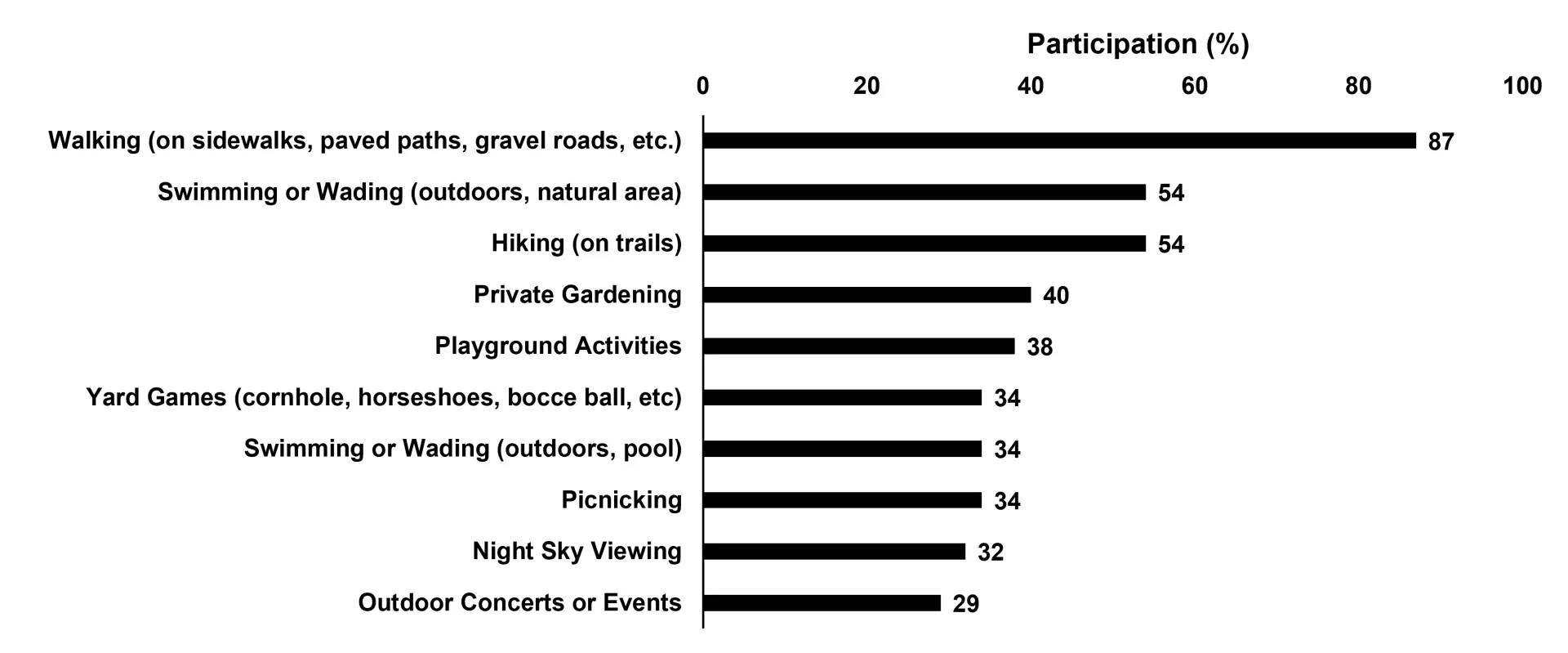
Outdoor recreation is a cornerstone of social identity and well-being in Vermont (SCORP, 2024). Over 90% of Vermonters recreate each year, with 20% enjoying some form of recreation on a near-daily basis. The top reason Vermonters chose to recreate is to improve mental health. Popular outdoor recreation activities include walking, swimming or wading in natural areas, and hiking on trails (Figure 9-1).
Source: SCORP (2024)
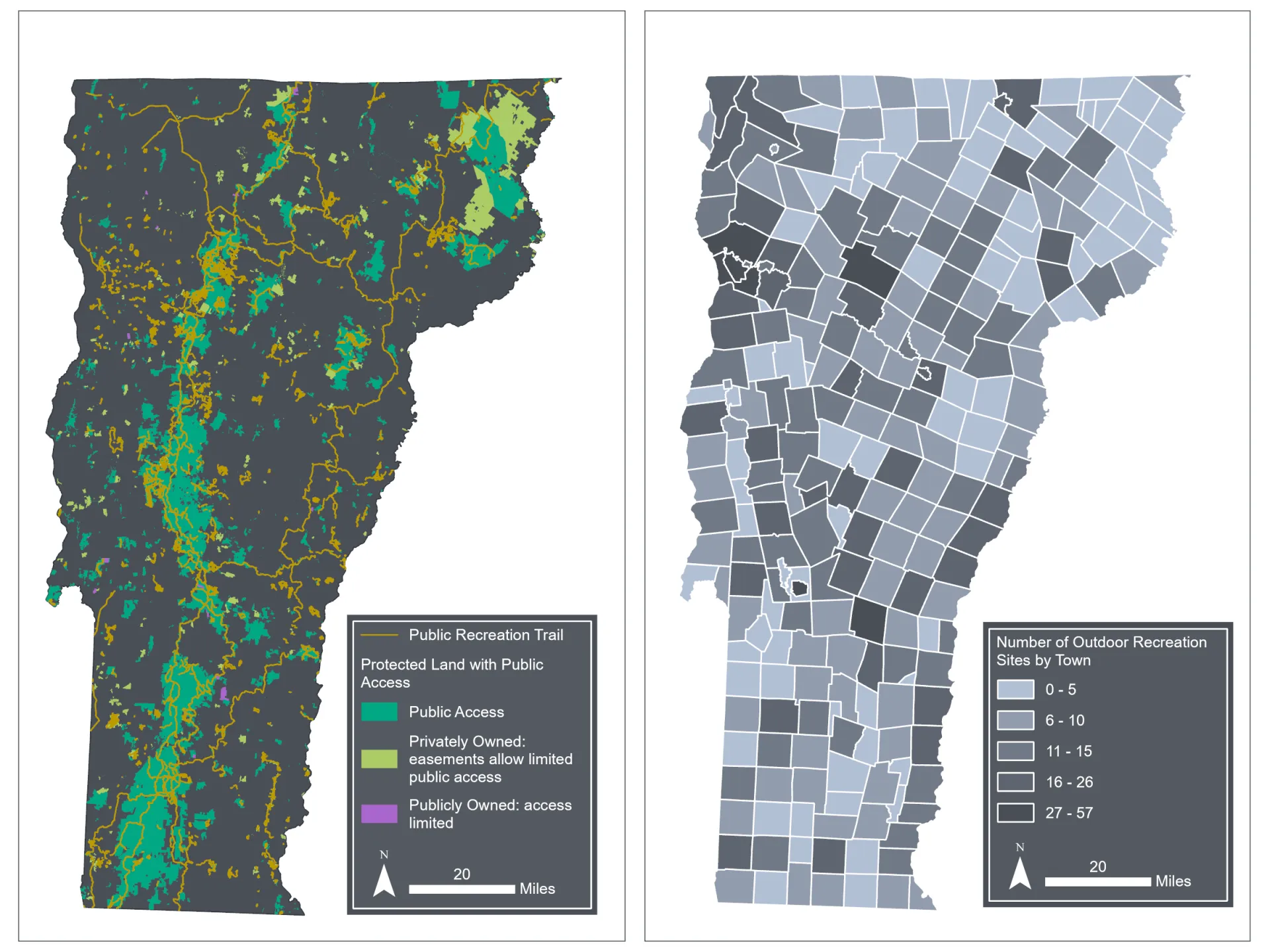
Recreation opportunities are widely available across the state, including public recreation trails, protected land with public access, and focused recreation sites that provide access to specific activity types like skiing, swimming, or using playgrounds (Figure 9-2). Over one-third (35.5%) of Vermonters report having a single park, trail system, or recreational facility within a comfortable, 10 minute walk from their home; another third (33.2%) report having multiple recreation sites (SCORP, 2024). Less than a quarter (22.3%) report that they did not have any recreation sites within a 10 minute walk. The most common settings for outdoor recreation are on private property (66%), state parks, forests, or wildlife management areas (52%), and municipal parks (46%).
Source: Vermont Agency of Natural Resources (2022); Vermont Center for Geographic Information (2022, 2025)
Note: Visualization by Hannah C. Turner
9.2.2 Tourism in Vermont
Vermont’s scenic landscape is foundational to the appeal of outdoor activities in the state, which has long-invested in the aesthetic of its working landscape for tourism purposes (Harrison, 2006). Two major statutes are in place for the purpose of maintaining the “Vermont aesthetic”: the anti-billboard statute (10 V.S.A. § 495, 1968) and Act 250 (10 V.S.A. § 151, 1970). In 1968, the anti-billboard statute banned billboards on public roadways, reinforcing the idea that scenic beauty is essential to both Vermont’s identity and its economy (Bushnell, 2021). Journalist Dorothy Thompson summarized Vermonters’ opinions on billboards in 1937 as follows:
If aesthetic considerations do not move us, let us consider the matter from the standpoint of cold cash. Vermont has beauty to sell. Thousands and thousands of tourists come here every summer, for no other reason than that Vermont is lovely. They can see billboards from Connecticut to California. The absence of them is a positive asset (Bushnell, 2021).
In 1970, Act 250—a law that defined a public and semi-judicial process for reviewing consequences of major developments—passed in response to a wave of growing tourism and pressure for second home development in scenic locations (Harrison, 2006; State of Vermont, 2026).
Over the decades, tourism has become an essential component of Vermont’s overall economy, and a large contributor to its outdoor recreation economy. The Vermont Department of Tourism identifies three sub-sectors of tourism: 1) agritourism (see Agriculture and Food Systems 6.5.1); 2) arts and culture; and 3) outdoor recreation. Across the three subsectors, tourism-supported jobs accounted for 10.2% of all jobs in Vermont in 2023 (Tourism Economics, 2024). Visitors spent around $4 billion in 2023, with the most on lodging (35.6%), followed by food and beverage (20.5%), transport (16.5%), retail (16.3%), and recreation/entertainment (11.0%). For these purposes, “visitors” are defined as those who have traveled and stayed overnight or traveled over 50 miles to their destination, which includes Vermonters visiting locations away from their home but within the state.
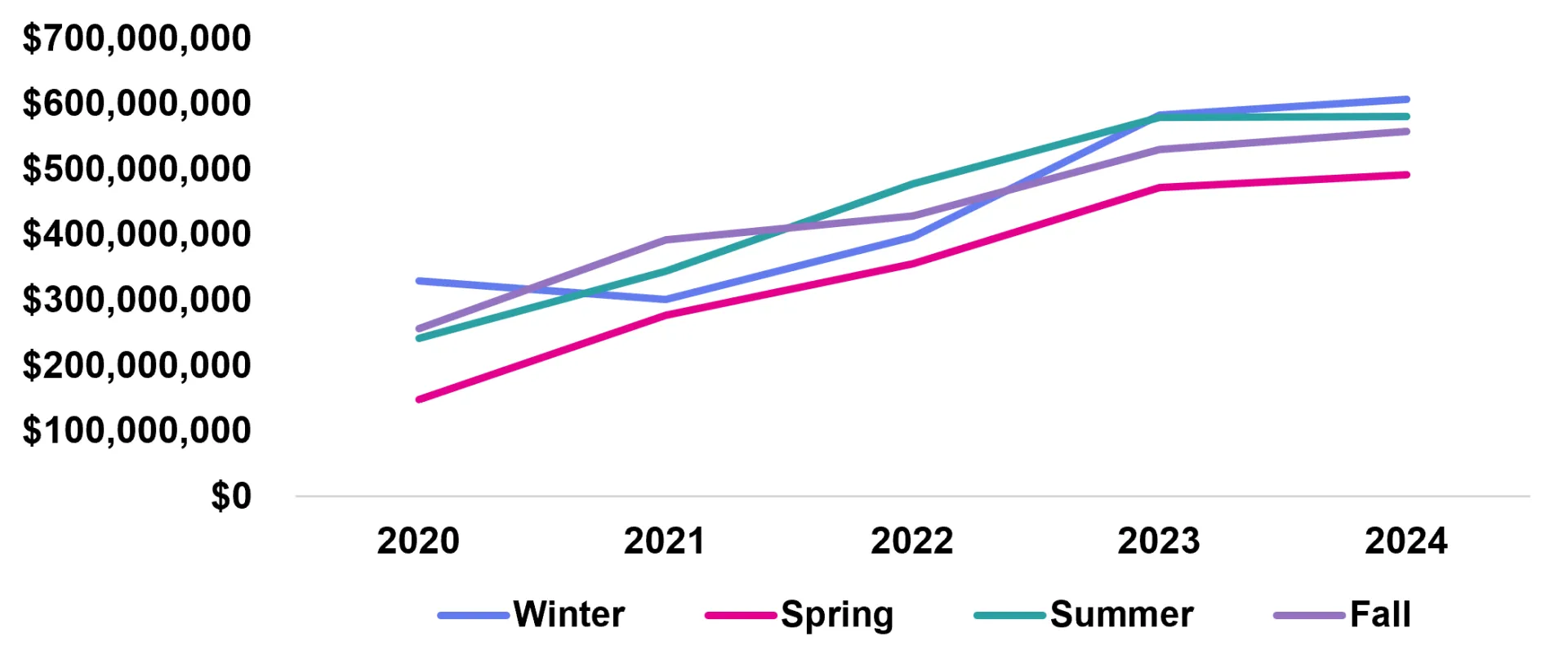
Total spending on meals, lodging, and alcoholic beverages in Vermont over the past five years has increased, except for lower spending in the winter of 2021, which is likely due to the COVID-19 pandemic (Figure 9-3).
Source: Vermont Department of Taxes (2024)
9.2.3 Vermont's outdoor recreation economy
Outdoor recreation contributes $2.2 billion annually to Vermont’s Gross Domestic Product (GDP), comprising 4.7% of its GDP and placing Vermont 4th in the nation in terms of its share of state GDP associated with outdoor recreation (BEA, 2024). Outdoor recreation in the state supports 16,682 jobs (5.1% of state employment). These numbers include recreation-associated economic activity generated by out-of-state and international visitors, as well as residents.
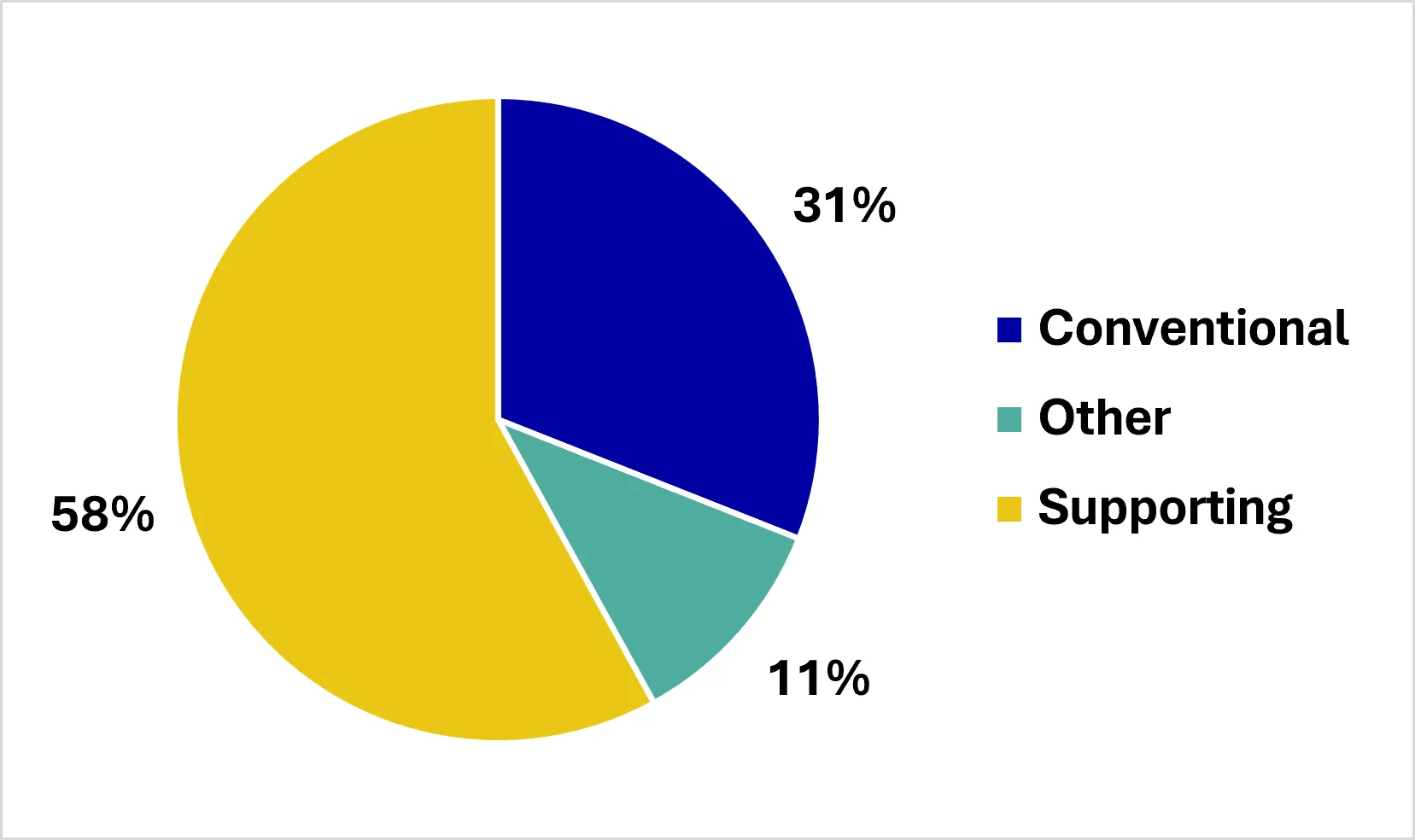
The value-added composition of the sector can be broken down into supporting, conventional, and other activities (Figure 9-4). In 2024, “supporting” outdoor recreation activities added the most to Vermont’s economy (58%), led by high value activities such as lodging ($629.8 million added), food and beverages ($217.7 million added), and transportation ($117.5 million added; BEA, 2024). “Conventional” outdoor recreation activities (e.g., skiing, snowboarding, and snowmobiling) comprised 31%, led by snow activities ($219.3 million added). “Other” outdoor recreation activities (e.g., golf, tennis, and similar activities) comprised 11% ($88.3 million added).
Source: Adapted from BEA (2024)
Vermont’s state government has invested in supporting outdoor recreation. In 2017, Vermont Governor Phil Scott signed Executive Order #11-17, creating the Vermont Outdoor Recreation Economic Collaborative (VOREC) administered by the Vermont Department of Forests, Parks and Recreation (FPR) in partnership with the Agency of Commerce and Community Development (ACCD). This group promotes stewardship and marketing of outdoor recreation in the state to foster economic growth (VOREC, 2025). VOREC established a 15-person steering committee of outdoor recreation stakeholders from Vermont and hired a program manager in 2021 to lead the effort. The group convenes potentially disparate stakeholders around a shared agenda, fostering coordination and communication. Its community grant program is an example of this collaboration resulting in millions of dollars flowing to municipalities to support outdoor recreation resources (VOREC, 2026). In addition, VOREC supported the Vermont Department of Tourism & Marketing to create the Vermont CORE Toolkit which provides resources for towns to take steps towards implementing Vermont’s vision for the outdoor recreation economy as captured in the Move Forward Together Vermont plan (SCORP, 2024; Vermont CORE Toolkit, 2026).
9.2.4 Types of impacts of climate change on recreation and tourism
Climate change is influencing Vermont’s outdoor recreation and tourism sector through interconnected physical, economic, and social effects (Figure 9-5). These impacts simultaneously alter recreation infrastructure, reshape how people access outdoor spaces, and affect the well-being of communities and economies that depend on recreation (see 9.3, 9.4, 9.5, and 9.6 for seasonal impacts).
Although data on the these impacts remains limited, there are sources such as the Vermont Trail Pulse and the Statewide Comprehensive Outdoor Recreation Plan (SCORP; SCORP, 2024) that provide insight into how these changes are unfolding and may be addressed. The Vermont Trail Pulse Survey, conducted in 2025, used a panel survey to gather a representative sample of Vermonters who have recreated on a natural surface trail within the last 12 months. The survey included a bank of questions related to climate disruption of recreation activities that are pertinent to this chapter. Surveys conducted for the SCORP (including a Representative Panel Survey and an Invested Recreation User Survey) provide insight into the types of recreation that are important for Vermonters and what they would like to see more of over the next five years.
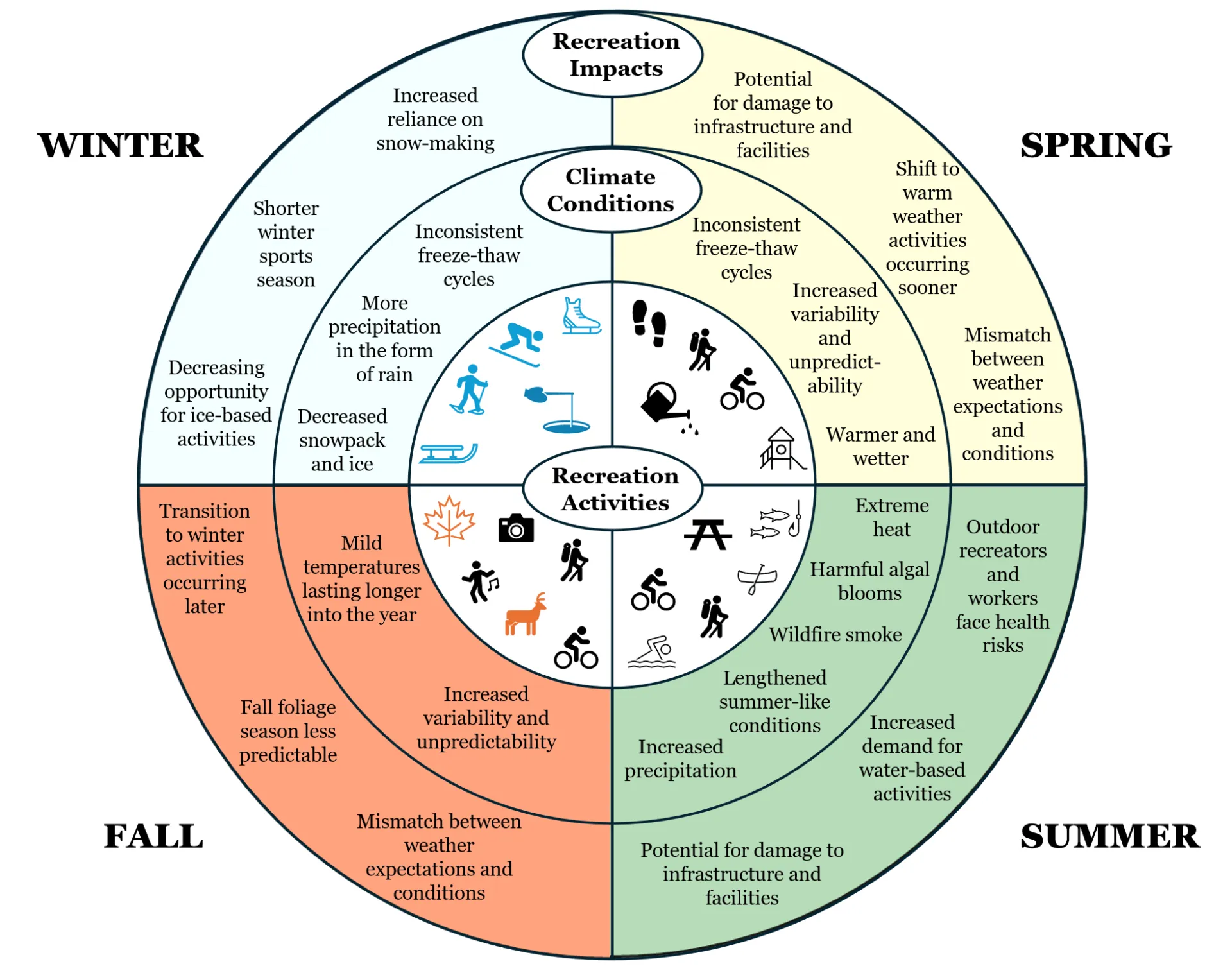
Source: Chapter co-authors
Physical dimensions
Vermont’s recreation infrastructure is increasingly stressed by climate-related hazards, such as heavier precipitation and changing freeze-thaw cycles, which can prolong “mud season” and limit recreation during the spring months (see Climate Change in Vermont 2.4.4). Trails, access roads, and waterfront facilities are experiencing more frequent erosion and damage from large-scale rain events, increasing maintenance needs and costs (see Infrastructure 7.3.1 and 7.3.2). Across the state, unpredictable snowpack has shortened the season for snow-reliant sports like skiing, snowboarding, and snowmobiling (Perry et al., 2018), while contributing to more all-season use of hiking and biking networks. This creates new management challenges as land managers work to maintain safe, sustainable access under shifting and more variable climate conditions.
Shifting climate patterns are changing how and when people recreate. In 2025, a survey of 600 Vermonters showed increasing use of recreation trails during spring and fall months and more concentrated visitation to low-elevation and water-based recreation sites (Wrigley & Coleman, 2025). Extreme weather events and infrastructure closures can limit access, especially for communities with few recreation options. Changing site conditions may affect Vermonter’s trail use plans, referred to as “displaced use.” The same survey (Wrigley & Coleman, 2025) showed that recreation use displacement was mostly driven by climate-related impacts (62%; Figure 9-6), including extreme precipitation (31%), extreme temperature (18%), wind events (9%), and poor air quality (5%). Climate drivers had a larger impact than recreation management issues, such as lack of parking (6%) and crowding on trails (5%), or community factors like road closures (2%)[1].
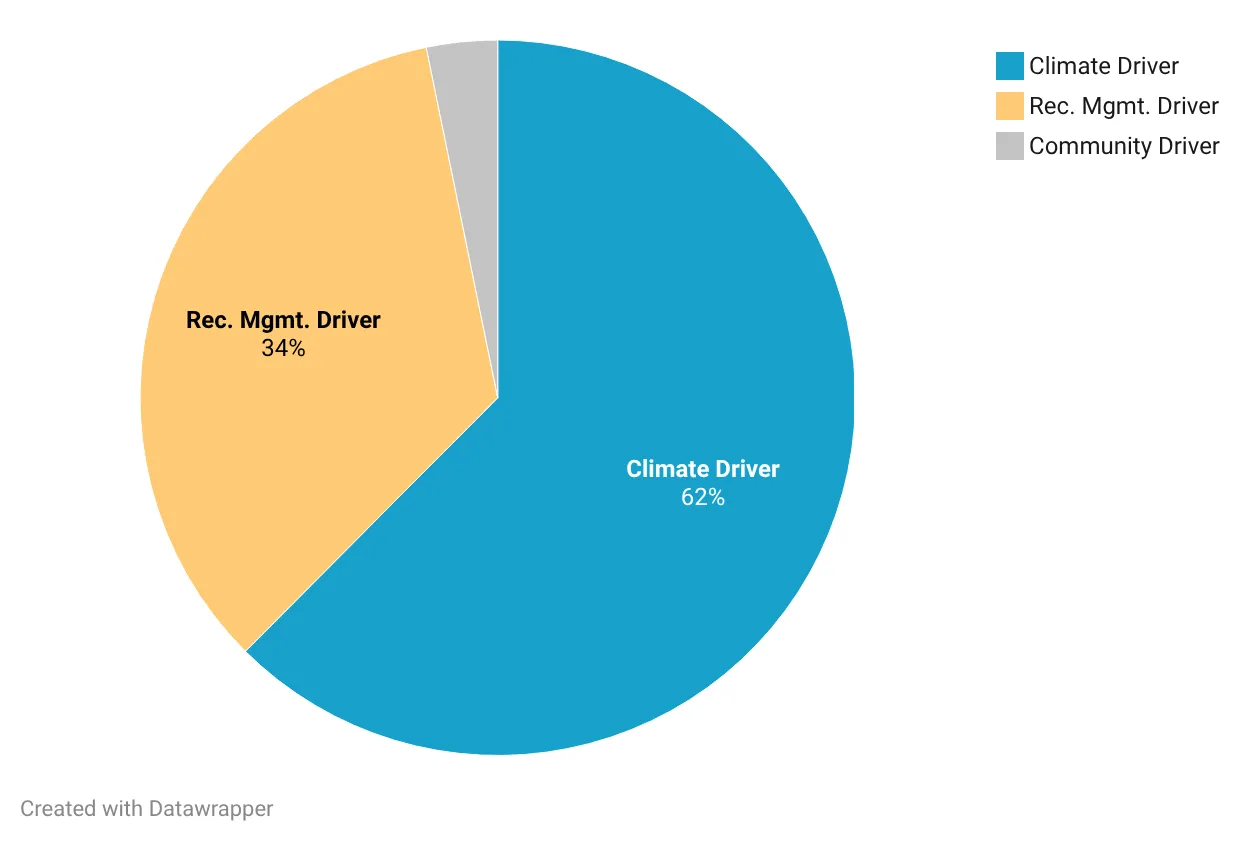
Source: Wrigley et al., In process
Economic dimensions
Outdoor recreation and tourism are significant economic drivers for communities in Vermont, from gear/supply shops to guiding services to family-owned ski resorts (see 9.2.3 and 9.2.4). Visitor spending, visitor-supported jobs, and business sales generated from visitors provided more than double the amount of state and local taxes combined in 2023 (Tourism Economics, 2024). Vermonters would need to be taxed an additional $1,227 per household to replace the same level of visitor-generated taxes (Tourism Economics, 2024).
For communities reliant on recreation and tourism, climate change carries significant economic implications. Over 58% of outdoor businesses who responded to a state-wide survey in 2024 reported being affected by recent climate events, including flooding in July and December of 2023, prolonged summer rain, and/or winter power outages (SCORP, 2024). Outdoor recreation supports 5.1% of employment in the state and seasonal employment, guiding services, and small businesses are highly sensitive to fluctuating visitation and unpredictable weather (BEA, 2024). Changes in season length, temperature, and precipitation will have ripple effects on the timing and availability of recreational opportunities throughout the year, potentially affecting the growth in seasonal tourism activity (Figure 9-3). While increased summer tourism may offset some winter losses, it also brings new pressures on water quality, access, and infrastructure. These dynamics will affect both service providers and consumers (see 9.5).
Social dimensions
Outdoor recreation helps Vermonters feel connected to nature and to their communities (Winter et al., 2019; Raymond et al., 2010). Connectedness to nature can positively influence pro-environmental and pro-social behaviors that can strengthen community adaptation to climate change (Mayer & Frantz, 2004; Whitburn et al., 2019; Guazzini et al., 2025). For example, residents who regularly hike local trails or participate in outdoor programs often develop a stronger attachment to the landscapes around them, which can translate into greater support for climate-resilient policies that, for example, support forest conservation or sustainable trail design (Dang & Weiss, 2021).
Climate change is already constraining many outdoor recreation and tourism experiences. The increasing presence of harmful algal blooms limits opportunities to swim in some lakes during the summer (see 9.5.2), while reduced winter ice cover shortens or eliminates traditional ice fishing seasons (see 9.3.2). Beyond the loss of recreational opportunities, these changes can have profound emotional and physiological impacts on individuals and communities. The degradation of familiar landscapes and the disappearance of long-standing seasonal traditions may contribute to climate-related distress, including feelings of grief, anxiety, and solastalgia —the distress experienced when one’s home environment changes in ways that feel irreversible (Albrecht et al., 2007; see Human Health 10.9).
[1] The survey did not capture whether respondents recreated someplace else when displaced.
9.3 Winter
9.3.1 Winter recreation patterns
The most common winter recreation activities for Vermonters are sledding and tubing, snowshoeing, ice skating, downhill skiing, ice fishing, cross-country skiing, snowboarding, and snowmobiling, according to a representative panel of Vermonters (i.e., not including out-of-state tourists; SCORP, 2024; Figure 9-7).
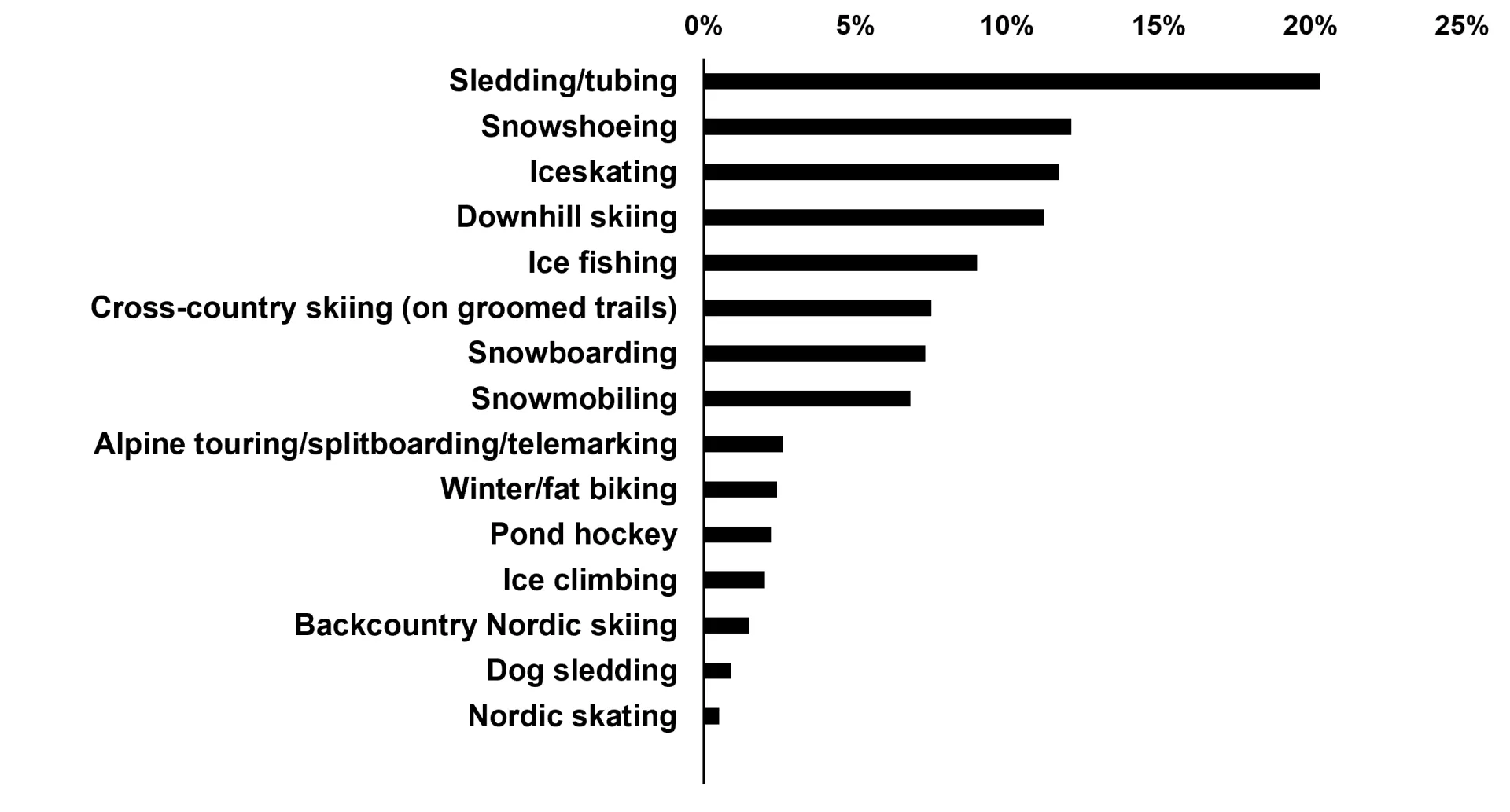
Source: SCORP (2024). Surveys conducted for the Move Forward Together Vermont (MFTV) planning process conducted by the Vermont Department of Forests, Parks, and Recreation, Vermont Outdoor Recreation Economic Collaborative (VOREC), and CRO Planning and Design in support of the Statewide Comprehensive Outdoor Recreation Plan (SCORP)
For out-of-state visitors in winter months, 52% cite outdoor recreation as the reason for their trip, and 60% engage in outdoor activities (Downs & St. Germain Research, 2025d). Skiing/riding is by far the most common outdoor recreation activity for winter visitors (51%), followed by hiking (9%), snowshoeing (7%), and ice skating, sledding, or tubing (7%; Downs & St. Germain Research, 2025d). Over half of out-of-state winter visitors (58%) who engage in outdoor recreation participate in more than one activity (Downs & St. Germain Research, 2025d).
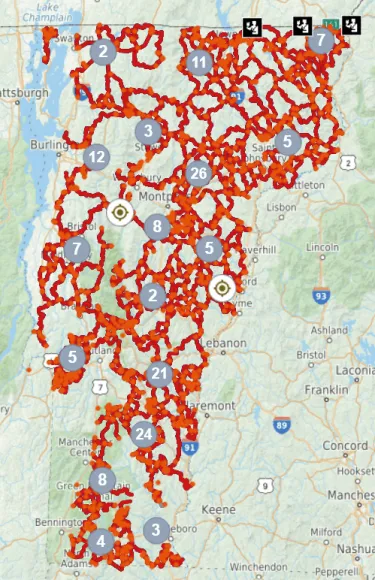
Winter recreation activities take place on a mix of public and private lands. For example, some downhill ski resorts are privately operated on state lands, and cross-country ski and snowmobile trails often traverse both private and public lands, stitched together with private landowner permissions. The Vermont Association of Snow Travelers (VAST) maintains the largest trail network in Vermont, extending over 4,000 miles across the state (Locke, 2025; Box 9-1).
Over the past decade, recreationists have become increasingly interested in backcountry skiing. Backcountry skiing refers to skiing without using ski lifts, usually in an undeveloped setting rather than at a resort with groomed slopes and trails, and with a goal of skiing down steep, wooded slopes rather than touring through gently rolling or flat terrain (Wrigley & O’Brien, 2023). Outdoor businesses in Vermont reported that backcountry skiing is one of the top three outdoor recreation activities that their customers participate in (SCORP, 2024). The increase in Vermonters and out-of-state visitors interested in backcountry skiing has sparked interest from communities with nearby backcountry ski locations to think about how to harness this interest to support their local economies. Vermont is home to the first designated backcountry ski zone in the United States (U.S.)—the Brandon Gap—located in the Green Mountain National Forest. Between January and April, 2018, over 3,000 people skied or rode this area (SE Group, 2026). In a magazine article for VT Ski + Ride, Lisa Lynn describes her experience visiting the gap:
On a January day last winter, the parking lots were full—both of them—and cars were lined up and down the road. The guy parked next to me, with Massachusetts plates, said “I drive here pretty much every weekend, ski all day and then head home.” He put his skins on and disappeared up the Long Trail toward Goshen Mountain and the backcountry powder runs of Brandon Gap (Lynn, 2018).
Box 9-1: Island Pond “Snowmobile Capital of Vermont”
Written by: Vermont Association of Snow Travelers (VAST)
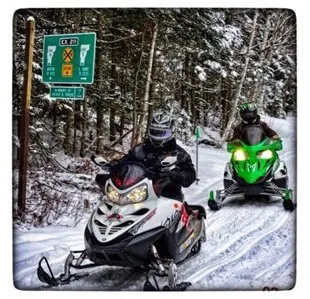
Snowmobiling in Vermont is culturally significant and provides an example of local stewardship and cooperation different from the structure of private resorts or state-managed recreation lands.
The Vermont Association of Snow Travelers (VAST) is a non-profit, private group which currently maintains and grooms over 4,000 miles of trails. Founded over 50 years ago, it is one of the oldest U.S. snowmobiling organizations and consists of 127 clubs with over 24,000 members. The clubs rely on a culture of stewardship and cooperation through landowners who allow access to their land, as over 85% of VAST trails are on private property and volunteers assist with management tasks.
Brighton or Island Pond in Northeast Vermont is the "Snowmobile Capital of Vermont." It is an accessible area at high elevation, so snow is generally plentiful. The Brighton Snowmobile Club grooms and maintains 125 miles of trails. Riders pass through towns including Brighton, Lewis, Ferdinand, East Charleston.
9.3.2 Changing climate conditions in winter
Vermont’s winters are warming faster than any other season and more than two times faster than average annual temperatures (see Climate Change in Vermont 2.4). Average winter air temperatures have increased by about 4.4°F (2.4°C) over the past 55 years, and freeze periods are shortening roughly four days per decade. Since 1900, Vermont’s average annual freeze-free period—the number of consecutive days above 32.0ºF (0ºC) in a year—has lengthened by 23.7 days (a 17% increase), and the number of very cold winter days has decreased by 15.8 days.
Increasing variability in the timing, form, and amount of winter precipitation has reduced the reliability of historically consistent snowpack and ice cover. Winters in Vermont are becoming wetter, and a growing portion of the winter precipitation is falling as rain rather than snow; these trends are expected to continue throughout this century (see Climate Change in Vermont 2.5.3). Winter precipitation has increased by 0.14 inches/decade (3.6 mm/decade) since 1990, while snowfall has declined 9.2 inches/decade (0.36 mm/decade) within the same period. With a total snowfall decline of 24.8 inches between 1990–2024, we find that during the winter months of December, January and February precipitation is more commonly falling as rain when, historically, it would have snowed. Snow cover, a combined measurement of temperature variability and precipitation levels, has decreased in all Northeast states (excluding New York due to lack of data) between 2000–2020. Within the last half decade, Vermont, New Hampshire, and Maine had less than 55 days of annual snow cover with losses of up to 15% since 2001 (see Climate Change in Vermont 2.5.3).
9.3.3 Winter activities most affected by climate change
Climate change is likely to continue to have a direct impact on snow and ice-based outdoor recreation activities. People tend to focus on how much snow or rain has fallen; however, it is important to highlight and understand snowpack and its creation process. Unpredictable winter conditions change snow conditions and maintenance requirements for snow sports (Gilaberte-Búrdalo et al., 2014; Hale et al., 2025). Downhill ski resorts rely on sustained cold temperatures for both natural snow retention and for snowmaking so the increasing frequency of mid-winter thaw and rain-on-snow events followed by refreezing, creates icy, uneven, and/or unstable surface conditions (Hale et al., 2025; Yang et al., 2025). This process can limit safety and accessibility for activities such as Nordic (cross-country) skiing, snowshoeing, and winter hiking, while increasing maintenance demands on trail systems (Gilaberte-Búrdalo et al., 2014).
Ice-based recreation activities are especially vulnerable to changing climate conditions, since river and pond or lake ice cannot be artificially created. Warmer winters and inconsistent freeze-thaw cycles shorten or eliminate seasons for ice fishing, pond hockey, and other lake- and pond-based traditions, while increasing safety risks associated with thin or unstable ice (see Human Health 10.3.2). These activities are especially important to many rural communities across the state, where winter ice has long been the focal point of recreation, social gatherings, and local identity.
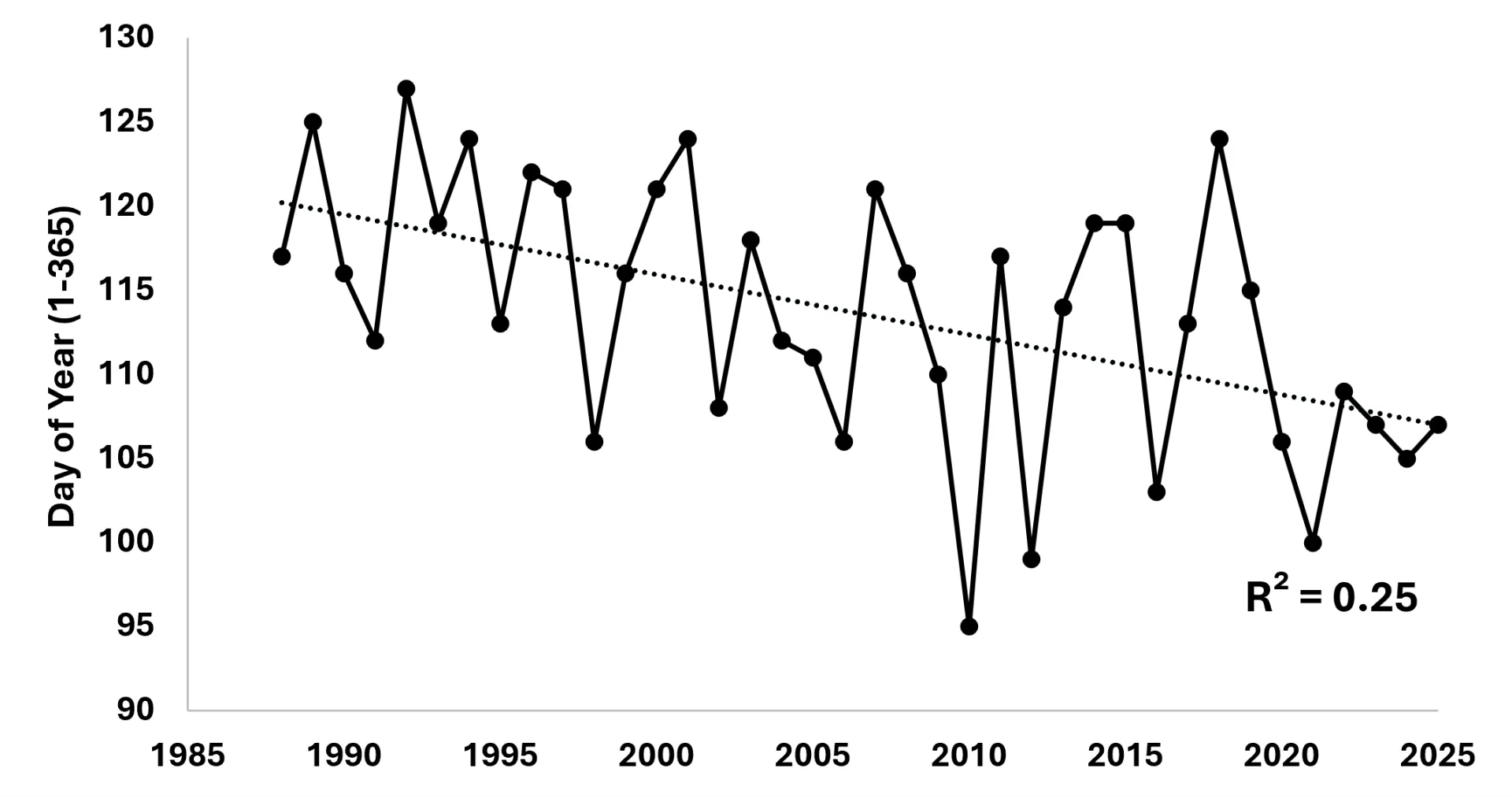
The loss of reliable ice threatens culturally significant traditions, such as long-running “ice-out” competitions, ice fishing tournaments, and other activities which reflect deep community engagement with seasonal cycles and local landscapes. For example, the Lake Champlain Island’s Ice Fishing Derby has brought people together for the past 44 years to compete in seven categories and support walleye restoration (Islands Derby, 2026). The Joe’s Pond Ice-Out Contest has taken place every year since 1988; in this contest, competitors place wagers on which day of the year the ice on Joe’s Pond will melt (Joe’s Pond Association, 2025; Figure 9-8). A similar contest has been held at Lake Memphremagog since 2014. Pond hockey tournaments are another group activity affected by the changing climate (Fairley et al., 2015). As ice becomes less predictable, these traditions—and the shared knowledge, enthusiasm, and community surrounding them—are at risk of disappearing.
Source: Joe’s Pond Association (2025)
Similarly, snowmobiling is an important component of Vermont winter culture and economies, with trails weaving through Vermont towns and backroads generating economic activity, especially in rural parts of the state. VAST needs enough snow to run the groomers that maintain their trail network across the state so that snowmobilers can use the trail system. There is no single threshold value, as the minimum amount of snow needed to run a groomer varies by location and snow type (American Council of Snowmobile Associations, 2026).
9.3.4 Winter recreation adaptation examples
Climate change impacts are changing the recreation and tourism landscape in Vermont. To adapt, some operations have begun diversifying their offerings by promoting year-round recreation, such as water parks, mountain biking, hiking, and other events to replace losses from more variable winters (NELSAP, 2023). Some towns and groups are working to reinvigorate historic, hyperlocal ski resorts with backcountry skiing options (Ascutney Outdoors, 2025; DHASH, 2025) in addition to four season activities (Box 9-2 and 9-3).
Downhill ski resorts and Nordic skiing centers are beginning to rely more heavily on artificial snow to maintain operations, reflecting an industry-wide shift toward technological adaptation as natural snowfall becomes less dependable (National Ski Areas Association, 2023). Resorts across Vermont have expanded their snowmaking capacity to ensure consistent conditions and longer seasons, but this adaptation comes with environmental costs. Snowmaking is both energy and water-intensive, placing additional demands on local resources and contributing to greenhouse gas emissions (Box 9-3). As more winter precipitation falls as rain rather than snow (see 9.3.2), resorts must start snowmaking earlier and extend it later into the season, further increasing these pressures.
Emerging technologies are helping resorts reduce these impacts. High-efficiency fan guns and automated systems now allow snow production at higher temperatures and with lower resource use. The Craftsbury Outdoor Center and Sleepy Hollow Ski and Bike Center are pioneering snow-storage strategies, using insulated piles of preserved snow in a technique known as snow-farming to guarantee early-season coverage and reduce the need for repeated snowmaking (E. Enman, personal communication, November 2025). Sleepy Hollow has invested in climate-friendly infrastructure by deploying a fully electric trail groomer, significantly cutting emissions associated with daily operations. Innovations like these represent promising steps toward balancing economic resilience with sustainability, though they cannot fully offset the effects of a warming climate.
Snowmaking remains a critical tool for sustaining Vermont’s outdoor recreation and tourism economy, but when it can be used is increasingly limited. As average overnight winter temperatures continue to rise (see 9.3.2), there will be fewer days when conditions are cold enough for snow production (Young & Young, 2025). Continued research, technological innovation, and coordinated resource management will be essential to ensure that snowmaking continues to add value to Vermont’s long-term resilience and the viability of its winter tourism industry. Resorts will need to increase investments in high-efficiency snowmaking systems, renewable energy sources, and improved water management to reduce the environmental footprint of increased artificial snowmaking.
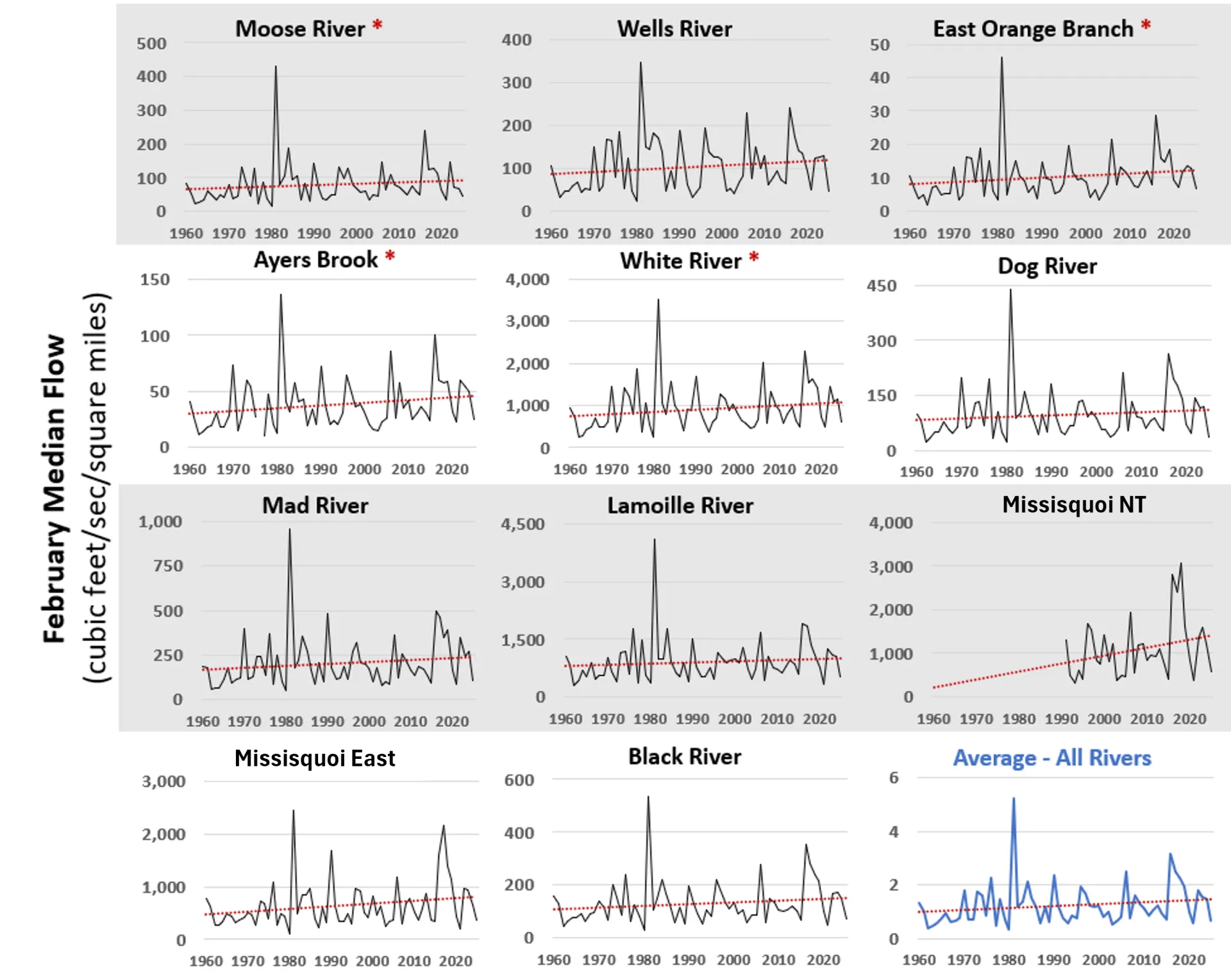
The Vermont Agency of Natural Resources Environmental Protection Rules state that ski areas may withdraw water from a water source until it reaches its February median flow level (i.e., the lowest level throughout the year; Shanley & Wemple, 2001). After this threshold, withdrawing water is considered damaging to ecosystems. This regulation has differing implications for resorts and recreation areas based on their proximity to water sources. Hills such as Cochran’s Ski Area (located near the Winooski River) have greater water accessibility than locations like Burke Mountain, which was unable to make snow on schedule in 2026 due to drought (Hayes, 2026). Significant increasing trends in mean February flow were identified in the Moose River, East Orange Branch, Ayers Brook, and the White River (1960–2025) with 95% confidence (Figure 9-9). All other rivers analyzed (Wells River, Dog River, Mad River, Lamoille River, Missisquoi, and Black River) had increasing trends but were not statistically significant.
Source: USGS (2026)
Box 9-2: Dutch Hill Alliance of Skiers and Hikers
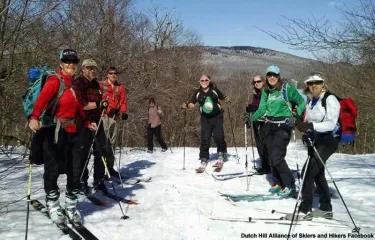
Dutch Hill was one of Vermont's earliest ski areas, thriving from the 1940s through the 1960s. Dutch Hill's prominence faded and it went out of business in the mid-1980s when larger ski areas began to dominate the landscape (NELSAP, 2023). Dutch Hill Alliance of Skiers and Hikers (DHASH) has recently revived the site. According to the DHASH,
When the Forest Service began exploring ways to make public recreation available in this part of the Green Mountain National Forest, backcountry ski enthusiasts banded together to form DHASH, a non-profit, all-volunteer organization to collaborate with the Forest Service on the effort (DHASH, 2025)
DHASH provides the volunteer labor needed to develop and maintain landowner approved trails, slopes, and lines with a goal of bringing more winter recreation opportunities to the Deerfield/Hoosic corner of Vermont, Massachusetts, and New York.
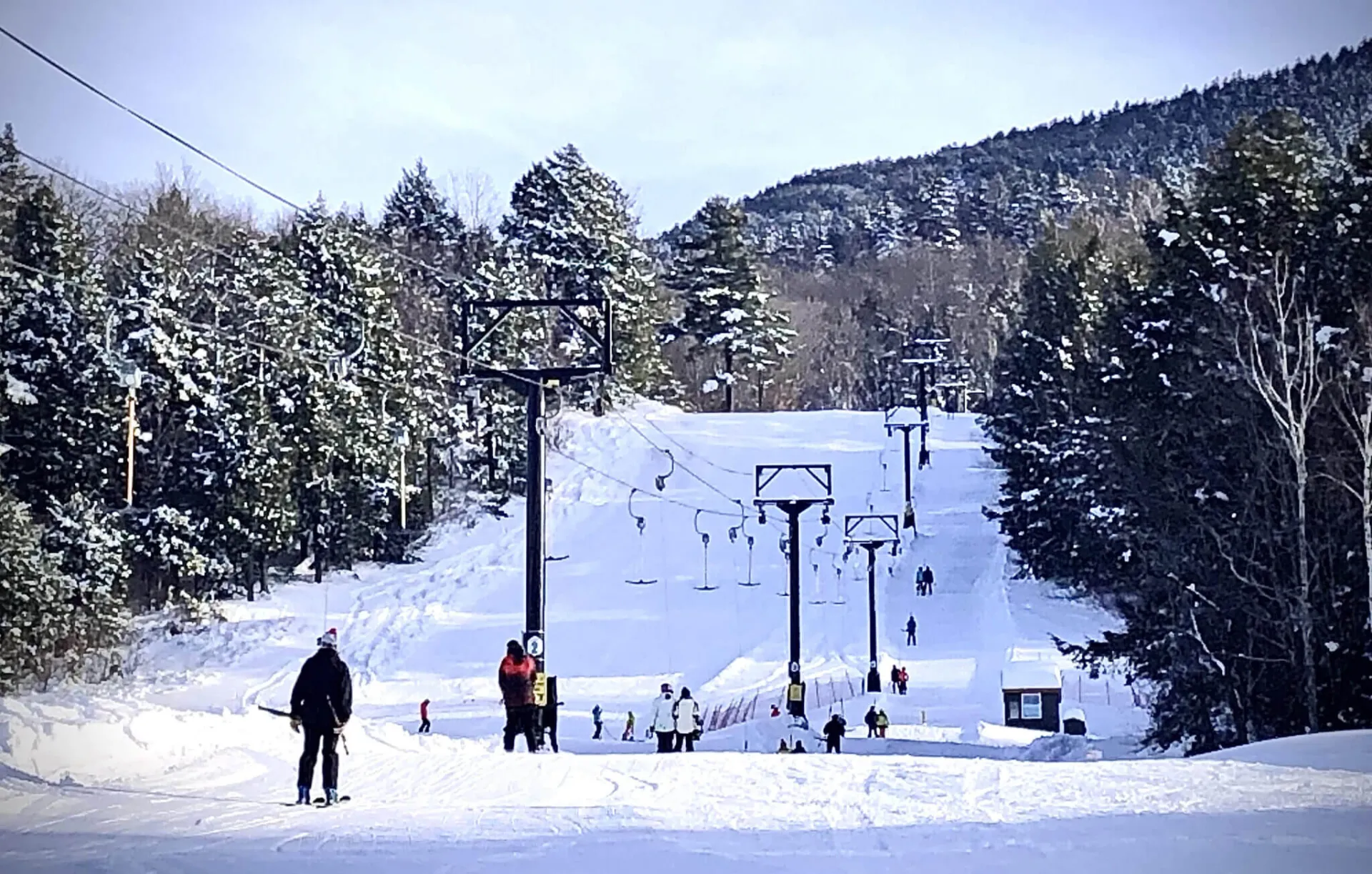
Box 9-3: Ascutney Outdoors, a model for community driven outdoor recreation
The Trust for Public Land’s Kate Wanner spoke of the origins of Ascutney Outdoors,
For over 80 years, Mount Ascutney’s extensive trail network and challenging alpine terrain served as the centerpiece of recreational activity in the Town of West Windsor, Vermont. However, the closure of the ski area in 2010 led to a decline in economic and social vitality. Concerned about re-building a strong economic base and quality of life, the community rallied around a new approach that would create a more diversified base of outdoor activities, including affordable and sustainable alpine skiing (low impact and smaller footprint), hiking and mountain biking, as well as events and educational programs. In 2015, the Town took the first step towards this new concept by acquiring the 470 acres associated with the former ski area (Ascutney Outdoors, 2025)
9.4 Spring
9.4.1 Spring recreation patterns
Vermonters commonly identify shoulder seasons (spring and fall) using monikers associated with environmental conditions, namely “mud season” (the wet period between winter and spring) and “stick season” (the leaf-less and snow-less period between fall and winter). Mud season is roughly a 6-week period between snowmelt and Memorial Day (Department of Forests, Parks and Recreation, 2026). During this time, outdoor recreators cannot engage in snow sports any longer yet often still cannot hike, mountain bike, or engage in other trail sports, since land managers close trails due to the potential for damage and increased maintenance costs. Even if trails are not officially closed, safety precautions and local norms encourage users to refrain from using trails with saturated soils.
Spring in Vermont is associated with the maple sugaring season and over half of the U.S.’s maple syrup is produced in Vermont. The flow of sap from sugar maples (Acer saccharumis) is triggered by the combination of cold nights and warm days that occurs in spring (see Forests 3.5.1; see Agriculture and Food Systems 6.4.6). Each year in March, maple producers across Vermont open their sugarhouse doors to visitors for tours, demonstrations, tastings, and more during Maple Open House Weekend (Vermont Maple Sugar Makers’ Association, 2026). The Vermont Maple Festival in St. Albans celebrated its 59th birthday in 2026, further showcasing the cultural significance of maple in the state (VT Maple Festival, 2026).
For out-of-state visitors in spring months, 19% cite outdoor recreation as the reason for their trip, and nearly 34% engage in outdoor activities while visiting (Downs & St. Germain Research, 2025b). Hiking is the most common outdoor recreation activity for spring visitors (22%), followed by biking (6%) and skiing/riding (5%; Downs & St. Germain Research, 2025b). More than three-quarters (77%) of out-of-state spring visitors who engage in outdoor recreation engage in more than one activity (Downs & St. Germain Research, 2025b).
9.4.2 Changing climate conditions in spring
Since 1990, average annual spring (March, April, May) temperatures have increased by 1.5ºF (0.8ºC) since 1990 (see Climate Change in Vermont 2.4.5). Changes in precipitation since 1990 has varied in the spring months. Average annual spring precipitation increased by 1.2 inches (3.2 cm) from 1900–2024 but decreased by 0.8 inches (2.0 cm) from 1990–2024 (see Climate Change in Vermont 2.5.5). Since the 1990s, the number of spring days with precipitation above 1 inch (2.5 cm) decreased by 0.1 days (see Climate Change in Vermont 2.6). Despite this variability, spring precipitation is anticipated to increase throughout this century, though variability may make patterns less clear (see Climate Change in Vermont 2.5.5).
Many of the winter climate trends described in 9.3.2 affect spring conditions. Increasing winter rainfall affects the availability of water in spring (see Climate Change in Vermont 2.5.3). Vermont’s average freeze-free period has lengthened by 21.1 days since 1900, and the number of very cold days has decreased by 15.8 days, indicating that spring conditions (and the risks that slippery roads and sidewalks bring to Vermonters) will arrive earlier in the year (see Climate Change in Vermont 2.4.4).
9.4.3 Spring activities most affected by climate change
Recreation activities in Vermont are decoupling from their historically associated seasons. Some activities typically associated with the summer months are becoming available in spring due to warming temperatures (for example, hiking and desire to swim). Some winter activities that typically continue into spring, especially at higher elevations where snow is available, will become less viable as spring temperatures warm (for example, snowmobiling and Nordic skiing). Recreation infrastructure and surrounding ecosystems are at increased risk of damage in the spring; for example, visitors going around areas of mud or ice may widen trails.
Changing climate conditions may cause people to recreate more in the shoulder seasons, however, conditions are increasingly variable and unpredictable, so there may be an increase in the number of people going out unprepared for changing daily conditions. For example, a recreator coming from spring conditions in low elevation areas may not be prepared to face winter conditions when they arrive in a higher elevation area. More hot days during the spring encourage water-based activities when waterbodies are still very cold, introducing increased risks of hypothermia and other health- and safety-related concerns (Brackin, 2026). These safety risks may pose a challenge for staffing and capacity of land managers, stewards, and other outdoor recreation workers such as search and rescue teams. Risks can be mitigated through outdoor education, awareness, and preparedness campaigns.
Maple sugaring is one popular outdoor activity affected by the changing sap harvest season and shifting habitat and pest pressures, as well as extreme weather that damages trees and sap collection systems (see Agriculture and Food Systems 6.4.5). Warmer temperatures during late winter and early spring result in an earlier sap flow period, moving the production season 9–13 days earlier than at present by 2050 (Houle et al., 2015).
9.4.4 Spring recreation adaptation examples
As Vermont shifts towards warmer and wetter seasons, typical trail closure schedules may shift so land managers may need to adapt their messaging strategies to alert recreators, who may be used to a particular schedule. Vermont’s traditional mud season is unique, so local land managers must work together to adapt their management and communication strategies. Additional research on this change could benefit this group.
Vermonters are adapting by hiking earlier in the year but should be aware of the shifting and lengthening season of concern for Lyme disease (see Human Health 10.6.1). Gardeners may tend to their plots earlier in the year, but variability in spring climate conditions has potential to pose a challenge to productivity. Gardeners are adopting practices ranging from covering crops to implementing irrigation and tunnels to manage the pressures of climate change on their activities(Shelburne Farms, 2021; see Agriculture and Food System 6.7.2).
Maple producers in Vermont are already adapting to the changing climate, especially by adopting technologies like vacuum tubing to increase harvesting efficiency and overall production (see Agriculture and Food Systems 6.4.5).
9.5 Summer
9.5.1 Summer recreation patterns
Of the top ten outdoor recreation activities in which Vermonters participate, several are concentrated in the summer months: swimming or wading in natural areas (54% annual participation); private gardening (40%); and swimming or wading in outdoor pools (34%; SCORP, 2024; see Figure 9-1). While other activities in the top ten occur year-round (likely the reason they rise to the top of the list), they also experience peak participation in summer months, when conditions are most conducive to spending extended time outdoors (i.e., walking, hiking, playground activities, yard games, picnicking, outdoor concerts or events). Participation in many other outdoor recreation activities in Vermont are concentrated in the summer months, such as camping, cycling, boating (including paddling), and fishing.
Many (40%) out-of-state visitors in summer months cite outdoor recreation as the reason for their trip, and nearly 60% engage in some outdoor activities during their trip (Downs & St. Germain Research, 2025c). Hiking is by far the most common outdoor recreation activity for summer visitors (35%), followed by visiting a state/local park or a scenic outdoor location (23% each, respectively; Downs & St. Germain Research, 2025c). Some summer visitors engage in biking (15%) or paddling (12%) (Downs & St. Germain Research, 2025c). The majority (75%) of out-of-state summer visitors who engage in outdoor recreation engage in more than one activity (Downs & St. Germain Research, 2025c).
9.5.2 Changing climate conditions in summer
Summer (June, July, August) air temperatures have warmed by 1.8ºF (1.02ºC) since 1990 in Vermont (see Climate Change in Vermont 2.4.4). Extremely hot days (i.e., days over 90.0ºF [32.2ºC]) are increasing in Vermont at an accelerating rate. Since 1900, extremely hot days have increased a total of 3.1 days/year. Notably, the most recent 10-year average (7 extremely hot days/ year) was 1.5 times that of 1900–1909 (see Climate Change in Vermont 2.4.4). Warm nights (i.e., nights when the minimum air temperature is above 70.0ºF [21.1ºC]) have more than tripled in Vermont since 1900 (see Climate Change in Vermont 2.4.4).
Summer water temperatures in Vermont’s lakes have risen with negative consequences for water quality (see Water Resources 4.5.3). Average August surface water temperature in Lake Champlain has increased by 6.8°F (3.8°C) since monitoring began in 1964 (Lake Champlain Basin Program, 2026). Rising water temperatures contribute to the occurrence of cyanobacteria that produce harmful algae blooms (HABs), which limit access for outdoor recreation such as swimming. HABs in Vermont are occurring two weeks earlier in the year compared to 2003, and lasting later, through mid-October (Vermont Department of Environmental Conservation, 2025; see Water Resources 4.5.5). A relatively higher incidence of blooms in Lake Champlain was found in 2023 compared to prior years (Lake Champlain Basin Program, 2024).
Summer precipitation has increased by 2.7 inches (67.3 mm) since 1900 (see Climate Change in Vermont 2.5.4). Summer precipitation is becoming increasingly variable; heavy precipitation days (i.e., days with more than 1.0 inch [25.4 mm] of precipitation in 24 hours) have increased 30.6% since 1960 (+0.6 days/year). Vermont received 21.1 inches (53.6 cm) of precipitation in the summer of 2024 alone, contributing to severe flooding, while severe drought conditions were observed in summer 2025 (see Climate Change in Vermont 2.6). Extreme weather events leading to flooding, drought, reduced air quality, and extreme wind are projected to continue increasing in frequency throughout the 21st Century (see Climate Change in Vermont 2.6, 2.7).
The intensity, frequency, and severity of wildfires cause more poor air quality days worldwide (see Forests 3.6.3; see Human Health 10.5.1). Most wildfires in Vermont occur during the following two periods: i) April and May, with occasional fires in the summer and ii) late August through snowfall in November (see Forests 3.6.3). Wildfires beyond Vermont’s borders have the potential to significantly impact Vermont’s air quality. In 2023 and 2025, record-breaking wildfires in Quebec, Canada, sent dense smoke across the border into Vermont and the northeastern U.S. (see Human Health 10.5.1). Climate change is expected to intensify drought throughout the northeast U.S. (see Climate Change in Vermont 2.6.3), and decreased snowfall and warmer springs lengthen the fire season (see Climate Change in Vermont 2.5.3 and 2.4.5; see Forests 3.6.3).
9.5.3 Summer activities most affected by climate change
An increase in summer temperatures and lengthening of summer-like weather conditions or the “lengthening of the summer season” may increase participation in common summer recreation and tourism activities (Hoag et al., 2021). Longer summer-like weather may be beneficial for some businesses and livelihoods that depend on summer outdoor recreation activities (e.g., boating rentals, fishing gear, cafes near swimming holes). Shifts in the tourism seasons may create new challenges for park and recreation managers who must adapt to schedules, staffing, and emergency preparedness.
Higher temperatures heighten the risk for heat-related illnesses among outdoor recreators, including heat exhaustion and heat stroke (see Human Health 10.3.1). Recent patterns show periods of extreme heat (see Climate Change in Vermont 2.4.4), which can both deter visitors concerned about unsafe conditions and limit access to recreational opportunities for Vermonters. For example, at temperatures around 77.0°F (25.0ºC), visitation tends to decrease in U.S. national parks (though this varies by location; Wilkins & Horne, 2024).
Increased air temperatures and longer summer-like conditions may lead to a greater risk of vector-borne diseases like Lyme disease for Vermonters recreating outdoors (see Human Health 10.6). Messaging campaigns should raise awareness for recreators at heightened risk for contracting such diseases.
Increased air temperatures in the summer will likely lead to an increase in demand for water-based activities (e.g., swimming, kayaking, paddling, boating), as compared to other summer outdoor recreation activities (e.g., hiking, mountain biking; Perry et al., 2018). Public access to water recreation remains uneven, including rivers, lakes with public beaches, and municipal swimming pools, many of which may face capacity pressures as demand increases during hotter months.
In recent years, several public beaches have experienced temporary closures due to water quality issues caused by HABs (Figure 9-10; see Water Resources 4.5.5). Increased exposure to HABs is a serious public safety and health concern (see Human Health 10.7). Impacts tend to be regionally concentrated; the average sample location across Lake Champlain was found to be “generally safe” 97% of the time since 2013, while St. Albans and Missisquoi Bays were found to be “generally safe” only 77% and 78% of the time, respectively (Lake Champlain Basin Program, 2024). Burlington—Vermont’s largest city—does not have a public pool, so the closure of public beaches due to algal blooms limits local options for recreation and relief from the heat.
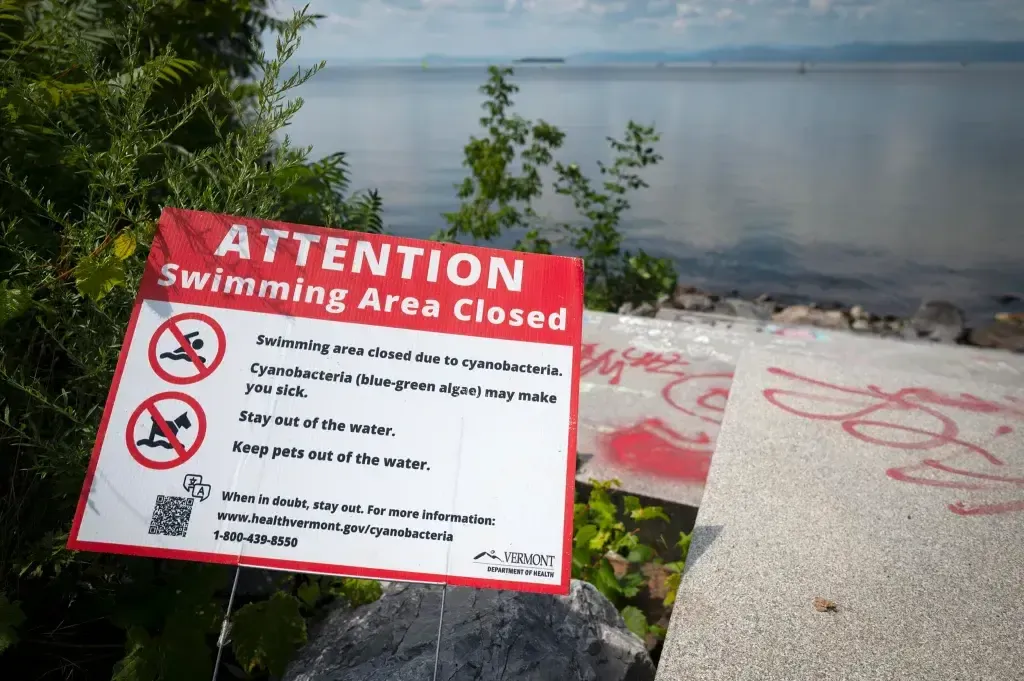
Source: Glenn Russell via VTDigger (2025)
Warmer air and water temperatures may alter the ecology of recreation sites. Changes in precipitation patterns are influencing fishing opportunities, lake stratification, and stream health, with potential consequences for recreational angling (see Fish & Wildlife 5.6). A change in water temperatures can disrupt fish life cycles (e.g., reduction in populations of cold-water fish) and subsequently threaten the availability of fishing and wild food gathering. As Vermont’s climate continues to warm, managers must balance rising demand for water-based recreation and the protection of aquatic resources.
More frequent and severe storm events in the summer have led to flooding (see Water Resources 4.4) that can cause direct damage to recreation infrastructure, including water access, boat put-ins, trails and boardwalks, as well as to supporting transportation infrastructure that facilitates access to outdoor recreation opportunities (O’Toole et al., 2019). For example, the Lamoille Valley Rail Trail experienced extensive damage from flooding in 2023 including complete bridge and culvert washouts and slope failures (Cusanelli, 2023).
Drought further impacts the types of recreation activities that are accessible to Vermonters. For example, low water levels on lakes and rivers may prevent motorized boats from accessing certain areas, while paddling-based activities will be less affected. During the 2025 drought (August through November), there were reports of problems with docks not reaching the water, paddle boarders needing to access alternative entry points, and boats stranded along the shore (Jones, 2025).
Wildfires are increasing the occurrence of hazardous air quality days, restricting outdoor activities for both Vermonters and tourists, and posing immediate health risks to outdoor workers, including those in the outdoor recreation industry (see Human Health 10.5.1).
In addition to climate change effects on summer recreationists, the recreation workforce (both paid and volunteer) faces occupational exposure related to completing their work responsibilities (e.g., trail work, patrols) under hazardous heat, air quality, and other environmental conditions.
9.5.4 Summer recreation adaptation examples
Adaptation strategies to rising temperatures are focused on improving public access to safe, cool recreation environments and reducing heat exposure. For example, expanding shaded areas in parks, developing new public swimming areas, and improving water quality monitoring at public beaches helps ensure equitable access to safe cooling spaces. Monitoring and communication regarding risks related to water quality, air quality, and heat are increasingly important for protecting Vermont’s tourism and local recreation sectors.
9.6 Fall
9.6.1 Fall recreation patterns
Leaf peeping is one of Vermont’s most iconic and economically significant forms of seasonal tourism (Figure 9-11). Each fall, visitors from across the country, and the world,travel to experience the state’s vibrant foliage, shaped by a mix of northern hardwood forests, mountainous terrain, and cool autumn climate. The fall foliage season contributes substantially to Vermont’s tourism economy, supporting local businesses such as inns, restaurants, and outdoor recreation services. Fall foliage tourism generates an estimated $500 million annually from 2.5 million visitors (Agency of Commerce and Community Development, 2024; O’Toole et al., 2019). Popular summer recreation activities such as hiking and paddling typically continue into the early fall, often in conjunction with the fall foliage season.
Many (32%) out-of-state visitors in fall months cite fall foliage as the reason for their trip and 38% report viewing fall foliage during their visit (Downs & St. Germain Research, 2025a). Outdoor recreation remains an important factor, with 22% of fall visitors citing outdoor recreation as the reason for their visit and 44% engage in outdoor activities while visiting (Downs & St. Germain Research, 2025a). Hiking is the most common outdoor recreation activity for fall visitors (29%), followed by biking (10%) and wildlife viewing (7%; Downs & St. Germain Research, 2025a). Almost 80% of out-of-state fall visitors who engage in outdoor recreation engage in more than one activity (Downs & St. Germain Research, 2025a).
Fall is a critical season for hunting in Vermont. Participation in hunting and fishing remains high, despite a generational cultural shift that has led to declining hunting participation nationally (SCORP, 2024). Approximately 11% of Vermonters hunted in 2022, nearly double the national average of 6% (U.S. Fish & Wildlife Service, 2023). Long-term declines in hunting participation pose challenges for wildlife management and for sustaining fall hunting traditions. (U.S. Fish & Wildlife Service, 2023)
White-tailed deer, black bear, wild turkey, and moose seasons draw residents and out-of-state hunters to forests and rural communities across the state (see Fish and Wildlife 5.7.1). Deer populations are expected to increase with climate change while moose populations are expected to decline (see Fish and Wildlife 5.7.1). As deer increasingly occupy suburban environments, deer-human conflicts are rising, and hunting access is becoming more complicated. Hunting plays an important role in managing wildlife populations under changing environmental conditions. For many Vermonters, fall recreation is not only scenic tourism, but also subsistence, cultural heritage, and land-based stewardship.
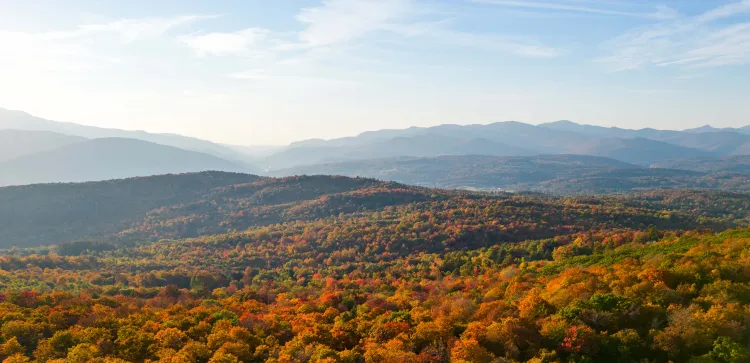
Source: UVM Spatial Analysis Lab (2023)
9.6.2 Changing climate conditions in fall
Climate change is altering the timing, temperature, and precipitation patterns that define Vermont’s fall season. Warmer autumns, with mild temperatures extending further into October and November, are lengthening the growing season and delaying the onset of colder conditions. First frosts are occurring later in the year, and freeze-thaw cycles are becoming less consistent (see Agriculture and Food Systems 6.3.1; Climate Change in Vermont 2.4.4).
Fall is projected to experience greater variability in rainfall, including an increase in heavy precipitation events as well as periods of drought (see Climate Change in Vermont 2.5.5). These changes are reducing the predictability of seasonal transitions and increasing interannual variability in fall weather conditions.
9.6.3 Fall activities most affected by climate change
Fall’s changing climatic conditions have direct impacts for recreation and tourism. Vermont’s renowned foliage season is particularly sensitive to shifts in temperature and precipitation. Rising temperatures (see Climate Change in Vermont 2.4) and shifts in precipitation patterns (see Climate Change in Vermont 2.5) are influencing the timing, intensity, and duration of foliage displays (Kosiba, 2024; Kyne, 2012; Xie et al., 2015). Warmer autumns delay the onset of color change, while erratic temperature fluctuations and drought stress may cause muted or uneven coloration of leaves (Kosiba, 2024). Inconsistent freeze-thaw cycles and delayed frosts may further affect ecological cues that influence foliage timing and forest dynamics in addition to maple sugaring and forestry, which rely on these cycles for sap flow (see Agriculture and Food Systems 6.4.5).
These phenological shifts reduce the predictability of the fall season, complicating travel planning and likely affecting visitation rates among tourists seeking peak foliage conditions. Greater variability in fall weather, including heavy rainfall events, can disrupt outdoor recreation, trail systems, and seasonal events during peak tourism periods (Wilkins & Horne, 2024). As a result, communities and small businesses that depend on fall recreation face growing exposure to climate-related uncertainty.
Climate change is influencing fall hunting conditions. Reduced snow cover and later onset of winter temperatures limits hunters’ availabilities to track wildlife, altering traditional hunting practices and wildlife movement patterns (see Fish and Wildlife 5.7.1). Expanding deer populations and shifting habitat use, particularly into suburban and fragmented landscapes, complicates access and management strategies (Vermont Fish and Wildlife Department, 2020). Meanwhile, declining participation among young hunters may reduce the capacity to manage increasing deer populations effectively (Custodio, 2022). These ecological and demographic changes intersect to reshape the social and economic dimensions of fall hunting in Vermont.
As more people recreate in fall, they may be unprepared for weather conditions. This may pose a challenge for staffing and capacity of land managers, stewards, and other outdoor recreation workers, but may be mitigated through messaging efforts.
9.6.4 Fall recreation adaptation examples
To sustain the economic and cultural value of fall recreation, Vermont continues to explore strategies that link ecosystem management with tourism resilience. Efforts to conserve and diversify native tree species will help preserve the color diversity and ecological stability of fall landscapes. Monitoring forest health, managing invasive species, and protecting landscape connectivity will be critical in maintaining vibrant foliage displays under changing climate conditions.
In the hunting sector, adaptive wildlife management strategies, including adjustments to season timing, license allocation, and harvest limits, are being used to respond to shifting species populations (see Fish and Wildlife 5.7.1). Safely expanding access to hunting in suburbanizing areas and engaging younger generations in hunting traditions may also help sustain both wildlife management goals and fall recreation economies. Conflicts between hunting and other outdoor recreation and tourism activities should be monitored and managed appropriately. As hunting access expands simultaneously with climate-driven lengthening of seasons for other activities, so too does the potential for conflict between those sectors.
9.7 Conclusions
Outdoor recreation relies on Vermont’s natural resources and long history of investments in outdoor recreation infrastructure, from the snowy mountains with their backcountry and downhill ski trails to the boaters, kayakers, and paddlers on Lake Champlain and the Connecticut River. Each season in Vermont faces distinct challenges and opportunities related to the impact of climate change on natural resources and recreation infrastructure. Outdoor recreation currently accounts for 4.7% of Vermont’s GDP (BEA, 2024); however, climate change impacts will be widespread across outdoor recreation and tourism sectors (O’Toole et al., 2019).
As the winter season shortens and precipitation patterns change, recreational activities that rely on snow, ice, or cold temperatures will face extreme challenges in the coming decades, especially activities that cannot be supported by artificial snowmaking. Managers of winter recreation sites will need to continue to find creative ways to offset losses from the shorter and more variable winter season with activities during the warmer months. Overall, the winter sports season is expected to continue to shorten throughout the coming century, with winter warming faster than any other season in the state and increasing precipitation in the form of rain. These changing climate conditions will result in decreased snowpack and ice.
The summer recreation season will become longer as temperatures increase, bolstering opportunities for warm-weather activities, including water-based recreation activities like swimming and boating. However, extreme weather events, like drought and flooding, threaten the availability and water quality of water resources throughout the state as well as recreation infrastructure (see Water Resources 4.3 and 4.5; see Infrastructure 7.3.2). Poor air quality from pollen and wildfire smoke alongside expanded mosquito- and tick-borne disease transmissions threaten all outdoor recreators in the summer months (see Human Health 10.5 and 10.6).
The fall and spring shoulder seasons will likely take on additional significance for tourism and recreation in Vermont as the winter season, currently the most lucrative, shortens. However, shoulder season temperature and precipitation patterns are more variable, which poses a risk for planning and long-term resilience. Unpredictability and variability of the shoulder seasons may lead to a mismatch between weather expectations and conditions, which poses a risk for recreators and may increase pressures on workers and rescue teams. Spring is getting warmer and wetter, with inconsistent freeze-thaw cycles adding to the season’s unpredictability and risk for damage to infrastructure. Distinct challenges identified in the fall include a less predictable fall foliage season, which is an important tourism driver.
Despite the challenges and pressures climate change poses to outdoor recreation and tourism, creative and resourceful Vermonters are constantly experimenting with and adopting new technologies and practices. Trail managers are redesigning infrastructure to better withstand heavier rainfall, and recreation organizations are expanding year-round opportunities that are less dependent on consistent snow or predictable seasons. Just as important, strong community ties—among local organizations, land managers, and recreation groups—help share knowledge, mobilize resources, and coordinate responses to emerging challenges. Together, these social networks and on-the-ground innovations position Vermont’s recreation sector to adapt, thereby sustaining both the landscapes and the shared experiences that define outdoor recreation and tourism in Vermont.
9.7.1 Data needs
Missing or desired data sources to assess climate change impacts on outdoor recreation and tourism in Vermont include aggregated search and rescue operations data, cloudy days data, freeze-free nights which limit snowmaking operations, and aggregated temperature differences between low and high elevations in the state to understand expectation and condition mismatches.
9.8 Traceable accounts
9.9 References
10 V.S.A. § 151, Pub. L. No. 10 V.S.A. Chapter 151 (1970). https://legislature.vermont.gov/statutes/fullchapter/10/151?_gl=1*1j9nu6w*_ga*MTM4MjQ0NDE0My4xNzM5NTY0NzU4*_ga_V9WQH77KLW*czE3O….
10 V.S.A. § 495 (1968). https://legislature.vermont.gov/statutes/section/10/021/00495
Agency of Commerce and Community Development. (2024). Economic Impact Studies Show Boost from April Eclipse but Fall Foliage Season is Still Vermont’s Biggest Draw | Agency of Commerce and Community Development. https://accd.vermont.gov/press-releases/economic-impact-studies-show-boost-april-eclipse-fall-foliage-season-still-vermonts
Albrecht, G., Sartore, G. M., Connor, L., Higginbotham, N., Freeman, S., Kelly, B., Stain, H., Tonna, A., & Pollard, G. (2007). Solastalgia: The Distress Caused by Environmental Change. Australasian Psychiatry, 15(1), S95–S98. https://doi.org/10.1080/10398560701701288
American Council of Snowmobile Associations (ACSA). (2026). Snowmobile Safety and Access Information Center. Snowmobile Safety and Access Information Center. https://snowmobileinfo.org/
Ascutney Outdoors. (2025). Ascutney Outdoors: History. Ascutney Outdoors: History. https://www.ascutneyoutdoors.org
BEA. (2024). Outdoor Recreation Satellite Account. U.S. Bureau of Economic Analysis.
Brackin, S. (2026, May 7). Stay Safe While Enjoying Vermont’s Waters This Spring. Agency of Natural Resources. https://anr.vermont.gov/stay-safe-while-enjoying-vermonts-waters-spring
Bushnell, M. (2021, July 11). Then Again: Vermont’s billboard ban followed a winding road to passage. VTDigger. https://vtdigger.org/2021/07/11/then-again-vermonts-billboard-ban-followed-a-winding-road-to-passage/
Cusanelli, M. (2023, August 8). More than half of the Lamoille Valley Rail Trail has reopened following historic flooding. WPTZ. https://www.mynbc5.com/article/phil-scott-vermont-flooding/44755492
Custodio, J. (2022, December 8). Declining hunting rates in Vermont and across the nation could stir trouble for conservation. Saint Albans Messenger. https://www.samessenger.com/news/declining-hunting-rates-in-vermont-and-across-the-nation-could-stir-trouble-for-conservation/a…
Dang, L., & Weiss, J. (2021). Evidence on the Relationship between Place Attachment and Behavioral Intentions between 2010 and 2021: A Systematic Literature Review. Sustainability, 13(23), 13138. https://doi.org/10.3390/su132313138
Department of Forests, Parks and Recreation. (2026). Mud Season. https://fpr.vermont.gov/recreation/mud-season
DHASH. (2025). Dutch Hill [NGO]. Dutch Hill Alliance of Skiers and Hikers (DHASH). https://www.dhash4vt.org
Downs & St. Germain Research. (2025a). Vermont Tourism Full Fall Visitor Tracking Report. https://outside.vermont.gov/agency/ACCD/ACCD_Web_Docs/TM/Vermont-Tourism-Full-Fall-Visitor-Tracking-Report.pdf
Downs & St. Germain Research. (2025b). Vermont Tourism Spring 2025 Visitor Tracking Report. https://outside.vermont.gov/agency/ACCD/ACCD_Web_Docs/TM/Vermont_Tourism_Spring_2025_Visitor_Tracking_Report.pdf
Downs & St. Germain Research. (2025c). Vermont Tourism Summer 2025 Visitor Tracking Report. https://outside.vermont.gov/agency/ACCD/ACCD_Web_Docs/TM/Vermont_Tourism_Summer_2025_Visitor_Tracking_Report.pdf
Downs & St. Germain Research. (2025d). Vermont Tourism Winter 2024-2025 Visitor Tracking Report. https://outside.vermont.gov/agency/ACCD/ACCD_Web_Docs/TM/Vermont%20Tourism%20Winter%202024-2025%20Visitor%20Tracking%20Report_F…
Fairley, S., Ruhanen, L., & Lovegrove, H. (2015). On frozen ponds: The impact of climate change on hosting pond hockey tournaments. Sport Management Review, 18(4), 618–626. https://doi.org/10.1016/j.smr.2015.03.001
Gilaberte-Búrdalo, M., López-Martín, F., Pino-Otín, M. R., & López-Moreno, J. I. (2014). Impacts of climate change on ski industry. Environmental Science & Policy, 44, 51–61. https://doi.org/10.1016/j.envsci.2014.07.003
Guazzini, A., Valdrighi, G., Fiorenza, M., & Duradoni, M. (2025). The Relationship Between Connectedness to Nature and Pro-Environmental Behaviors: A Systematic Review. Sustainability, 17(8), 3686. https://doi.org/10.3390/su17083686
Hale, K., Schroth, A., Shanley, J., & Wemple, B. (2025). Warmer Winters Drive Declines in Snowpack and Consequent Increases in Annual and Seasonal Runoff in a Headwater Region of the Northeastern United States. Hydrological Processes, 39(2). https://doi.org/10.1002/hyp.70092
Harrison, B. (2006). The View from Vermont: Tourism and the making of an American rural landscape. University of Vermont.
Hayes, P. (2026, March 23). Drought Conditions Impact Burke Mountain Snowmaking. The Caledonian Record. https://www.caledonianrecord.com/news/local/drought-conditions-impact-burke-mountain-snowmaking/article_4ac690e5-6e8d-5732-9b22…
Hoag, F., Raimondi, S., & Zencey, D. (2021). The Vermont Climate Assessment 2021: Recreation and Tourism Chapter. University of Vermont. https://doi.org/10.18125/kowgvg.
Houle, D., Paquette, A., Côté, B., Logan, T., Power, H., Charron, I., & Duchesne, L. (2015). Impacts of Climate Change on the Timing of the Production Season of Maple Syrup in Eastern Canada. PLOS ONE, 10(12), e0144844. https://doi.org/10.1371/journal.pone.0144844
Islands Derby. (2026). Lake Champlain Islands Ice Fishing Derby. Islands Ice Fishing Derby. https://www.islandsderby.com/
Joe’s Pond Association. (2025). Historical Dates/Times [Dataset]. https://www.joespondvermont.com/historical-datestimes.html
Jones, C. (2025, September 3). Low water levels posing problems on Lake Champlain. WCAX. https://www.wcax.com/2025/09/03/historically-low-water-levels-posing-problems-lake-champlain/
Kosiba, A. (2024). Climate Change Impacts on Northeastern Forests. Northern Woodlands Magazine, 30–35. https://northernwoodlands.org/articles/article/climate-change-forests
Kyne, A. (2012). CLIMATE CHANGE AND AUTUMN COLORS In New England’s Forests. 4. https://northernwoodlands.org/articles/article/climate-change-forests
Lake Champlain Basin Program. (2024). 2024 State of the Lake and Ecosystem Indicators Report. Lake Champlain Basin Program. https://storymaps.arcgis.com/collections/0cc5a840e6904201825284a058844c1b
Lake Champlain Basin Program. (2026). Climate Data Trends. Lake Champlain Basin Program. https://www.lcbp.org/our-goals/clean-water/climate-change-impacts/climate-data-trends/
Locke, C. (2025). VAST Snowmobile Vermont. VAST. https://vtvast.org/downloads/2025/About%20VAST%20Final%202025.pdf
Lynn, L. (2018, November 28). The Backcountry Payoff. VT SKI + RIDE. https://vtskiandride.com/the-backcountry-payoff/
Mayer, F. S., & Frantz, C. M. (2004). The connectedness to nature scale: A measure of individuals’ feeling in community with nature. Journal of Environmental Psychology, 24(4), 503–515. https://doi.org/10.1016/j.jenvp.2004.10.001
National Ski Areas Association. (2023). Climate Smart Snowmaking Industry Study (p. 76). https://nsaa.org/webdocs/Sustainability/Snowmaking/ClimateSmartSnowmakingStudy_Report_2023.pdf
NELSAP. (2023). New England Lost Ski Areas Project. NELSAP: New England Lost Ski Areas Project. https://www.nelsap.org/
O’Toole, D., Brandt, L. A., Janowiak, M. K., Schmitt, K. M., Shannon, P. D., Leopold, P. R., Handler, S. D., Ontl, T. A., & Swanston, C. W. (2019). Climate Change Adaptation Strategies and Approaches for Outdoor Recreation. Sustainability, 11(24), 7030. https://doi.org/10.3390/su11247030
Perry, E., Manning, R., Xiao, X., & Valliere, W. (2018). Multiple Dimensions of Adaptations to Climate Change by Visitors to Vermont State Parks. The Journal of Park and Recreation Administration, 36(2), 13–30. https://doi.org/10.18666/JPRA-2018-V36-I2-8308
Perry, E., Manning, R., Xiao, X., Valliere, W., & Reigner, N. (2018). Social Climate Change: The Advancing Extirpation of Snowmobilers in Vermont. The Journal of Park and Recreation Administration, 36(2), 31–51. https://doi.org/10.18666/JPRA-2018-V36-I2-8307
Raymond, C. M., Brown, G., & Weber, D. (2010). The measurement of place attachment: Personal, community, and environmental connections. Journal of Environmental Psychology, 30(4), 422–434. https://doi.org/10.1016/j.jenvp.2010.08.002
Root, T. & Grist. (2024, February 27). Greener snowmaking is helping ski resorts weather climate change. Vermont Public. https://www.vermontpublic.org/local-news/2024-02-27/greener-snowmaking-is-helping-ski-resorts-weather-climate-change
SCORP. (2024). Vermont’s Statewide Comprehensive Outdoor Recreation Plan (SCORP). VT Dept. of Forests, Parks and Recreation. https://fpr.vermont.gov/move-forward-together-vermont
SE Group. (2026, April 14). Catamount Trail Association. Public Lands Catamount Trail Association Catamount Trail Association and Rochester Area Sports Trail Alliance. https://segroup.com/portfolio/catamount-trail-association
Shanley, J. B., & Wemple, B. (2001). Water quantity and quality in the mountain environment. Vermont Law Review, 26, 717–751. https://www.uvm.edu/~bwemple/pubs/shanley_wemple_law.pdf
Shelburne Farms. (2021). Farming in a Changing Climate. http://shelburnefarms.org/about/news-and-stories/farming-changing-climate
Ski Vermont. (2026). Vermont Ski Areas: Decades of Sustainability Work. Ski Vermont. https://skivermont.com/sustainability
Spera, S. A., Spangler, K., & Hubert, M. O. (2024). Climate Change, Fall Foliage, and Leaf-Peepers: Effects of Climate on Senescence and Visitation in a National Park. Session: Science and Society / Innovative Applications of Social Sciences to Advance Earth Observations and Remote Sensing, SY11D-2552. https://ui.adsabs.harvard.edu/abs/2024AGUFMSY11D2552S
State of Vermont. (2026). History of Act 250 [Government Agency]. Act 250. https://act250.vermont.gov/act250-program
Tourism Economics. (2024, December). Economic impacts of visitors in Vermont 2023 [Economic Impact Report]. VT Dept. of Tourism and Marketing. https://outside.vermont.gov/agency/ACCD/ACCD_Web_Docs/TM/Vermont-Tourism%20Economic-Impact-Final.pdf
U.S. Fish & Wildlife Service. (2023, October 12). Americans Spent $394B on Hunting, Fishing, and Wildlife-Associated Activities in ’22 | U.S. Fish & Wildlife Service. U.S. Fish & Wildlife Service. https://www.fws.gov/press-release/2023-10/americans-spent-394b-hunting-fishing-and-wildlife-associated-activities-22
USGCRP. (2023). Fifth National Climate Assessment (No. 5th). U.S. Global Change Research Program. https://nca5.climate.us/downloads/NCA5_2023_FullReport.pdf
USGS. (2026). Vermont water conditions—USGS Water Data for the Nation. https://waterdata.usgs.gov/state/vermont/
Vermont Agency of Natural Resources. (2022). Outdoor Recreation Sites Inventory [Dataset]. https://geodata.vermont.gov/datasets/VTANR::outdoor-recreation-sites-inventory/about
Vermont Center for Geographic Information. (2022). E911 Trails [Dataset]. https://geodata.vermont.gov/datasets/vt-data-e911-trails?geometry=-80.763,42.482,-64.074,45.253
Vermont Center for Geographic Information. (2025). Vermont Protected Lands Database Updated [Dataset]. https://vcgi.vermont.gov/data-release/vermont-protected-lands-database-updated
Vermont CORE Toolkit. (2026, April 14). Vermont CORE Toolkit. https://vtcoretoolkit.com/
Vermont Department of Environmental Conservation. (2025). Vermont Clean Water Initiative 2024 Performance Report[Performance Report]. Vermont Clean Water Initiative. https://dec.vermont.gov/sites/dec/files/documents/Clean%20Water%20Initiative%202024%20Performance%20Report_0.pdf
Vermont Department of Taxes. (2024). Meals and Rooms Tax Statistics [Dataset]. https://tax.vermont.gov/data-and-statistics/mrt#2025
Vermont Fish and Wildlife Department. (2020, October 5). 2020 – 2030 DRAFT Big Game Plan Public Comment Meeting. http://vtfishandwildlife.com/sites/fishandwildlife/files/documents/Learn%20More/Library/REPORTS%20AND%20DOCUMENTS/HUNTING/BIG-G…
Vermont Maple Sugar Makers’ Association. (2026). Maple Open House Weekend. https://vermontmaple.org/visit/maple-open-house-weekend
VOREC. (2025, March 14). VT Outdoor Recreation Economic Collaborative (VOREC) Foundation Document [Foundation Document]. State of Vermont. https://fpr.vermont.gov/sites/fpr/files/documents/2025_VORECFoundationDoc_Final.pdf
VOREC. (2026, April 14). VOREC Community Grant Program. Department of Forests, Parks and Recreation. https://fpr.vermont.gov/recreation/recreation-grants/vorec-community-grant-program
VT Maple Festival. (2026). Vermont Maple Festival. VT Maple Festival. https://www.vtmaplefestival.org
Weiss, H. (2018). Feasibility of over-summer snow storage at the Crafstbury Outdoors Center in Craftsbury, VT. T1. Practical Applications of Engineering Geology, 50(2). https://doi.org/10.1130/abs/2018NE-311045
Weiss, H. S., Bierman, P. R., Dubief, Y., & Hamshaw, S. D. (2019). Optimization of over-summer snow storage at midlatitudes and low elevation. The Cryosphere, 13(12), 3367–3382. https://doi.org/10.5194/tc-13-3367-2019
Whitburn, J., Linklater, W., & Abrahamse, W. (2019). Meta‐analysis of human connection to nature and proenvironmental behavior. Conservation Biology, 34. https://doi.org/10.1111/cobi.13381
Wilkins, E. J., & Horne, L. (2024). Effects and perceptions of weather, climate, and climate change on outdoor recreation and nature-based tourism in the United States: A systematic review. PLOS Climate, 3(4), e0000266. https://doi.org/10.1371/journal.pclm.0000266
Winter, P. L., Selin, S., Cerveny, L., & Bricker, K. (2019). Outdoor recreation, nature-based tourism, and sustainability. Sustainability, 12, 81. https://doi.org/10.3390/su12010081
Wrigley, K., & Coleman, K. (2025). Drivers of Recreation Activity Displacement on Natural Surface Trails in Vermont. [Paper in Preparation].
Wrigley, K., Coleman, K., Perry, E. E., Leahy, J., & Dvorak, B. (In prep). Is Pre-trip Information the First Step of Recreation Management? [Unpublished manuscript].
Wrigley, K., & O’Brien, L. (2023). VT Backcountry Ski Handbook (M. Snyder & Joe, Eds.) [Best Management Practices Document]. VT Dept. of Forests, Parks and Recreation. https://fpr.vermont.gov/sites/fpr/files/doc_library/VT-BC-HANDBOOK.pdf
Xie, Y., Wang, X., & Silander, J. A. (2015). Deciduous forest responses to temperature, precipitation, and drought imply complex climate change impacts. Proceedings of the National Academy of Sciences, 112(44), 13585–13590. https://doi.org/10.1073/pnas.1509991112
Yang, Z., Chen, R., Liu, Z., Wang, X., Liu, G., Bian, S., & Li, X. (2025). Field study for the impact of rain-on-snow events on snow cover during snow accumulation period. iScience, 28(11), 113634. https://doi.org/10.1016/j.isci.2025.113634
Young, S. S., & Young, J. S. (2025). Decreasing Snow Cover and Increasing Temperatures Are Accelerating in New England, USA, with Long-Term Implications. Climate, 13(12), 246. https://doi.org/10.3390/cli13120246