What is the Vermont Climate Assessment (VCA)?
The Vermont Climate Assessment (VCA) provides the best available science about the impacts of climate change, including how Vermont's climate is changing, what those changes mean for our communities and economy, and how Vermonters can and are preparing for the future.
The VCA is a reference designed to help guide decision-makers as they prepare for future impacts across key sectors like agriculture and food systems, health, water resources, and more.
History and updates
VCA 2025 is the third statewide climate assessment, following assessments in 2014 and 2020. VCA 2014 was the first climate assessment in the state to provide state-level data following a similar approach to the National Climate Assessment.
Across all three assessments, the direction of climate change is consistent. What has changed is the scale and acceleration of the impacts. VCA 2025 shows that climate impacts are becoming more widespread and interconnected, affecting Vermont’s environment, economy, and quality of life.
Our Impact
VCA 2014 and 2020 are used across Vermont to guide climate change-related communications, planning, and decision-making.
Some notable examples include:
- Enacted legislation: Community Resilience and Biodiversity Protection Act (Act 59) and the Flood Safety Act (Act 121)
- Statewide and regional planning: Vermont Climate Action Plans (2021, 2025), Vermont State Hazard Mitigation Plan (2023), Chittenden County All Hazards Multi-Jurisdictional Hazard Mitigation Plan (2022), Tactical Basin Plans (e.g., White River 2024; Ottauquechee, Black Rivers & Connecticut River Direct Tributaries, 2024)
- State agency communications: Climate Action Office, Department of Forests, Parks, and Recreation, Flood Ready Vermont
Used a VCA in your work? We'd love to hear about it. Share how.
Our team
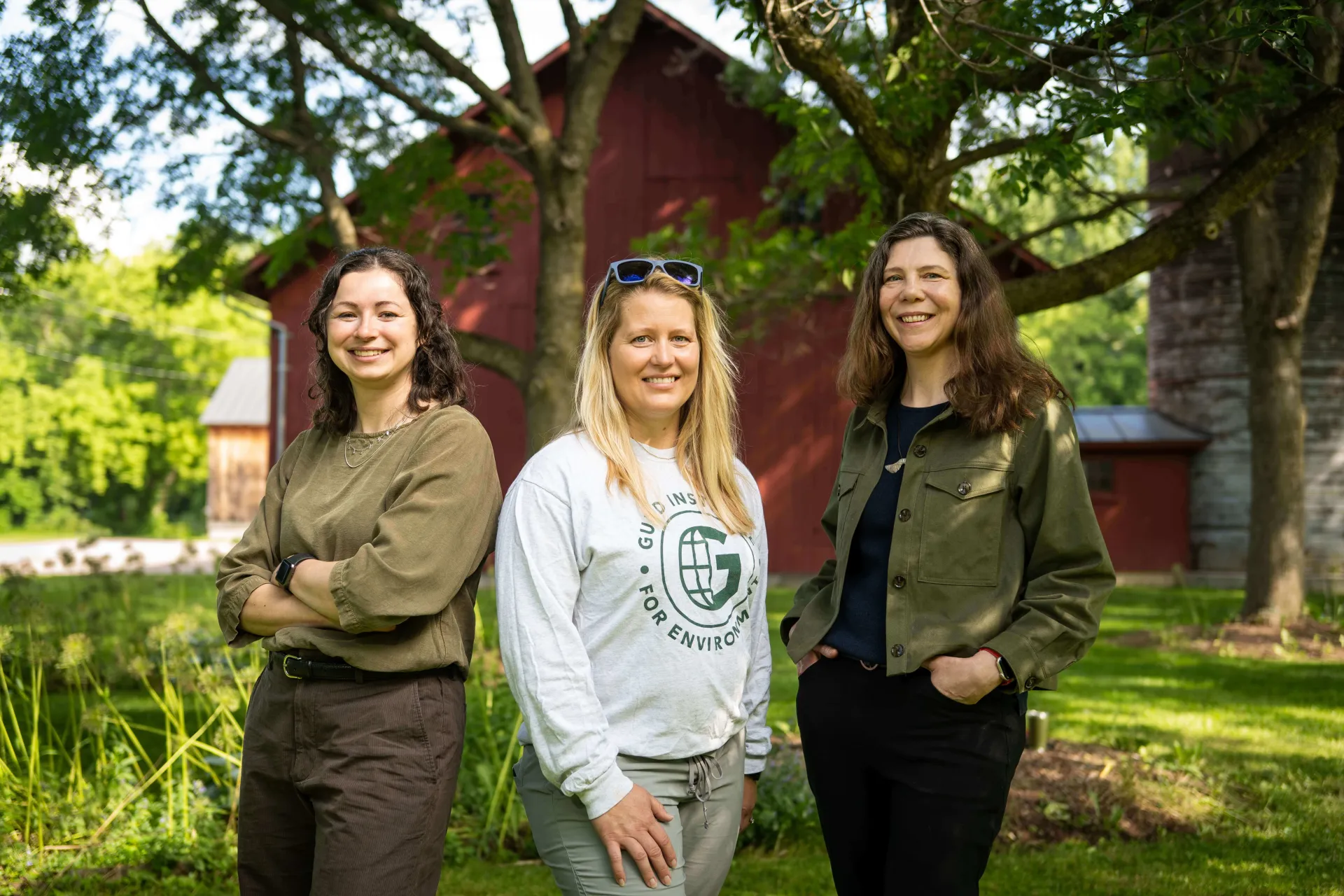
Leading researchers
Dr. Gillian L. Galford is the lead researcher for all three VCAs.
- Editors from VCA 2025: Gillian L. Galford, Jessica A. Balerna, Hannah Turner, Amanda Sardonis, and Hannah Peplinski
- Editors from VCA 2021: Gillian L. Galford, Joshua Faulkner, and Laura Edling
- Editors from VCA 2014: Gillian L. Galford, Ann Hoogenboom, Sam Carlson, Sarah Ford, Julie Nash, Elizabeth Palchak, Sarah Pears, Kristin Underwood, and Daniel V. Baker
Authors and contributors
VCA 2025 was written by 27 graduate and undergraduate students, 3 postdoctoral researchers, and 12 faculty and staff at the University of Vermont alongside over 195 professionals from over 25 organizations. These professionals span industry, non-profits, and all levels of government (municipal, regional, state, federal, and Tribal), all counties of Vermont, and all sectors covered in the report (e.g., Fish and Wildlife, Outdoor Recreation and Tourism, Human Health). They contributed data, research directions, writing, reviewing, and mentorship for chapter authors.
Vermont Climate Corps
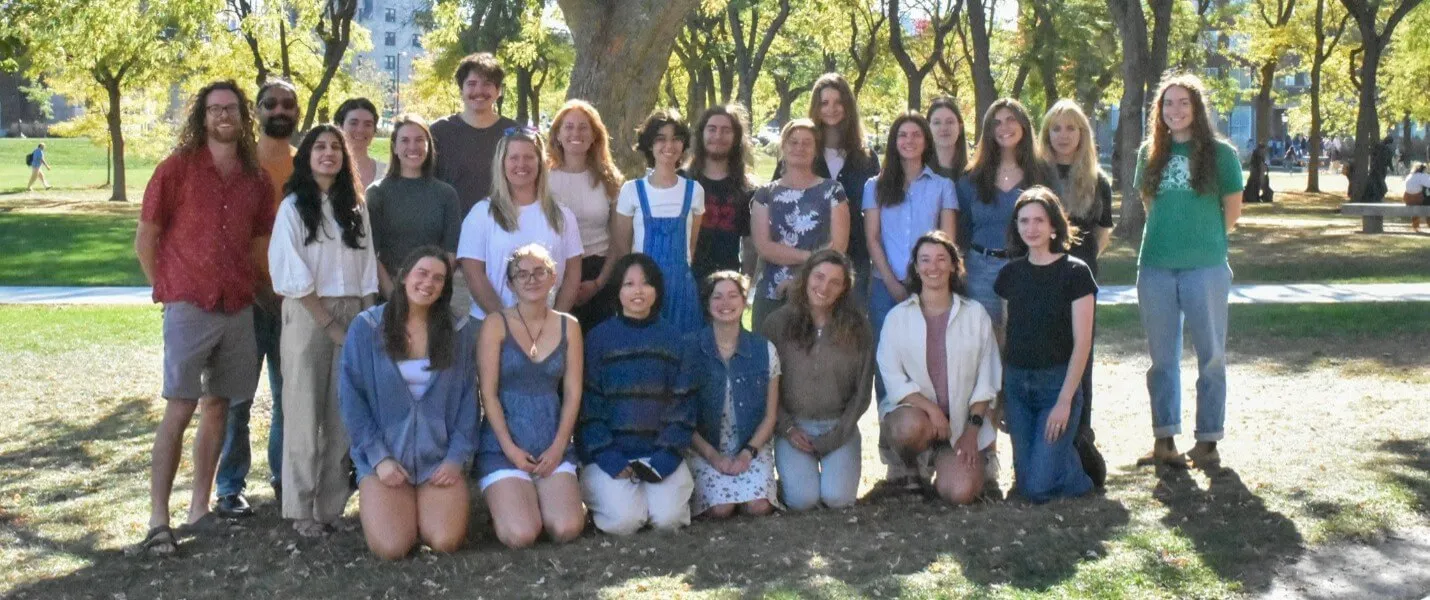
Source: Lauren Milideo (2025)
The Vermont Climate Corps (VCC) consists of graduate and undergraduate students who served as lead authors for VCA 2025. The VCC participated in a year-long, community-engaged, team-based learning course that guided them through writing VCA 2025 as well as offered multiple benefits: mentorship, community engagement, skill-building, and guidance on future career paths.
VCC trainees are from various degree programs across the University of Vermont including the natural sciences (e.g., environmental science, natural resources, parks, recreation & tourism, biology, plant and soil sciences, food systems, conservation biology, ecology, geosciences), math and engineering (electrical engineering, mathematics, statistics, data science, computer science), and the social sciences (community development and applied economics, philosophy, sustainable development, policy, economics and governance).
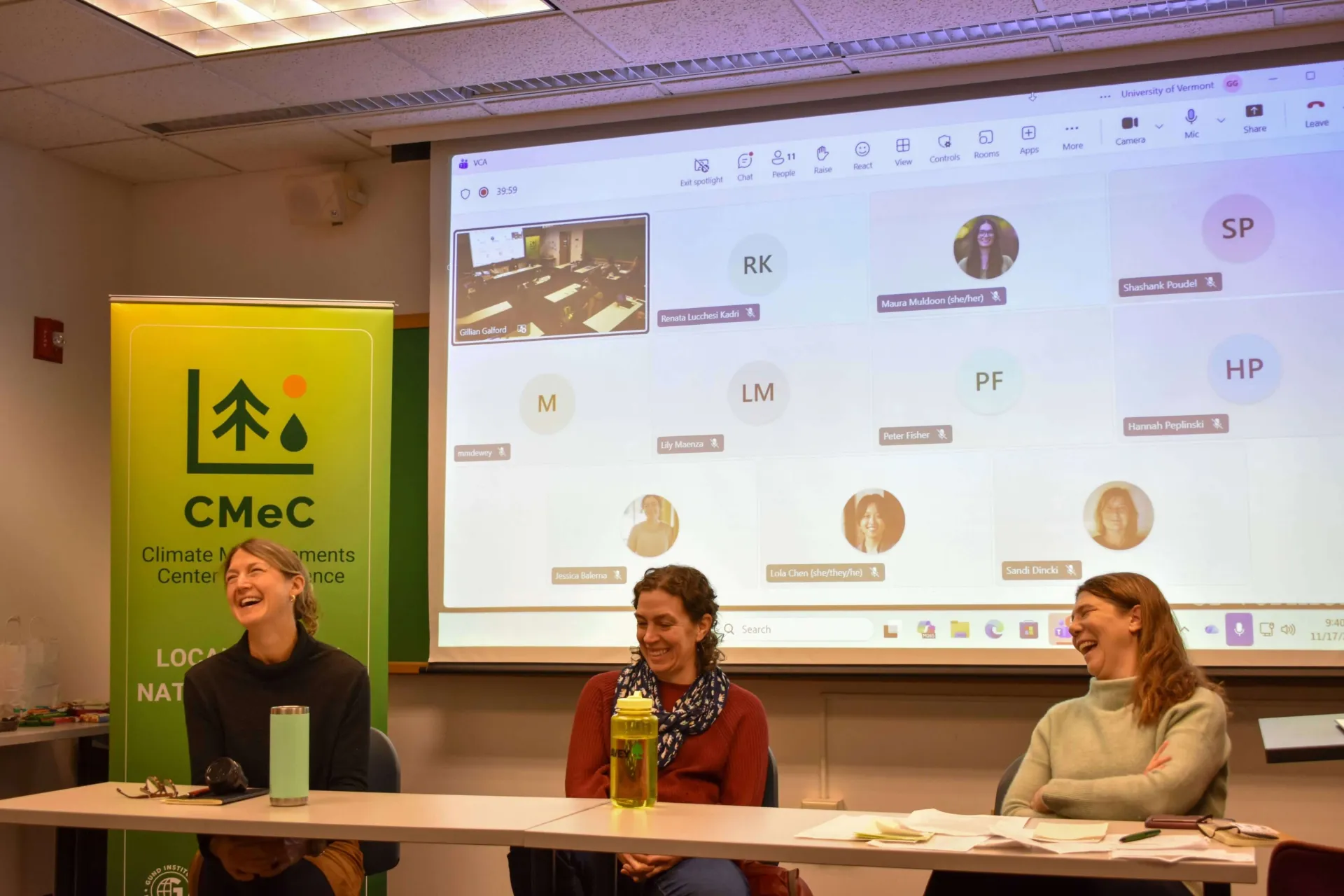
Source: Lauren Milideo (2025)
Contributors
Prior to writing the VCA, lead authors engaged a diversity of professionals in a needs assessment to guide the research agenda of the report.
The needs assessment seeks to:
- Determine what information is needed for understanding and addressing climate change in Vermont;
- Identify how information will be shared with diverse audiences across the state and what products will facilitate that sharing
- Facilitate knowledge co-production by inviting stakeholders to be involved in the conception, research, writing, or dissemination of the report
- Evaluate the impact of previous VCAs to continually improve the report process
While authors synthesized statewide datasets, peer-reviewed research, and local knowledge to examine climate impacts at state, county, municipal, and watershed scales, technical contributors shared data and ideas, reviewed chapter drafts, and some served as chapter co-authors or wrote call-out boxes in the report.
In VCA 2025, 101 stakeholders completed the needs assessment, sharing their research needs as well as what industry, sector, and county in Vermont they work in.
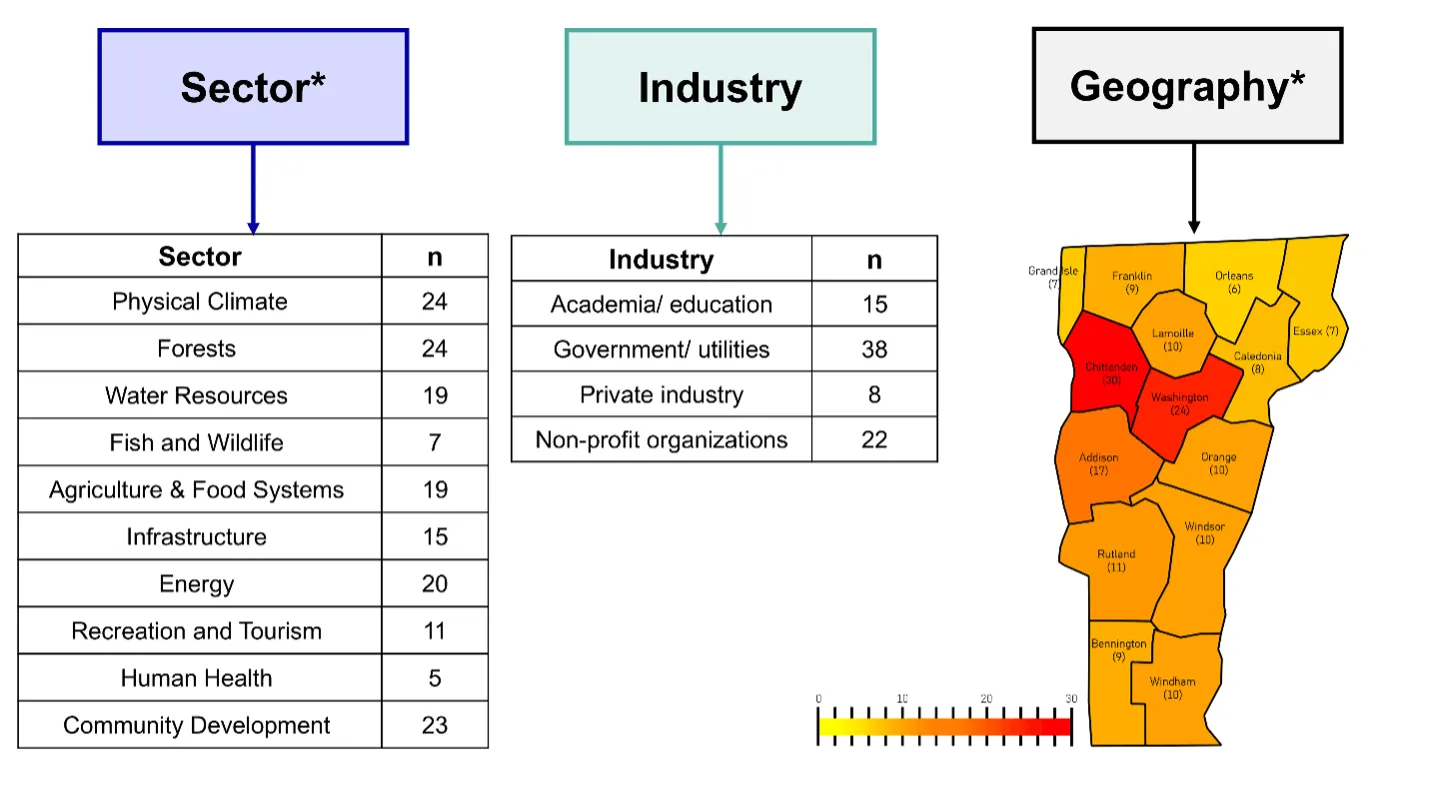
Source: Balerna et al. (2026) Process, In Vermont Climate Assessment 2025
For more information about the process behind VCA 2025, see Chapter 1 Process.
For a full acknowledgements page of contributors, see Acknowledgements