Authors
Garrett Simon
Loden Croll
Emma van Wagner
Maeve Dewey
Alexandra Kosiba
Jess Wikle
About
Recommended citation for chapter
Simon, G., Croll, L., van Wagner, E., Dewey, M., Kosiba, A., Wikle, J. 2026. Chapter 3: Forests. In Galford, G.L., Balerna, J.A., Turner H.C., Sardonis, A., Peplinski, H. (Eds), The Vermont Climate Assessment 2025. Burlington, Vermont: Climate Measurements Center of Excellence, Gund Institute for Environment at the University of Vermont. DOI: 10.5281/zenodo.20272849. Accessed online at https://vtclimate.org.
Author Contributor Roles Taxonomy (CRediT) statement
Garrett Simon: Supervision, Writing – Original Draft, Writing – Review & Editing, Conceptualization, Visualization; Loden Croll: Writing – Original Draft, Writing – Review & Editing, Conceptualization; Maeve Dewey: Writing – Original Draft, Writing – Review & Editing, Conceptualization, Visualization; Emma van Wagner: Writing – Original Draft, Writing – Review & Editing, Conceptualization; Alexandra Kosiba: Writing – Review & Editing, Visualization; Jess Wikle – Writing – Review & Editing
Acknowledgements
We thank Samantha Myers, Nicholas Afflito, Mariano Rodriguez-Cabal, Curt Lindberg, M. Noelia Barrios-Garcia, Stephen Peters-Collaer and William Keeton whose thoughtful review and contributions helped refine and strengthen this chapter.
Downloads
Please use the following accessible downloads for your own needs.To find downloads of other chapters in VCA 2025, please go to Downloads.
- Forests (high resolution PDF)
- Forests (low resolution PDF)
- Forests brief (PDF)
- Forests slidedeck (PPTX)
- alt-text is attached to each figure.
- alt-text is attached to each figure.
Table of contents
- 3.0 Executive summary
- 3.1 Key messages
- 3.2 Background
- 3.3 Forest loss
- 3.4 Carbon sequestration and storage
- 3.5 Forest productivity and composition
- 3.6 Impacts of abiotic stressors
- 3.7 Biotic disturbances on forests
- 3.8 Shifts in logging and forest management seasons
- 3.9 Urban trees in a changing climate
- 3.10 Adaptation and conservation actions
- 3.11 Traceable accounts
- 3.12 Resources
- 3.13 References
3.0 Executive summary
Forests provide critical economic, environmental, and health benefits to Vermont residents, such as removing and storing CO2 from the atmosphere, providing wildlife habitat, filtering and cleaning the water supply, regulating temperatures, and supporting the livelihoods of over 10,000 Vermonters. However, climate-driven changes, in conjunction with land use development, are reshaping Vermont’s forests. Careful monitoring and management of Vermont’s forests will be essential to maintain their health and productivity. This chapter provides detailed information about potential climate impacts that can guide land management practices to address changing forest conditions.
Current projected impacts on Vermont’s forests include:
- Northern hardwood-dominated forests may experience a shift in species composition towards more drought-tolerant and heat-tolerant tree species currently present in the mid-Atlantic or southern New England regions, such as oaks and hickories, while cold-adapted species, such as firs and spruces, face habitat contractions.
- More frequent flooding events may favor species with deeper root systems and greater tolerance to waterlogging, such as willows and white pines, particularly in low-lying, poorly drained, or riparian forests.
- Increased temperatures are likely to facilitate the expansion of invasive plants, insects, and pathogens. Species such as beech leaf disease, butternut canker, emerald ash borer, hemlock wooly adelgid, and spotted lanternfly pose the most immediate threat because they are already established in Vermont (or have the potential to rapidly emerge), can cause significant mortality in tree species, and are expected to worsen under projected climatic changes.
- Long-term monitoring of Vermont maple trees shows important shifts in phenology including later fall peak leaf color and leaf drop, and earlier spring budbreak and leaf emergence, which have consequences for tourism and the maple sugar industry.
- Warmer and wetter winters are reducing the number of forest working days for forest managers, operators, and loggers.
Despite these climate-related impacts, several adaptation strategies can help, including climate-adaptive silviculture, encouraging old-growth characteristics in forests, and expanding urban tree plantings. Climate-adaptive silviculture helps forests better withstand and recover from climate change impacts by focusing on increasing their resistance and resilience or facilitating transitions to forest communities with more future-adapted species like yellow birch, red maple, and beech. Resistance treatments can include selecting for existing healthy or climate-tolerant species already in a forest patch as well as treating any at-risk species, such as ash trees, with insecticides. Resilience treatments may include patch harvests that favor native, shade-tolerant species. Assisted planting can also be used to facilitate the growth of associated, though less prolific, species in the region, such as red oak or white pine. Finally, facilitating transitions may include creating large gaps and patch cuts that create large openings for future-adapted species. Encouraging old growth characteristics in forest patches, such as leaving deadwood, can help ensure forests continue to act as large carbon sinks.
Forests are both a key indicator of climate change and, as a major carbon sink, a vital tool in mitigating it. Properly managing and monitoring forest health can allow the state to minimize the loss of critical ecosystem services that forests provide and help them adapt to the changing climate.
3.1 Key messages
- While Vermont forests store and absorb carbon from the atmosphere, the rate of absorption is decreasing for many reasons, including deforestation for development, natural forest aging, and extreme weather impacts.
- The current composition of Vermont forests, largely northern hardwoods (maple-beech-birch), will likely shift as increasing temperatures and irregular precipitation patterns create a more suitable habitat for oak and hickory composition.
- Increased frequencies of extreme weather events, such as drought, flooding, or wildfires, will favor forest species with high adaptability to stressors, migration capability, and habitat suitability.
- The presence of invasive insects, plants, and pathogen species continues to increase in Vermont, and the effects of climate change could add to the severity of invasives unless properly monitored, contained, or mitigated.
- Warmer and shorter winters, coupled with more frequent extreme precipitation events, are expected to further decrease forest management activities by reducing the number of days suitable for operating equipment in forests.
- In urban settings, trees are increasingly important for mitigating climate change impacts on human populations, but the health of urban trees is under stress from hotter conditions and invasive species.
3.2 Background
Source: MRLC (2021)
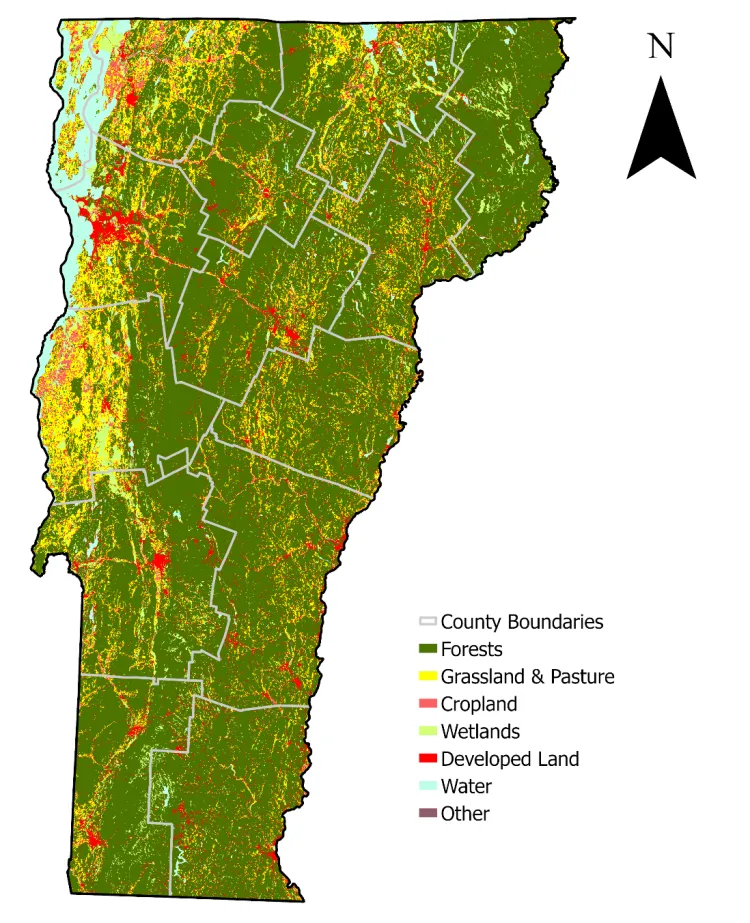
Vermont forests are a major component of the state’s economy, identity, and ecology. In 2024, forests make up most of the state, covering 76%, or 4.5 million acres, of Vermont’s 5.9 million acres of land, (Forest Ecosystem Monitoring Cooperative, 2025b), but it was not always this way. In its pre-colonial state, Vermont was almost entirely forested. Pre-1700, Indigenous peoples cleared land for villages and agriculture and used controlled fires to burn sections of forest for hunting and agricultural purposes. The 18th and 19th centuries saw forests subjected to intensive clearing for timber products, crops, livestock, and settlements by European colonizers. When deforestation and agricultural activities peaked in the mid-19th century, only 30% of the state remained forested (Vermont Historical Society, 2021). A major abandonment of farms followed this period, allowing some native forest species to begin to grow back. Present day Vermont is largely reforested with secondary forests. These secondary forests lack certain features of undisturbed old-growth forests, including abundant old (>200 years old) and large trees, spatial variation in tree density and size, abundant standing dead trees (snags) and downed deadwood, and multiple canopy layers (D’Amato & Catanzaro, 2022). In 2024, approximately 55% of Vermont forest stands were classified as 100 years old or less (Forest Ecosystem Monitoring Cooperative, 2025a). Vermont’s land matrix of farms and fields adjacent to temperate forests is a direct consequence of past land use and management practices (Figure 3-1).
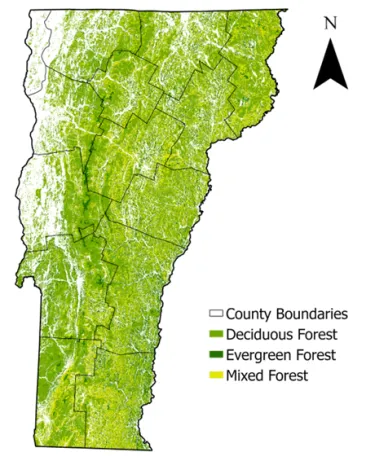
Vermont forests (Figure 3-2) are a transition area between northern boreal forests and southern deciduous forests (Department of Forests, Parks, and Recreation, 2025). Generally classified as a northern hardwood mix, common species include sugar maple (Acer saccharum), yellow birch (Betula alleghaniensis), American beech (Fagus grandifolia), eastern hemlock (Tsuga canadensis), and red spruce (Picea rubens; Janowiak et al., 2018). American beech is the most abundant tree species in the state, comprising 17% of total live trees by count (stems greater than 1 inches/2.54 centimeters in diameter), but sugar maple (Acer saccharum) and red maple (Acer rubrum) constitute the largest percentages of total wood volume at 24% and 12% (USDA, 2025). Eighty-one percent of forestland is privately owned by individuals, families, or businesses, and 19% of forests are owned by state, federal, or municipal governments (Department of Forests, Parks, and Recreation, 2025).
Source: MRLC (2021)
Vermont residents benefit from the state’s forests in several ways. Forests provide critical ecosystem services necessary for human health, safety, and prosperity; carbon sequestration, high water quality, flood protection, and temperature regulation are just some of the many benefits. The forest products industry in the state supports 10,000 jobs and generates $1.9 billion annually in forestry-related revenue (VT Agency of Commerce & Community Development, 2025). Forests also hold unique cultural values and provide recreational opportunities for Vermont residents and visitors. The exact effects that climate change will have on these forests is uncertain, but documenting past effects can facilitate better forecasting and inform management actions to strengthen forest resiliency.
3.3 Forest loss
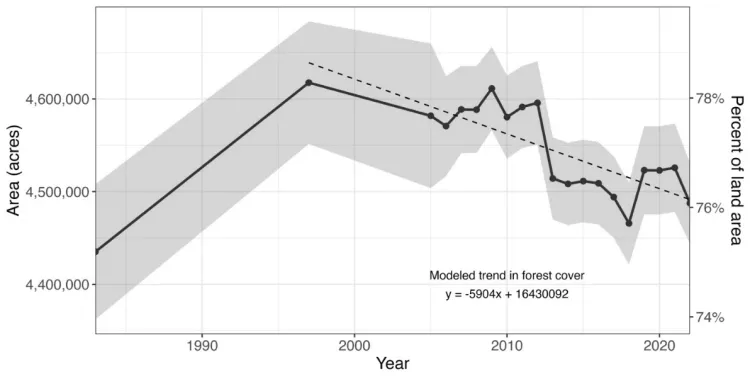
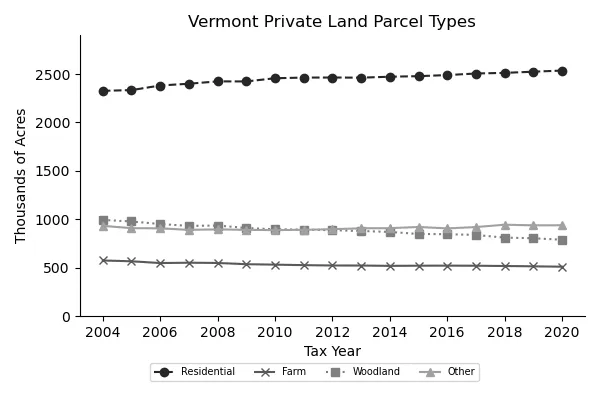
Since 1997, Vermont has lost an average of 5,900 acres of forest annually (Figure 3-3), with the largest driver of forest loss in the state being residential development. The total acreage within private land parcels classified as “residential” has consistently risen since 2005, while the acreage within parcels classed as “woodland” has decreased (Figure 3-4), suggesting a conversion of woodland lots to residential uses or subdivision. In contrast, agricultural expansion has only been a minor driver of forest loss, and total Vermont farmland decreased over the same period (Fidel, 2023).
Source: Vermont Forest Carbon Inventory (Kosiba, 2025)
In addition to net loss, Vermont forests have been subject to increasing levels of fragmentation from parcelization. Parcelization is the practice of dividing larger, contiguous tracts of forested land into smaller parcels that are then commonly sold for residential development. Although the appraised values of wooded parcels of all sizes have continuously risen through 2020, the rate of increase has been faster for smaller parcels (less than 50 acres). This elevated rate of increase incentivizes landowners of large parcels to sell off their land in smaller lots for economic gain (Fidel, 2023).
Source: Adapted from Fidel (2023); data from Vermont Natural Resources Council (2023)
Fragmentation is problematic for forests in an uncertain and changing climate. Changes in land use between adjacent parcels and management practices in neighboring woodlands affect the species diversity and climate dynamics in the forested ecosystem. Forest edges typically have lower canopy height and density, a smaller mean tree size, fewer late-successional species, and faster biomass turnover rates compared to forest interiors (Morgan & Jucker, 2025). These edge effects increase forest susceptibility to damage from extreme weather events and degrade forest capacities to provide ecosystem services, including temperature regulation, flood protection, and water filtration. Edge effects can also limit species movement for food, mating, habitat, and adaptation.
3.4 Carbon sequestration and storage
Forests play a crucial role in mitigating climate change by absorbing atmospheric carbon through photosynthesis and storing the carbon in woody biomass and soils. Vermont’s forests serve as a critical carbon sink. In 2022, Vermont’s forest sector, which includes forests, urban trees, land use change, and harvested wood products, compensated for approximately 79% of the state’s total emissions, absorbing an estimated 6.6 million metric tons of carbon dioxide equivalents (MMTCO₂e) from the atmosphere (Kosiba, 2025).
However, the power of Vermont’s forest carbon sink is declining. Each year, forests absorb slightly less CO₂ than the year before. This decline is due to natural forest aging (older forests sequester CO₂ at a slower rate) and net loss of forested land from land use conversion. Loss of forested land not only reduces the forest sector’s sequestration benefit, but results in emissions of stored carbon. Climate change may also be causing greater emissions from forests through accelerated rates of decomposition and soil respiration (Kosiba, 2025).
Forest carbon can be subdivided into five reservoirs or pools: aboveground biomass, belowground biomass, dead wood, forest floor (litter), and soils. Of these five pools, aboveground biomass contributes the most to the annual increase in carbon storage, while soils store the most overall (Kosiba, 2025; Figure 3-5).
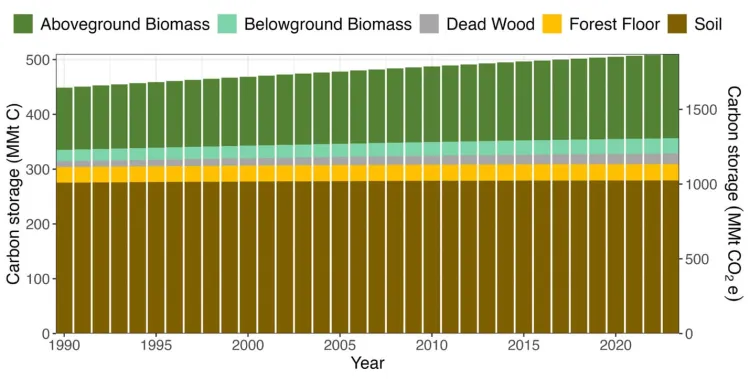
Source: Vermont Forest Carbon Inventory (Kosiba, 2025)
Stored forest carbon is increasingly at risk of being emitted due to climate change stress and extreme weather events. For example, intense rainfall could cause increased erosion of forest soils, which is the largest carbon storage pool (Kosiba, 2025). Conducting silvicultural activities on soft and wet soils, a practice that may occur more often under current climatic trends, exacerbates these effects. Loss of forest to other land uses has been and will continue to be a major contributor to forest carbon release and decreased sequestration capacity; negative flux values indicate sequestration of carbon dioxide from the atmosphere, and positive values indicate emissions to the atmosphere (Figure 3-6). Conversion of forestland to settlements and grassland, and to a lesser extent to croplands, are major drivers of carbon emissions. Even though the conversion of non-forested lands into forests sequesters carbon, it is a smaller amount than forest loss and minimally decreases the net carbon release from land use change.
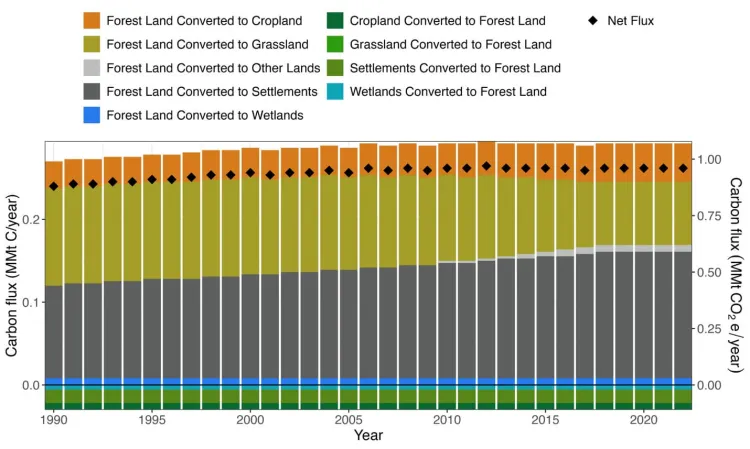
Source: Vermont Forest Carbon Inventory (Kosiba, 2025)
Box 3-1: A missing carbon sink? Carbon storage of downed wood in aquatic systems
Written by: Stephen Peters-Collaer and William Keeton, Rubenstein School of Environment and Natural Resources and Gund Institute for Environment, University of Vermont
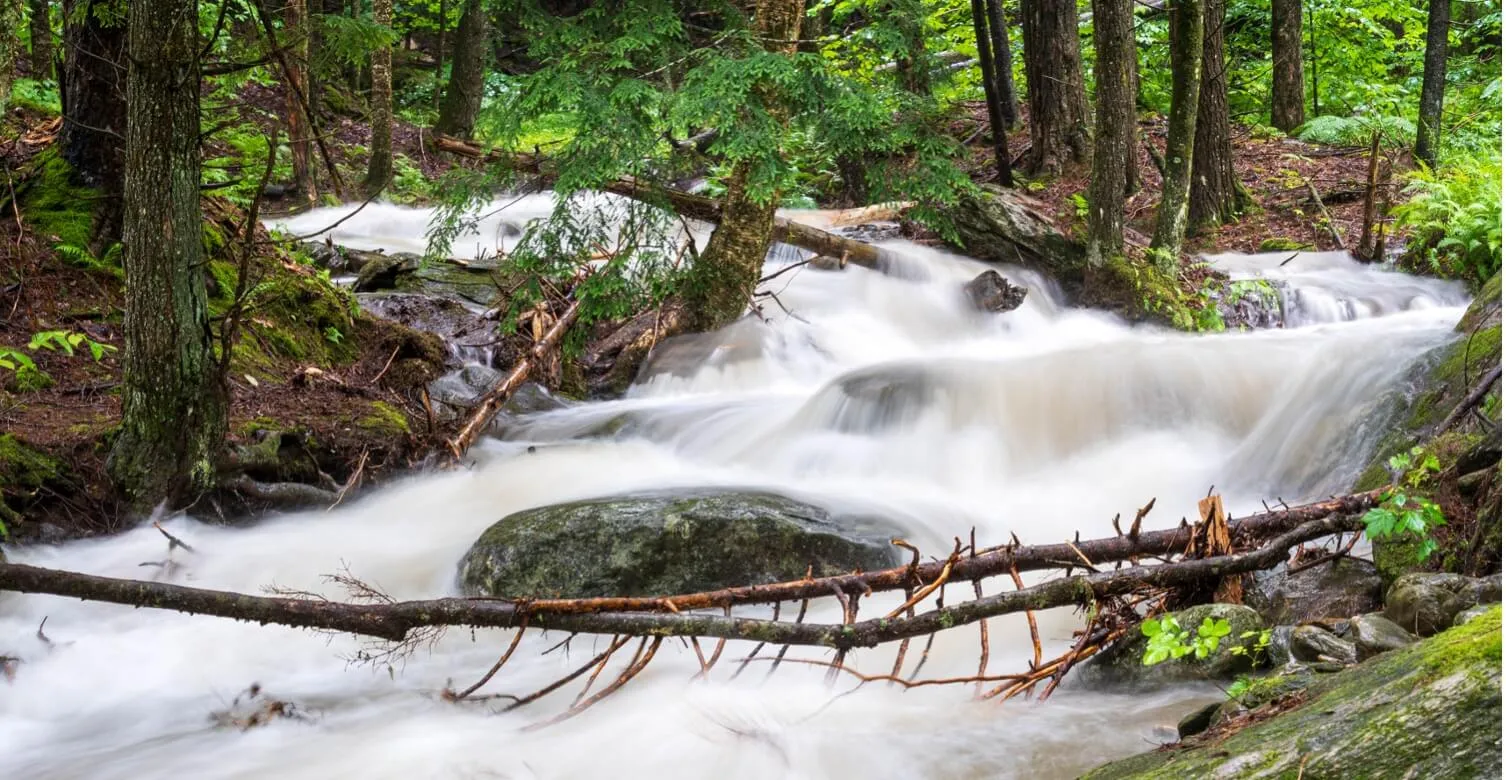
Source: Parlette (2023)
Recent research from the University of Vermont’s Carbon Dynamics Lab (UVM CDL) suggests that downed trees that fall into streams or lakes can be a valuable, and understudied, carbon sink (Peters-Collaer et al., 2025). Downed, large wood (LW) carbon is well-studied and long recognized as an important terrestrial carbon pool, with regional calculations suggesting that these LW pieces store 1.9 metric ton C acre-1 on the forest floor (Campbell et al., 2019), but is not well understood in aquatic environments.
The UVM CDL studied the carbon storage of LW in headwater streams of a mature (80–150 years old) forest in New Hampshire, finding that these streams store 3.0 metric ton C acre-1 in LW, 50–60% more than the forest floor on a per area basis (Peters-Collaer et al., 2025). Although rivers and streams constitute a small percentage of area in New England, they are of outsized importance as carbon sinks. The LW carbon in these streams was closely related to the basal area of large trees (>50cm diameter) in the riparian forest. Fallen large trees store significant carbon themselves and often become wedged into place in the stream channel, trapping smaller pieces of wood that would otherwise move downstream, and creating wood jams that store substantial amounts of carbon. This suggests that riparian zones where large trees are allowed to develop, grow old, and “recruit” to streams as LW—through natural disturbances and tree mortality—can contribute significantly to carbon storage in aquatic systems.
Mature forests are recovering from historic land use across much of New England and, in coming decades, will age and develop more old forest characteristics (Keeton, 2018). As these riparian forests develop, LW is expected to increase in streams (Warren et al., 2009). This study also assessed in-stream LW carbon in old-growth forests to understand how the LW carbon pool may change in the future as forests age. Streams in old-growth forests stored 9.6 metric ton C acre-1, several times more than streams in mature forests, suggesting that as forests across Vermont age, the in-stream LW carbon sink may increase. Land managers can leverage these findings by encouraging the representation of large trees and old-forest structures in riparian forests, either through passive management or silviculture (Keeton et al., 2018).
Downed LW is an understudied but valuable carbon pool in Vermont ecosystems. While this study focused on headwater streams, research suggests that lakes, ponds, and even the ocean may store impressive quantities of carbon in downed wood (Marsden et al., 2024). Such carbon can last for centuries if buried under water or sediment (Guyette et al., 2008; Marsden et al. 2024). As a result, wood carbon in global aquatic systems may store atmospheric carbon for long periods and represent a missing ecosystem carbon sink. Land managers can use these findings from this emergent research to better incorporate large aquatic wood into natural climate solutions.
3.5 Forest productivity and composition
Climate conditions dictate factors that influence the productivity and composition of Vermont’s forests. Forest productivity is the rate at which a forest produces new biomass (wood, roots, leaves), while composition describes the abundance, distribution, and size of different tree species in a forest. Past and present conditions have supported development of Vermont forests into their current composition and productivity patterns, and a changing climate will continue to alter these patterns into the future. Relevant climatic conditions can include, but are not limited to, temperature, precipitation, and atmospheric CO2 concentrations.
3.5.1 Climate change effects on forest productivity
Trees are most productive during the growing season and growing seasons are shifting due to climate change with uncertain and variable impacts on tree health and forest productively. Vermont’s growing season, the number of consecutive freeze-free days, or days between the last spring day and first fall day with minimum temperatures above 32°F (0°C), has increased a total of 23.7 days since 1900, with a significant trending increase of 2.3 days/decade (see Climate Change in Vermont 2.4.4). Earlier warm temperatures in the spring mean trees may be able to produce leaves and photosynthesize sooner and warm fall temperatures can extend productivity later into the fall (McMahon et al., 2010). However, some future climate change models suggest that impacts on forest productivity may be variable throughout New England and regions with higher water availability may have greater productivity, while drier locations may have lower productivity (Duveneck & Thompson, 2017). A longer growing season requires more nutrients and water to sustain prolonged photosynthesis. Therefore, a longer growing season does not necessarily equate to increased productivity if other resources are limited. Other hazards, such as heat, drought, and invasive insect and pathogen outbreaks associated with longer growing seasons, can still cause an overall decline in growth rates (Tumajer et al., 2025); these topics are discussed in subsequent sections. As a result, enhanced photosynthesis from a longer growing season may be negated by other detrimental consequences of warmer temperatures. See Table 3-1 below for a comparison of the effects of additional important productivity factors.
| Productivity factor | Climate change projection and the effect on forests |
|---|---|
Nutrient availability
| Low nutrient availability slows photosynthesis, reducing growth and resilience. Climate change can intensify nutrient limitations through increased leaching during heavy rainfall events, altered decomposition rates, and shifting nutrient cycling processes. In some ecosystems, warming may accelerate microbial activity and decomposition which temporarily increases nutrient availability, but long-term nutrient depletion may follow. |
| Water availability | Water shortages reduce productivity by forcing stomatal closure, limiting carbon uptake and nutrient transport, and increasing tree mortality during droughts. Increases in drought frequency and severity will intensify water stress, making water availability one of the strongest predictors of future productivity declines. |
| Heat stress | Temperatures above physiological tolerance reduce photosynthesis, increase respiration costs, and damage enzymes and cellular structures. Heat stress also intensifies drought by increasing evapotranspiration. Increased temperatures and heat waves from climate change may lead to growth declines, increased carbon losses, and higher tree mortality in heat-susceptible species. |
| Biotic stressors | Pest and pathogen outbreaks reduce productivity by damaging foliage, bark, and roots – the tree’s vascular system – and lowering photosynthetic capacity, diminishing energy reserves, and increasing tree stress and mortality. Herbivore browsing can prevent regeneration. Climate change alters insect life cycles, often increasing overwinter survival, expanding pest ranges, and creating more frequent or intense outbreaks (e.g., bark beetles). |
| Arrested succession | When forests are stuck in growth-dieback cycles due to frequent intervals of severe weather events, they may not reach the stages of maturity needed for optimal productivity or reproduction. Climate change may exacerbate arrested succession by increasing disturbance frequency (fire, storms, drought-induced dieback) and reducing regeneration success in some species, preventing forests from reaching peak productivity stages. |
| CO2 fertilization | Higher atmospheric CO₂ can stimulate photosynthesis and water-use efficiency in the short-term, increasing productivity in some forests, especially in nutrient-rich systems with ample moisture. However, longer-term consequences of increased atmospheric CO₂, including heat stress, drought, and nutrient limitation can negate this benefit, especially in temperate forests. |
Sources: Itter et al. (2016); Morin et al. (2018); Norby et al. (2010); Reyer (2015); Thompson (2009); Zhang et al. (2023)
Climate change can also affect the annual timing of critical periodic events in plant growth cycles, referred to as phenology (e.g., leaf out, bud burst). This could potentially harm trees, as warmer temperatures earlier in the spring can trigger earlier budbreak and leaf expansion, creating a risk of exposing emerging leaves and flowers to frost damage (Buttò et al., 2023). For instance, long-term monitoring of Vermont maple tree phenology has identified a consistent shift of fall maximum leaf color and leaf drop to later in the year, while spring budbreak and leaf emergence are occurring earlier (Nevins et al., 2020; Figure 3-7). Vermont’s maple sugaring industry is impacted by tree phenology fluctuations, as maple sap is harvested during late winter freeze-thaw cycles (i.e., freezing nights followed by above-freezing days) prior to budbreak (see Agriculture and Food Systems 6.4.6). For example, the start of sap production has shifted 5–6 days earlier for every 1.8 °F (1 °C) increase in March temperature (Kurokawa et al., 2025).
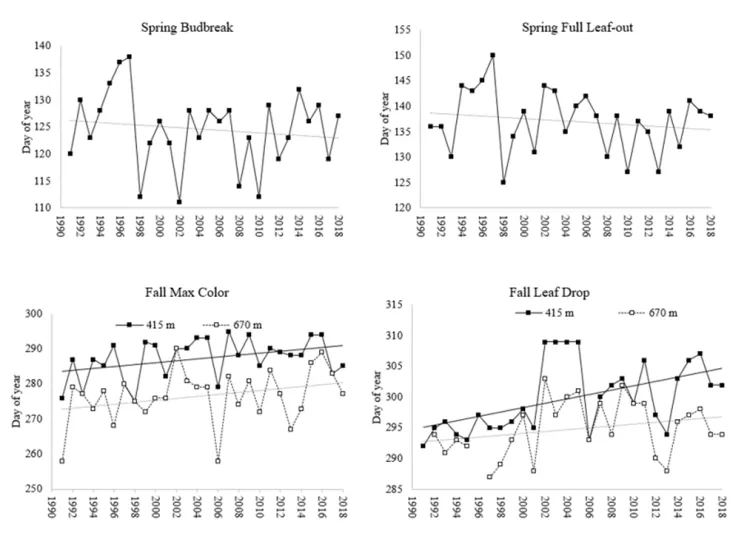
Source: Forest Ecosystem Monitoring Cooperative 2018 Long-Term Update (Nevins et al., 2020)
3.5.2 Climate change effects on species habitat ranges
Changing temperature, precipitation patterns, and extreme weather occurrences may change the suitability of habitats for some tree species in some locations. Future distributions will depend on how species respond to warmer weather, decreased snowpack, variations in overstory shade, physical disturbances, and pest and pathogen population changes. Changes may take a long time to manifest, given the lengthy reproductive cycle and slow migration rate of many tree species. Responses can take the form of adaptation or migration to new regions, as well as tree mortality. Areas with mature trees that are more resilient to stress can maintain current composition despite climatic changes, until the occurrence of major disturbances (e.g., windstorms, insect outbreaks), which can create openings that then allow more climate-adapted species to establish and expand (Pederson et al., 2015).
The US Forest Service (USFS) and Northern Institute of Applied Climate Science (NIACS) have created Vermont-specific predictions for tree species response capability to climate change through the year 2100 by using a high emissions scenario climate model (2022). Response “capability” takes into consideration habitat suitability for a species, species’ adaptability based on its capacity to tolerate stressors, and the abundance of the species. Consequently, a highly abundant and adaptable species, such as sugar maple, can still have a high response capability despite its sensitivity to climate change. Some examples of species from the USFS and NIACS’s three tiers of capability are as follows:
- Good capability: American basswood, American elm, black oak, chestnut oak, white oak, northern red oak, red maple, sugar maple, aspen, and black cherry
- Fair capability: American beech, balsam fir, eastern hemlock, eastern cottonwood, eastern white pine, silver maple, white ash, white spruce, and yellow birch
- Poor capability: American mountain-ash, balsam poplar, black ash, paper birch, red pine, red spruce, striped maple, and white-cedar
Species characteristic of southern and southeastern New England, such as oaks (Quercus spp.), hickories (Carya spp.), and walnuts (Juglans spp.), are expected to fare better than the more northern species, such as fir and spruce (Prasad et al., 2007). With warming winters, more extreme weather events, and hotter summers, Vermont forests will be better suited for species with high seedling establishment rates, shade-tolerance, drought-tolerance, and resistance to invasive pests and pathogens (Janowiak et al., 2018). The U.S, Department of Agriculture (USDA) Forest Ecosystem Atlas captures these species-specific traits in the adaptability score metric, which determines the species that are best suited to adapt to a changing habitat based on biological traits and their current spatial and regional distribution. Species with high adaptability scores, such as maples and oaks, possess the aforementioned tolerances and are more likely to adapt well to changing habitat (USFS Northern Research Station - Landscape Change Research Group, 2015).
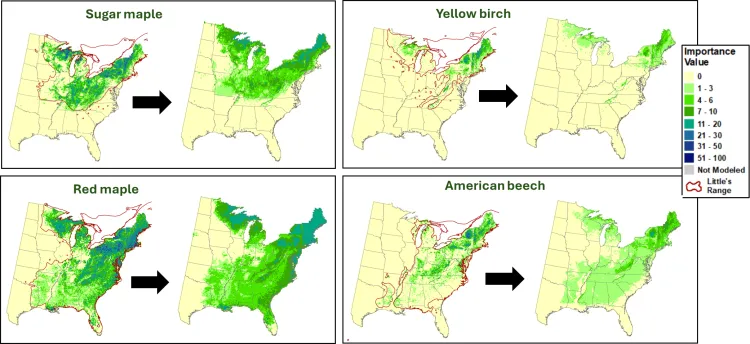
Species with projected declines are mainly those in colder, boreal climate conditions currently associated with northern Vermont (Figure 3-8). By contrast, species limited to warmer areas of Vermont, such as the oaks and hickories along with species such as silver maple (Acer saccharinum), may experience increases in suitable habitat ranges northward (Janowiak et al., 2018).
Source: USDA Tree Climate Change Atlas (Iverson et al., 2012; Peters et al., 2020)
3.6 Impacts of abiotic stressors
Climate change has increased the frequency of novel disturbances affecting Vermont forests, such as extreme precipitation, drought, and fire (see Climate Change in Vermont 2.6). Disturbance is a crucial driver of forest dynamics, shaping the spatial arrangement of trees, species composition, and canopy structure. Vermont forests can best adapt when disturbance patterns remain within historically typical ranges; however, an increase in the frequency, duration, or intensity of disturbances could lead to new response pathways or unexpected forest recovery adaptations, such as climatic conditions favoring different forest types. Such rapid changes in forest conditions may result in habitat loss for native species or the loss of some forest ecosystem services that benefit Vermont communities.
3.6.1 Precipitation
Changes in the amount and pattern of precipitation can have wide-ranging consequences for forest dynamics. Vermont’s total annual precipitation has increased 0.8 inches/decade (20.3mm/decade) since 1900, a total change of 7.3 inches (185 mm). In addition, there is an increase in the frequency and intensity of heavy precipitation events across the Northeast U.S., including Vermont (see Climate Change in Vermont 2.5.1, 2.6.2). Heavy precipitation events can significantly affect forest health by leaching soil nutrients, causing soil erosion, and triggering landslides that uproot vegetation and destabilize soil on slopes. Heavy precipitation days, defined as more than one inch (25.4mm) per 24-hour period, are increasing in frequency across Vermont (see Climate Change in Vermont 2.5.2 and 2.6.2). The effects of extreme precipitation and flooding events are highly dependent on the severity of the event, as well as site characteristics, including slope, soil type and depth, drainage capacity, and elevation, which influences temperature and soil development. At high elevations, with shallow soil depths and steep inclines, flooding tends to be short but intense as rainfall rapidly drains downslope. This fast-moving water has the potential to move leaf litter, exposing soils and fine roots to erosion (Jurado & Matthes, 2025). Excessive soil moisture can directly harm trees by limiting oxygen and nutrient intake through root systems (Murphy et al., 2024). Water collected at lower elevations and in flat lands can oversaturate soils for long periods, causing root mortality in trees and increasing vulnerability to blowdowns from wind events (Matthes et al., 2025; Coble et al., 2017). Consequently, frequent flooding may favor species with deeper root systems and greater tolerance to waterlogging such as willows and white pines, particularly in low-lying, poorly drained, or riparian forests where soil saturation is more severe (Kosiba, 2024).
Warmer winters have reduced snow cover and shifted the form in which precipitation occurs, from snow to more frequent rain (Contosta et al., 2019), which has consequences for tree health and productivity. On average, Vermont’s most recent half-decade experienced 15.8 fewer days with minimum temperatures below freezing in the winter compared to the 1900s, with the strongest decline occurring since 1990 and in the Northeast climate division (see Climate Change in Vermont 2.4.4 and 2.10.4). Reduced snowpack removes the insulating layer that moderates soil temperatures, increasing the frequency and depth of soil freezing and changing freeze-thaw cycles as air temperatures fluctuate (Matthes et al., 2025). Freezing soil can damage fine roots by causing water inside their cells to expand, rupturing cell walls and impairing the uptake of water, carbon, and other nutrients during the growing season. Species with fine feeder root systems are particularly vulnerable. Sugar maple, for example, exhibits reduced radial growth after soil freezing events (Reinmann et al., 2019). This results in diminished water reserves and decreased drought tolerance during the following growing season (Matthes et al., 2025). Winter soil conditions directly impact tree productivity, and repeated annual soil freezing can reduce growth while heightening drought vulnerability.
Vermont’s riparian forests provide a valuable ecosystem service by protecting against flooding from changes in precipitation. These riparian forests serve as vegetated buffers between waterways and developed land helping tostabilize river channels, reduce erosion, and slow floodwaters (Keeton et al., 2017). For example, it is estimated that the Otter Creek floodplain forest provides at least $126,000 per year in flood protection services for the downstream town of Middlebury (Watson et al., 2016). As climate change increases the frequency and severity of flooding, maintaining or expanding riparian buffers will be critical for protecting ecosystems and communities.
3.6.2 Drought
Climate change is increasing the severity and frequency of prolonged dry spells and drought across Vermont (see Climate Change in Vermont 2.6.3). In the fall of 2025, the worst recorded drought conditions occurred in Vermont since the U.S. Drought Monitor began tracking this data in 2000 (NOAA, 2026). Forest-related drought events have societal and ecological consequences, including increased tree mortality, wildfire risks, and impacts on wildlife and ecosystems.
Trees have evolved different adaptations to drought. One key response is stomatal regulation, when trees open or close their stomata, the pores on leaves that take in carbon dioxide and release oxygen and water. Species with loose stomatal control, such as white oak, northern red oak, eastern white pine, and white spruce, leave their stomata open to continue photosynthesis and carbon capture during drought, and as a result experience increased water stress. Species with tight stomatal control, such as maple, beech, birch, cherry, and hemlock, close their stomata to conserve water during dry periods, but consequently experience limited photosynthesis (Coble et al., 2017). With closed stomata during drought, they release less water into the air, limiting the natural cooling from evapotranspiration and making forests hotter during dry periods (Yang et al., 2023). This positive feedback loop can intensify drought conditions, affecting the trees themselves as well as other species and human communities that benefit from forests’ thermal regulation services.
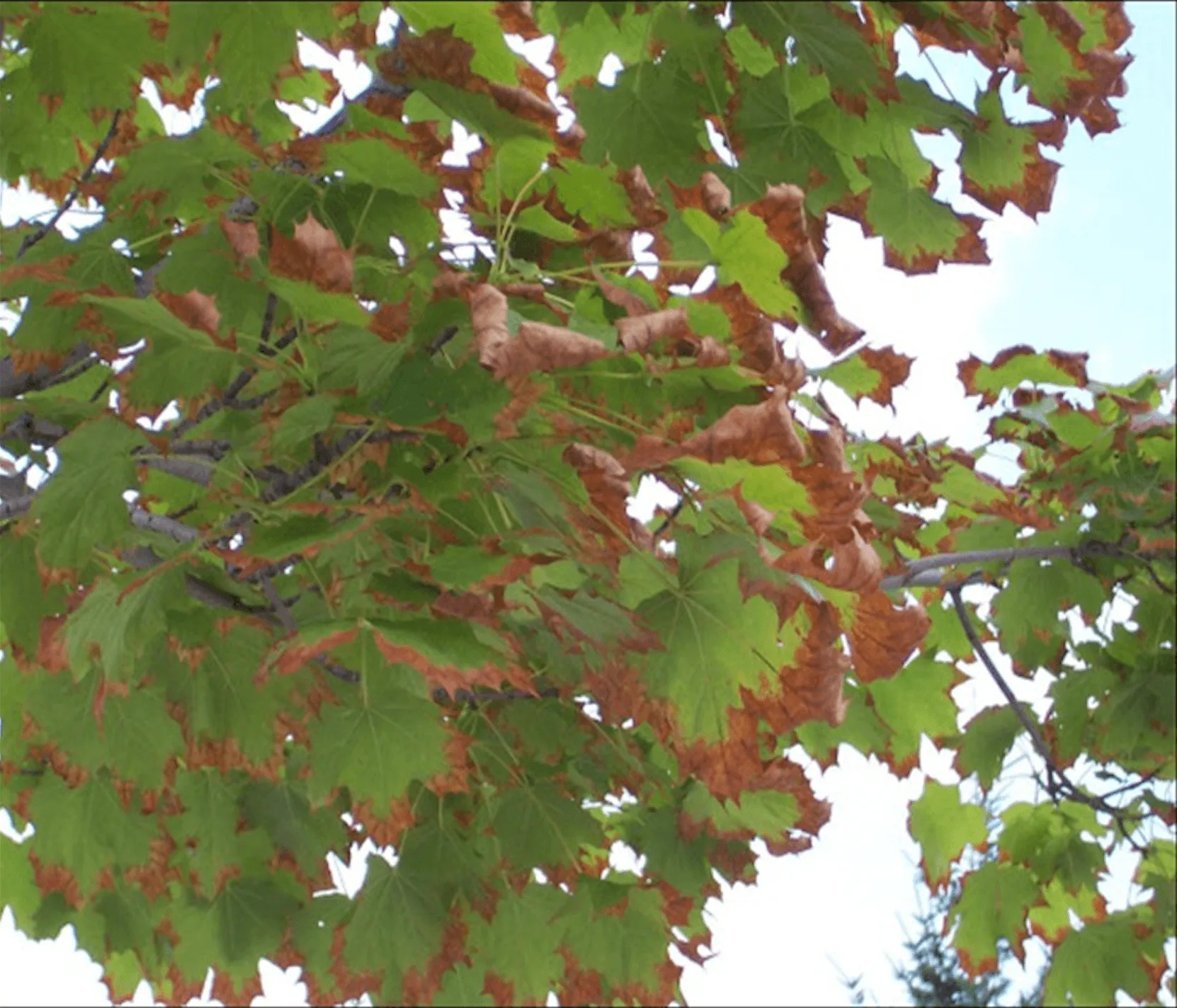
Symptoms of drought stress in trees present as wilting, premature leaf drop, and dieback or marginal leaf scorch (i.e., a sign that a tree is unable to transport enough water to maintain normal function; Figure 3-9). Droughts can weaken trees, making them more susceptible to secondary compound stressors like insects or infections (Janowiak et al., 2018). Extended dry periods can harden soils, reducing their ability to absorb or retain water when it does rain. Dry soil is particularly harmful to seedlings with shallow, underdeveloped root systems, and limits the survival and regeneration of forests in the Northeast U.S. (MacDonald et al., 2026).
Source: Ann Hazelrigg, University of Vermont Extension (2025)
Vermont’s mountainous terrain creates favorable conditions for mesophytic species, meaning those that prefer neither particularly dry nor wet environments, such as sugar maple and American beech. Prolonged dry conditions could threaten the survival of these species, which often depend on water runoff from higher elevations, andpotentially produce a shift to more drought tolerant species such as pine and oak trees (Hwang et al., 2020). These shifts may not take place until mature trees die, creating space for the drought-adapted species to establish and grow.
3.6.3 Wildfires
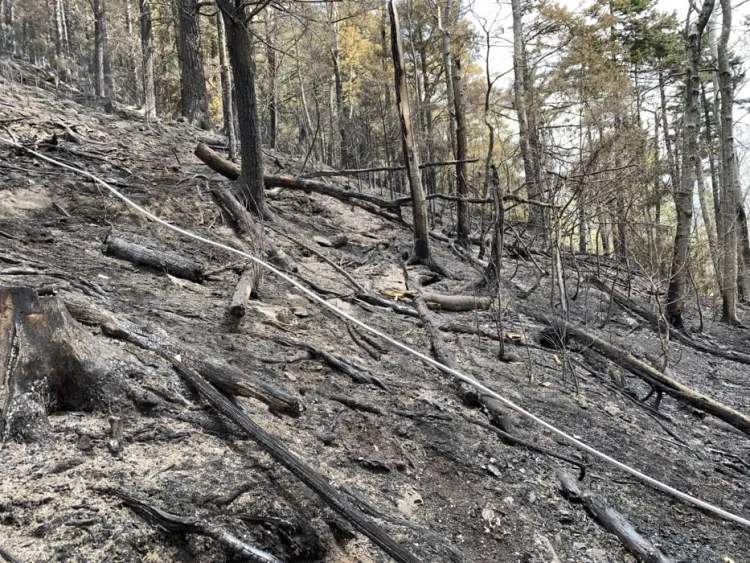
Climate change is likely to affect the frequency, duration, and severity of fire weather in Vermont; however, the specific effects of wildfire disturbance are harder to predict. Fire weather is defined by conditions that promote the ignition and spread of wildfire, specifically drought, low humidity, and strong winds. In Vermont, fire ignition is primarily human-caused, especially from debris and pile burning that escapes containment (VT Department of Forest Parks and Recreation, 2025; Figure 3-10). Natural ignition from lightning poses a small risk, accounting for only five of the 84 wildfire incidents in 2025 (Department of Forests, Parks and Recreation, 2025a). Vermont’s fire season typically begins just after spring snowmelt, when sunlight still reaches the forest floor before leaf out, and debris burning activity increases throughout the state. Most wildfires in Vermont occur in April and May. While there are occasional fires in the summer, a second wave of wildfire activity occurs in late August and continues until snowfall in November (Department of Forests, Parks and Recreation, 2025b). Climate change is expected to intensify drought throughout the Northeast U.S., and decreased snowfall and warmer springs will lengthen the fire season. These changes may shorten fire return intervals and increase the likelihood of higher-severity fires, which could shift species composition and alter forest dynamics (Janowiak et al., 2018). Potential increases in forest fire frequency may favor pitch pines on sites where they are present, and oaks, which have fire-adapted traits that allow them to persist and grow under more frequent fire (Palus et al., 2018).
Source: Smith & Wertlieb (2021)
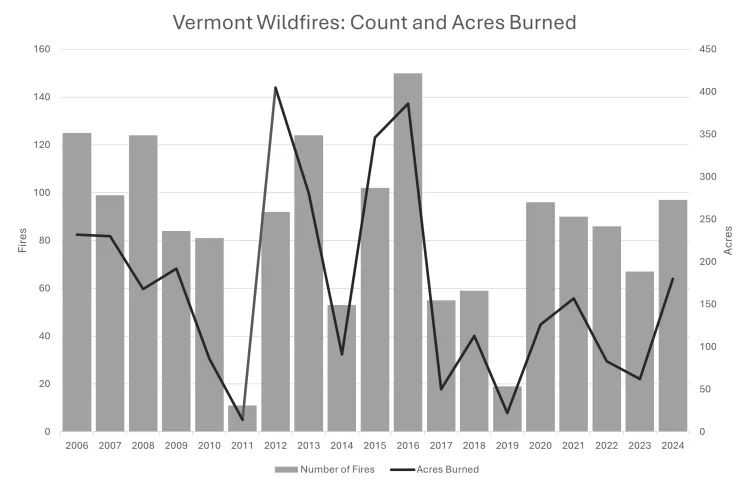
For the 2025 season, as of November 10th, there were 83 wildfires, burning a total of 66 acres of land (Department of Forests, Parks and Recreation, 2025b). Comparatively, the statewide historical average since 2006 is approximately 85 fire occurrences, affecting 170 acres of land annually (National Interagency Coordination Center, 2006; Figure 3-11).The season was notable for an unusually high number of fall fires, although the total number of fires and acres burned in 2025 aligned with the historical range. Compounding seasons of drought create conditions conducive to future fires. Fire can accelerate ecosystem change, as other disturbances (e.g., disease, blowdowns) can increase fuel loads, creating a positive feedback loop that may make forests more vulnerable to wildfire events. In Vermont, this dynamic is unlikely to become widespread unless there are prolonged drought conditions and ignition sources. Severe wildfires can cause tree mortality, increases in invasives, and alter soil and hydrology. Post-fire stress can weaken trees defenses, increasing opportunities for pests and invasive species to colonize and spread (Finch et al., 2021). Management decisions such as burn bans, fire restrictions, community wildfire protection plans, prescribed fires and fuel reductions have been used throughout the state to reduce fire risks (Department of Forests, Parks and Recreation, 2025b).
Source: National Interagency Coordination Center (2006)
3.7 Biotic disturbances on forests
3.7.1 Introduced invasive insects and pathogens
Invasive species are introduced, non-native, and cause negative effects to Vermont’s economy and environment (VT Agency of Natural Resources, 2025). Invasive species have the potential to disrupt forest ecosystems by altering species composition, damaging soil health, and augmenting disturbance regimes outside of a system’s historic range(Finch et al., 2021). Of the many non-native species introduced to Vermont each year, only a small percentage establish a permanent presence, and a smaller portion of those pose a threat to local ecosystems or become invasive. The effect of climate change on the spread of invasive insects or pathogens depends on the species itself, any indirect effects climate change has on habitat and resource availability, and management decisions, such as plant removals, insecticides, or pest introductions from moving out-of-state woods. For example, warming temperatures may allow insects greater range of movement, increased feeding and growth rates, and rates of survival (Finch et al., 2021). Emerald ash borer (Agrilus planipennis), a common invasive in Vermont, has a 34% mortality rate at temperatures below -10°F (-23° C) (Gaiss, 2021). Milder winters may allow this species to survive in larger numbers, expand its range further north, and produce more generations per year, resulting in increased ash tree mortality. Climate change may also have indirect impacts on invasive species. Insects may not respond directly to increased levels of CO₂, but changes in their host plants can alter feeding rates, survival, and reproductive success. Native tree species struggling with climate-change-induced stressors, like, droughts, floods, or soil nutrient deficiency, creates conditions that give invasive species an advantage (Finch et al., 2021).
There are many major potential or current invasive insects and pathogens affecting Vermont’s forests though they vary in priority based on the species they impact, the symptoms they cause and the significance of their climate interactions (Table 3-2). High-priority species pose the most immediate threat because they are either already established or have the potential to rapidly emerge, cause significant mortality in tree species, and are expected to worsen under projected climatic changes (VT Agency of Natural Resources, 2025). Some of these include beech leaf disease (Litylenchus crenatae mccannii), butternut canker (Ophiognomonia clavigignenti-juglandacearum), emerald ash borer, and hemlock wooly adelgid (Adelges tsugae). These insects and pathogens are receiving particular attention from the Vermont Agency of Agriculture, Farms, and Markets (VAAFM) although their impacts extend to forests more broadly (VT Agency of Agriculture, 2025). Medium and low priority insects and pathogens are either less widespread or unlikely to cause significant damage. They may still be monitored, even if no remediation or preventative action is currently being taken by the state. These categories are taken from recent literature on current and projected biotic forest health risks.
| High priority | ||||
|---|---|---|---|---|
| Insect/Pathogen | Symptoms | Impacted species | Presence in VT | Climate interactions |
Asian longhorned beetle (Anoplophora glabripennis) | Bark tunnels, round exit holes, and fallen branches, leading to tree mortality | Hardwood species including maples (Acer spp.), ashes (Fraxinus spp.), birches (Betula spp.), poplars (Populus spp.), among others | Potential threat to VT, but not currently in VT | Suitability in the Northern Hemisphere is predicted to increase |
Beech leaf disease (Litylenchus crenatae mccannii) | Premature leaf drop, branch death, and tree mortality | American beech (Fagus grandifolia) | Emerging; detected in four VT counties | Unknown |
Butternut canker (Ophiognomonia clavigignenti-juglandacearum) | Cankers cause girdling in twigs, branches, and roots, killing the tree and infecting the nuts | Butternut (Juglans cinerea) | Established; found throughout VT | Climate change exacerbates existing stressors, increasing vulnerability to canker |
Emerald ash borer (Agrilus planipennis) | Create S-shaped tunnels behind outer bark and D-shaped exit holes, girdling and killing infected trees | White ash (Fraxinus americana), black ash (Fraxinus nigra), green ash (Fraxinus pennsylvanica) | Established; found throughout VT (except the NE Kingdom) | Northward host species migration due to warming will expand Emerald ash borer range |
Hemlock wooly adelgid (Adelges tsugae) | Deplete stored carbohydrate reserves, causing premature needle drop and carbon starvation, leading to tree mortality | Eastern hemlock (Tsuga canadensis) | Emerging; detected in two counties | Expanding range—warmer winters may allow expansion into new habitats, poses severe threat combined with elongate hemlock scale |
Sources: Berrini (2023); Hahn & Krischik (2018); Halman (2024); Keller et al. (2024); Li et al. (2025); Moore et al. (2025); Stephanson & Ribarik Coe (2017); Vermont Invasives (2025); VT Agency of Agriculture (2025); Zhou et al. (2021)
| Medium Priority | ||||
|---|---|---|---|---|
| Insect/Pathogen | Symptoms | Impacted species | Presence in VT | Climate interactions |
Balsam wooly adelgid (Adelges piceae) | Stunted tree growth, white woolly tufts, premature needle drop | True firs (Abies spp.), especially balsam and Fraser fir (Abies balsamea, fraseri) | Established; found throughout VT | Controlled by cold temperatures, warmer winters could increase population, impact on firs has a cascading trophic effect |
Beech bark disease (Nectria fungi) and beech scale insect (Cryptococcus fagisuga insect) | Attacks bark, creating a weak spot for fungus to infect, weakening the tree, often leading to mortality of mature trees, and prolific stump and root sprouting | American beech (Fagus grandifolia) | Established; found throughout VT | Warmer winters and less snowpack will increase survival |
Chestnut blight (Cryphonectria parasitica) | Spores infect tree through existing wounds, cankers typically kill trees within two years | American chestnut (Castanea dentata) | Established; found throughout VT | Unknown |
Dutch elm disease (Ophiostoma novo-ulmi) | Blocks water and nutrient flow, girdling and killing the tree | American elm (Ulmus americana) | Established; found throughout VT | Climate change exacerbates existing stressors, increasing vulnerability |
Spongy moth (Lymantria dispar dispar) | Occur in outbreak cycles, causing heavy defoliation, many consecutive years of defoliation will result in tree death | Deciduous, some conifer, mostly oaks (Quercus spp.) and sugar maple (Acer saccharum) | Established; found throughout VT | Oak populations are shifting northward; drought thought to increase populations, but heavy rain could also decrease them, defoliation combined with drought stress increases chances of oak mortality |
Sources: Berrini (2023); Hahn & Krischik (2018); Halman (2024); Keller et al. (2024); Li et al. (2025); Moore et al. (2025); Stephanson & Ribarik Coe (2017); Vermont Invasives (2025); VT Agency of Agriculture (2025); Zhou et al. (2021)
| Low priority | ||||
|---|---|---|---|---|
| Insect/Pathogen | Symptoms | Impacted species | Presence in VT | Climate interactions |
Elongate hemlock scale (Fiorinia externa) | Premature needle drop, branch dieback, and tree mortality | Primarily eastern hemlock (Tsuga canadensis) | Established; found in some counties in VT | Mixed infestation of adelgid and scale can hasten hemlock stand decline, warming winters increase likelihood of overwinter survival and expand northern range |
Elm zigzag sawfly (Aproceros leucopoda) | Zigzag patterns in leaves, heavy defoliation over time leaves tree vulnerable and stressed | Elms (Ulmus spp.) | Emerging, threat unclear; found in some counties in VT | Stressed trees are more vulnerable to disturbances such as drought |
Red pine scale (Matsucoccus matsumurae) | Feed on wood [phloem] in the crown and can kill tree, heavy infestation appears as a white, cottony mass | Red pine (Pinus resinosa) | Emerging, monitoring priority, co-morbidity for red pine in VT, detected in Washington County as of 2024 | Primarily wind-distributed, intolerant to cold, as winters become warmer, range is expected to spread |
Sources: Berrini (2023); Hahn & Krischik (2018); Halman (2024); Keller et al. (2024); Li et al. (2025); Moore et al. (2025); Stephanson & Ribarik Coe (2017); Vermont Invasives (2025); VT Agency of Agriculture (2025); Zhou et al. (2021)
3.7.2 Non-insect biotic threats
White-tailed deer (Odocoileus virginianus) can pose significant biotic threat to Vermont’s forests when deer population resource requirements exceed what current forests can provide (U.S. Fish and Wildlife Service Northeast Region, 2014). Over-browsing of understory saplings by deer can alter forest composition and limit regeneration of native tree species and ground cover. These factors degrade forest ecosystem suitability for other species and create opportunities for invasive species expansion (Vermont Fish & Wildlife Department, 2025b). Deer browsing is especially intensive along forest edges, which are expanding across Vermont due to forest fragmentation from development and timber production (Vermont Fish & Wildlife Department, 2025a).
Climate change has influenced deer populations as it produces milder winters, which increases overwinter survival and allows deer to expand into areas of Vermont where they were historically limited by temperature and snowpack (Shortsleeve, 2025; Vermont Fish & Wildlife Department, 2025b). This shift is compounded by human driven changes, including the removal of key predator species (e.g., catamount (Puma concolor), gray wolf (Canis lupus)) and the decline in hunting participation, partially due to an aging population (Dockser, 2023; Shortsleeve, 2025; Vermont Fish & Wildlife Department, 2025b; see Fish and Wildlife 5.7.1).
Box 3-2: Beech leaf disease, an emerging threat
Written by: Nicholas Afflito, Rubenstein School of Environment and Natural Resources, University of Vermont
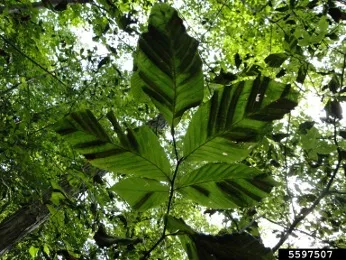
Source: Li (2020)
Vermont has monitored the progression of beech leaf disease (BLD) since confirming its presence in the state in late 2023. The disease represents a significant forest health concern due to its impact on American beech (Fagus grandifolia), a common and ecologically important species in the region.
Causal Agent and Symptoms
BLD is associated with the foliar nematode Litylenchus crenatae mccannii, an organism that colonizes tree buds and developing leaves (Carta et al., 2020). The primary visual symptom is the appearance of dark green, interveinal banding on the leaves, which can be observed by viewing the canopy from below. As the disease progresses, leaves may become shrunken, curled, and develop a leathery texture, leading to a reduced photosynthetic capacity and a sparse canopy.
Impact on Forest Structure
BLD impacts all age classes of American beech but causes mortality most rapidly in understory saplings and young trees, often within two to five years of the first visible symptoms (Vermont Invasives, 2025). Mature trees tend to decline more slowly but are still susceptible, showing progressive canopy thinning and reduced vigor over time. The high mortality rate among younger beech poses a long-term threat to the regeneration of the species in affected forest stands.
Ecological and Management Implications
The decline of American beech has potential ecological consequences for Vermont's forests. As a prevalent hardwood species, the loss of mature, nut-producing trees can reduce a key food source, known as hard mast, for wildlife such as black bears, turkeys, and blue jays. These losses would alter forest composition and structure over time.
Large-scale forest treatment remains challenging or unfeasible; however, new research suggests that for high-value individual trees, trunk injections with thiabendazole (Arbotect 20-S) or applications of potassium phosphite can reduce symptoms and slow decline. Research is ongoing, but for now, the Vermont Department of Forests, Parks & Recreation focuses on tracking the disease's spread through systematic surveys and public reporting. Landowners and forest users are encouraged to learn to identify BLD symptoms and report suspected cases to support the state's monitoring efforts (Halman, 2023).
Box 3-3: Japanese knotweed
Written by: Mariano Rodriguez-Cabal and M. Noelia Barrios-Garcia, Rubenstein School of Environment and Natural Resources and Gund Institute for Environment, University of Vermont
Curt Lindberg, Rubenstein School of Environment and Natural Resources, University of Vermont
Japanese knotweed (Reynoutria japonica) is a highly invasive perennial plant native to East Asia, including Japan, China, and Korea. Listed among the world’s worst invasive species, it poses severe ecological and economic threats across introduced regions, which include the U.S., Europe, New Zealand, and Australia. Since its introduction to the U.S., Japanese knotweed has become invasive in 42 states, coast to coast (except the arid Southwest).
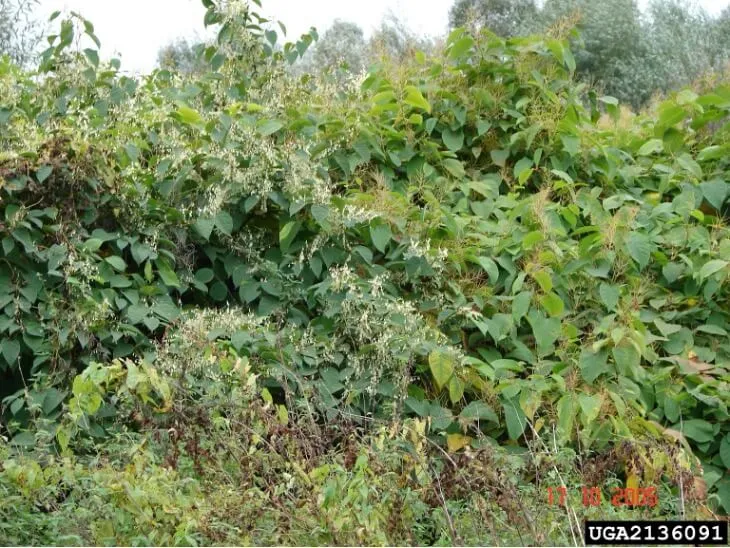
Source: Tokarska-Guzik (2026)
Japanese knotweed is particularly problematic in full sun locations along riverbanks, floodplains, and moist roadsides where it monopolizes light, water, and nutrients, while releasing allelopathic compounds that harm surrounding plants and displace native species. This displacement, especially of trees along stream banks, harms aquatic ecosystems by depriving fish and other organisms of necessary shade. Furthermore, Japanese knotweed provides no known value for wildlife and supports fewer invertebrates compared to surrounding native vegetation, thereby negatively impacting the food chain. It alters nutrient cycling in soil and streams, because its lack of fine surface roots leads to increased erosion. As climate change shifts hydrological regimes towards more frequent and severe storm events, feedback loops are developing where existing Japanese knotweed populations cause sudden riverbank failure, resulting in increased flood-related damage, affecting riparian infrastructure to a greater extent each time such an event occurs.
As it spreads, Japanese knotweed’s extensive root system penetrates deep into the soil and causes damage to infrastructure, buildings, and flood defenses. Remarkably, it can penetrate through concrete and asphalt. As a result, the plant is notoriously difficult to control, often resprouting even after intensive removal. In Great Britain, control costs have been estimated at approximately US $250 million annually.
Climate change is likely to intensify the impacts of Japanese knotweed because more frequent and severe storms can exacerbate erosion and riverbank failures. Restoring riverbanks degraded by Japanese knotweed can offer substantial ecological and social benefits. Reestablishing native vegetation enhances biodiversity, stabilizes soils, and strengthens the resilience of river systems to extreme weather events. These improvements can help reduce flood risk and associated economic costs, which disproportionately affect underserved and historically disadvantaged communities living in flood-prone areas. Long-term, integrated management combined with active restoration can gradually shift invaded sites toward healthier, more resilient riparian ecosystems, supporting both ecological recovery and broader climate adaptation goals.
3.7.3 Invasive plants
Many invasive plants in the eastern United States have been introduced intentionally as ornamentals (Lehan et al., 2013). Despite state legislation efforts to regulate non-native species introduction to Vermont (National Agricultural Law Center, 2026), new species continue to arrive. In 2023 alone, Vermont documented four new invasive species: pale swallowwort (Vincetoxicum rossicum), porcelain berry (Ampelopsis brevipedunculata), mile a minute vine (Persicaria perfoliate), and common butterbur (Petasites hybridus hybridus; Decker, 2023).
Invasive plant species represent a different threat to Vermont’s ecosystems than insects and pathogens. Rather than directly killing trees, they disrupt forests by outcompeting native species, altering soil and water, and providing less nutritious food to wildlife. Many nonnative species establish more quickly than native plants because local herbivores, pests, and diseases have not evolved alongside them and therefore they lack any form of natural population control. This freedom allows them to spread and reproduce at higher rates than native species (Janowiak et al., 2018). Statewide research and monitoring suggests that Vermont’s warming winters are creating favorable conditions for the spread of more southerly invasive species, with the potential to significantly impact ecological communities (Coville et al., 2021).
Invasives change ecosystems by soil alteration, changing nutrient cycles, soil structure, pH, and modifying microbial communities. Some of these species release allelopathic chemicals into soils, which inhibit the growth, survival, and reproduction of surrounding native plants. For example, Garlic mustard (Alliaria petiolata) is a common allelopathic invasive in Vermont, secreting toxins from its roots that inhibit other species’ growth (Afzal et al., 2023; Swislocki, 2025). Many invasive species are higher in nitrogen than their native neighbors, contributing to excess nitrogen, nutrient imbalances and soil acidification throughout Vermont forests. Overall, these changes can reduce forest productivity and tree health over time (Afzal et al., 2023).
3.8 Shifts in logging and forest management seasons
Forest management operations, including logging, depend on firm, frozen ground and snowpack to operate heavy machinery, but recent winter temperatures have shown warming trends with less annual snowfall. Vermont’s winter temperatures averaged across December, January and February have increased a total of 4.6 °F (2.6 °C) since 1900, with a significant trending increase of 0.2 °F/decade (0.1 °C/decade; see Climate Change in Vermont 2.4.3). Meanwhile, the 2020s experienced the lowest annual average snowfall (68.8 inches/year; 1,748 mm/year) since before many high elevation stations came online in the 1930s (see Climate Change in Vermont 2.5.3), and more frequent freeze-thaw cycles with the potential for limiting snowpack growth (see Climate Change in Vermont 2.4.3). Climate change has limited the available time for, and effectiveness of forest management operations through the increased presence of warmer and wetter soil in the winter and spring. One measure of the incidence of such conditions is rain-on-snow events, where heavy winter rainfall occurs on top of snowpack, which can accelerate snowmelt and erode soils through run-off (Aldrich, 2025). The number of annual rain-on-snow events in the New England region have increased over the last few decades, exemplified in the Mount Washington case study (Figure 3-12). Meanwhile, recent flooding events, such as the Great Vermont Flood of July 2023 followed by severe flooding in July 2024, left soils too saturated in the summer, which prevented loggers from making up for decreased winter yields (Giles, 2024). In addition to substantial reductions in timber harvest and potential damage to equipment, operating on wetter soils causes soil compaction, leading to erosion and increased water runoff.
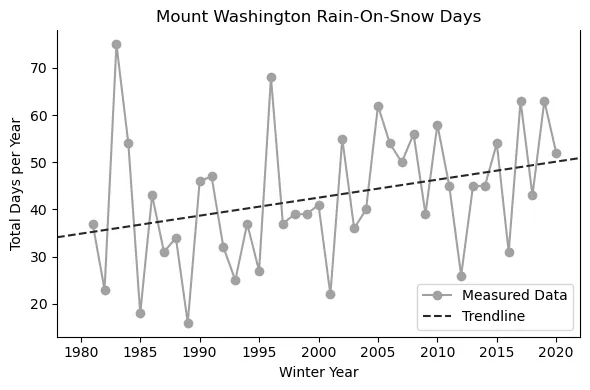
Source: Data derived from Peachey (2023); figure adapted from Aldrich (2025)
These climate related impacts are important due to the critical role of forest products in Vermont’s economy and energy sector. There are 10,000 jobs in the forest products industry and the sector generates $1.9 billion annually in forestry-related revenue (VT Agency of Commerce & Community Development, 2025). Warmer winters will reduce the capacity for winter harvesting, disproportionately impacting contracted operations jobs in rural communities (Lal et al., 2011). In 2023, the largest sawmill operation in Vermont was forced to operate on reduced hours in the early summer and fall due to limited timber yields from the preceding winter and spring (Giles, 2024). Vermont also has the highest percentage of wood-heated homes in the nation—13.8% as of 2023—and wood meets a large portion of residents’ heating and electricity needs (Russell, 2025).
3.9 Urban trees in a changing climate
Urban trees provide climate, health, and social benefits by cooling air temperatures, reducing flooding and stormwater runoff, storing carbon, improving air and water quality, strengthening community resilience, and advancing environmental equity. Approximately 35% of Vermont’s population live in Census-designated “urban” areas (Barrett, 2023) and could benefit from these services. Urban trees, however, are particularly vulnerable to the effects of climate change. Impervious surfaces, dense human populations, and built structures in urban areas intensify the impacts of increasing heat, drought, and extreme weather occurrences (Janowiak et al., 2018). Such intensifications include exacerbated flooding due to stormwater runoff. In the future, Vermont’s urban environments may be better suited to species that are more tolerant to heat and drought conditions.
Similarly, trees under stress are more susceptible to impacts from invasive insects and pathogens. Unfortunately, urban areas are also the most common entry point for invasives and nonnative species (Janowiak et al., 2018). For example, maple and ash are among the most common native species in urban areas, but are both threatened by invasives. Maples trees, often favored for street planting, are threatened by the Asian longhorned beetle. Ash trees continue to face widespread mortality from the Emerald ash borer, which spreads rapidly in urban environments.
Due to historical inequities in urban development, disadvantaged populations often have less urban tree cover and face greater exposure to heat, flooding, and air pollution. The American Rescue Plan Act and Inflation Reduction Act State Allocation provide urban tree planting grants for communities that a) have less than 40% tree canopy cover, and b) are identified as vulnerable by the National Climate & Economic Justice Screening Tool (CEJST) and the VT Department of Health’s Social Vulnerability Index (SVI) (Schadler, 2023). In Vermont, the city of Burlington qualifies with 11% canopy cover, and received part of the $510,000 in urban tree canopy grants distributed throughout the state, funded by the Inflation Reduction Act (Schadler, 2024; Figure 3-13).
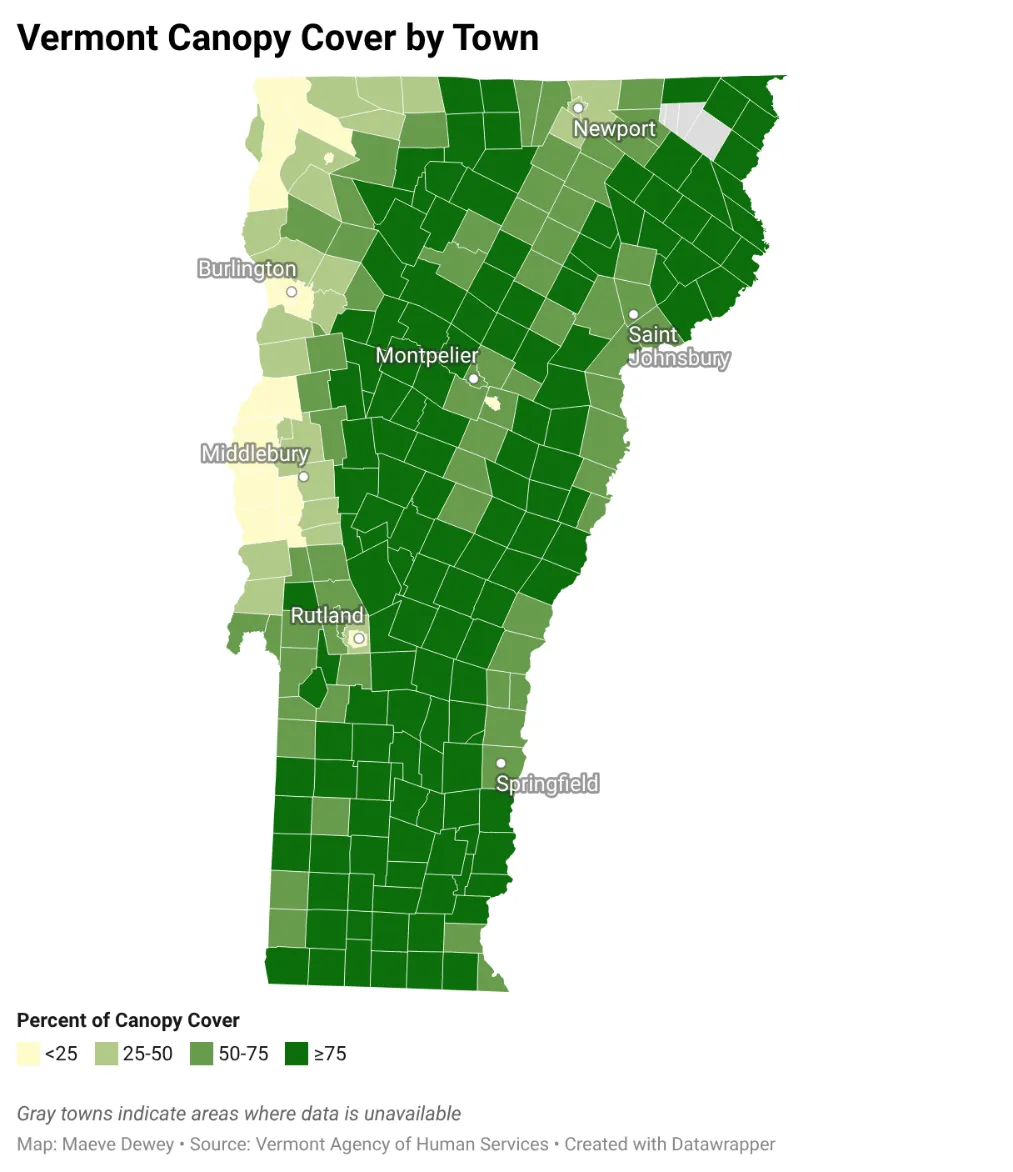
Source: Vermont Heat Vulnerability Index Feature Layer (VT-AHS, 2023)
Note: Gray towns indicate areas where data is unavailable
3.10 Adaptation and conservation actions
3.10.1 Climate-adaptive silviculture
Climate-adaptive silviculture is forest management that uses silvicultural techniques to help forests better withstand and recover from climate change impacts. This is achieved by focusing on increasing resilience, strengthening resistance, or facilitating transitions to new, more suitable conditions through strategies like diversifying species composition, managing for diverse stand structure, and promoting future climate-adapted species. Adaptation measures depend on estimated future climate impacts for specific locations, vulnerabilities specific to the forest being managed, and the priorities and resources available to land managers (Miller et al., 2007).
Although practices are site-specific, there are a series of guiding principles, workbooks, and comprehensive studies that identify common threads of climate-adaptive silviculture. Two of the leading resources for advising forest managers on climate adaptation are the Climate Change Response Framework’s (CCRF) Adaptation Workbook (Climate Change Response Framework, 2025c) and the Adaptive Silviculture for Climate Change (ASCC) network of adaptation trial sites (Nagel et al., 2017; see 3.12.1). The former is useful in guiding Northeast U.S. land managers in making individualized management plans, augmented with numerous case studies of individual demonstrations at all stages of the process (Climate Change Response Framework, 2025a). The latter documents adaptation studies from planning through implementation across the United States. One example that may be of interest to Vermont forestry practitioners is the Dartmouth College Second College Grant site in New Hampshire, which is comprised of northern hardwood forests and representative of much of Vermont’s forests. Many of the recommendations discussed here are based on findings from that site.
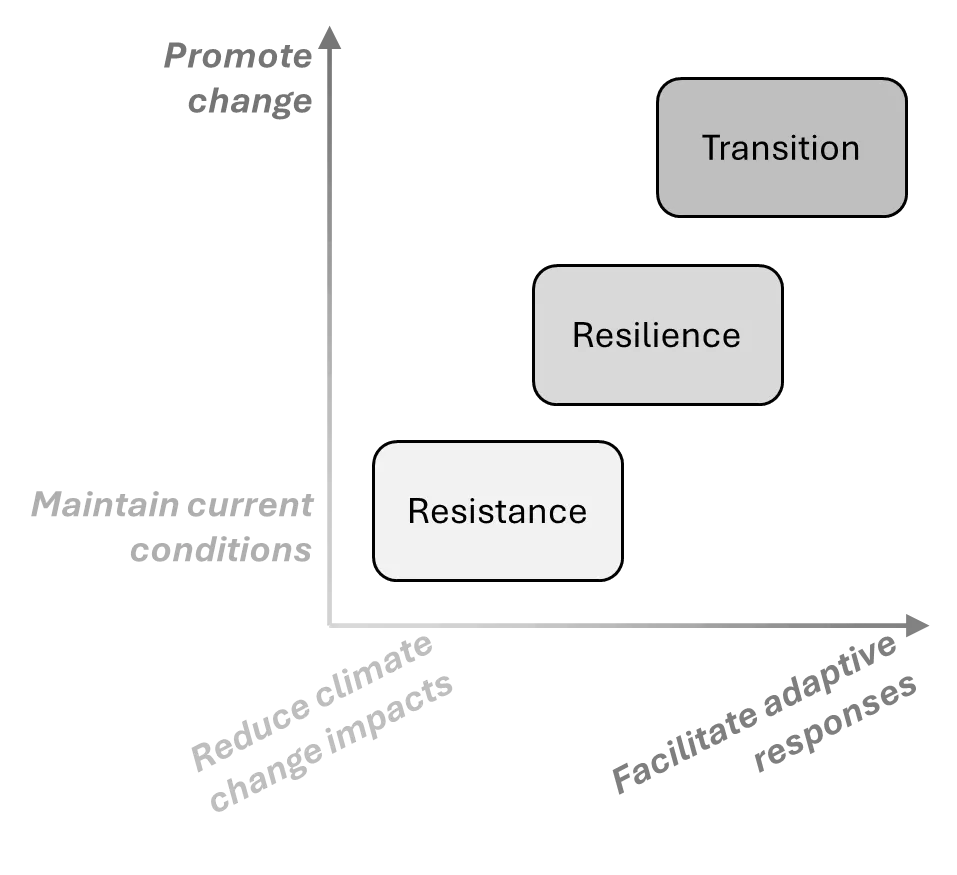
One common climate change response framework for managers is the resistance-resilience-transition model (Nagel et al., 2017). In this model (Figure 3-14), treatments are classified as resistance-, resilience-, or transition-oriented, based on the desired future state of the forest after disturbance relative to the pre-disturbed state. These three general treatment types fall along a spectrum, and aspects of different classifications can be combined at a single site. Further experience in recent years with adverse weather and pest conditions have enabled researchers to tailor the components of this framework to Vermont-specific conditions, typically characterized as northern hardwood forests.
Resistance is defined as improving forest defenses against anticipated changes or disturbances, with the goal of maintaining current or historic structure and composition (Nagel et al., 2017). In Vermont, resistance treatments would typically include thinning, single-tree, or small group selection favoring the existing shade-tolerant species distribution of sugar maple, beech, yellow birch, red maple, and red spruce, with preference for healthy and resistant individual trees. This category also includes treatments of at-risk species, like ash, with insecticides (Janowiak et al., 2023). This approach might be best suited to sites that are climate refugia, or where the current forest conditions have exceptional ecological value (Wikle et al., 2024).
Source: Adapted from Nagel et al. (2017)
Resilience accommodates a degree of interim change in response to stressors but allows for an eventual return to reference conditions (Nagel et al., 2017). Such treatments may include small-group selection or patch harvests with reserves, favoring native, shade mid-tolerant species like yellow birch. This approach can increase species and structural diversity, while retaining features of the existing forest. Natural regeneration or assisted planting can also be used to facilitate the growth of associated, though less prolific, species in the region, such as red oak or white pine (Janowiak et al., 2023).
Transition intentionally accommodates change, with the goal of adapting and transitioning towards novel future forest conditions. This may entail creating large gaps and patch cuts with varying vertical and horizontal structure. The larger openings favor future-adapted species currently in northern hardwood forests, like yellow birch, red maple, and beech. Assisted migration can also increase the presence of future-adapted species (Janowiak et al., 2023) and has shown potential in recent ASCC Second College Grant transition-focused treatments (Wikle, D’Amato, & Evans, 2024). The transition approach is a departure from current and historic management of northern hardwood forests. Future tree distribution models predict an expansion of species that are drought-tolerant but shade intolerant or mid-tolerant. Due to their shade intolerance, these species are best encouraged through even-aged regeneration systems, in contrast to the uneven-aged methods historically practiced in the Northeast U.S. that support shade tolerant species (D’Amato & Palik, 2021). Transition methods may be most suitable on sites that are already vulnerable, and unlikely to persist in their current state with changes in climate.
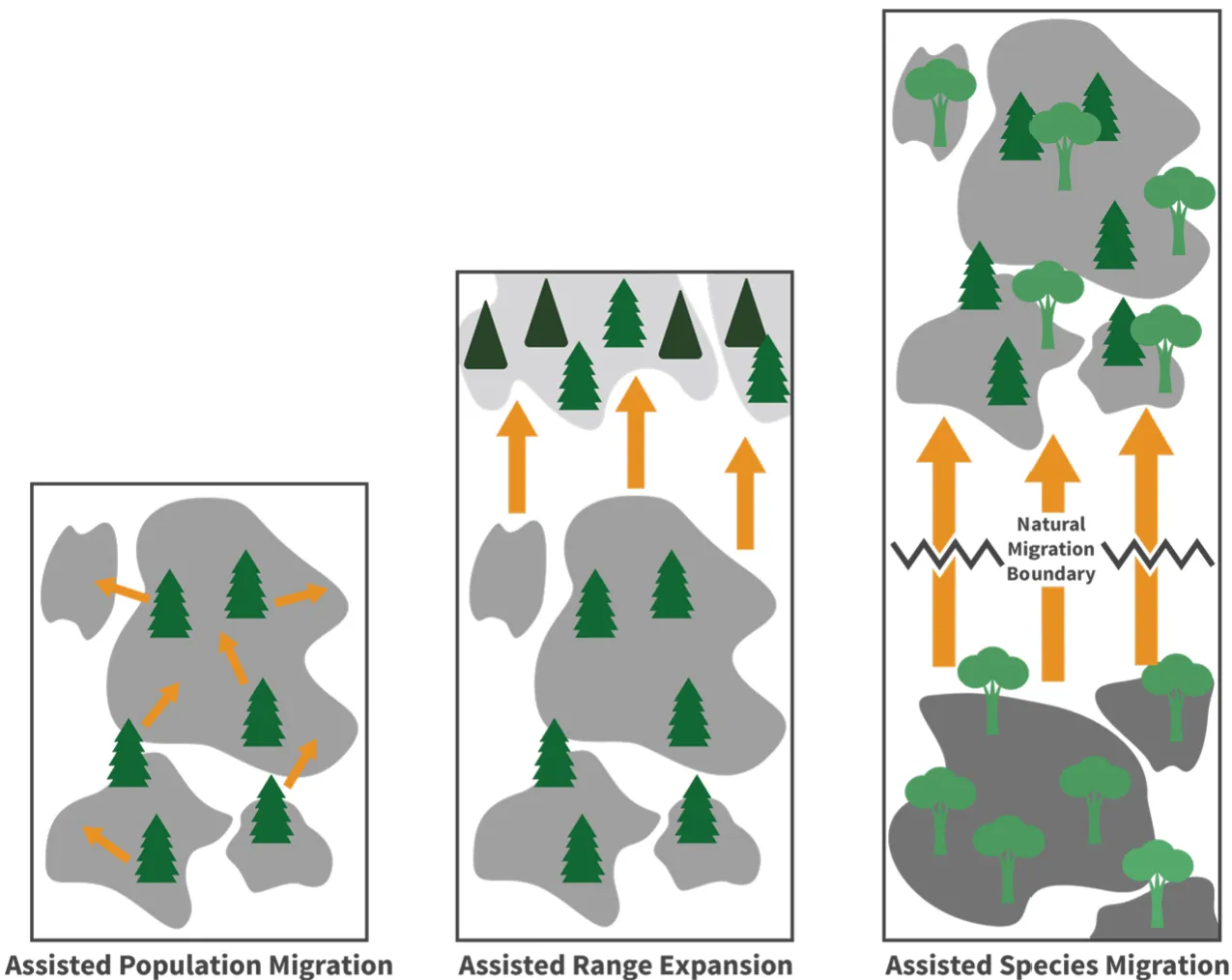
Assisted migration may prove to be a critical component of climate-adaptive silvicultural practices. Historic tree migration rates are slower than current rates of climate change, which could cause future species distribution to be poorly adapted to future climate conditions. Numerous other practical hurdles exist to hinder natural migration: trees must be reproductively mature, seed production and viability depend on climate, seed predation can be high, seeds must find favorable location and conditions to germinate, deer browsing limits recruitment, among others. Assisted migration is a potential solution to this problem, where manual planting serves to accelerate the movement and growth of desired tree species at a rate faster or a distance greater than what the species could achieve naturally. There are three types of assisted migration: assisted population expansion, assisted range expansion, and assisted species migration (Figure 3-15). Assisted population expansion involves introducing climate-adapted genotypes to the existing focal population, often from more southern locations or lower elevations. Assisted range expansion involves moving a species outside of its historical range and into adjacent areas, albeit still in a range across which the species could naturally move over a longer timescale. Lastly, assisted species migration entails moving a species over long distances that it would never likely traverse on its own to locales that better fits their climatic niche (Clark et al., 2024).
Source: Handler et al. (2023)
Challenges exist to assisted migration, and its efficacy remains uncertain. It requires careful planning for tree survivability while mitigating potential negative consequences for the local ecosystem, such unintentionally introducing invasive species, pests, and pathogens. The Vermont Agency of Natural Resources has published planting guidelines outlining these challenges and associated best practices (Owczarski et al., 2025). After three growing seasons of adaptive migration at the ASCC Second College Grant site, population expansion trees performed better than assisted range expansion trees, with less dieback and injury (Janowiak et al., 2023). Through surveys, forest managers report limited access to diverse planting stock from nurseries, as well as a lack of training and awareness on climate-specific adaptive planting (Clark et al., 2024). Research is underway to better understand adaptive planting, and early insights have been developed into guides for public implementation and awareness. For example, the USFS Seed Zone WebMap allows managers to see where seeds can most effectively be planted (Research & Development, USFS, 2023). The University of Massachusetts Amherst and University of Vermont developed a reforestation guide with decision-support tools and processes for planting, as well as case studies of reforestation efforts to forest managers throughout New England (Clark et al., 2025).
Box 3-4: Implementing adaptation practices across forests in the northeastern USA
Written by: Samantha Myers, Northern Institute of Applied Climate Science, USDA Forest Service
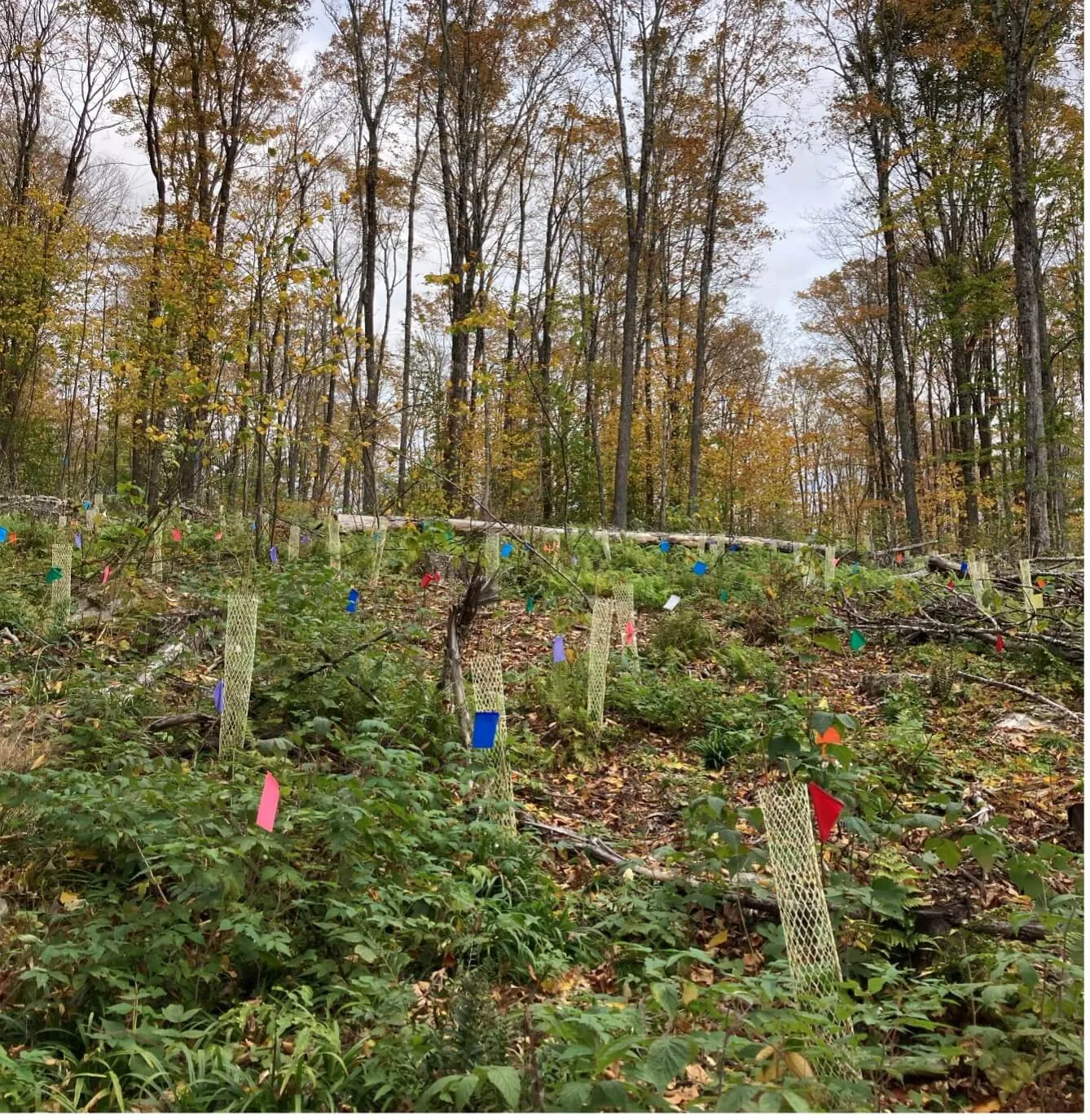
Uncertainty around the impacts of climate change and extreme weather events poses a significant challenge to sustaining forest ecosystems in the Northeast U.S. Numerous field applications and experiments are testing different adaptation strategies to maintain diverse forest values in the face of changing environmental conditions. Researchers at University of Vermont, the Northern Institute of Applied Climate Science, and the USDA Northern Forests Climate Hub worked with partners to develop a manager’s guide based on the outcomes of these adaptation projects incorporating broader manager input that outlines best adaptation practices for northern hardwood, mixedwood (co-dominance of hardwood and softwood), and spruce-fir forests.
Since 2014, the research team conducted outreach to natural resource managers in Vermont, New Hampshire, Maine, and New York, who developed adaptation research and demonstration projects using the Climate Change Response Framework (CCRF) (Swanston et al, 2016). The team synthesized outcomes of these projects, spanning three broad regional forest types: northern hardwoods, spruce-fir, and mixedwoods. Within each forest type, natural resource managers face an array of climate-related challenges, which reflect the specific conditions of their site, including soils, hydrology, species composition, and past management legacies. A variety of adaptation strategies are needed to address these challenges, and multiple strategies may be useful within the same site.
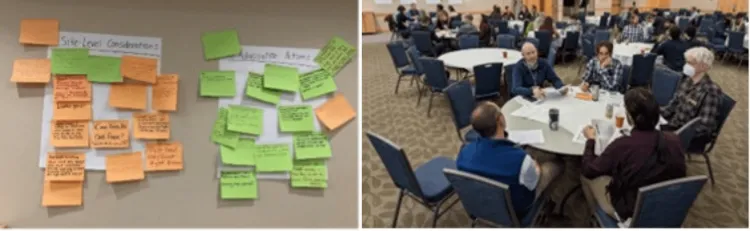
After the initial synthesis was conducted, the research team held a forum at the Forest Ecosystem Monitoring Cooperative Conference in 2023 to gather feedback from managers in the region. Then, the team integrated case studies into the guide to showcase real-world examples of adaptation tactics and their outcomes for various management goals.
Ultimately, this guide helps managers consider forest management at the site-level through a climate change lens and walks through a logical process to determine possible adaptation actions. Intended for site-level applications, it requires local expertise and judgement to observe site conditions and vulnerabilities and then choose management approaches that are appropriate for the site. Adaptation actions listed in the guide are not exhaustive nor prescriptive, but rather showcase an array of possible starting points for adaptation actions that managers might consider to mitigate climate vulnerability at their site. A suite of tools provide guidance to managers on forest adaptation and enhance the region’s capacity for implementing forest adaptation in practice. The final guide was published online on the USDA Climate Hubs website (See 3.12.2).
Source: Swanston et al. (2016); Myers and D’Amato (2025)
Source: Myers & D’Amato (2025); Swanston et al. (2016)
3.10.2 Summer forest management solutions
Given the increased occurrence of winter precipitation events limiting suitable forest management workdays during the winter, alternative work periods throughout the year are needed. It is possible that late summer droughts could provide opportunities for sustainable non-winter harvests. The Green Mountain National Forest’s Robinson project area has been used to study management adaptations to climate change effects and has relied on such drought periods for summer harvests to compensate for shortened winter logging periods (Climate Change Response Framework, 2025b). This may be a problematic long-term solution, as the cumulative effects of repeated seasonal droughts could degrade overall tree productivity, thereby decreasing total timber harvests over time (Anderegg et al., 2020; Yu et al., 2025).
3.10.3 Urban tree planting
When selecting species to plant in urban environments, planners should prioritize a diverse mix of species and genotypes that are expected to tolerate future climate conditions (Janowiak et al., 2021). To counter urban heat effects, trees should be planted in patches to shade impervious surfaces such as roads and parking lots. Suspended pavement and structural soil systems are designed to support sidewalks and roads while still providing space for tree roots to grow. Suspended pavements use underground scaffolding to support surface infrastructure, allowing the soil beneath to remain loose and uncompacted. Structural soil is a blend of stone, soil, and binding material. This creates a stable base for infrastructure while allowing pore spaces for root movement (Vermont Urban & Community Forestry Program, 2018). Combined, these practices encourage tree maturity and maximize benefits to communities. Resources like the Vermont Tree Selection Guide provide detailed strategies tailored to Vermont's environmental conditions, including species selection, site considerations, and best practices (Vermont Urban & Community Forestry Program & University of Vermont Extension, 2022).
While only a small portion of Vermont is categorized as developed land, future growth of urban areas is anticipated. This development may reduce urban forests, diminish canopy cover, and add impervious surfaces. Planning for this growth with a focus on the protection, expansion, and integration of urban trees will be essential to enhancing Vermont's long-term resilience. Additionally, urban forest capacity is heavily influenced by funding availability and political support due to the reliance on state and local governments for implementation.
3.10.4 Encouraging old growth characteristics for carbon storage
While there is no direct substitute for time in developing old growth characteristics, some management practices can hasten this process. Some of these include leaving deadwood in forests, conservation of soil carbon pools, legacy tree retention, and variable density thinning to encourage stand complexity. Such practices mimic the natural disturbances that occur over longer time horizons and create conditions characteristic of old growth. Downed wood and branches are critical for minimizing carbon loss from forests; these components are often missing from second-growth New England forests (Anderson, 2021; D’Amato & Catanzaro, 2022). Active management mimicking natural disturbance processes can restore old growth characteristics in shorter timeframes (approximately 50 years from current conditions) than passive management can (approximately 100 years from current conditions; D’Amato & Catanzaro, 2022).
3.11 Traceable accounts
3.12 Resources
See resources linked below.
3.12.2 Forest adaptation management resources
3.13 References
Afzal, M. R., Naz, M., Ashraf, W., & Du, D. (2023). The Legacy of Plant Invasion: Impacts on Soil Nitrification and Management Implications. Plants, 12(16), 2980. https://doi.org/10.3390/plants12162980
Aldrich, B. (2025, January 29). Forestry Friday: Changing Winters, Evolving Strategies in Forest Winter Operations | Forest Society. https://www.forestsociety.org/blog-post/forestry-friday-changing-winters-evolving-strategies-forest-winter-operations
Anderegg, W. R. L., Trugman, A. T., Badgley, G., Konings, A. G., & Shaw, J. (2020). Divergent forest sensitivity to repeated extreme droughts. Nature Climate Change, 10(12), 1091–1095. https://doi.org/10.1038/s41558-020-00919-1
Anderson, M. G. (2021). Wild Carbon: Analysis of sequestration in old forests. Northeast Wilderness Trust.
Barrett, K. (2023, March 10). Nation’s Urban and Rural Populations Shift Following 2020 Census. United States Census Bureau. Census.Gov. https://www.census.gov/newsroom/press-releases/2022/urban-rural-populations.html
Berrini, N. (2023, December 14). Hemlock-loving invasive insects are moving north. Vermont Land Trust. https://vlt.org/2023/12/14/hemlock-wooly-adelgid/
Birdsey, R., Pregitzer, K., & Lucier, A. (2006). Forest Carbon Management in the United States: 1600–2100. Journal of Environmental Quality, 35(4), 1461–1469. https://doi.org/10.2134/jeq2005.0162
Buttò, V., Khare, S., Jain, P., de Lima Santos, G., & Rossi, S. (2023). Spatial patterns and climatic drivers of leaf spring phenology of maple in eastern North America (Pt. 1). Science of The Total Environment, 857. https://doi.org/https://doi.org/10.1016/j.scitotenv.2022.159064
Clark, P., D’Amato, T., & Catanzaro, P. (2025). Reforestation guide: Tree Planting to enrich, restore, and adapt northern forests. University of Massachusetts Extension, University of Vermont. https://masswoods.org/planting
Clark, P. W., D’Amato, A. W., Fitts, L. A., Janowiak, M. K., Montgomery, R. A., & Palik, B. J. (2024). Forest assisted migration and adaptation plantings in the Northeastern US: Perspectives and applications from early adopters. Frontiers in Forests and Global Change, 7, 1386211. https://doi.org/10.3389/ffgc.2024.1386211
Climate Change Response Framework. (2025a). Demonstration Projects. Climate Change Response Framework. https://forestadaptation.org/adapt/demonstration-projects
Climate Change Response Framework. (2025b). Green Mountain National Forest: Robinson Integrated Resource Project. https://forestadaptation.org/green-mountain-national-forest-robinson
Climate Change Response Framework. (2025c). New England Forest Vulnerability. https://forestadaptation.org/assess/ecosystem-vulnerability/new-england
Coble, A. P., Vadeboncoeur, M. A., Berry, Z. C., Jennings, K. A., McIntire, C. D., Campbell, J. L., Rustad, L. E., Templer, P. H., & Asbjornsen, H. (2017). Are Northeastern U.S. forests vulnerable to extreme drought? Ecological Processes, 6(1), 34. https://doi.org/10.1186/s13717-017-0100-x
Contosta, A. R., Casson, N. J., Garlick, S., Nelson, S. J., Ayres, M. P., Burakowski, E. A., Campbell, J., Creed, I., Eimers, C., Evans, C., Fernandez, I., Fuss, C., Huntington, T., Patel, K., Sanders-DeMott, R., Son, K., Templer, P., & Thornbrugh, C. (2019). Northern forest winters have lost cold, snowy conditions that are important for ecosystems and human communities. Ecological Applications, 29(7), e01974. https://doi.org/10.1002/eap.1974
Coville, W., Griffin, B. J., & Bradley, B. A. (2021). Identifying high-impact invasive plants likely to shift into northern New England with climate change. Invasive Plant Science and Management, 14(2), 57–63. https://doi.org/10.1017/inp.2021.10
D’Amato, A. W., & Catanzaro, P. (2022, December 28). Restoring Old-Growth Characteristics to New England’s and New York’s Forests. University of Vermont, University of Massachusetts Amherst. https://fpr.vermont.gov/sites/fpr/files/doc_library/Restoring-Old-Growth-Characteristics.pdf
D’Amato, A. W., & Palik, B. J. (2021). Building on the last “new” thing: Exploring the compatibility of ecological and adaptation silviculture. Canadian Journal of Forest Research, 51(2), 172–180. https://doi.org/10.1139/cjfr-2020-0306
Davis, S. (2024, November 7). Vermont’s Declining Forest Carbon Sink—Partnership for Policy Integrity. https://www.pfpi.net/2024/11/vermonts-declining-forest-carbon-sink/
Decker, K. (2023). Forest Health Highlights Vermont 2023 (p. 16).
Department of Forests, Parks and Recreation. (2025a). 2025 Fire Statistics [PDF]. Vermont’s Wildland Fire Seasons. https://fpr.vermont.gov/sites/fpr/files/documents/Fire%20Statistics%20for%202025.pdf
Department of Forests, Parks, and Recreation. (2025). Overview of Vermont’s Forests. Department of Forest, Parks, and Recreation. https://fpr.vermont.gov/forest/vermonts-forests
Department of Forests, Parks and Recreation. (2025b). Vermont’s Wildland Fire Seasons. Department of Forest, Parks, and Recreation. https://fpr.vermont.gov/forest/wildland-fire/wildland-fire-seasons
Dockser, C. (2023, December 28). Here’s where Vermont’s deer population hunkers down for winter. Vermont Public. https://www.vermontpublic.org/local-news/2023-12-28/map-heres-where-vermonts-deer-population-hunkers-down-for-winter
Duveneck, M. J., & Thompson, J. R. (2017). Climate change imposes phenological trade-offs on forest net primary productivity. Journal of Geophysical Research: Biogeosciences, 122(9), 2298–2313. https://doi.org/10.1002/2017JG004025
Evans, A. E., Jarnevich, C. S., Beaury, E. M., Engelstad, P. S., Teich, N. B., LaRoe, J. M., & Bradley, B. A. (2024). Shifting hotspots: Climate change projected to drive contractions and expansions of invasive plant abundance habitats. Diversity and Distributions, 30(1), 41–54. https://doi.org/10.1111/ddi.13787
Fidel, J. (2023). Tracking Parcelization Over Time to Inform Planning and Policy. Vermont Natural Resources Council. https://vtforesttrends.vnrc.org/reports
Finch, D. M., Butler, J. L., Runyon, J. B., Fettig, C. J., Kilkenny, F. F., Jose, S., Frankel, S. J., Cushman, S. A., Cobb, R. C., Dukes, J. S., Hicke, J. A., & Amelon, S. K. (2021). Effects of Climate Change on Invasive Species. In T. M. Poland, T. Patel-Weynand, D. M. Finch, C. F. Miniat, D. C. Hayes, & V. M. Lopez (Eds.), Invasive Species in Forests and Rangelands of the United States: A Comprehensive Science Synthesis for the United States Forest Sector (pp. 57–83). Springer International Publishing. https://doi.org/10.1007/978-3-030-45367-1_4
Forest Ecosystem Monitoring Cooperative. (2025a). Forestland area by age class for the Northeast (VT Tree Age Diversity for Indicators 20250613; Version 24) [CSV]. Federal Forest Inventory and Analysis Data For the Northeast. https://www.uvm.edu/femc/CI4/data/archive/project/federal-forest-inventory-analysis-data-northeast/dataset/forestland-area-by-a…
Forest Ecosystem Monitoring Cooperative. (2025b). VT Forest Cover for Indicators (VT Forest Cover for Indicators 20250613; Version 45) [CSV]. Federal Forest Inventory and Analysis Data For the Northeast. https://www.uvm.edu/femc/CI4/data/archive/project/federal-forest-inventory-analysis-data-northeast/dataset/northeast-forest-cov…
Gaiss, K. (2021, September 9). A warming Vermont gives way to more invasive species. Https://Www.Wcax.Com. https://www.wcax.com/2021/09/09/warming-vermont-gives-way-more-pests/
Giles, A. (2024, January 5). Vermont lawmakers want to help loggers adapt to climate change. Vermont Public. https://www.vermontpublic.org/local-news/2024-01-05/vermont-lawmakers-want-to-help-loggers-adapt-to-climate-change
Graham MacLean, M., Duveneck, M. J., Plisinski, J., Morreale, L. L., Laflower, D., & Thompson, J. R. (2021). Forest carbon trajectories: Consequences of alternative land-use scenarios in New England. Global Environmental Change, 69, 102310. https://doi.org/10.1016/j.gloenvcha.2021.102310
Hahn, J., & Krischik, V. (2018). Forest tent caterpillars. University of Minnesota Extension. https://extension.umn.edu/yard-and-garden-insects/forest-tent-caterpillars
Halman, J. (2024). Beech Leaf Disease Expands into Vermont [Press Release]. Department of Forests, Parks and Recreation. https://fpr.vermont.gov/news/beech-leaf-disease-expands-vermont
Handler, S., Pike, C., St. Clair, B., Abbotts, H., & Janowiak, M. (2023). Assisted Migration. Climate Change Resource Center. https://www.climatehubs.usda.gov/sites/default/files/Assisted-Migration_Climate-Change-Resource-Center.pdf
Hazelrigg, A. (2025). Drought Stress Affecting Vermont’s Trees and Shrubs. University of Vermont Extension. https://www.uvm.edu/extension/news/drought-stress-affecting-vermonts-trees-and-shrubs
Hwang, T., Band, L. E., Miniat, C. F., Vose, J. M., Knoepp, J. D., Song, C., & Bolstad, P. V. (2020). Climate Change May Increase the Drought Stress of Mesophytic Trees Downslope With Ongoing Forest Mesophication Under a History of Fire Suppression. Frontiers in Forests and Global Change, 3, 17. https://doi.org/10.3389/ffgc.2020.00017
Itter, M. S., Finley, A. O., D’Amato, A. W., Foster, J. R., & Bradford, J. B. (2016). Variable Effects of Climate on Forest Growth in Relation to Climate Extremes, Disturbance, and Forest Stand Dynamics (arXiv:1602.07228). arXiv. https://doi.org/10.48550/arXiv.1602.07228
Iverson, L. R., Matthews, S. N., Prasad, A. M., & Peters, M. P. (2012). Development of risk matrices for evaluating climatic change responses of forested habitats. Climatic Change, 114(2). https://doi.org/10.1007/s10584-012-0412-x
Iverson, L. R., Prasad, A. M., Matthews, S. N., & Peters, M. (2008). Estimating potential habitat for 134 eastern US tree species under six climate scenarios. Forest Ecology and Management, Forest Landscape Modeling - Approaches and Applications, 254(3), 390–406. https://doi.org/10.1016/j.foreco.2007.07.023
Janowiak, M. K., Brandt, L. A., Wolf, K. L., Brady, M., Darling, L., Lewis, A. D., Fahey, R. T., Giesting, K., Hall, E., Henry, M., Hughes, M., Miesbauer, J. W., Marcinkowski, K., Ontl, T., Rutledge, A., Scott, L., & Swanston, C. W. (2021). Climate adaptation actions for urban forests and human health. Gen. Tech. Rep. NRS-203. Madison, WI: U.S. Department of Agriculture, Forest Service, Northern Research Station., 203. https://doi.org/10.2737/NRS-GTR-203
Janowiak, M. K., Clark, P., D’Amato, A. W., Dallman, M., Handler, S. D., Wikle, J., Nagel, L., & Peterson, C. (2023). Lessons Learned from Climate Adaptation Projects in Northern Hardwood Forests. Proceedings of the First Biennial Northern Hardwood Conference 2021: Bridging Science and Management for the Future, 258–264. https://doi.org/10.2737/NRS-GTR-P-211-paper55
Janowiak, M. K., D’Amato, A. W., Swanston, C. W., Iverson, L., Thompson, F. R., Dijak, W. D., Matthews, S., Peters, M. P., Prasad, A., Fraser, J. S., Brandt, L. A., Butler-Leopold, P., Handler, S. D., Shannon, P. D., Burbank, D., Campbell, J., Cogbill, C., Duveneck, M. J., Emery, M. R., … Templer, P. (2018). New England and northern New York forest ecosystem vulnerability assessment and synthesis: A report from the New England Climate Change Response Framework project (NRS-GTR-173; p. NRS-GTR-173). U.S. Department of Agriculture, Forest Service, Northern Research Station. https://doi.org/10.2737/NRS-GTR-173
Jurado, S., & Matthes, J. (2025). Increasing Large Precipitation Events and Low Available Water Holding Capacity Create the Conditions for Dry Land-Atmosphere Feedbacks in the Northeastern United States. Water Resources Research, 61(2), e2024WR038600. https://doi.org/10.1029/2024WR038600
Keeton, W. S. (2018). Source or Sink? Carbon Dynamics in Eastern Old-Growth Forests and Their Role in Climate Change Mitigation. In A. M. Barton & W. S. Keeton (Eds.), Ecology and Recovery of Eastern Old-Growth Forests (pp. 267–288). Island Press/Center for Resource Economics. https://doi.org/10.5822/978-1-61091-891-6_14
Keeton, W. S., Copeland, E. M., Sullivan, S. M. P., & Watzin, M. C. (2017). Riparian forest structure and stream geomorphic condition: Implications for flood resilience. Canadian Journal of Forest Research, 47(4), 476–487. https://doi.org/10.1139/cjfr-2016-0327
Keller, A. B., Handler, S. D., USDA Northern Forests Climate Hub, Northern Institute of Applied Climate Science, & Nature Conservancy (U.S.). (2024). Non-native invasive earthworms in the Midwest and Eastern United States: A primer. USDA Northern Forests Climate Hub. https://www.climatehubs.usda.gov/sites/default/files/Earthworms_CPrimer_05302024.pdf
Kosiba, A. (2023). Managing Forest Carbon. UVM Extension Faculty and Staff Publications. https://scholarworks.uvm.edu/extfac/52
Kosiba, A. (2024). Future-Climate Adaptive Species. UVM Extension Faculty and Staff Publications. https://scholarworks.uvm.edu/extfac/58
Kosiba, A. M. (2025). Vermont Forest Carbon Inventory 2025 (p. 14). University of Vermont Extension, College of Agriculture and Life Sciences. https://www.uvm.edu/d10-files/documents/2025-03/VTForestCarbonInventory2025.pdf
Kurokawa, S. Y. S., Silvestro, R., Khan, A., de Lima Santos, G., Delagrange, S., & Rossi, S. (2025). The divergent advancements of sap phenology in maple under warming conditions can shorten the sugar season. Trees, Forests and People, 19, 100779. https://doi.org/10.1016/j.tfp.2025.100779
Lal, P., Alavalapati, J. R. R., & Mercer, E. D. (2011). Socio-economic impacts of climate change on rural United States. Mitigation and Adaptation Strategies for Global Change, 16(7), 819–844. https://doi.org/10.1007/s11027-011-9295-9
Lehan, N. E., Murphy, J. R., Thorburn, L. P., & Bradley, B. A. (2013). Accidental introductions are an important source of invasive plants in the continental United States. American Journal of Botany, 100(7), 1287–1293. https://doi.org/10.3732/ajb.1300061
Li, D., Potgieter, L. J., Aronson, M. F. J., Axmanová, I., Baiser, B., Carboni, M., Celesti-Grapow, L., Knapp, S., Kühn, I., Lacerda de Matos, A. C., Lososová, Z., Montaño-Centellas, F. A., Pyšek, P., Richardson, D. M., Trotta, L. B., Zenni, R. D., Cilliers, S. S., Clarkson, B. D., Davis, A. J. S., … Cadotte, M. W. (2025). GUBIC: The global urban biological invasions compendium for plants. Ecological Solutions and Evidence, 6(1), e70020. https://doi.org/10.1002/2688-8319.70020
MacDonald, E. G., Cullina, M. D., Peterson, B. J., & Wason, J. W. (2026). Combined heat and drought events reduce first-year survival of tree seedlings, especially at southern range margins. Frontiers in Forests and Global Change, 8. https://doi.org/10.3389/ffgc.2025.1734405
Matthes, J. H., Reinmann, A., Naughton, H., Gewirtzman, J., & Pederson, N. (2025). Impacts and Legacies of Extreme Precipitation on Temperate Forests During Critical Ecological Windows. https://doi.org/10.1146/annurev-ecolsys-102723-042035
McMahon, S. M., Parker, G. G., & Miller, D. R. (2010). Evidence for a recent increase in forest growth. Proceedings of the National Academy of Sciences, 107(8), 3611–3615. https://doi.org/10.1073/pnas.0912376107
Miller, C. I., Stephenson, N. L., & Stephens, S. L. (2007). Climate change and forests of the future: Managing in the face of uncertainty. Ecological Applications, 17(8), 2145–2151. https://doi.org/https://doi.org/10.1890/06-1715.1
Moore, C., Aukema, B. H., Leone, J. B., Jetton, R. M., Petrice, T. R., Ambourn, A., & Venette, R. C. (2025). Survival of elongate hemlock scale (Hemiptera: Diaspididae) with prolonged cold exposure: overwintering mortality risk across North America. Environmental Entomology, nvaf096. https://doi.org/10.1093/ee/nvaf096
Morgan, R. B., & Jucker, T. (2025). A unifying framework for understanding how edge effects reshape the structure, composition and function of forests. New Phytologist, 248(2), 529–541. https://doi.org/10.1111/nph.70457
Morin, X., Fahse, L., Jactel, H., Scherer-Lorenzen, M., García-Valdés, R., & Bugmann, H. (2018). Long-term response of forest productivity to climate change is mostly driven by change in tree species composition. Scientific Reports, 8(1), 5627. https://doi.org/10.1038/s41598-018-23763-y
MRLC. (2021). USA NLCD Land Cover (CONUS) 2021 [Imagery Layer]. Multi-Resolution Land Characteristics Consortium. https://www.arcgis.com/home/item.html?id=3ccf118ed80748909eb85c6d262b426f
Murphy, T. R., Hanley, M. E., Ellis, J. S., & Lunt, P. H. (2024). Soil saturation limits early oak establishment in upland pastures for restoration of Atlantic oak woodlands. Forest Ecology and Management, 561, 121895. https://doi.org/10.1016/j.foreco.2024.121895
Nagel, L. M., Palik, B. J., Battaglia, M. A., D’Amato, A. W., Guldin, J. M., Swanston, C. W., Janowiak, M. K., Powers, M. P., Joyce, L. A., Millar, C. I., Peterson, D. L., Ganio, L. M., Kirschbaum, C., & Roske, M. R. (2017). Adaptive Silviculture for Climate Change: A National Experiment in Manager-Scientist Partnerships to Apply an Adaptation Framework. Journal of Forestry, 115(3), 167–178. https://doi.org/10.5849/jof.16-039
National Agricultural Law Center. (2026). States’ Noxious Weed Statutes and Regulations: Vermont. The National Agricultural Law Center, University of Arkansas. http://nationalaglawcenter.org/wp-content/uploads//assets/weeds/Vermont.pdf
National Interagency Coordination Center. (2006). Wildland Fire Summary and Statistics Annual Report (Wildland Fire Summary and Statistics Annual Report) [Dataset]. https://www.nifc.gov/nicc/predictive-services/intelligence
Nevins, M., Kosiba, A., Truong, J., Stern, R., & Pontius, J. (2020). The Forest Ecosystem Monitoring Cooperative Long-Term Monitoring Update – 2018. Forest Ecosystems Monitoring Cooperative. https://doi.org/10.18125/vt2018
NOAA. (2026). The U.S. Drought Portal. National Integrated Drought Information System. https://www.drought.gov/
Norby, R. J., Warren, J. M., Iversen, C. M., Medlyn, B. E., & McMurtrie, R. E. (2010). CO2 enhancement of forest productivity constrained by limited nitrogen availability. Proceedings of the National Academy of Sciences, 107(45), 19368–19373. https://doi.org/10.1073/pnas.1006463107
Owczarski, D., Glynn, G., Patch, N., & Schlageter, N. (2025). Planting Guidelines for Agency of Natural Resources Lands[Guidance]. Lands Division, Agency of Natural Resources. https://anr.vermont.gov/content/planting-guidelines-agency-natural-resources-lands
Palus, J. D., Goebel, P. C., Hix, D. M., & Matthews, S. N. (2018). Structural and compositional shifts in forests undergoing mesophication in the Wayne National Forest, southeastern Ohio. Forest Ecology and Management, 430, 413–420. https://doi.org/10.1016/j.foreco.2018.08.030
Peachey, C. (2023). Rain-on-Snow Research. Mount Washington Observatory. https://mountwashington.org/research/current-research-projects/rain-on-snow/
Pederson, N., D’Amato, A. W., Dyer, J. M., Foster, D. R., Goldblum, D., Hart, J. L., Hessl, A. E., Iverson, L. R., Jackson, S. T., Martin‐Benito, D., McCarthy, B. C., McEwan, R. W., Mladenoff, D. J., Parker, A. J., Shuman, B., & Williams, J. W. (2015). Climate remains an important driver of post‐European vegetation change in the eastern United States. Global Change Biology, 21(6), 2105–2110. https://doi.org/10.1111/gcb.12779
Reinmann, A. B., Susser, J. R., Demaria, E. M. C., & Templer, P. H. (2019). Declines in northern forest tree growth following snowpack decline and soil freezing. Global Change Biology, 25(2), 420–430. https://doi.org/10.1111/gcb.14420
Research & Development, USFS. (2023, March 17). Seed Zone WebMap [Web App]. https://research.fs.usda.gov/pnw/products/dataandtools/seed-zone-webmap
Reyer, C. (2015). Forest Productivity Under Environmental Change—A Review of Stand-Scale Modeling Studies. Current Forestry Reports, 1(2), 53–68. https://doi.org/10.1007/s40725-015-0009-5
Russell, M. (2025, August 31). Homes that heat with wood: Data by state. Arbor Analytics. https://arbor-analytics.com/post/2025-08-31-25-wood-heating-by-state/
Schadler, E. (2023, January 4). Urban & community forestry grows bigger than ever [Vermont Urban & Community Forestry Program]. Community Stories. https://vtcommunityforestry.org/community-stories/urban-community-forestry-grows-bigger-ever
Schadler, E. (2024, February 27). Funding awarded to increase urban tree canopy across Vermont [Vermont Agency of Natural Resources]. Department of Forests, Parks, and Recreation. https://fpr.vermont.gov/anr/news/funding-awarded-increase-urban-tree-canopy-across-vermont
Shirvell, B. (2025, April 21). What Does the Future Hold for National Forests? https://environment.yale.edu/news/article/what-does-future-hold-national-forests
Shortsleeve, A. (2025). Vermont, Deer, and our Forests. Vermont Invasives. https://www.vtinvasives.org/news-events/news/vermont-deer-and-our-forests
Sittaro, F., Paquette, A., Messier, C., & Nock, C. A. (2017). Tree range expansion in eastern North America fails to keep pace with climate warming at northern range limits. Global Change Biology, 23(8), 3292–3301. https://doi.org/10.1111/gcb.13622
Smith, M. F., & Wertlieb, M. (2021, May 28). As Drought Conditions Persist, Fire Officials Warn Of Lingering Fire Danger. Vermont Public. Vermont Public. https://www.vermontpublic.org/vpr-news/2021-05-28/as-drought-conditions-persist-fire-officials-warn-of-lingering-fire-danger
Stephanson, C. A., & Ribarik Coe, N. (2017). Impacts of Beech Bark Disease and Climate Change on American Beech. Forests, 8(5), 155. https://doi.org/10.3390/f8050155
Swislocki, L. (2025). Species Spotlight: Garlic Mustard. Vermont Invasives. https://www.vtinvasives.org/news-events/news/species-spotlight-garlic-mustard
Thompson, I. D. (Ed.). (2009). Forest resilience, biodiversity, and climate change: A synthesis of the biodiversity/resiliende/stability relationship in forest ecosystems. Secretariat of the Convention on Biological Diversity. https://www.cbd.int/doc/publications/cbd-ts-43-en.pdf
Tumajer, J., Kašpar, J., Altman, J., Altmanová, N., Camarero, J. J., Cienciala, E., Čada, V., Čihák, T., Doležal, J., Fibich, P., Janda, P., Kaczka, R., Kolář, T., Lehejček, J., Mašek, J., Matula, R., Neudertová Hellebrandová, K., Plavcová, L., Rybníček, M., … Treml, V. (2025). Longer growing seasons will not offset growth loss in drought-prone temperate forests of Central-Southeast Europe. Nature Communications, 16(1), 9535. https://doi.org/10.1038/s41467-025-64568-8
U.S. Department of Agriculture, Forest Service. (2026). Forest Ecosystem Atlas [Dataset]. https://experience.arcgis.com/experience/fbfad910532e4ae18fa3fe5af6e9260f
U.S. Fish and Wildlife Service Northeast Region. (2014). Silvio O. Conte National Fish and Wildlife Refuge [JPG]. https://www.flickr.com/photos/43322816@N08/15031466241
U.S. Forest Service & Northern Institute of Applied Climate Science. (2022). Climate Change Projections for Individual Tree Species: Vermont (p. 2). USDA Northern Research Station. https://www.uvm.edu/d10-files/documents/2024-10/VermontFutureClimateAdaptatedSpecies_2022.pdf
USDA, F. S. (2025). Forests of Vermont, 2024: FIA annual snapshot (Resource Update FS-635). US Department of Agriculture, Forest Service. https://doi.org/10.2737/FS-RU-635
USGCRP. (2023). Fifth National Climate Assessment (No. 5th). U.S. Global Change Research Program. https://nca5.climate.us/downloads/NCA5_2023_FullReport.pdf
Vermont Fish & Wildlife Department. (2025a). White-Tailed Deer. Vermont Fish & Wildlife Department. https://www.vtfishandwildlife.com/learn-more/vermont-critters/mammals/white-tailed-deer
Vermont Fish & Wildlife Department. (2025b). White-Tailed Deer FAQs. https://www.vtfishandwildlife.com/hunt/hunting-and-trapping-opportunities/white-tailed-deer/white-tailed-deer-faqs
Vermont Historical Society. (2021). War & Industry: Vermont’s Changing Landscape. https://vermonthistory.org/freedom-unity-vermonts-changing-landscape
Vermont Invasives. (2025). Invasive Plants are Spreading into Vermont [Vermont Invasives]. https://www.vtinvasives.org/news-events/news/invasive-plants-are-spreading-into-vermont
Vermont Natural Resources Council. (2023). Total Acreage by Parcel Type [XLSX File]. Vermont Parcelization Website. https://vtforesttrends.vnrc.org/downloads
Vermont Urban & Community Forestry Program. (2018, June). Vermont Green Streets Guide. https://vtcommunityforestry.org/projects/vermont-green-streets-guide
Vermont Urban & Community Forestry Program & University of Vermont Extension. (2022). Vermont Tree Selection Guide (2). Vermont Department of Forests, Parks, and Recreation. https://vtcommunityforestry.org/sites/default/files/2022-11/complete-vt-tree-selection-guide-2022.pdf
VT Agency of Agriculture. (2025). Vermont Introduced Pests. Vermont Agency of Agriculture, Food & Markets. https://agriculture.vermont.gov/public-health-agricultural-resource-management-division/plant-health-and-pest-management/vermont
VT Agency of Commerce & Community Development. (2025). Forest Products. ThinkVermont. https://thinkvermont.com/sectors/forest-products/
VT Agency of Natural Resources. (2025). Invasive Species. https://anr.vermont.gov/special-topics/invasive-species
VT Department of Forest Parks and Recreation. (2025). Wildland Fire. https://fpr.vermont.gov/wildland
VT-AHS. (2023). Heat Vulnerability Index [Feature Layer]. Vermont Open Geodata Portal. https://geodata.vermont.gov/datasets/ahs-vt::vt-data-heat-vulnerability-index/about
Watson, K. B., Ricketts, T., Galford, G., Polasky, S., & O’Niel-Dunne, J. (2016). Quantifying flood mitigation services: The economic value of Otter Creek wetlands and floodplains to Middlebury, VT. Ecological Economics, 130, 16–24. https://doi.org/10.1016/j.ecolecon.2016.05.015
Wikle, J. L., D’Amato, A. W., & Evans, K. S. (2024). Early tree regeneration response following adaptive silviculture treatments in northern hardwood ecosystems. Forest Ecology and Management, 563, 121990. https://doi.org/10.1016/j.foreco.2024.121990
Wikle, J. L., D’Amato, A. W., Palik, B. J., Woodall, C. W., Evans, K. S., & Nagel, L. M. (2024). Structural outcomes of climate adaptation treatments in two contrasting northern temperate forests. Forest Ecology and Management, 562, 121932. https://doi.org/10.1016/j.foreco.2024.121932
Yang, H., Munson, S. M., Huntingford, C., Carvalhais, N., Knapp, A. K., Li, X., Peñuelas, J., Zscheischler, J., & Chen, A. (2023). The detection and attribution of extreme reductions in vegetation growth across the global land surface. Global Change Biology, 29(8), 2351–2362. https://doi.org/10.1111/gcb.16595
Yu, X., Orth, R., Reichstein, M., Reimers, C., Gomarasca, U., Migliavacca, M., Papale, D., Bahn, M., & Bastos, A. (2025). Widespread but Divergent Drought Legacy Effects on Gross Primary Productivity Across Biomes. Global Change Biology, 31(10), e70541. https://doi.org/10.1111/gcb.70541
Zhang, Z., Zhang, L., Xu, H., Creed, I. F., Blanco, J. A., Wei, X., Sun, G., Asbjornsen, H., & Bishop, K. (2023). Forest water-use efficiency: Effects of climate change and management on the coupling of carbon and water processes. Forest Ecology and Management, 534, 120853. https://doi.org/10.1016/j.foreco.2023.120853
Zhou, Y., Ge, X., Zou, Y., Guo, S., Wang, T., & Zong, S. (2021). Prediction of the potential global distribution of the Asian longhorned beetle Anoplophora glabripennis (Coleoptera: Cerambycidae) under climate change. Agricultural and Forest Entomology, 23(4), 557–568. https://doi.org/10.1111/afe.12461