The Vermont Agency of Agriculture, Food and Markets and the Vermont Department of Forests, Parks and Recreation are asking Vermonters to be on the lookout for spotted lanternfly (Lycorma delicatula) from now through the first hard frost of the season.
Spotted lanternfly is an introduced sap-sucking insect first found in Pennsylvania in 2014. It is spreading throughout the Northeast with populations established in southern New York and much of southern New England.
The insects don’t pose any threat to humans, and are primarily considered a nuisance, but they feed on many plants, and can kill grapevines, causing economic harm to vineyards. In states where populations have become established, large swarms of adults can make outdoor recreation unpleasant.
Vermont does not have a confirmed, established population of spotted lanternfly. However, individual adult insects have been intercepted in the state, most often arriving on vehicles or plants from areas where the pest is established. Officials say continued vigilance from the public is one of the most effective tools for keeping the insect from gaining a foothold in Vermont.
"Every adult spotted lanternfly found in Vermont so far has been the result of an alert Vermonter or business reporting what they saw," said Ginger Nickerson, UVM Extension Forest Pest Education Coordinator. "The window between now and the first hard frost is critical. Adults are most visible this time of year, and this is also when they lay the egg masses that can survive the winter and start a new population next spring."
What to look for
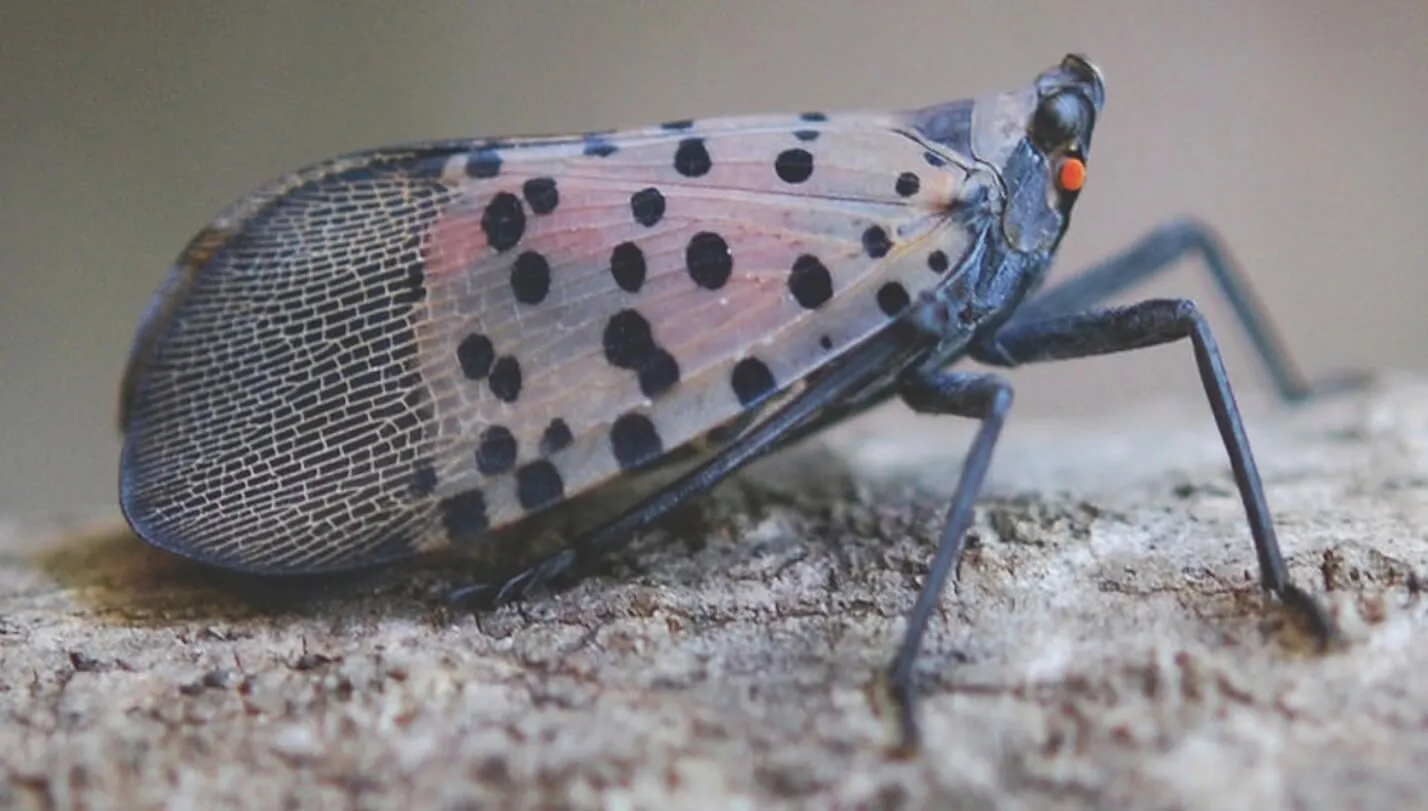
- Adults: Roughly 1 inch long with folded wings that are gray with black spots; when open, the hindwings reveal patches of bright red. Adults are most active and visible in late summer and fall. They are killed by the first hard frost.
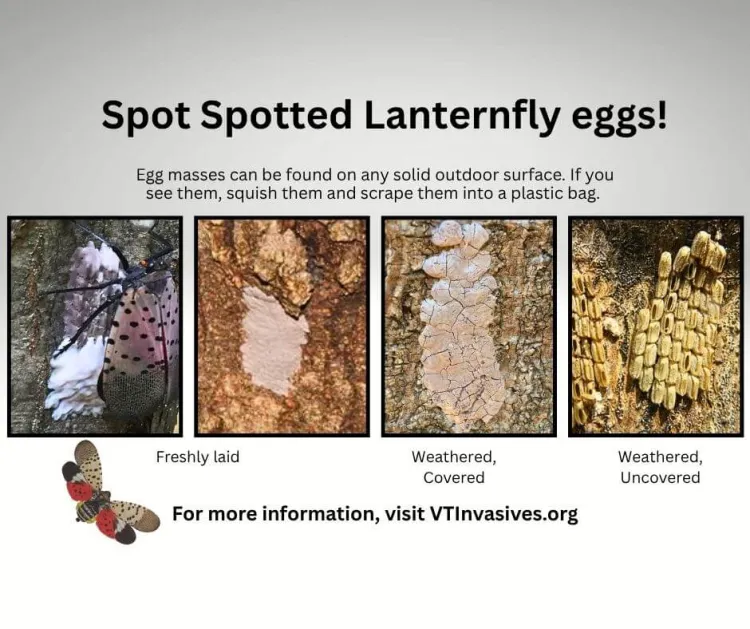
- Egg masses: Grayish-brown, putty-like or mud-like patches about an inch long, often laid on tree trunks, outdoor furniture, stone, vehicles, firewood, and other flat surfaces. Egg masses are the primary way spotted lanternfly survives the winter and spreads to new areas.
What Vermonters can do
- Check vehicles, outdoor gear, and patio furniture for adults and egg masses, particularly if you or your items have recently traveled through a state with known infestations.
- Look in cracks and protected areas, such as behind windshield wipers, bumpers, and under hoods. The adults especially like to lay eggs on rusty metal.
- If you find an adult spotted lanternfly or a suspected egg mass, squish it, take a photo, note the location, and report it at vtinvasives.org.
- Do not transport firewood long distances. Buy and burn firewood locally to avoid moving hitchhiking pests, including spotted lanternfly.
When Vermont has intercepted individual spotted lanternflies, it has been due to reports from the public and local businesses. State officials say keeping the pest from establishing here depends on catching new arrivals early, before they can reproduce and spread.
For more information on identifying spotted lanternfly, its egg masses, the location of infestations, and preventing its spread, visit the vtinvasives.org spotted lanternfly webpage.