It might be because of the rising cost of food. It might be time limited by work, child care and sleep. It might be inadequate transportation to the grocery store. It might be the overwhelming prospect of making something from scratch when you've never been taught how to do that. It might be all of those things at once.
"It's hard to beat the cost of prepared chicken nuggets and French fries out of the frozen food section," said Lori Pinard, a nutrition educator with the Community Nutrition Education program at University of Vermont Extension. "There's nothing wrong with that. Until it starts to be three meals a day, seven days a week."
But through the federally-funded Expanded Food and Nutrition Education Program (EFNEP), income-eligible parents, pregnant adults, caregivers, kids and college students can get resources and lessons about food management and nutrition. The goal of EFNEP? Empower Vermonters to lead healthier lives.
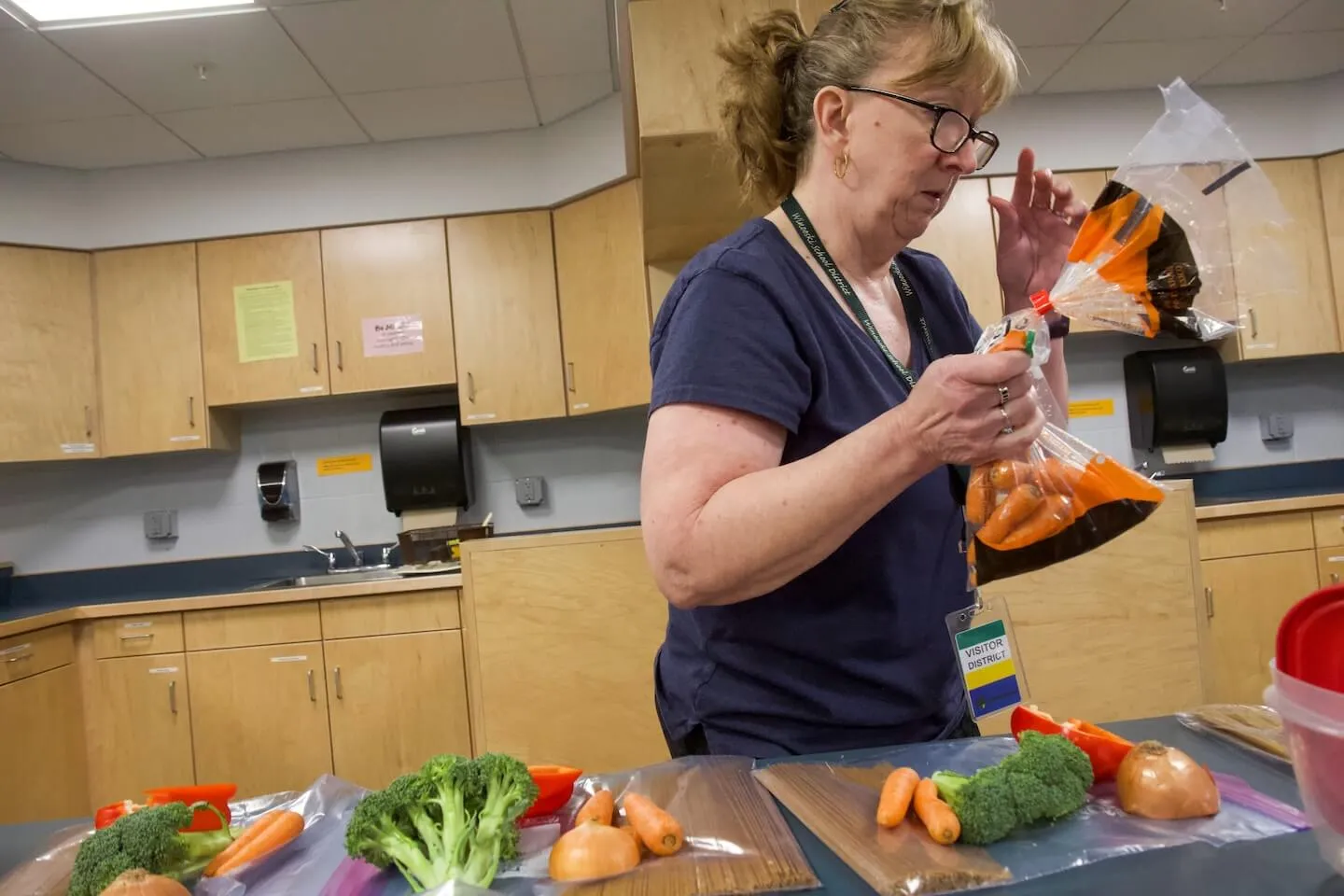
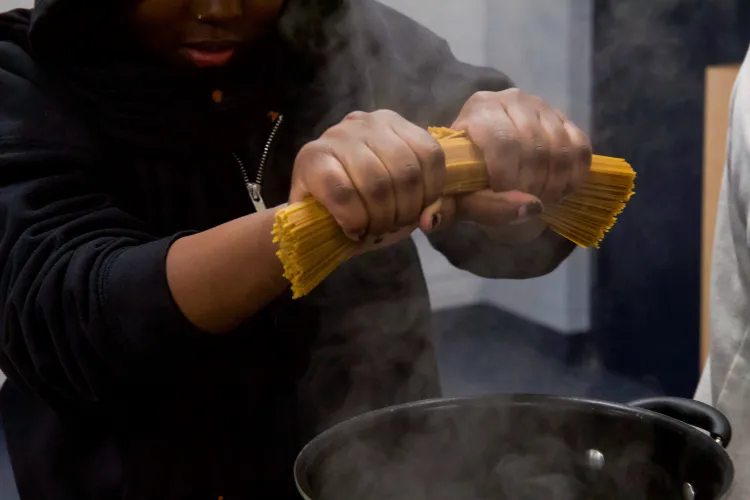
Pinard contributes to that goal by teaching EFNEP classes across the state. This past spring, for example, she pulled a wagon full of pre-portioned veggies and noodles into Winooski Middle and High School, where she guided about a dozen middle schoolers through the process of cooking lo mein.
"I try to have us cook in every class," she said.
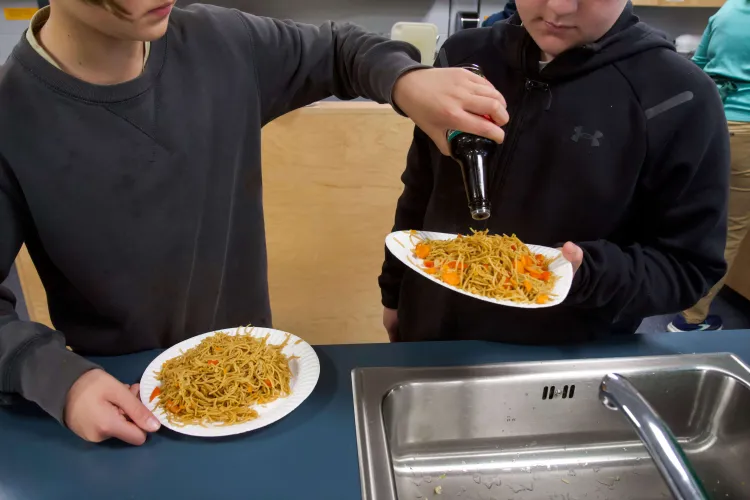
In groups of two and three, the students followed each step of the recipe, from chopping and boiling to sauteing and saucing. Before too long, a pleasant aroma of garlic, ginger and soy sauce wafted across the classroom. And at the end, every student got a chance to sit down and eat the vegetable-rich dish.
"The biggest outcome that [EFNEP] really looks for is an increase in consumption of produce, fruits and vegetables, especially vegetables," Pinard said. "Because all the curricula are research-based, and designed to be taught in a series, it really looks toward behavior change."
National data show that both adult and youth who participate in EFNEP do increase their consumption of vegetables and fruits between entering and exiting the program. And that they decrease the amount of solid fat and sugar they consume.
Pinard also says she witnesses the impact of community-building among EFNEP class participants. Sometimes she'll see single parents form friendships and share meal prep one night a week. And some students she's taught at UVM and Champlain College have gone on to form supper clubs.
"Some of them eat together," Pinard said. "It has tremendous value if a group of oftentimes strangers get together to start sharing and learning, then prepare and cook together."
Community partners also contribute important building blocks for EFNEP programming by helping recruit participants, offering space for classes and sometimes transporting those participants or providing child care. Pinard has worked with school districts, summertime food sites, camps, child centers, community health centers, housing developments and state programs like WIC.
"Anywhere who will have a group," she said.
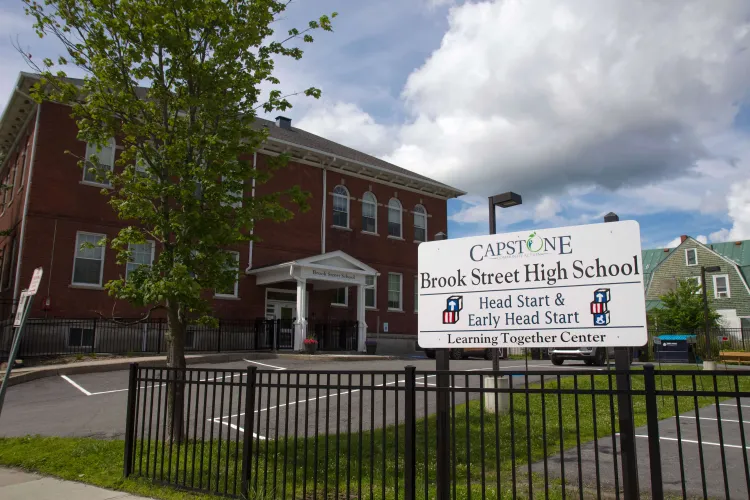
Capstone Community Action's Head Start program at Brook Street School in Barre is one such community partner. Pinard taught an EFNEP class there at the request of 24-year-old student Dakota Austin.
Austin and her Head Start classmates are working toward their high school diplomas. As part of that, Austin said she wanted to learn more about nutrition.
"I didn't always know how to eat healthy," she said. "I grew up based off of eating from convenience, and I think my mom also just didn't know."
Austin's biggest takeaway from the EFNEP class? Laying out all of your ingredients for a meal before you start cooking it can make the process less stressful. Also: cooking at home with fresh food can be more cost-effective than buying something frozen.
"You just have to learn how to actually use healthy ingredients, and then you can eat healthier, on a stricter budget," she said. "You're more likely to get more servings if you make it yourself, and you can freeze whatever you cook and use them for later on."
Austin and her classmates got to put this to the test during the EFNEP classes. They all came up with their own meal ideas, went to the grocery store with Pinard to buy ingredients using the budget of provided gift cards, then made the meals on portable stovetops in the hallway of Brook Street School. Austin made Philly steak and cheese.
"I didn't realize that could have been a healthy meal," she said. "Just based on a little bit of change of ingredients, like doing whole grain bread or supper rolls instead of white bread... I don't add brown sugar in it."
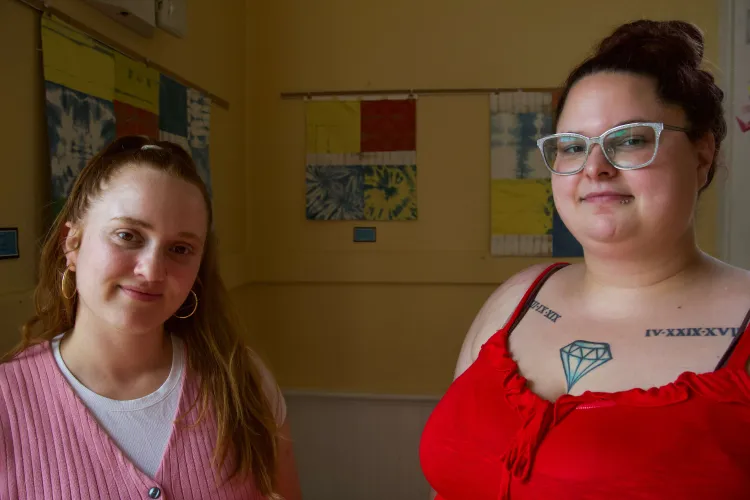
Sugar, and learning that it was a carbohydrate, was a major a-ha moment for Austin.
"All I could think of was bread, I didn't think that it's in everything," she said. "I realized that I was consuming like three cups of sugar a day, and that's a lot."
Austin shared that she hasn't always had the best relationship with food. But as a result of the EFNEP class, she said she's a healthier version of herself.
Austin added that multiple generations of her family can now be empowered with more food and nutrition knowledge, too. Like her mom.
"I can pass it to her," she said. "I can now teach my child, and she can teach her child."
Learn how to make chicken fried rice with Lori Pinard, nutrition educator with the Community Nutrition Education program at University of Vermont Extension, on Across the Fence: