UVM students gained skills and hands-on experience throughout the state and across many different fields, including:
- making photos, video, audio and writing for the Farmworker Education Hub, Extension offices, Forestry program and Across the Fence;
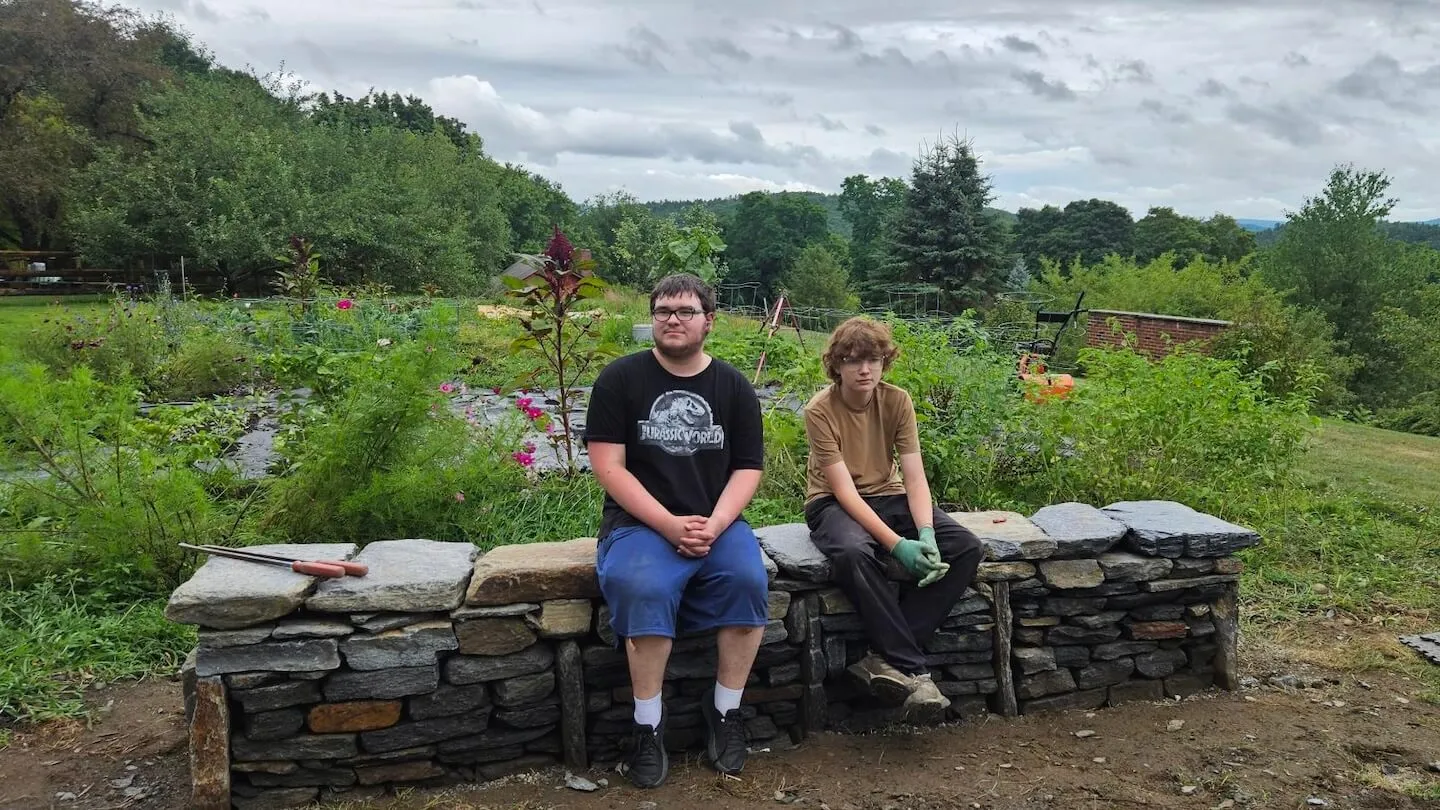
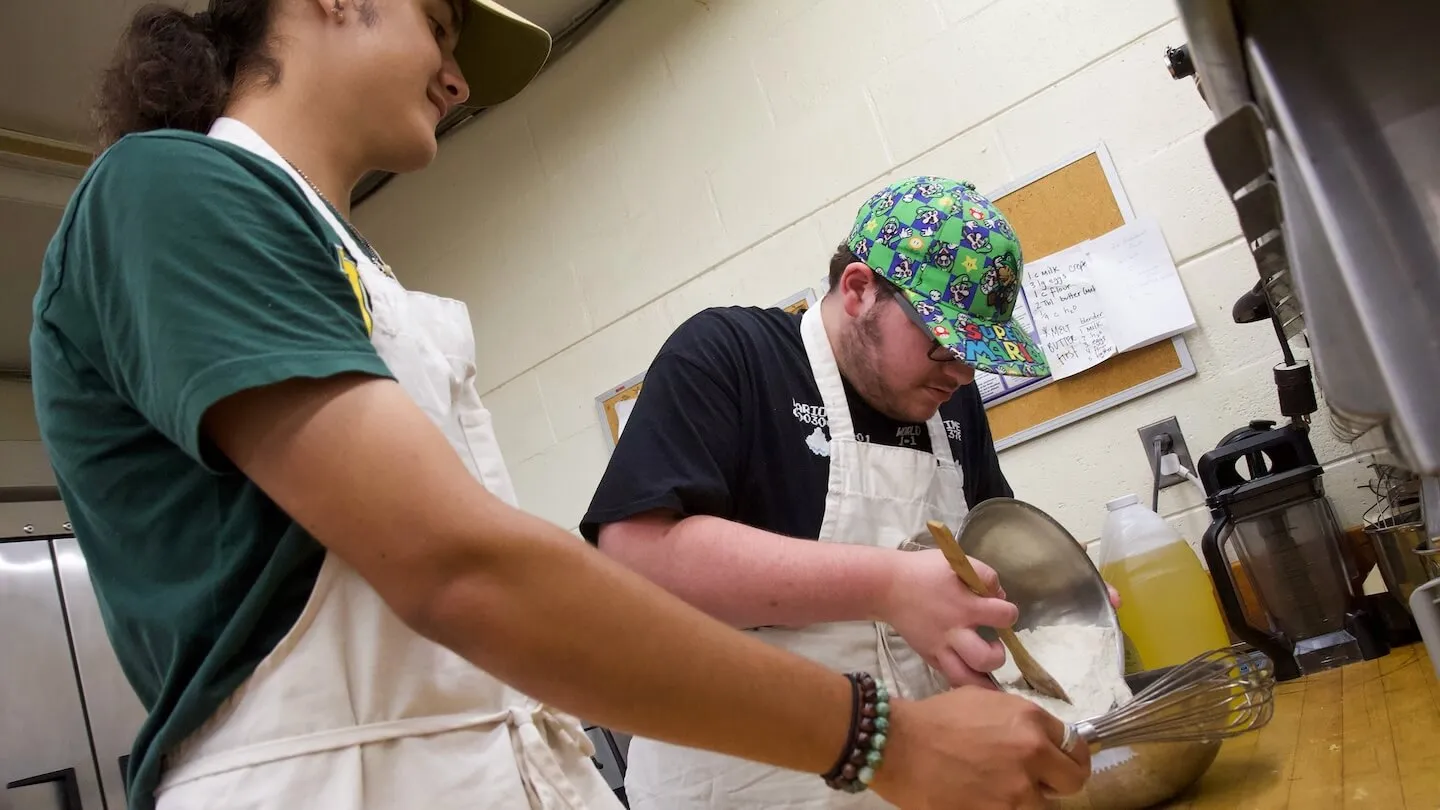
- coordinating STEM events and programming, and working with Brattleboro Union high schoolers in a summer garden and kitchen program, through Vermont 4-H;
- exploring agroecology and farm viability on a small-scale fruit farm;
- studying strawberry diseases on-farm and on-campus at the Plant Diagnostic Clinic; and
- collecting tree restoration data in riparian forest areas in the Winooski River watershed.
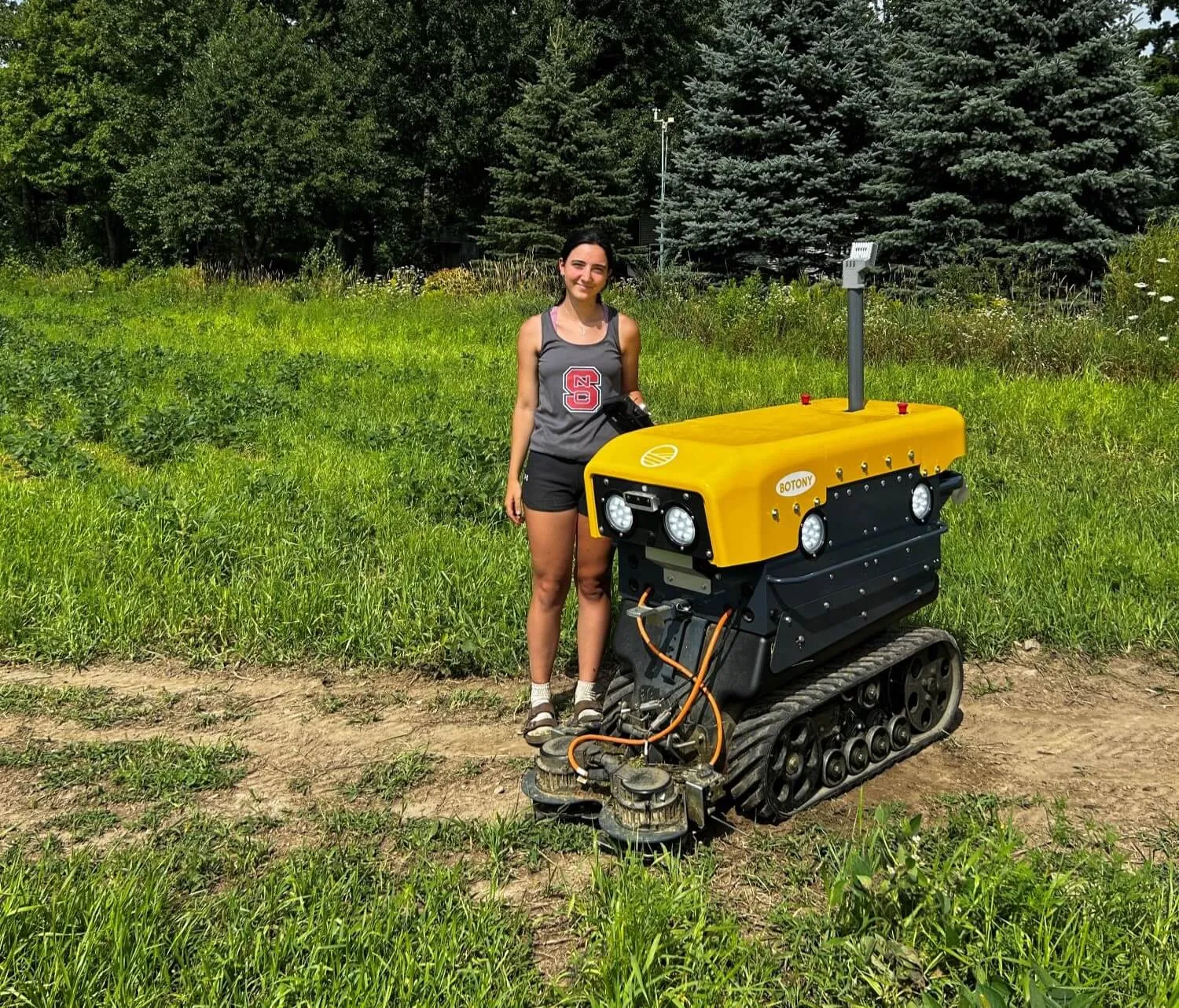
One local high school student also got to test out precision agriculture technology by way of the Northwest Crops and Soils Program's research into autonomous weeding robots.
Meet a few of these interns below.
Matthew Owen '27, Plant Diagnostic Clinic intern
While Plant Biology major and Forestry minor Matthew Owen said his internship this summer covered a "huge variety of stuff," he mainly worked on a survey of strawberry plants.
"We were pretty much just trying to figure out what diseases strawberries from local farmers had," he said.
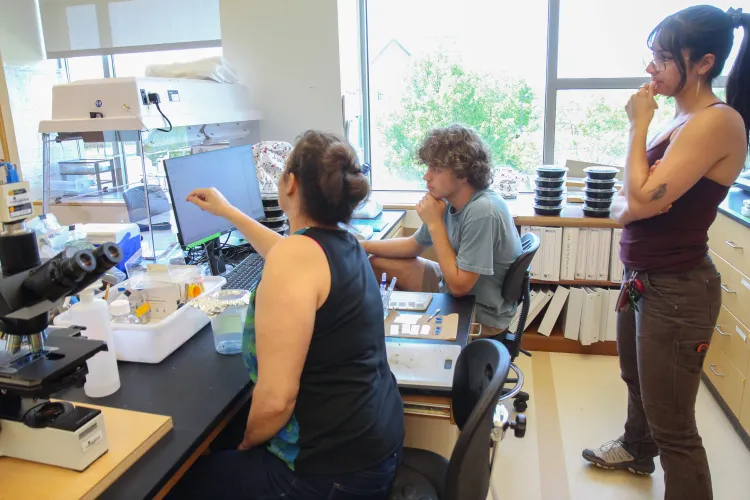
Some days, Owen helped intake strawberry plants at UVM Extension's Plant Diagnostic Clinic. With the supervision of Plant Diagnostic Clinic Research Specialist Giovanna Sassi, Owen dissected the plants and examined their parts under a microscope for fungal pathogens.
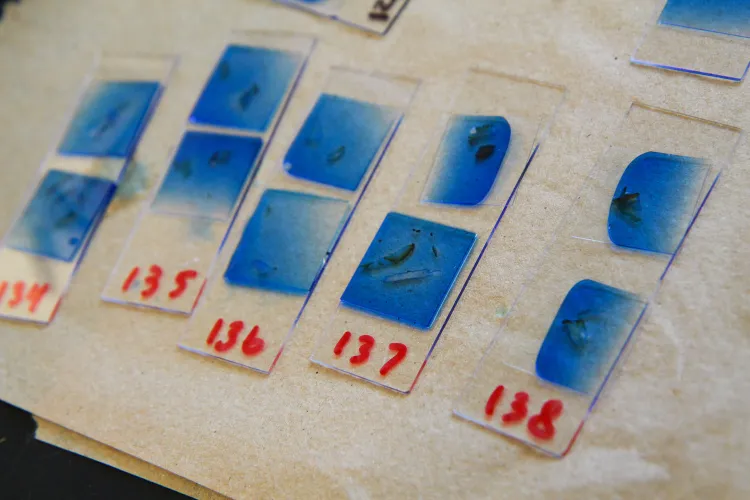
Other days, he visited the farms the plants originated at, to see the berries.
"Actually seeing the farmers and getting to talk to them, it's really cool to see how what we're doing in the lab is actually being implemented in the field," Owen said. "A lot of these results are really going to be useful for next year's crop."
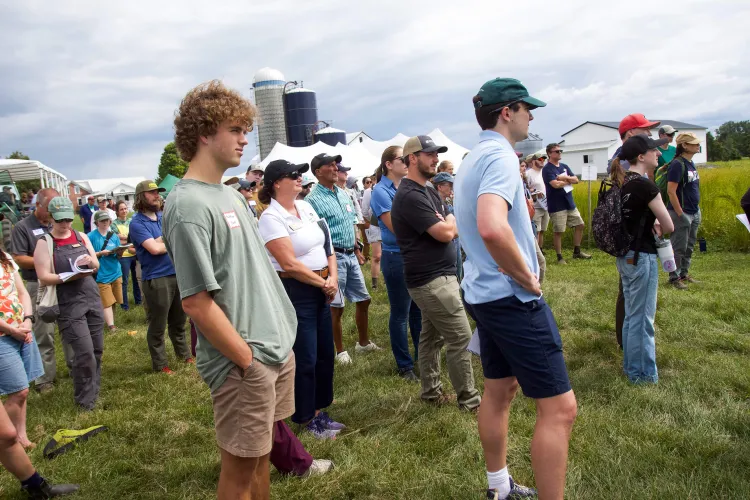
To cap off his internship, Owen attended Extension's 19th Annual Crops and Soils Field Day at Borderview Research Farm in Alburgh. There the Northwest Crops and Soils Program shared with farmers and community members the latest research, including the strawberry survey Owen helped conduct.
Lex Singh '29, Extension Food Systems intern
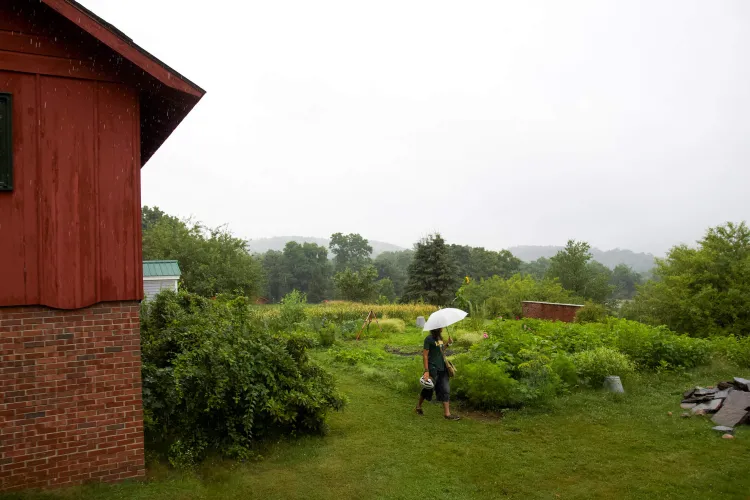
As an incoming sophomore Environmental Sciences major at UVM, Lex Singh already knows he wants to be active in community and work in agriculture. So he did an Extension internship that combined both experiences, in Brattleboro.
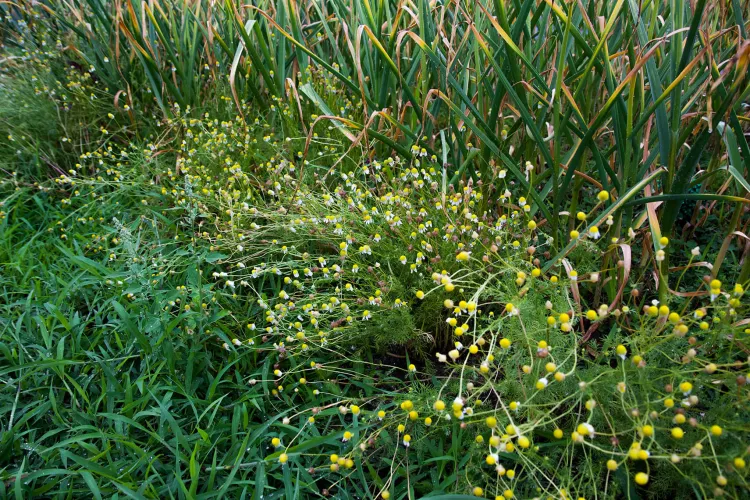
For the first part of their internship, Singh visited local farms with Extension Produce Safety Specialist Hans Estrin. And Singh said that this applied experience challenged some assumptions they'd previously had in classroom settings around the use — or not — of regenerative agriculture practices.
"Due to capitalism creating the circumstance where the primary focus must be income, traditional western agricultural practices are the ones used most often instead of regenerative ones," Singh said. "Though it gives me hope to have worked with farms this summer that are making it work while also caring for the environment."
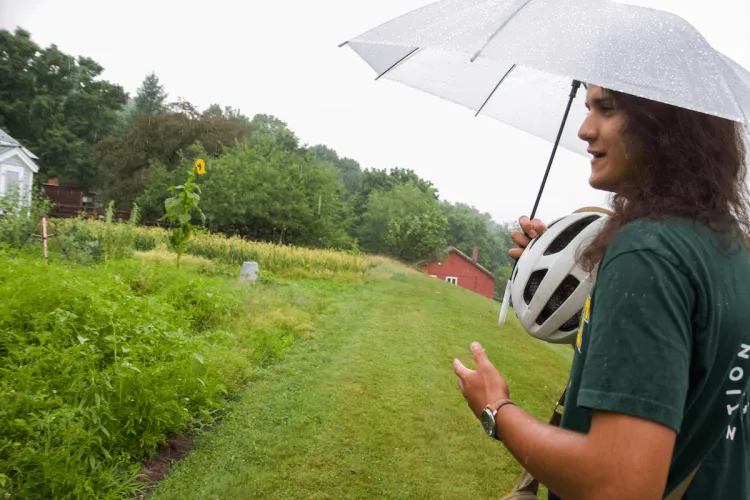
In addition to meeting local farmers, Singh has also connected with Brattleboro Union High School (BUHS) students participating in CAVE (Culinary Agricultural Vocational Education) this summer.
CAVE, which has funding through the Oh YEA! 4-H Grows True Leaders project and is a partnership between BUHS and UVM Extension 4-H, seeks to strengthen confidence, independence and future employment pathways for high schoolers who face barriers to education. It's doing so by growing, cooking and serving fresh food at the Winston Prouty Campus.
For the second part of his internship, Singh has been gardening and cooking with CAVE students. And as a result, he's witnessed the power of food systems to develop community.
"These kids light up when they get to take part in this," Singh said. "I also see the community absolutely elated about how good the food is, and how affordable it is."
Anastazja Szukala '27, Extension Storymaps intern
Senior Public Communications major and Consumer and Advertising minor Staja Szukala knew she wanted to practice her multimedia and interviewing skills while creating a couple storymaps for Extension.
One storymap would give a tour of various tree species on the UVM Green, a request on behalf of university employees who don't work on-campus, but want to get to know it better. Another would describe for the public the Extension offices spread throughout the state. Both would provide new resources to communities within and outside of UVM.
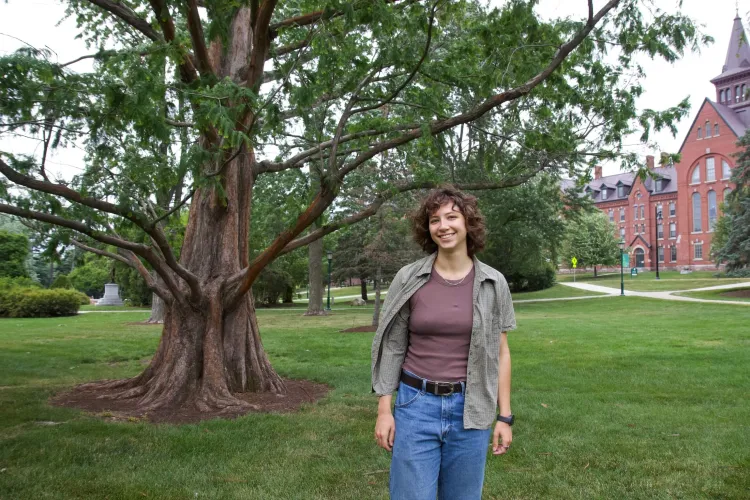
But Szukala didn't know a ton about campus trees or Extension offices. And like many communications professionals (this story's author included) setting out on an assignment they're about to research, do outreach on and produce, Szukala was a little nervous.
"I wasn't 100% sure how I was going to do, going into it," she said.
Some 80 hours of work later, Szukala has the Extension offices storymap well underway, and she completed the UVM Green virtual campus tree tour storymap.
"Now I'm really excited to share it with my friends," she said of the tree tour. "I'm really happy with how it turned out."
Szukala has also received numerous positive comments from the UVM horticulture, landscape and forestry experts she consulted, as well as the tour's original requestor.
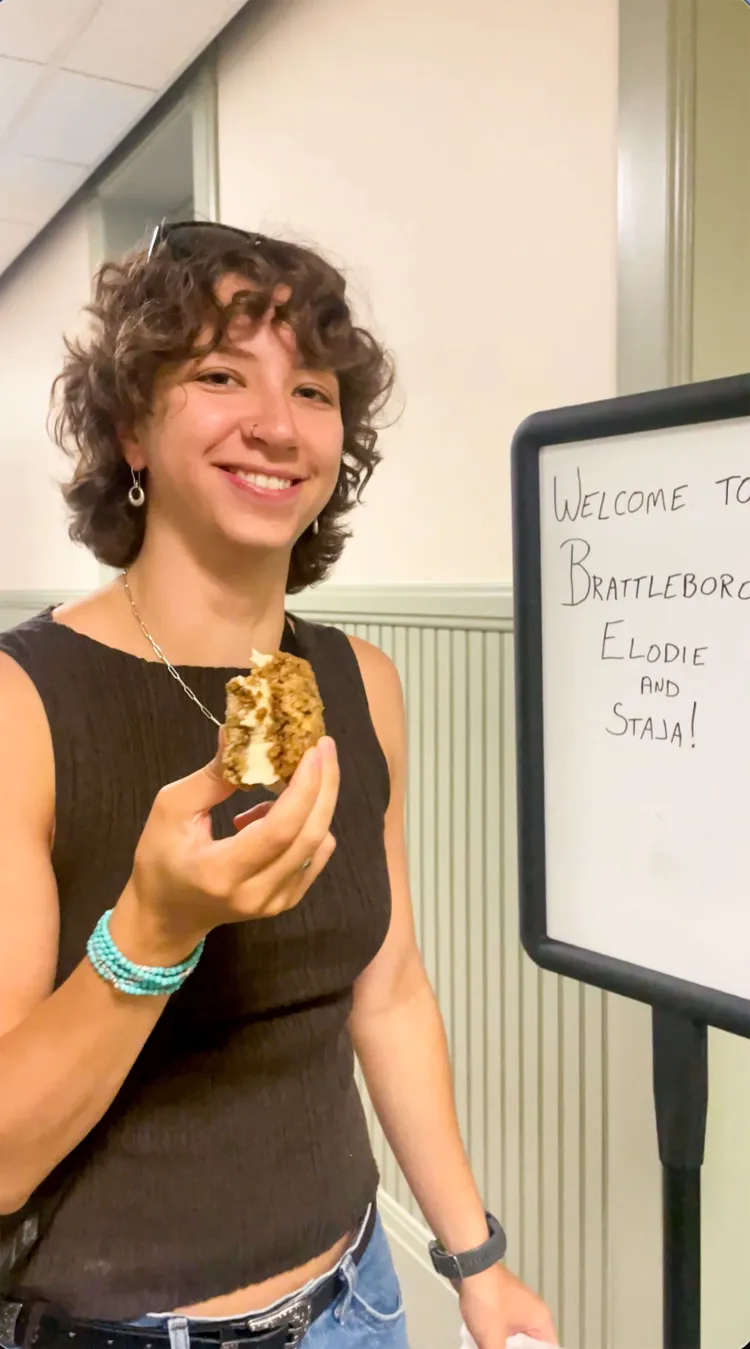
And in the process of working on the Extension offices storymap, including a visit to the Brattleboro office, Szukala got the reward of enthusiasm and appreciation from the faculty and staff she interviewed.
"Communicating with staff all around the state and hearing their excitement for the storymap project has given me so much pride in this project," she said. "This summer internship taught me how important it is to engage with my community."
Henri Zamanian '27, Across the Fence production intern
It was surprising for Business Administration and English major and Psychoanalysis minor Henri Zamanian, to learn that the television show Across the Fence is usually run by three people.
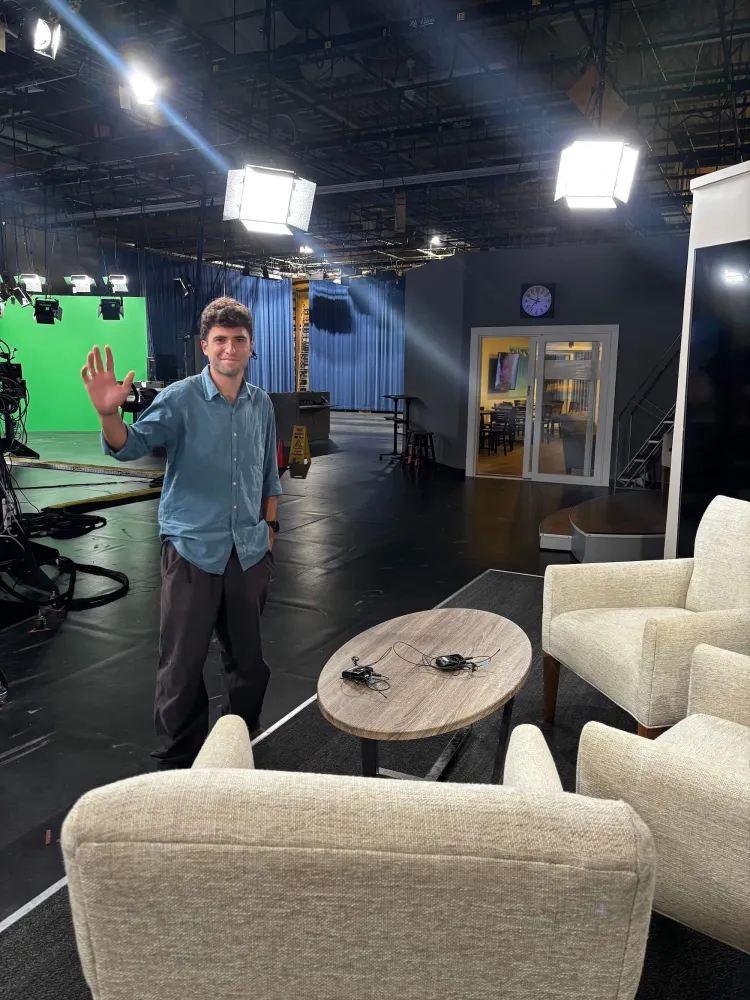
However, this summer, he became the fourth member of the team. And the confidence and can-do attitude he brought to the role shone through so much, that guests remarked on it.
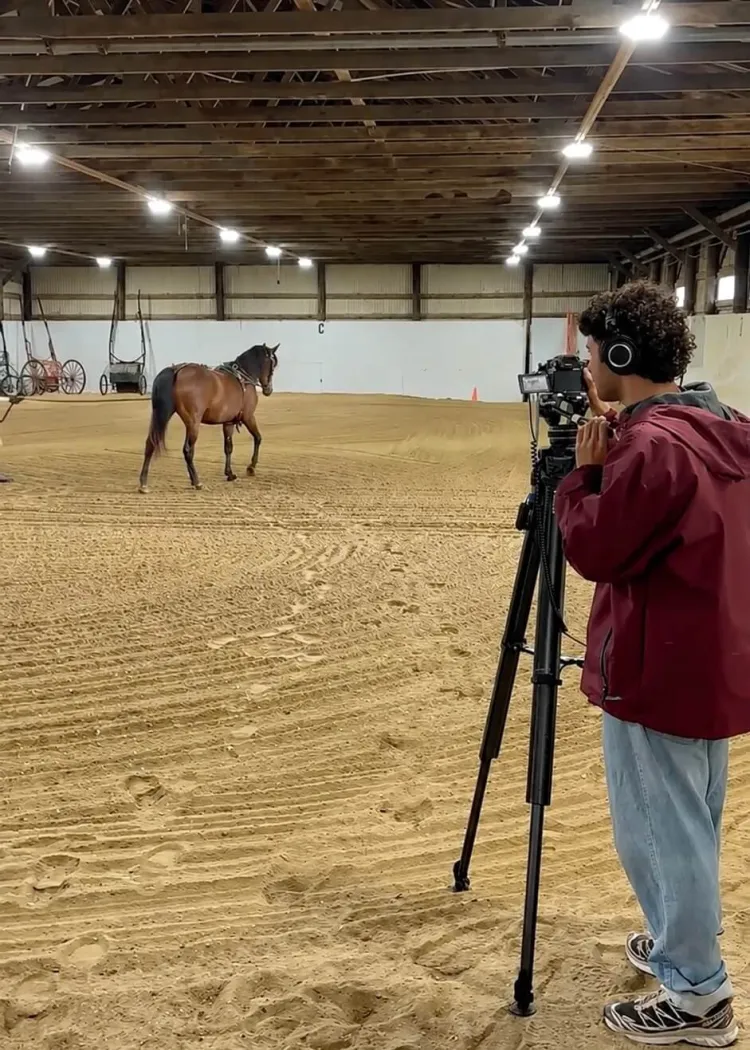
"Day-to-day, I [did] a mix of things," Zamanian said. "It can look like going to a shoot in the field and being handed a camera and told to get content, going into the studio and helping be sure the process is run smoothly, or going into the office and working on the editing process."
Zamanian said that because he joined such a small team, his input made a difference — his byline is on episodes like the July 27 show on the UVM Morgan Horse Farm.
"[My work] is either directly used or takes some pressure off of the team," he said. "I genuinely always feel helpful."
Addison Gates, Missisquoi Valley Union High School 2026 graduate, Northwest Crops and Soils Program intern
This coming fall, recent high school graduate Addison Gates will leave her hometown of Franklin, Vermont to study civil and environmental engineering at North Carolina State University. But first, she wanted some hands-on experience to inform her major and eventual career.
So Gates interned with Extension's Northwest Soils and Crops Program as it researches the viability of autonomous weeding robots for Vermont farmers. She worked closely with Agronomy Specialist Jeff Sanders and Precision Ag Specialist Daniel Bliss, who are leading the research project.
Together, all three would often spend 8-10 hours daily in the field. Gates helped clean robot parts — and replace any broken ones.
“I will definitely remember times when the tracks would fall off the robots in the field. That happened quite a bit,” she said. “There were probably a couple times where all three of us had to go out and try to get it back on."
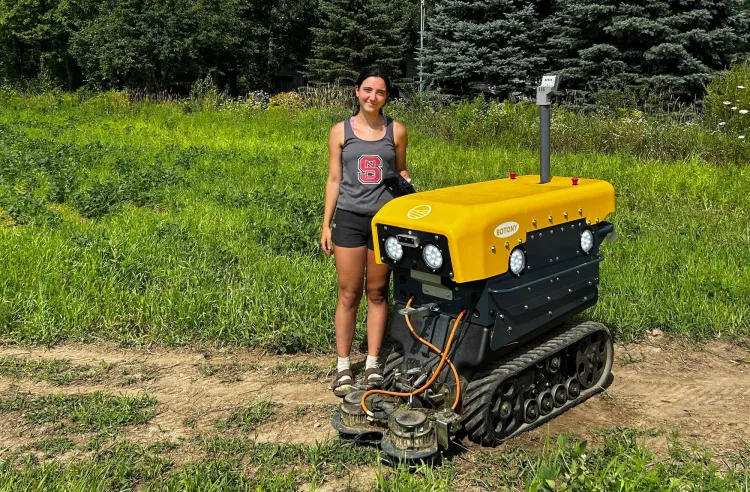
Gates said as a result of the internship, she has a newfound confidence for troubleshooting and fixing things. And she definitely achieved her goal of witnessing research and "all the moving parts" — in this case, robot parts, wrestled back together in the middle of a soybean field.
"It's been cool to learn about," Gates said. "I learned things here that you don't necessarily experience through high school class or high school experiences.”
NWCS Outreach and Program Specialist Shannon MacDonald interviewed Addison Gates and contributed to this story.