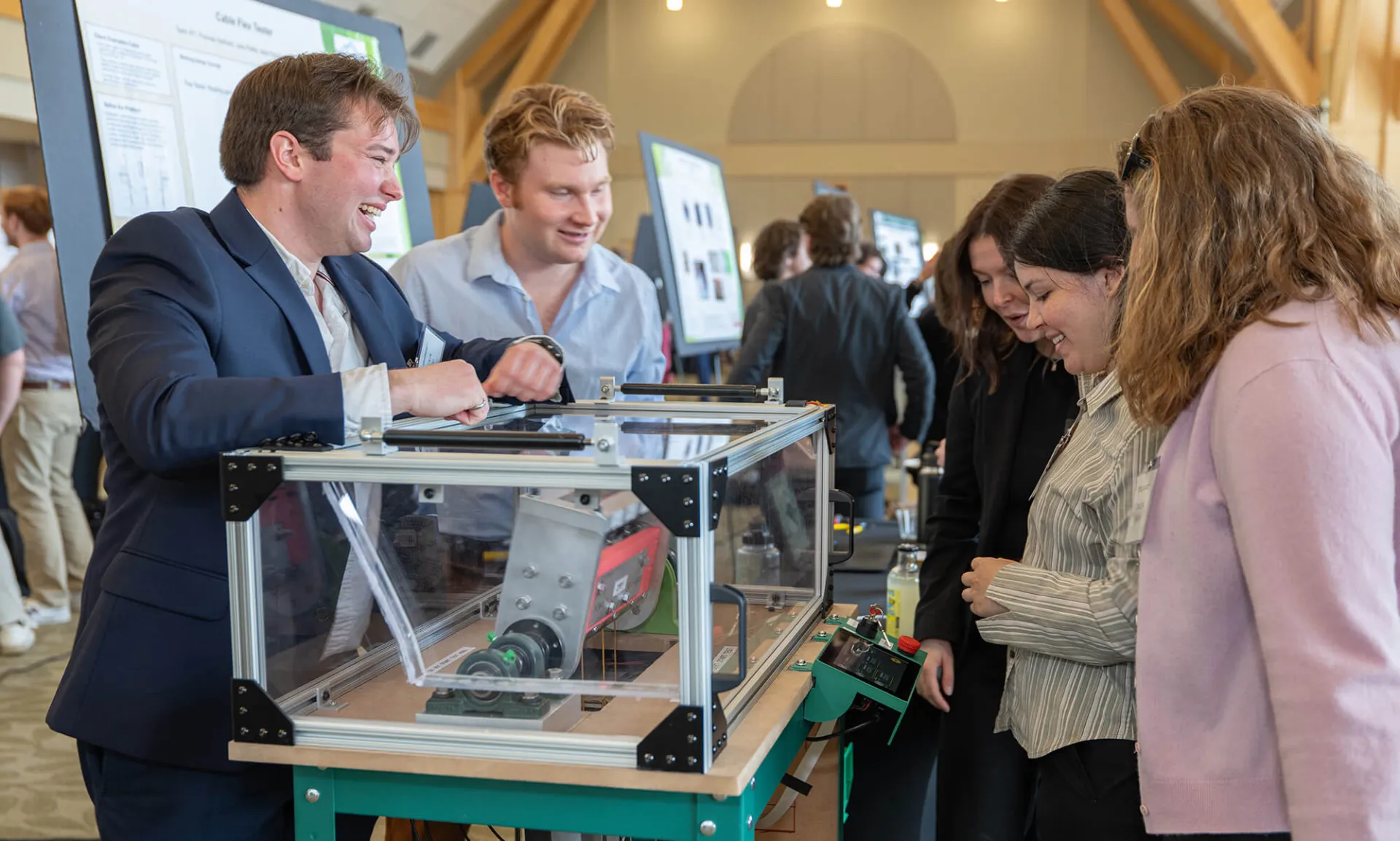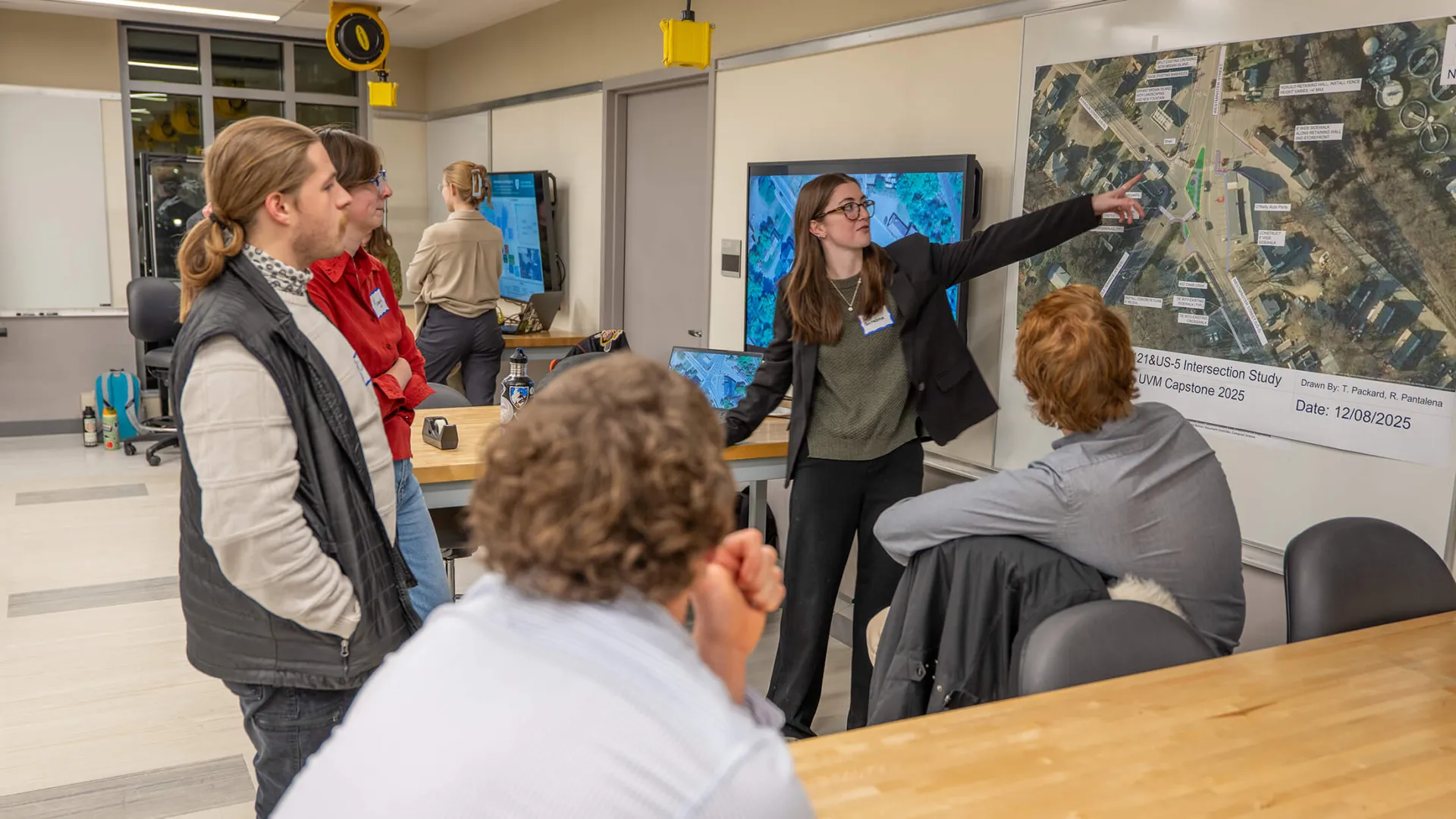
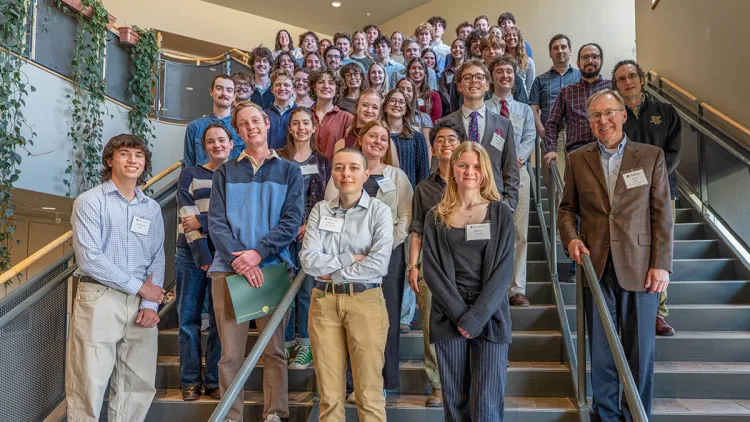
For two decades, CEE students have been helping shape the future of Vermont through hands‑on engineering projects that matter. Since 2006, our senior capstone program has partnered with municipalities, towns, and non‑profits across the state to take on real infrastructure and environmental challenges — the kinds of issues that directly influence how Vermonters live, work, and thrive.
The capstone is more than a culminating academic requirement. It’s a civic‑minded design experience in which student teams engage with multidisciplinary, community‑driven engineering problems rooted in Vermont’s needs. Over the past 20 years—the last ten of which led by CEE Professor of Practice John Lens—students have completed more than 260 projects with 70 communities statewide, contributing thousands of hours of engineering insight and resources for many communities that may otherwise lack the capacity to access.
Student capstone projects strengthen UVM’s land-grant mission by connecting teaching, scholarship and service. Their projects have supported stormwater and flood‑resilience planning; retrofits of bridges, streets, and buildings; the design of new bridges and hydropower pipelines; improvements to wastewater systems; restoration of historic structures; and remediation strategies for landslides — all essential components of a more resilient, sustainable, and economically vibrant Vermont.
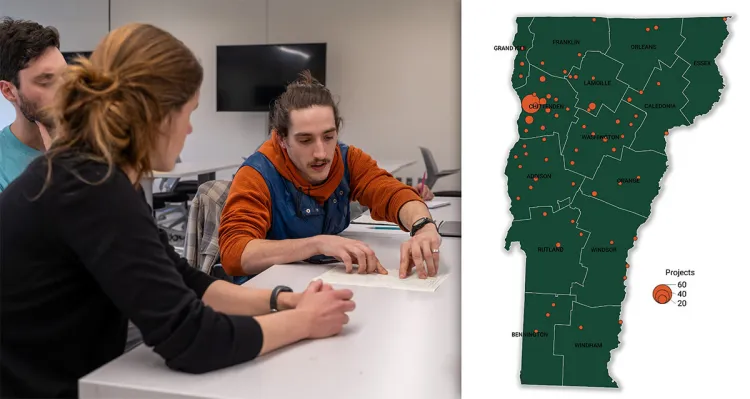
These projects often become the backbone of grant applications, capital planning efforts, and thoughtful design alternatives that support informed decision‑making and guide communities toward a final engineered solution. This work helps communities stretch limited resources while accelerating progress. The result is a powerful partnership: students gain real‑world experience with tangible impact, and Vermont communities gain engineering solutions that strengthen local economies, protect public health, and enhance quality of life.
Twenty years in, the CEE capstone program stands as a model of how universities and communities can work together to build a stronger, more resilient Vermont.