Instead, they want AI systems that respect their expertise, protect their data, and make their work simpler, not more complicated.
That message emerges from a new peer‑reviewed study led by researchers at Virginia Tech and the University of Vermont, offering one of the first large-scale empirical analyses of how agricultural advisors evaluate AI-enabled decision support systems. The study, published in Technological Forecasting and Social Change, sheds light on which features of emerging digital tools will win over the people farmers trust most.
Listening to the Advisors Behind America’s Farms
Crop advisors play a pivotal role in helping farmers manage fertilizer, identify pests and diseases, schedule irrigation, and meet carbon or nutrient accounting requirements. Their decisions influence productivity, profitability, and environmental sustainability across millions of acres.
But despite the surge of AI applications in agriculture—from satellite-based nutrient forecasting to machine-learned pest detection—adoption has lagged. Concerns about transparency, privacy, and usability remain major hurdles.
“Technical performance of AI tools matters in agriculture, but cost and data ownership—especially shared or open models—are pivotal,” said Maaz Gardezi, Associate Professor in Virginia Tech’s School of Public and International Affairs and principal investigator of the study. “Crop advisors prefer systems that augment rather than replace professional judgment.”
The research that was conducted in collaboration with the American Society of Agronomy was led by Maaz Gardezi an Associate Professor in the School of Public and International Affairs at Virginia Tech, with co-authors from UVM: Professor Asim Zia, Professor Donna M. Rizzo, Research Associate Professor Scott C. Merril, UVM graduate students Benjamin E.K. Ryan and Halimeh Abuayyash, and Virgina Tech Graduate Students Indunil Dharmasiri, Pablo Carcamo, Bhavna Joshi. Additional collaborators were David Clay Distinguished Professor at South Dakota State University and John McMaine Extension Associate Professor at University of Kentucky. The research team used a discrete-choice experiment to analyze how crop advisors weigh trade-offs among cost, accuracy, spatial precision, and data ownership when evaluating AI-based systems.
Gardezi and his collaborators studied more than 2,000 crop advisors who evaluated AI‑based decision support tools that varied in cost, accuracy, spatial precision, data requirements, and data ownership.
Simplicity Over Flashy Features
The study revealed that advisors consistently gravitate toward tools that are easy to use, even if those tools are less technically advanced. Systems that incorporated satellite data and required fewer manual inputs were preferred over “ultra‑accurate” models demanding extensive on‑farm data collection. For many advisors, practicality outweighed precision.
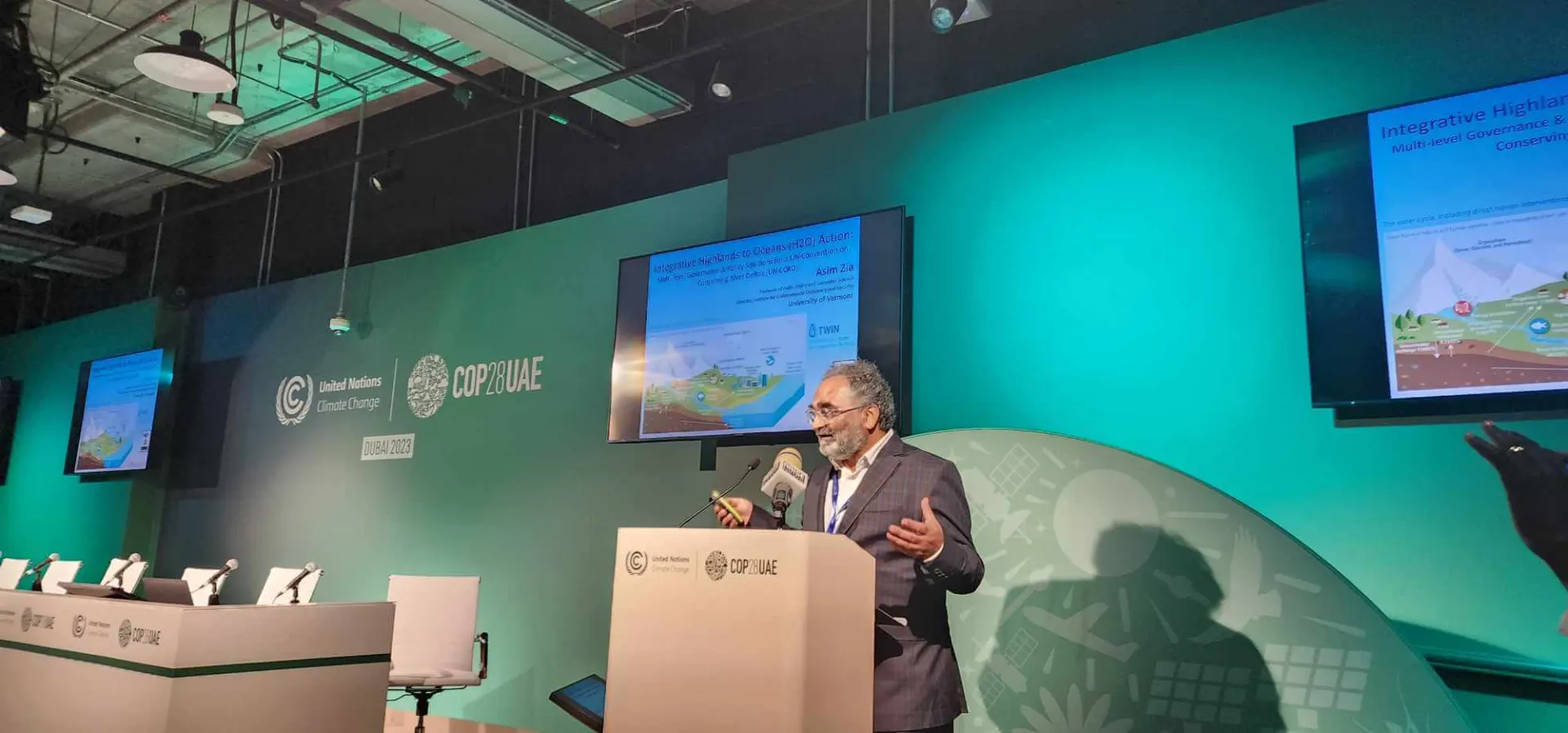
“Certified crop advisors are among the most trusted technical experts that farmers in the U.S. turn to,” said Asim Zia, Professor of Public Policy and Computer Science at UVM. “Designing AI decision tools that enhance, not replace, their expertise is essential for building agricultural systems that are productive, equitable, and climate resilient.”
Trust Is Built Through Transparency
Along with cost, data governance was one of the strongest predictors of whether advisors would adopt a system. Tools that allowed users to retain full or shared control of their data ranked far higher than those requiring exclusive ownership by companies.
Advisors also expressed a preference for systems that can be calibrated to local field conditions, allow users to edit recommendations, and support field‑level verification—all features that maintain their professional autonomy.
Not All Advisors View AI the Same Way
The study found significant differences in attitudes toward AI itself. Advisors who were optimistic about the technology were more willing to adopt systems that required intensive data inputs. Those concerned about privacy or misuse of farmer data remained deeply skeptical.
“This research helps move AI for agriculture beyond performance metrics,” said Donna Rizzo, Dorothean Chair and Professor of Civil & Environmental Engineering at UVM. “The goal is trustworthy, context‑sensitive tools that work for diverse farms and advisory systems.”
A Socio‑Technical Roadmap for the Future of Agricultural AI
The authors argue that AI developers and policymakers should adopt a socio‑technical approach, one that considers human values alongside technological performance.
Based on their findings, they recommend the following:
- Co‑designing tools with crop advisors and farmers
- Clear communication about cost, accuracy, and trade‑offs
- User‑centered data governance, ensuring shared or full control
- Human‑in‑the‑loop design that preserves expert judgment
This research underscores a growing consensus in agricultural technology: innovation alone is not enough. Tools must be usable, transparent, affordable, and aligned with the needs of the people expected to rely on them.