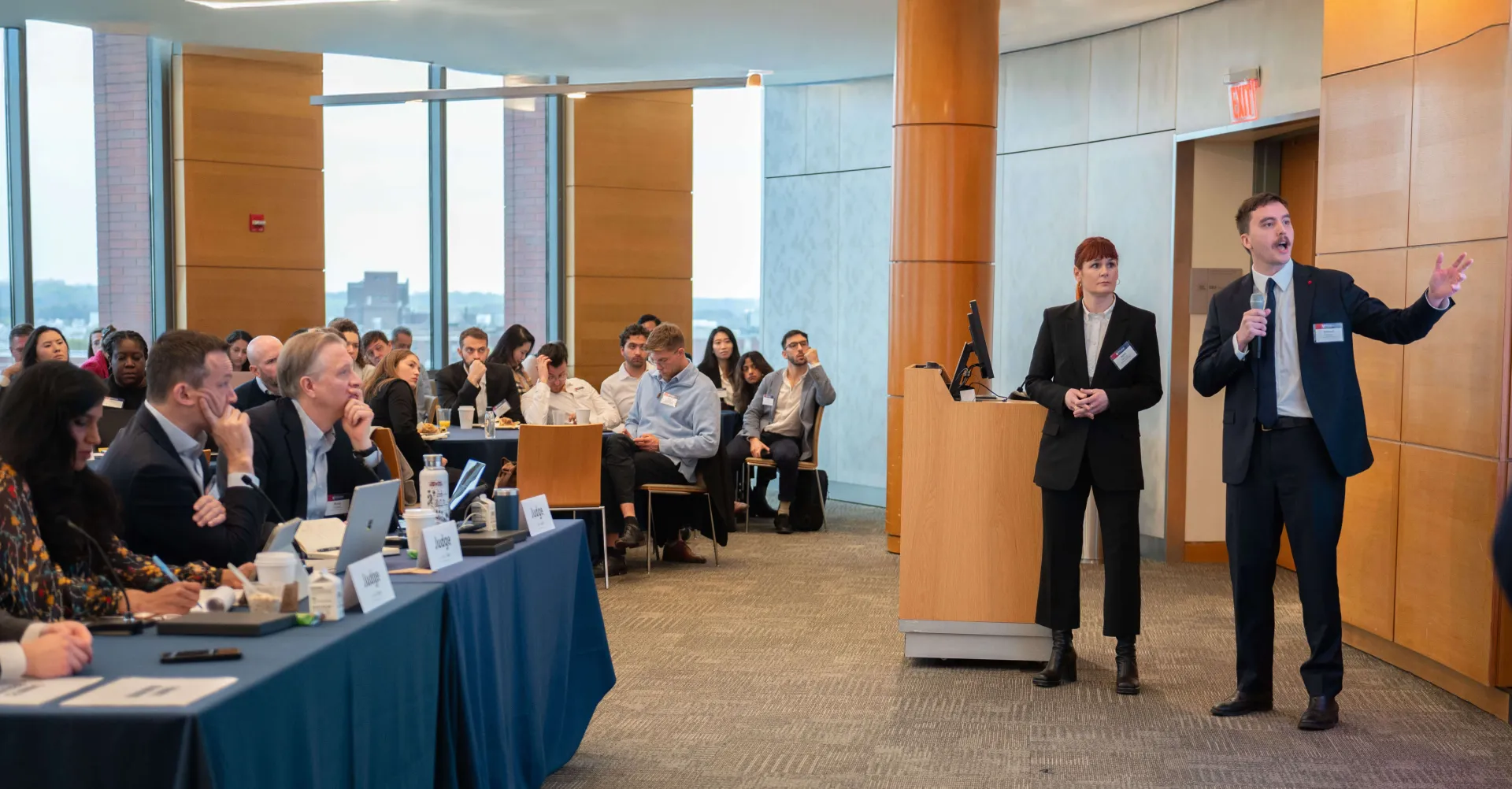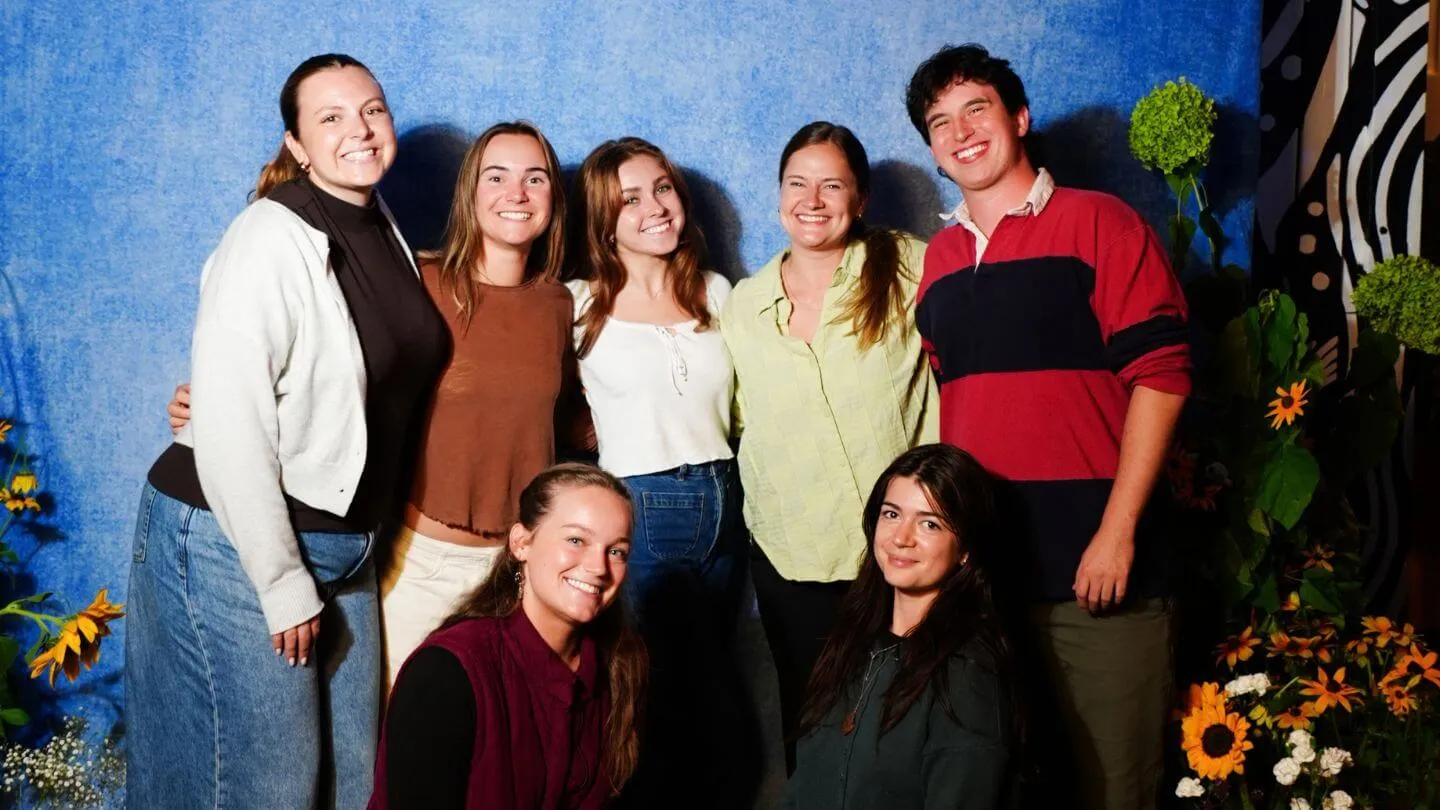
For years, the Sustainable Innovation MBA (SI-MBA) program at the Grossman School of Business has intentionally adjusted its academic schedule to ensure students can fully participate in See Change Sessions, Vermont's annual gathering of leaders, innovators, entrepreneurs, policymakers, researchers, and changemakers working to accelerate solutions to complex global challenges.
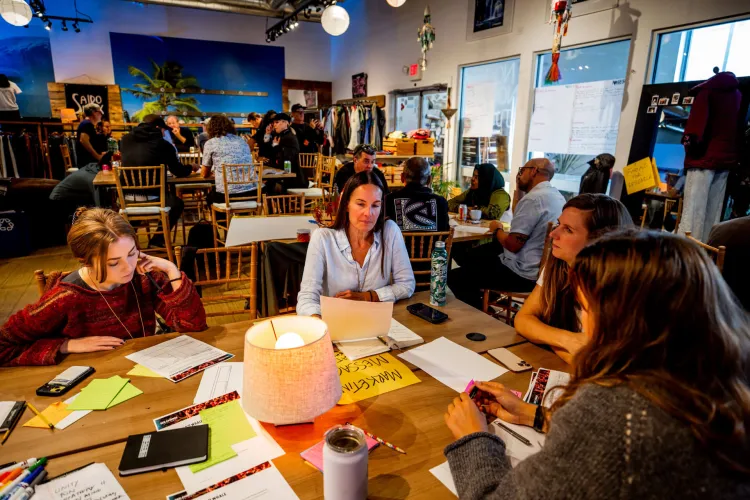
Hosted at Hula in Burlington's South End Arts & Innovation District, See Change Sessions brings together a carefully curated community from business, academia, technology, investing, government, nonprofits, and the arts. Rather than a traditional conference, the event is built around immersive working sessions, collaborative learning, and candid conversations designed to spark new ideas, deepen understanding, and strengthen relationships that continue long after the event concludes.
The longstanding partnership between SI-MBA and See Change reflects the program's commitment to experiential learning and the belief that leadership is developed not only in the classroom, but also through engagement with real-world challenges and the people working to address them.
"See Change Sessions creates a unique opportunity for our students to engage directly with leaders who are tackling some of today's most pressing environmental, social, and economic challenges," said John Kim. "By creating space for students to fully participate, we're reinforcing a core element of the SI-MBA experience: learning how to navigate complexity, build meaningful relationships, and translate ideas into action."
Exploring Complex Challenges Through Specialized Tracks
This year's See Change Sessions featured six tracks focused on challenges ranging from sustainable packaging and energy storage to artificial intelligence, circular economy policy, and innovation ecosystems. SI-MBA students participated across the event, bringing diverse professional backgrounds and perspectives to the conversations.
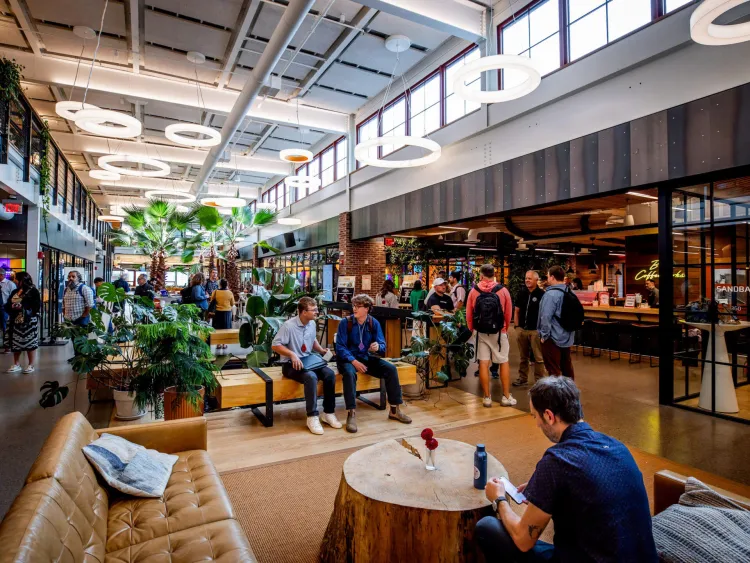
Packaging Matters: Moving from Vision to Practice
Developed in partnership with Atlantic Packaging, Packaging Matters explored how organizations can move beyond sustainability commitments and pilot projects to implement meaningful change across packaging systems and supply chains.
Participants examined topics including circular packaging solutions, materials innovation, source reduction, Extended Producer Responsibility (EPR) policy, artificial intelligence in supply chain management, and the role of collaboration in driving industry transformation.
For Griffin Zimmer, who studied marketing and sustainability at the University of Vermont before joining the SI-MBA program, the track highlighted both the complexity and opportunity of sustainable business transformation.
"One of the biggest takeaways for me was seeing how many stakeholders need to work together to make meaningful progress. Sustainable packaging isn't just a design challenge or a policy challenge. It's a systems challenge that requires collaboration across industries, supply chains, and organizations. The conversations reinforced why I came to SI-MBA: to develop the skills needed to help organizations navigate that complexity and create meaningful change."
The track also resonated with Nicholas Kammerdiener, whose professional experience includes leading sustainability initiatives within higher education dining operations, including efforts to eliminate single-use plastics.
"Having worked on sustainability initiatives at the operational level, I was especially interested in hearing how organizations are scaling solutions across entire systems. The sessions showed that innovation doesn't happen in isolation. Progress depends on bringing together businesses, policymakers, researchers, and practitioners who are willing to learn from one another and move from ideas to implementation."
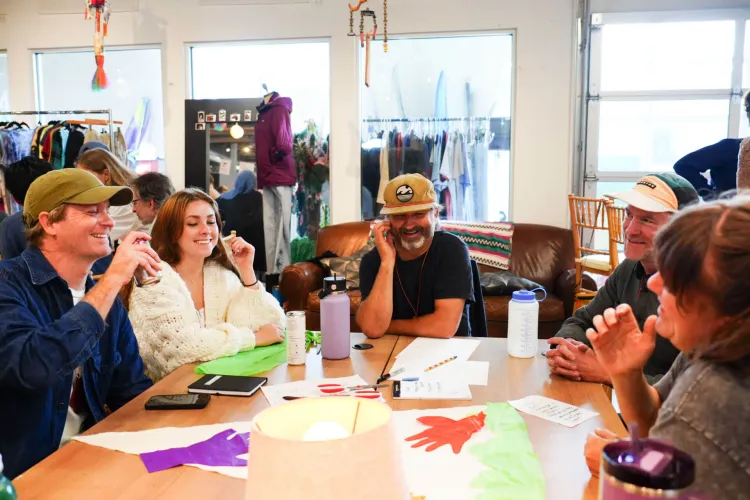
Fashioning Microfiber Solutions
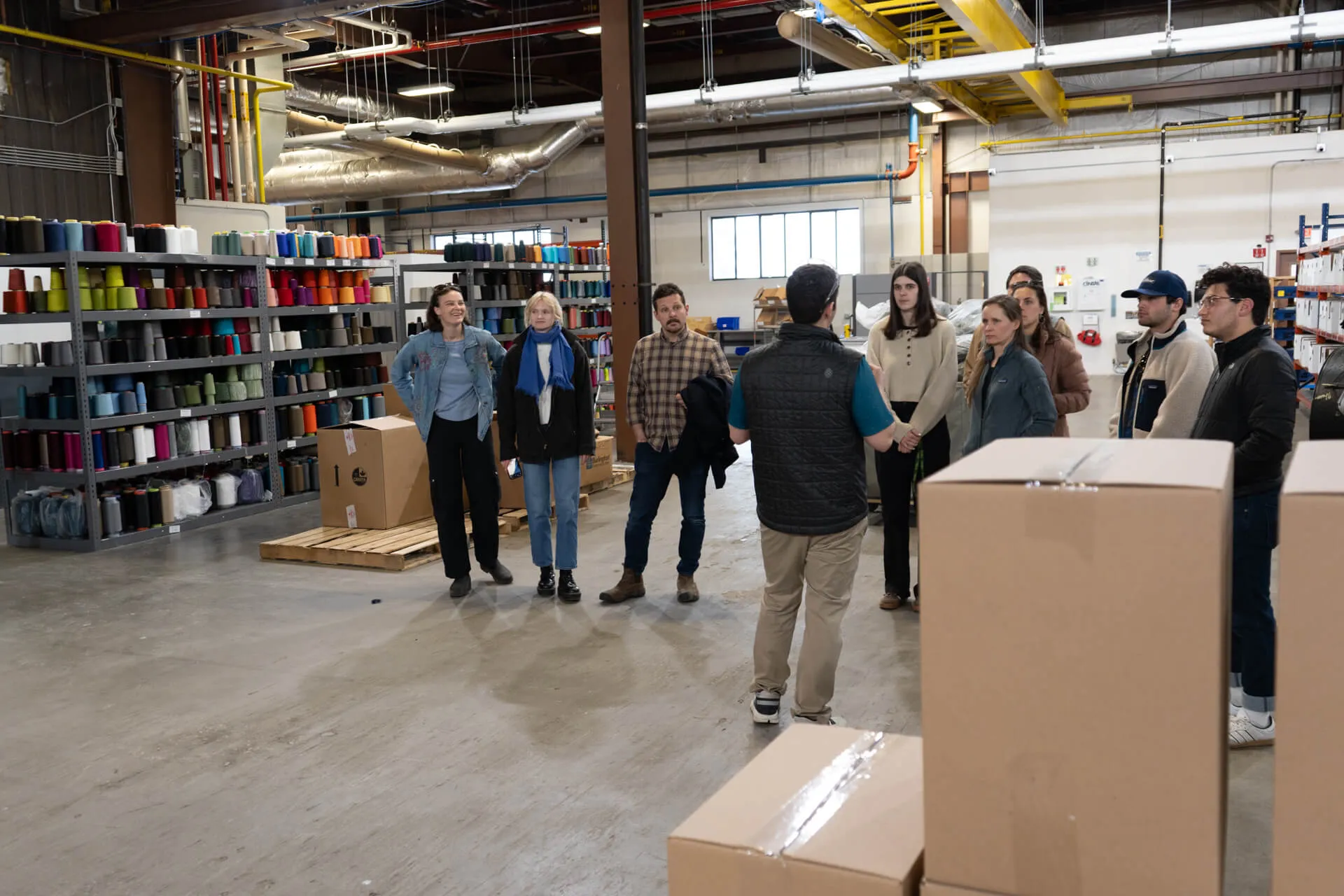
Through Fashioning Microfiber Solutions, participants examined one of the fashion industry's most significant and often unseen sustainability challenges: microfiber and microplastic pollution.
Bringing together fashion brands, manufacturers, researchers, NGOs, investors, and innovators, the track focused on emerging solutions and strategies for accelerating meaningful action.
For Molly Broom, whose background includes more than a decade in land conservation and outdoor recreation in western Wyoming, the topic connected directly to her interest in helping organizations build more sustainable relationships with the natural world.
"What stood out to me was the opportunity to examine a challenge that crosses so many different systems. Addressing microfiber pollution requires innovation in materials, changes in consumer behavior, scientific research, policy development, and business leadership. The conversations reinforced how interconnected environmental challenges are and why cross-sector collaboration is essential for creating lasting solutions."
The experience reflected the reason Broom chose the SI-MBA program: to combine her environmental background with business expertise and help organizations develop solutions that benefit both people and the environment.
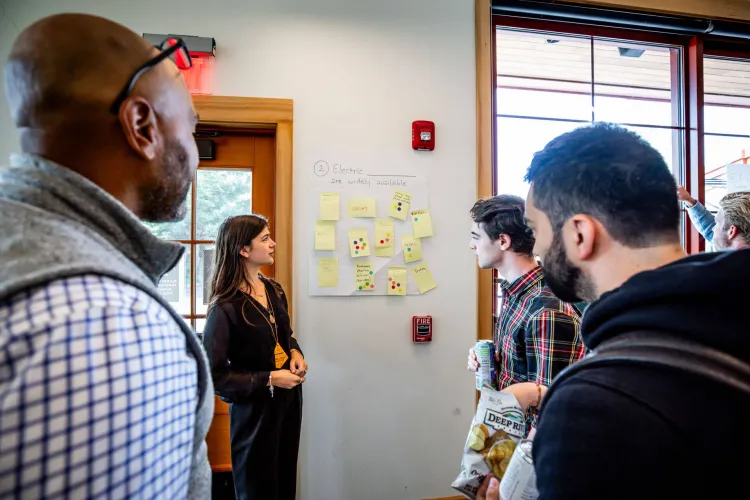
Energy Storage in Motion
Developed in partnership with BETA Technologies, Energy Storage in Motion explored the future of electrification beyond passenger vehicles. Leaders from aviation, maritime transportation, robotics, advanced manufacturing, and emerging mobility sectors gathered to examine how advances in energy storage can accelerate innovation across industries.
The track challenged participants to think beyond traditional applications and consider how collaboration across sectors can help shape the next generation of energy solutions.
For Jada Gleeson, the experience highlighted the unique blend of technical exploration, relationship-building, and creativity that makes See Change Sessions distinctive.
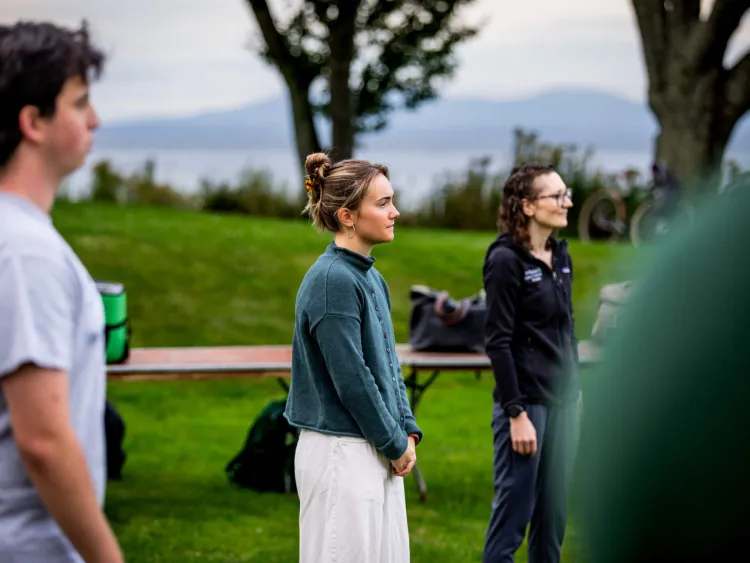
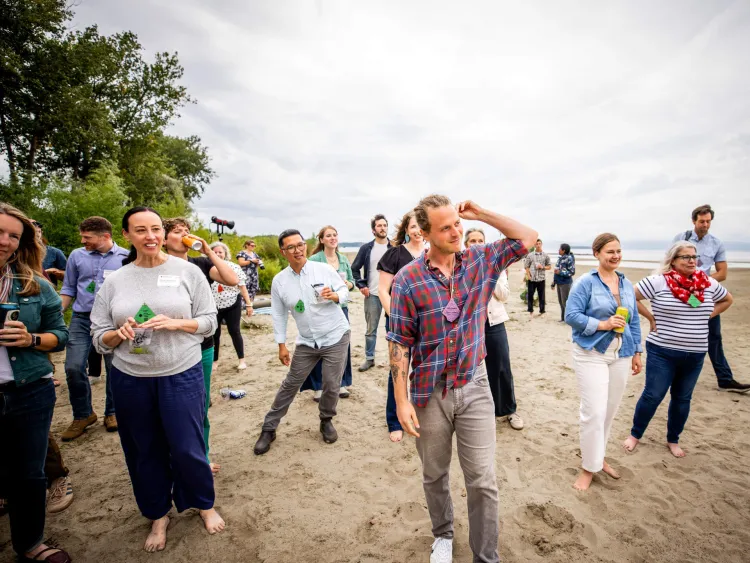
"From learning how to light beachside fires with flint and steel to sparking new ideas in energy storage alongside BETA Technologies, See Change was a masterclass in continuous learning. Moving through high-impact sessions, pitching energy-capturing space taxis, participating in lakeside morning yoga, and building genuine connections made it an unforgettable mixture of innovation, community, and vitality."
Gleeson said the experience reinforced the idea that innovation rarely happens in isolation. Some of the most valuable learning occurred through conversations with peers, industry leaders, and entrepreneurs working across sectors to solve complex challenges and envision new possibilities for an electrified future.
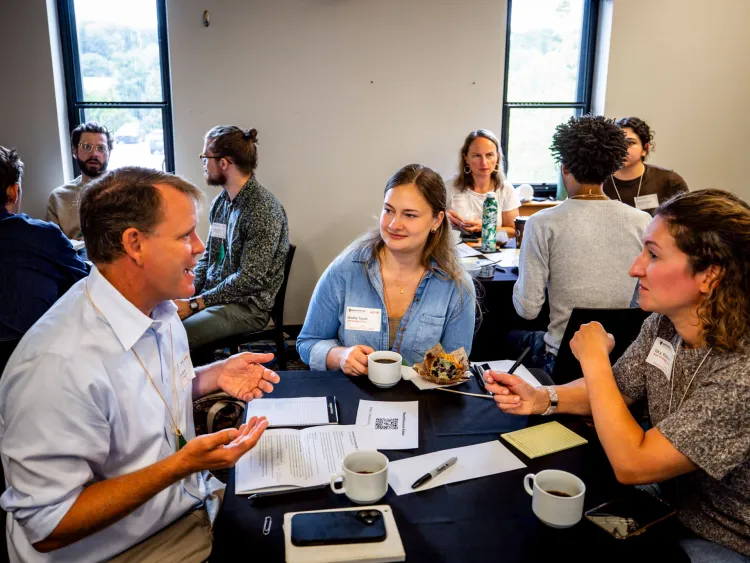
AI for Resilient Cities
Created in collaboration with IBM, AI for Resilient Cities focused on the role artificial intelligence in helping communities respond to challenges related to infrastructure, climate resilience, emergency management, public health, and risk mitigation.
Participants explored how emerging technologies can transform data into actionable insights, helping leaders make more informed decisions while strengthening the resilience of communities facing increasingly complex challenges.
For Logan Cicerone, the track offered an opportunity to examine how AI can support communities while raising important questions about implementation and impact.
"It was fascinating to hear how leaders in disaster response and public health are examining these tools. Coming from a political science and creative background, it can be difficult to discern the scale at which artificial intelligence can be a force for ecological and social good. What resonated most with me was how advances in machine learning, data mapping, and conversations like those at See Change can help communities better understand what these tools are capable of across both remote and urban environments. I hope that deeper understanding supports more targeted research and resilient policies, enabling leaders to effectively and ethically implement these technologies."
Brooke Taylor was inspired by the practical focus of the discussions and the diversity of perspectives represented in the room.
"I loved that the AI for Resilient Cities track focused on real-world implementations of AI in an area so closely linked to climate change. The people in the room made the conversation especially meaningful. Watching professionals from disaster response, healthcare, technology, and community organizing exchange ideas on how to harness AI for the public good was incredibly inspiring. The discussions struck a nice balance between innovation, opportunity, and practical considerations."
The Learning Exchange
Developed in partnership with Circle, The Learning Exchange brought together policymakers, industry leaders, producers, recyclers, regulators, and environmental stakeholders to explore the future of circular economy policy and Extended Producer Responsibility (EPR) implementation in the United States.
Participants examined how states are moving from legislation to implementation, explored policy tradeoffs, and engaged in cross-sector conversations designed to strengthen collaboration and accelerate learning. By bringing together diverse stakeholders with firsthand implementation experience, the track provided valuable insights into how policy, business, and environmental goals intersect.
For Annie Alfieri, whose background spans environmental studies, agroecological systems, and mission-driven organizations, the experience underscored the importance of bringing diverse perspectives together when designing and implementing sustainability solutions.
"What stuck with me was how many different voices it takes for policy to come to fruition. Having policymakers, producers, recyclers, and industry leaders all in the same room made it prevalent that lasting change occurs when everyone is at the table. Ultimately working towards solutions that translate across the entirety of the system."
Alfieri said the discussions highlighted the critical role collaboration plays in translating ambitious sustainability goals into practical, scalable solutions that create value for businesses, communities, and the environment alike.
Innovation Ecosystems
Developed in partnership with Do North, Northeastern Vermont Development Association (NVDA), and Hula, Innovation Ecosystems explored how stronger connections between rural and urban innovation networks can create opportunities for sustainable economic growth and place-based investment across the Northeast.
Participants included investors, entrepreneurs, economic development leaders, researchers, manufacturers, and community builders working to identify new models for collaboration. Discussions focused on the Northeast forest economy, cross-sector partnerships, and strategies for creating long-term value while strengthening communities and working landscapes.
For Blake Goldberg, a U.S. Air Force veteran and founder of Vermont-based Madcap Mushrooms, the track reinforced the importance of building connections between entrepreneurs, community leaders, investors, and organizations working toward shared goals. As someone who has grown a business rooted in sustainable food production and community engagement, he found the discussions particularly relevant.
"One of my biggest takeaways was recognizing how much opportunity exists when people from different sectors and regions come together around a shared goal. The conversations reinforced that innovation isn't limited to large cities or major companies. Some of the most impactful ideas emerge when entrepreneurs, investors, researchers, and community leaders are willing to learn from one another and build solutions together. As a business owner, it was inspiring to see how strong ecosystems can help turn local ideas into lasting community impact."
Goldberg said the track highlighted the value of collaboration in building resilient regional economies and demonstrated how strong innovation ecosystems can create opportunities not only for businesses, but also for the communities they serve.
Learning Beyond the Classroom
Across all six tracks, a common theme emerged: meaningful progress requires leaders who can work across disciplines, engage diverse stakeholders, and navigate complexity with creativity and purpose.
For SI-MBA students, See Change Sessions offered an opportunity to connect classroom concepts with real-world applications while expanding professional networks and gaining firsthand insight into the challenges shaping the future of business and society.
As students returned to class following the event, they brought with them more than new ideas and professional connections. They returned with firsthand experience engaging the kinds of challenges they are preparing to address throughout their careers.
For the SI-MBA program, that outcome is exactly the point. By creating space for students to learn alongside innovators, entrepreneurs, policymakers, investors, and systems thinkers, the partnership with See Change Sessions continues to extend learning beyond the classroom and into the conversations shaping the future.