The Challenge
Asthma remains the most common chronic disease of childhood and disproportionately affects rural and underserved youth. More than half of Vermont children with asthma experience uncontrolled symptoms, leading to missed school days, emergency department visits, hospitalizations, and disruptions to learning and family life.
The Proposed Solution
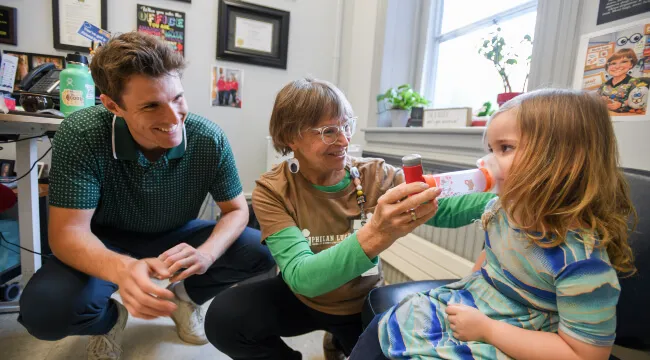
School-Based Asthma Therapy offers a promising solution for asthma care. The model allows students with persistent asthma to receive prescribed controller medications during the school day, helping improve medication adherence and reduce barriers that families often face at home.
During the project's first year, the team engaged more than 30 stakeholders, including school nurses, healthcare providers, parents, and state partners to better understand the barriers and opportunities associated with implementing School-Based Asthma Therapy in Vermont. Those conversations highlighted the importance of strong communication, trusted relationships, and coordinated support systems between schools, families, and healthcare providers.
Working with Vermont schools, clinicians, and families in year two, the partners are piloting School-Based Asthma Therapy programs in ten rural schools to improve access to care while reducing disruptions to learning. The goal is not only to improve asthma outcomes, but also to increase school attendance, support academic success, and enhance quality of life for students and their families.
The Partnership
Dr. Stephen Teach, Pediatrician at the University of Vermont Larner College of Medicine, is leading the project.
Dr. Heidi Schumacher and the Vermont Child Health Improvement Program (VCHIP) is also a partner. Through her Leahy Institute-supported initiative, Every Day Counts, Schumacher has worked to strengthen relationships between schools and community healthcare providers to support student attendance and well-being.
Dr. Bernice Garnett, from UVM’s College of Education and Social Services and the UVM College of Nursing and Health Sciences leads the Catamount Community Schools initiative. Dr. Garnett will support the engagement of administrative leaders in community schools participating in the project. The Leahy Institute supported Dr. Garnett with a 2024 grant that expanded services at the community schools, including comprehensive physical and mental health services for students and their families.
Haysal Jones, BSN, RN, National Council of School Nurses (President) and Sophia R. Boyle Hall, DNP, M.Ed., BSN, RN, NCSN (Past President and VT Director of NASN) from the Vermont State School Nurses Association were key partners in the 2025 Leahy Capacity Grant, will continue to support engagement of school nurses with the SBAT project.
By leveraging existing partnerships, communities are able to address multiple challenges through coordinated support rather than separate interventions.
Project Details
| Community Partner: | Vermont Child Health Improvement Program (VCHIP) |
| UVM Partner: | Larner College of Medicine |
| Amount: | $179,603 |
| Primary Region: | Statewide |
| Focus Areas: | Community Schools, Access to Health Care in Rural Areas |