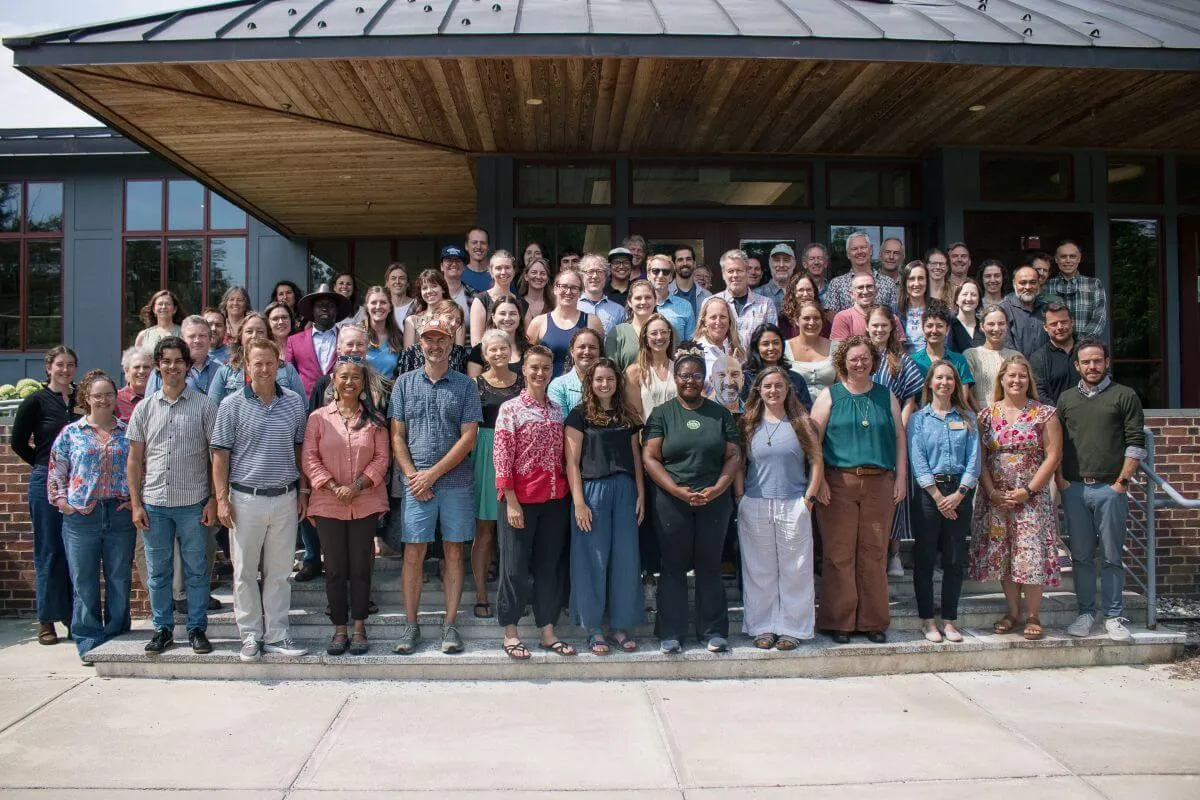
We are two weeks into the fall semester, and our students, faculty, and staff have brought a welcome, renewed energy to campus. It is wonderful to see our newest students begin exploring their interests and passions, and to reconnect with our returning students as they continue building on everything they have already accomplished.
This academic year is beginning at a consequential moment. Climate change, biodiversity loss, environmental injustice, and threats to human and ecological health continue to reshape our world. At the same time, artificial intelligence, machine learning, and other emerging technologies are transforming how knowledge is created, shared, and used. These changes present real challenges and often lead to anxiety about the future.
At the same time, we have extraordinary opportunities to change the world around us for the better. The Rubenstein School was built for moments like this. For more than fifty years, we have brought people and disciplines together to address complex environmental challenges. We know that lasting progress requires us to integrate science, different perspectives, connect ideas, listen carefully, and work alongside communities. It requires solutions that are scientifically rigorous, socially just, economically viable, and achievable.
This is where we come in. I have challenged every Rubenstein School student, faculty member, and staff member to make this a year of action. I’ve challenged them to ask difficult questions, cross disciplinary boundaries, and get involved in the research, service, internships, clubs, and community partnerships that are making an impact. And I’m encouraging all of us to remember that sometimes what we try may not work. But we can learn, adjust, and try again.
In the environmental field, we call this adaptive management: act thoughtfully, evaluate honestly, learn continuously, and improve relentlessly. It is a powerful approach not only for stewarding the natural world around us, but also for navigating education and life.
Our future will require people who can navigate complexity, bring people together, and turn knowledge into meaningful change. That is what we are preparing our students to do.
I am grateful to work alongside such a curious, courageous, and compassionate group of people who are willing to act.