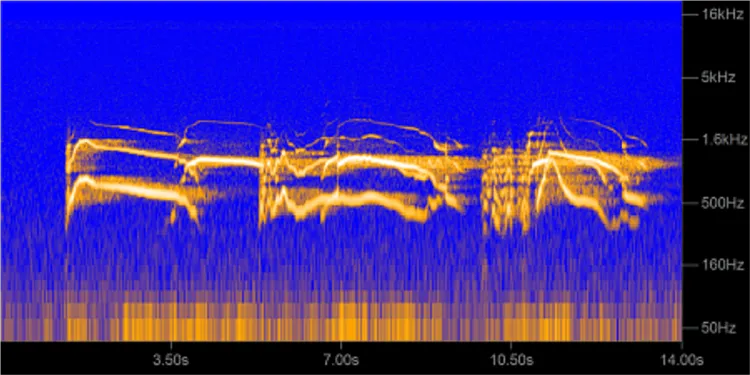
Audio recording of coyote, elk, and wind in Grand Teton National Park.
The Listening Lab is a part of the Protected Areas Research Collaborative (PARC). It analyzes soundscapes (the combinations of sounds heard in a place) to support management decisions, monitor ecological change, and respond to emerging concerns in U.S. National Parks. Led by Dr. Peter Newman, Dean of the Rubenstein School of Environment and Natural Resources, and Dr. Morgan Crump, Postdoctoral Associate in the Rubenstein School and Gund Institute for Environment Fellow, the lab provides detailed acoustic assessments in national parks across all 50 states.
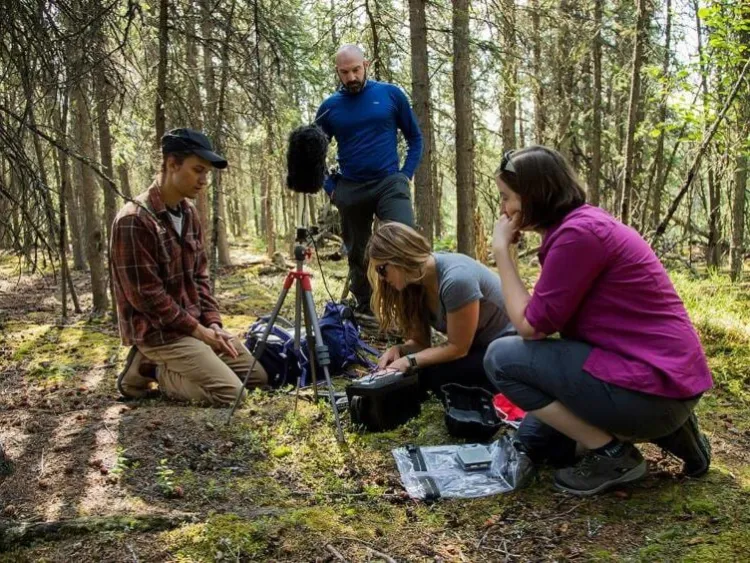
UVM is the newest home to this research, born out of a multi-decade, multi-institutional partnership with the National Park Service’s Natural Sounds and Night Skies Division, the federal program responsible for stewarding acoustic and nocturnal environments across the park system. The lab originated at Colorado State University before moving to the Pennsylvania State University (Penn State), and ultimately UVM in 2025.
“Sound is deeply ingrained in humans. It's why we respond so much to nature sounds. To fully understand the impact of acoustics, you need people to come together across disciplines. As an interdisciplinary school, Rubenstein is set up for that in a beautiful way,” says Newman. “Bringing acoustics to UVM allows us to address the problem of increasing anthropogenic noise and its effects on people and wildlife.”
In recent years, the Listening Lab has begun exploring machine learning, a growing effort led by Carter Paprocki, Ph.D. candidate at Penn State, and Dr. Andrew Bardnard, Vice President for Research at Michigan Technological University.
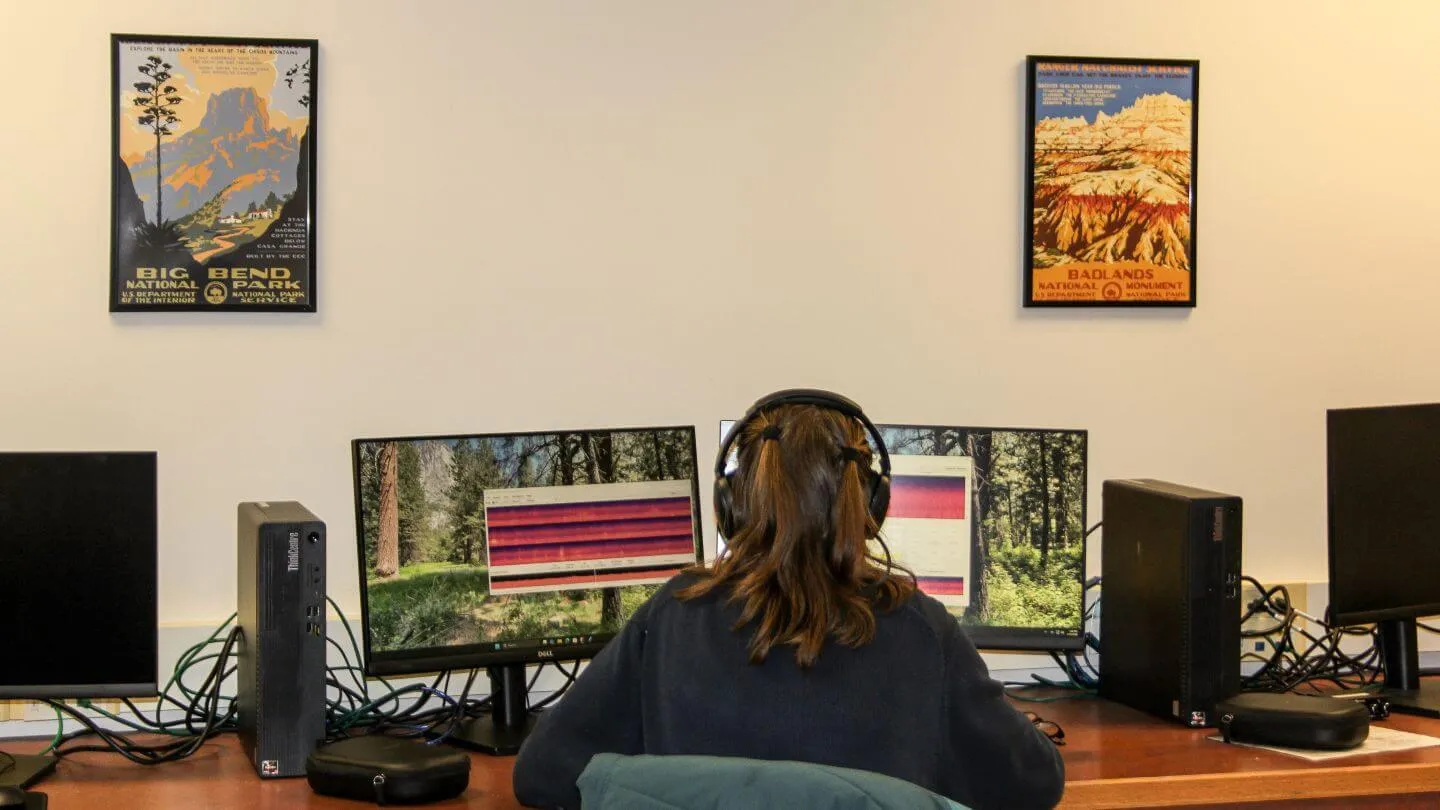
Upon completing her Ph.D. at Penn State, Crump came to UVM to continue her work in the Listening Lab. She oversees day-to-day operations, data governance, and machine learning projects. One graduate student and approximately 15 undergraduates make up the team that handles the important work of listening and coding. This all happens in a simple room in Delehanty Hall, with neatly framed National Park posters on the wall and two rows of computers, each equipped with a pair of noise-cancelling headphones.
Acoustic Detectives
When you picture a national park, you may think of the most iconic in the U.S., like Yosemite or Grand Teton, both of which are sites assessed by the Listening Lab. But the lab also receives recordings from national park sites that are less thought of, such as battlefields, historic landmarks, and the Canaveral National Seashore. Parks submitting acoustic data have varying needs. Some request baseline profiles, while others seek targeted assessments related to emerging issues.
Students are responsible for annotating five days’ worth of recordings from large datasets. They identify both human-made and natural sounds using approximately 100 different codes. Students work with both audio recordings and visual spectrograms to identify sounds. They also use maps, time of year, and time of day information to gather context clues to validate their findings.
Julia “JJ” Daniell is a Ph.D. student in the Rubenstein School who started working in the lab in January 2026. She is focused on managing the undergraduate student employees, addressing technical issues, and conducting quality control.
“The students break down sound bites, and I review trouble spots or areas where the code doesn't line up with what we would expect to see,” explains Daniell. “We make sure all the data is accurate before we finalize it.”
Mistakes aren’t frequent, but they do happen. “The students are responsible for every single thing they hear, and their job is to try to be as detail oriented as possible,” explains Crump. “The Park Service wants to know when we hear rain, a twig snapping, a jet, we label it all. That’s part of what makes our work on the machine learning so tricky – we need to teach it to pick up every single piece.”
Audio recording of rain and thunder in North Cascades National Park.
Sadie Dow, a sophomore Environmental Sciences student in the Rubenstein School, is working on recordings from the Appomattox Courthouse in Virginia. “This site is actually 30 minutes from where I grew up, so it’s oddly reminiscent of my childhood, hearing all the insects and the birds, it’s been really nice,” explains Dow. “There is a lot of highway noise and airplanes, but I also heard a coyote pack call, which was really cool. Their howls lasted about 20 minutes."
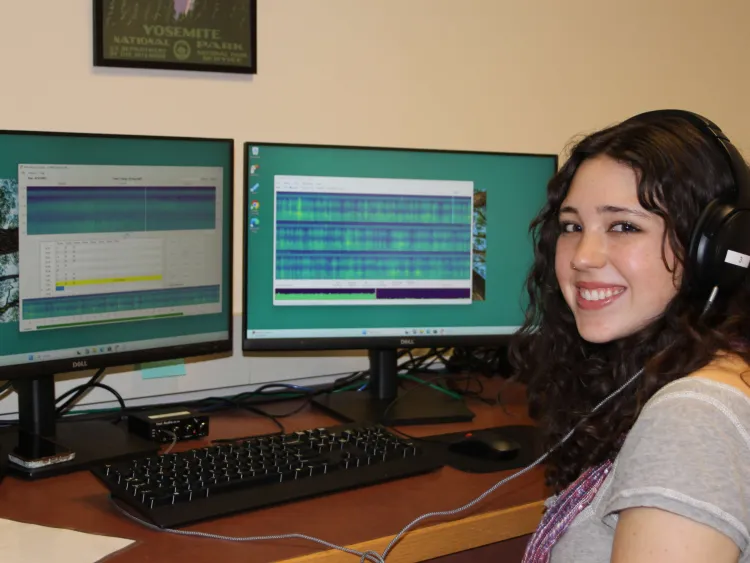
Fellow sophomore Environmental Sciences major, Cassidie Plourde, is new to the lab and working on the same site as Dow, her first site since her training. "It’s September in central Virginia, so I’m hearing a lot of birds and insects, along with trucks and planes, there’s a resident dog nearby too. My training site was in Denali, so that was a little different.”
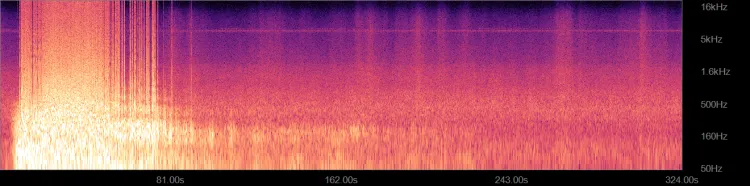
Plourde uses the spectrogram to affirm what she’s hearing. "It’s really helpful to visualize, I’ve learned that a jet will have a straight line, while a propeller aircraft makes a different shape.”

Studying Sound
Liz Litton is a junior in the Rubenstein School studying Parks, Recreation, and Tourism. She recently enrolled in the Accelerated Master’s Program to pursue her Master of Science in Natural Resources with a concentration in environmental thought and culture.
Litton’s work in the Listening Lab has inspired her plans for graduate study. She’s planning her thesis work on human emotional connections with the environment, with a specific focus on soundscapes.
"I recently finished a couple sites in Florida, which were really loud and chaotic. There were rocket launches, boats, music, and I just remember always feeling tired and kind of irritable after my shifts," said Litton. “Now I’m working on a site in Alaska where there's no road access, you can only get there by plane or boat. And the stark contrast between those sites got me thinking about the difference in my mindset, not just because the data was easier, but because I physically felt better."
Audio recording of a rocket launch at Canaveral National Seashore.
Litton’s time in the Listening Lab has given her new perspective on how humans impact natural spaces. “I’m more aware of how loud the world around us is all the time, and especially how loud we humans have made it. It has helped me to be less human-centered.”
Sensory ecology investigates how environmental signals affect animals. It originated in the 1970s, making it a relatively new field. The Listening Lab is among the first to comprehensively consider how acoustics play a role in our ecosystems. “It's cool to have this opportunity to study something that not a lot of people are doing yet,” said Litton.
Groundbreaking Potential
Only 2.5% of the acoustic data available from the National Park Service is manually reviewed, and the Listening Lab is the only place where that happens. With machine learning on the horizon, there is immense potential for enhanced soundscapes research.
“Bringing machine learning into the Listening Lab’s workflow will help us expand analyses to more parks, run more studies, and speed up turnaround time,” says Crump. “It’s an adaptive model, so it’s never really ‘done’ learning. The more data it gets, the better it becomes at classifying. So, the longer we do this work, the more accurate the models will be.”
Newman describes this potential as one of global impact. “If we can monitor the acoustic environment over time, we can see what species are shifting, what species exist or don't, that’s the power of acoustics. As we start developing methods that can inventory those recordings efficiently and accurately, we can take on more of the earth monitoring that we need to do to understand how the world is changing.”
Dive into the Listening Lab’s “Sounding Board” project to learn more about the science of sound.